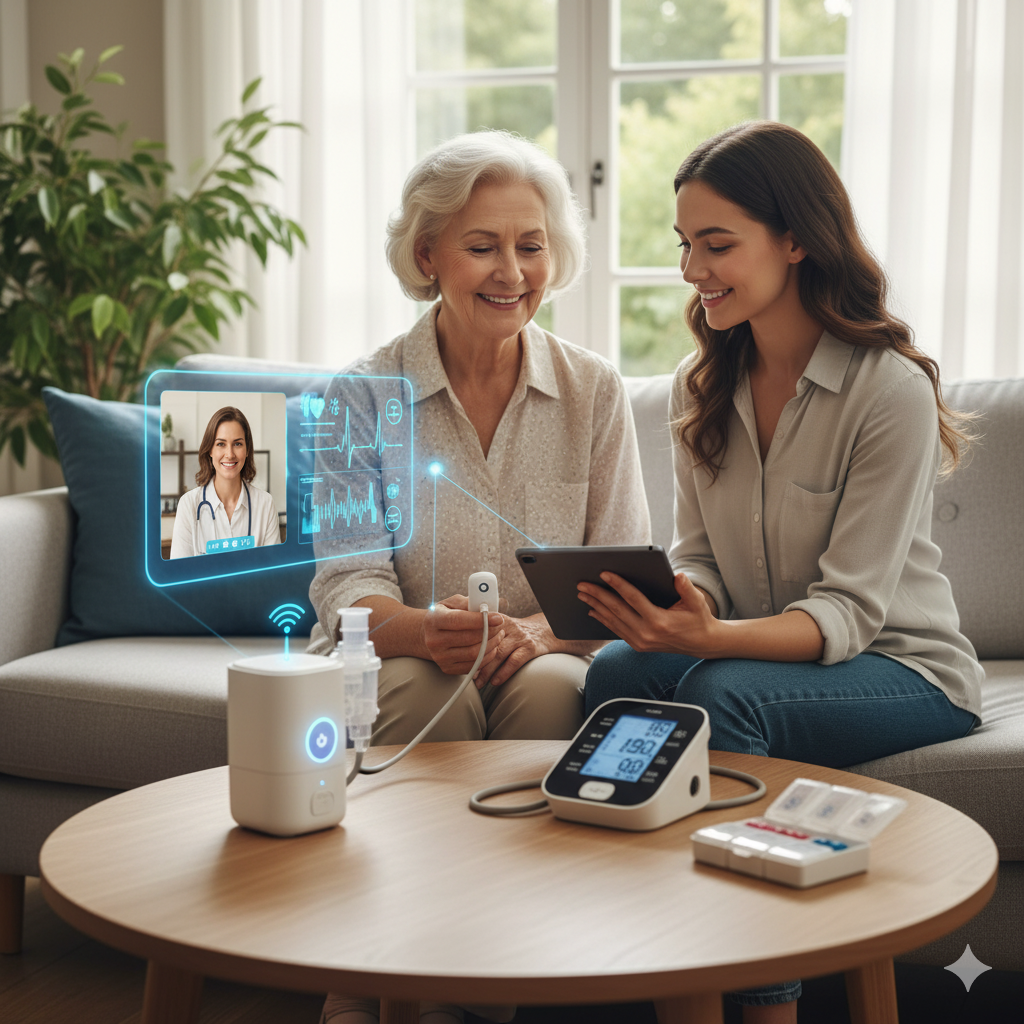
The Role of Smart Medical Devices in Home Healthcare
Healthcare is no longer limited to hospitals and clinics. Today, technology allows people to bring advanced medical care into their homes. One of the most exciting changes in recent years has been the rise of smart medical devices—tools that not only provide treatment but also monitor progress, collect data, and even connect with healthcare providers remotely.
What Are Smart Medical Devices?
Smart medical devices combine traditional medical tools with modern technology such as sensors, Bluetooth connectivity, and mobile apps. These features allow them to:
Track health data in real time.
- Send updates to caregivers or doctors.
- Provide alerts when something is wrong.
- Store information for future reference.
Examples of smart devices include:
- Smart nebulizers.
- Connected blood pressure monitors.
- Wearable oxygen sensors.
- Smart pill dispensers.
Key Benefits of Smart Medical Devices
- Improved Accuracy
Smart devices reduce the risk of human error by automating measurements and recording data digitally. - Better Communication with Doctors
Many devices connect directly to apps or cloud platforms, making it easy to share results with healthcare professionals. - Convenience for Caregivers
Family members or caregivers can monitor health indicators remotely, which brings peace of mind. - Encourages Patient Engagement
Having access to personal health data often motivates patients to take a more active role in their care.
Popular Smart Medical Devices for Home Use
- Smart Nebulizers – deliver respiratory treatments while recording usage history.
- Connected Blood Pressure Monitors – automatically log results in an app.
- Smart Oxygen Monitors (Pulse Oximeters) – track blood oxygen levels and detect sudden drops.
- Smart Pill Dispensers – remind patients when it’s time to take medication and prevent missed doses.
- Smart Thermometers – track fever patterns and send alerts when temperature spikes.
Each of these devices is designed to make healthcare more proactive rather than reactive.
Final Thoughts