


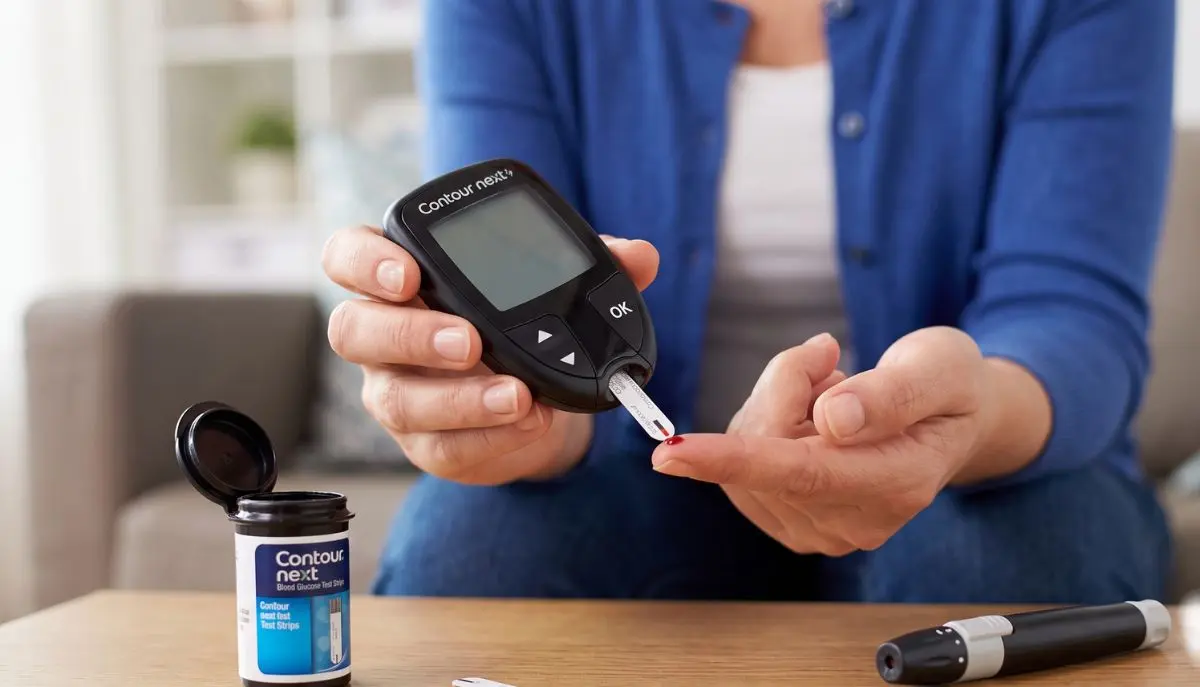
If you use a blood glucose meter regularly, accuracy matters. A reading that is close to your actual blood glucose level can help you make better day-to-day decisions, while an unexpected or incorrect reading can create confusion.
One question many people ask is: how accurate are CONTOUR NEXT test strips?
CONTOUR NEXT test strips are designed to work with compatible CONTOUR NEXT blood glucose meters and have been evaluated against laboratory reference methods. Manufacturer information reports that CONTOUR NEXT test strips can provide readings within ±10% of laboratory measurements, while specific CONTOUR NEXT systems have demonstrated accuracy beyond the minimum requirements of the ISO 15197:2013 standard.
However, accuracy is not determined by the test strip alone. The meter, blood sample, testing technique, strip storage, temperature, and other factors can influence the result.
Below is a detailed, easy-to-understand guide for people who want to know more about CONTOUR NEXT test strip accuracy and proper blood glucose testing.
CONTOUR NEXT test strips are disposable strips used with compatible CONTOUR NEXT blood glucose meters to measure glucose in a small blood sample.
The basic process is simple:
Although the process takes only a few seconds, small details can affect the result.
For someone checking glucose every day, having a testing system that is easy to use and consistent can make a meaningful difference.
The short answer is that CONTOUR NEXT test strips are designed to provide highly accurate blood glucose measurements when used correctly with a compatible CONTOUR NEXT meter.
According to Ascensia Diabetes Care, CONTOUR NEXT test strips are designed to provide readings within ±10% of laboratory measurements.
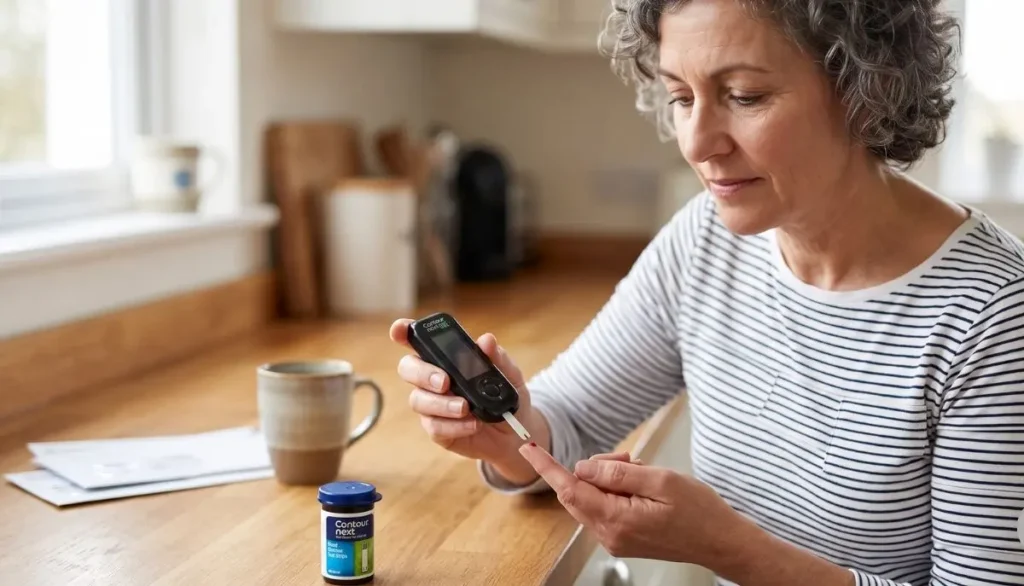
Specific CONTOUR NEXT systems have also performed strongly in accuracy studies.
For example, research evaluating the CONTOUR NEXT ONE system found that 100% of 600 laboratory results across three test-strip lots met the ISO 15197:2013 analytical accuracy criteria. In the clinical portion of the study, 99.4% of patient self-test results met the relevant ISO accuracy criteria.
Another study comparing CONTOUR NEXT with several blood glucose monitoring systems found that CONTOUR NEXT produced the lowest mean absolute difference and mean absolute relative difference across the overall glucose range studied.
These results are encouraging, but it is important to understand what “accurate” means for a home glucose meter.
When you see an accuracy statement such as ±10%, it does not mean that every single reading will be exactly the same as a laboratory result.
For example, imagine that a laboratory reference measurement is:
150 mg/dL
A reading that is approximately 10% higher or lower could be around:
The actual allowable range depends on the particular accuracy standard, glucose concentration, testing system, and study.
The ISO 15197:2013 minimum accuracy criteria require at least 95% of measurements to fall within:
compared with the reference method.
Therefore, a home blood glucose meter should not be expected to reproduce a laboratory value perfectly every time.
If you are researching how accurate are CONTOUR NEXT test strips, you may come across the term ISO 15197:2013.
ISO 15197:2013 is an international standard covering requirements for blood glucose monitoring systems used for self-testing.
The standard establishes accuracy criteria that blood glucose monitoring systems should meet.
Importantly, accuracy studies do not simply ask whether two numbers look similar. They use defined testing procedures and compare meter results against a reference measurement method.
CONTOUR NEXT systems have been evaluated against these types of requirements, and several published studies have reported results exceeding the minimum ISO accuracy criteria.
This is one reason consumers should look beyond marketing claims when choosing a blood glucose monitoring system.
Published research provides additional information about the performance of CONTOUR NEXT systems.
A study published in Journal of Diabetes Science and Technology evaluated the CONTOUR NEXT ONE system using laboratory and clinical testing.
In the laboratory study, all 600 results from three test-strip lots met the ISO 15197:2013 analytical accuracy requirements.
Among people with diabetes in the clinical study:
These findings demonstrate strong performance under the conditions studied.
However, this does not mean that every CONTOUR NEXT test strip reading will be identical to a laboratory reading.
It is completely understandable to become concerned when a home meter reading does not match a laboratory glucose result.
But the two measurements are not necessarily performed under identical conditions.
Several factors can contribute to differences.
Your blood glucose level can change between the time you test at home and the time your blood is tested in a laboratory.
Eating, exercising, taking medication, experiencing stress, or simply waiting can change your glucose level.
Therefore:
Home reading at 8:00 AM: 142 mg/dL
Laboratory sample at 8:30 AM: 130 mg/dL
This does not automatically mean that the meter is inaccurate.
A blood glucose meter requires an adequate blood sample.
If the sample is too small or does not properly enter the strip, the measurement may not be reliable.
CONTOUR NEXT systems include Second-Chance Sampling, which can allow additional blood to be applied to the same strip when the initial sample is insufficient. Manufacturer information says this feature can help reduce the need for another fingerstick and reduce strip waste.
This is one of the easiest things to overlook.
If your fingers contain food residue, sugar, lotion, or other substances, the blood sample may be affected.
For example, handling fruit or something sweet and then testing without washing your hands could potentially influence the reading.
A simple routine helps:
Wash → dry → test.
Yes.
Test strips are sensitive medical testing supplies and should be stored according to the manufacturer’s instructions.
Exposure to inappropriate conditions can affect strip performance.
Good habits include:
Always follow the specific instructions supplied with your CONTOUR NEXT test strips because storage requirements can vary by product and market.
A test strip is designed to work with a particular testing system.
CONTOUR NEXT test strips should be used with compatible CONTOUR NEXT meters according to the product instructions.
Do not assume that two strips that look similar are interchangeable.
Using an incompatible strip can lead to an error or an unreliable result.
When purchasing replacement strips, check:
Meter model → Compatible strip → Correct product → Expiration date
This simple check can prevent unnecessary problems.
Yes.
Blood glucose strips need enough blood to perform the test properly.
If there is not enough blood, the meter may display an error or, depending on the situation, the testing process may not work as intended.
The Second-Chance Sampling feature available with certain CONTOUR NEXT systems allows additional blood to be applied to the same strip within the specified time when the first sample is insufficient. Research has found that accuracy was maintained with sample reapplication under the conditions studied.
This can be particularly helpful for people who sometimes have difficulty getting an adequate blood drop.
Environmental conditions can affect blood glucose testing systems.
Very high or very low temperatures may influence how a meter or test strip performs.
For this reason, follow the temperature and environmental conditions listed in the product instructions.
If you are testing in unusual conditions, such as outdoors during extreme weather, do not assume that the result should be interpreted exactly like a reading taken under normal conditions.
Sometimes the number on the screen simply does not make sense.
For example, perhaps you normally see readings around 110–140 mg/dL but suddenly see 250 mg/dL without an obvious explanation.
Before immediately assuming the meter or strip is defective, consider:
If a result does not match how you feel or seems unusually different from your normal pattern, repeat the test according to the manufacturer’s instructions and follow your healthcare professional’s guidance.
If you have symptoms of severe high or low blood glucose, seek appropriate medical help rather than relying on repeated home testing alone.
Accuracy becomes especially important when glucose levels are low.
Research evaluating CONTOUR NEXT found strong performance in low glucose ranges. In one comparative study, CONTOUR NEXT had a mean absolute difference of 2.03 mg/dL in the studied range below 70 mg/dL, and it had a lower mean absolute relative difference than the other systems evaluated in that range except one.
Still, no home blood glucose meter should be treated as an infallible laboratory instrument.
If your result suggests significant hypoglycemia and you have symptoms, follow the hypoglycemia plan provided by your healthcare professional.
High glucose levels also need to be interpreted carefully.
At higher glucose concentrations, ISO 15197:2013 uses a percentage-based accuracy criterion rather than a fixed ±15 mg/dL criterion.
For example, a difference of 15 mg/dL means something very different at:
80 mg/dL
than at:
300 mg/dL.
That is why percentage-based accuracy becomes important at higher glucose levels.
If you repeatedly receive unexpectedly high results, follow your healthcare professional’s instructions and consider checking the meter and testing process.
A laboratory blood glucose test and a home glucose meter serve related but different purposes.
A laboratory analyzer generally uses a more controlled testing environment and reference methodology.
A home glucose meter is designed for convenient self-monitoring.
The goal of a quality home glucose meter is not to make every result identical to the laboratory number. Instead, the system is evaluated to determine whether its results fall within accepted accuracy limits.
Published studies have found that CONTOUR NEXT systems perform strongly against laboratory reference methods.
It is difficult to say that one blood glucose test strip is universally “the best” for every person.
Different meters have different features, costs, insurance coverage, availability, connectivity, and user preferences.
However, CONTOUR NEXT has a strong published accuracy record.
A study comparing six blood glucose monitoring systems found CONTOUR NEXT had the lowest mean absolute difference and mean absolute relative difference across the overall glucose range evaluated.
That is useful information when comparing blood glucose monitoring options.
But the best system for you is also one that you can consistently use correctly and obtain reliably.
Even a highly accurate test strip can produce a poor result if testing technique is inconsistent.
Here are some practical tips.
Use soap and water when possible.
Water remaining on your finger can dilute the blood sample.
Do not use a damaged or expired strip.
Store the strips according to their instructions.
Make sure the sample is adequate for the test.
Do not improvise the testing process.
Confirm that your strips match your meter model.
Follow your lancing-device instructions for obtaining a blood sample.
Follow the manufacturer’s cleaning instructions.
If a number looks very different from your normal pattern, investigate rather than automatically assuming it is correct or incorrect.
For most people using a compatible meter correctly, CONTOUR NEXT test strips provide a reliable tool for self-monitoring blood glucose.
The evidence is particularly encouraging because accuracy has been assessed through laboratory and clinical studies rather than relying solely on consumer impressions.
The CONTOUR NEXT family has also been reported to exceed the minimum accuracy requirements of ISO 15197:2013.
Still, remember:
Accurate does not mean perfect.
A blood glucose meter is a monitoring tool, not a laboratory analyzer.
Imagine two people using the same box of test strips.
Person A:
Person B:
Even though both people use the same brand of test strips, their testing conditions are very different.
This is why strip quality and user technique work together.
One useful feature associated with certain CONTOUR NEXT meters is Second-Chance Sampling.
It is designed to recognize when the initial blood sample is insufficient and allows more blood to be applied to the same strip within the specified time.
That can provide a practical benefit because it may help you avoid:
Research involving CONTOUR NEXT ONE found that accuracy was maintained when additional blood was applied under the study conditions.
For people who test frequently, this can make everyday testing a little less frustrating.
Blood glucose testing is not just about getting a number.
For many people, each reading is part of a larger picture.
You may use glucose readings to understand how your blood sugar responds to:
Reliable measurements can make these patterns easier to recognize.
But one number should not always be viewed in isolation.
Your healthcare professional can help you understand your glucose targets and what your results mean in the context of your diabetes management plan.
There is no single testing schedule that works for everyone.
Your testing frequency can depend on:
Follow the testing schedule recommended for your individual situation.
A blood glucose meter is most useful when the readings are collected consistently and interpreted appropriately.
You may want to repeat a test according to your meter’s instructions when:
Do not repeatedly test simply because you dislike a result.
Instead, follow proper testing procedures and your healthcare professional’s recommendations.
No.
A glucose meter result should not automatically lead to changing insulin, diabetes medication, or other treatment unless you have been instructed to do so.
Your healthcare professional can help you establish appropriate glucose targets and treatment decisions.
If your glucose readings consistently fall outside your recommended range, discuss the pattern with your healthcare team.
When purchasing CONTOUR NEXT test strips, consider more than just price.
Check:
Buying from a reputable medical supply source can also help provide confidence that you are receiving the intended product.
For people looking for diabetes testing supplies, Alfa Healthcare Supply Inc. provides medical supply products and serves customers looking for dependable healthcare equipment and supplies.
You can visit Alfa Healthcare Supply Inc. to explore available diabetes and medical supply products.
| Question | Answer |
| Are CONTOUR NEXT strips accurate? | Yes, they are designed for highly accurate blood glucose testing when used correctly with compatible meters. |
| Do they meet ISO standards? | CONTOUR NEXT systems have demonstrated performance exceeding ISO 15197:2013 minimum requirements. |
| Are readings identical to laboratory results? | Not necessarily. Home meters have an allowable measurement variation. |
| Can testing technique affect results? | Yes. Hand cleanliness, blood sample size, storage, and technique can matter. |
| Can expired strips affect testing? | They may; always follow the product instructions and expiration information. |
| Can strips be used with any meter? | No. Use them only with compatible meters. |
| Does Second-Chance Sampling improve convenience? | It can help when the initial blood sample is insufficient on compatible systems. |
| Should unexpected results be ignored? | No. Follow proper testing procedures and seek professional advice when appropriate. |
So, how accurate are CONTOUR NEXT test strips?
The available evidence indicates that CONTOUR NEXT systems provide highly accurate blood glucose measurements when used correctly. Manufacturer data reports readings within ±10% of laboratory measurements for CONTOUR NEXT test strips, while published research has shown strong performance against ISO 15197:2013 accuracy requirements.
Perhaps the most important point is that accuracy is a combination of good technology and good testing habits.
Using the right strip with the right meter, storing the strips properly, washing your hands, getting an adequate blood sample, and following the manufacturer’s instructions can all help you obtain dependable results.
For someone managing diabetes day after day, that consistency matters. A glucose number is more useful when you can feel confident that it was obtained correctly.
CONTOUR NEXT test strips can be an important part of that everyday routine, but your healthcare professional remains the best source for interpreting your glucose readings, setting personal targets, and making treatment decisions.
CONTOUR NEXT test strips are designed to provide highly accurate glucose readings when used with a compatible meter. Ascensia reports readings within ±10% of laboratory measurements for the CONTOUR NEXT test strip product, while individual CONTOUR NEXT systems have demonstrated performance beyond ISO 15197:2013 minimum accuracy requirements.
Yes. Published clinical and laboratory studies have demonstrated strong accuracy for CONTOUR NEXT systems. One study found 100% of 600 laboratory results across three strip lots met the relevant ISO analytical accuracy criteria.
Yes. A home glucose meter and laboratory analyzer can produce different results. Blood glucose can also change between the two tests.
Possible reasons include a genuine change in blood glucose, testing technique, contaminated hands, inadequate sample, strip storage conditions, or other factors. Follow the meter instructions and repeat testing when appropriate.
Yes. Check the expiration information on your specific package and follow the manufacturer’s instructions.
Only use the strips with meters specifically designed to work with them. Check the meter and strip documentation before testing.
They are designed for blood glucose self-monitoring and have demonstrated strong accuracy in clinical and laboratory evaluations. Your healthcare professional can advise you on how frequently you should test.
Follow the testing instructions and consider repeating the test when appropriate. If you have concerning symptoms or a potentially dangerous glucose result, follow your diabetes care plan and seek medical advice promptly.
Yes. Washing and thoroughly drying your hands before testing is a simple way to reduce the chance that substances on your fingers will affect the sample.
Use an unexpired compatible strip, store it properly, wash and dry your hands, obtain an adequate blood sample, and follow your meter’s instructions carefully.
Medical disclaimer: This article is for general educational purposes and is not a substitute for professional medical advice, diagnosis, or treatment. Always follow the instructions supplied with your specific glucose meter and test strips and consult your healthcare professional for individual diabetes-management decisions.