


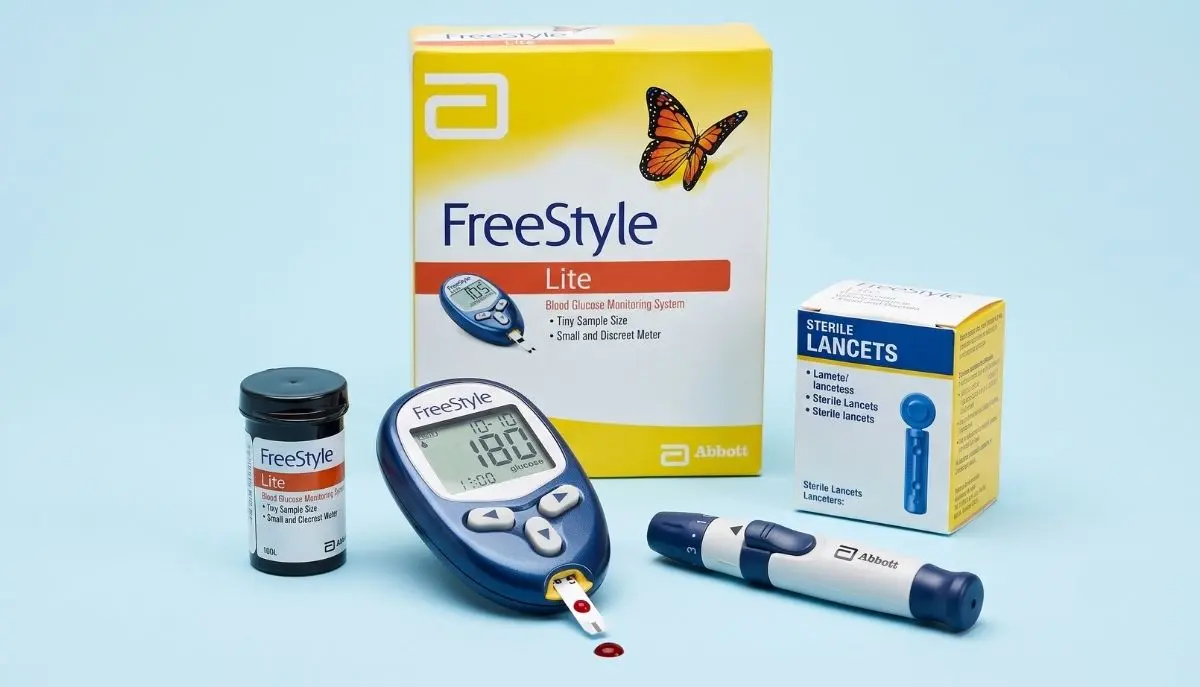
If you are new to checking your blood glucose at home, using a blood glucose meter can feel confusing at first. You may wonder where to put the test strip, how much blood is needed, when to test, or what to do if the meter displays an unexpected result.
The good news is that the FreeStyle Lite Blood Glucose Monitoring System is designed to make blood glucose testing straightforward. Once you understand the basic steps, testing can become a simple part of your daily routine.
This guide explains freestyle lite blood glucose monitoring system how to use, including preparing the meter, using FreeStyle Lite test strips, obtaining a blood sample, understanding the result, avoiding common mistakes, storing your supplies, and knowing when to contact a healthcare professional.
Important: This article is for general educational information and does not replace the instructions supplied with your meter or advice from your healthcare professional. Always follow the current product instructions for your specific FreeStyle Lite system.
The FreeStyle Lite system is a blood glucose monitoring system designed to measure glucose from a small sample of capillary whole blood. According to Abbott’s user information, the system uses a very small blood sample of approximately 0.3 microliters. The meter is intended for testing blood glucose and should be used with compatible FreeStyle Lite test strips and appropriate FreeStyle control solution.
Unlike a continuous glucose monitoring system such as FreeStyle Libre, the FreeStyle Lite meter is a blood glucose meter. It requires a blood sample for each test.
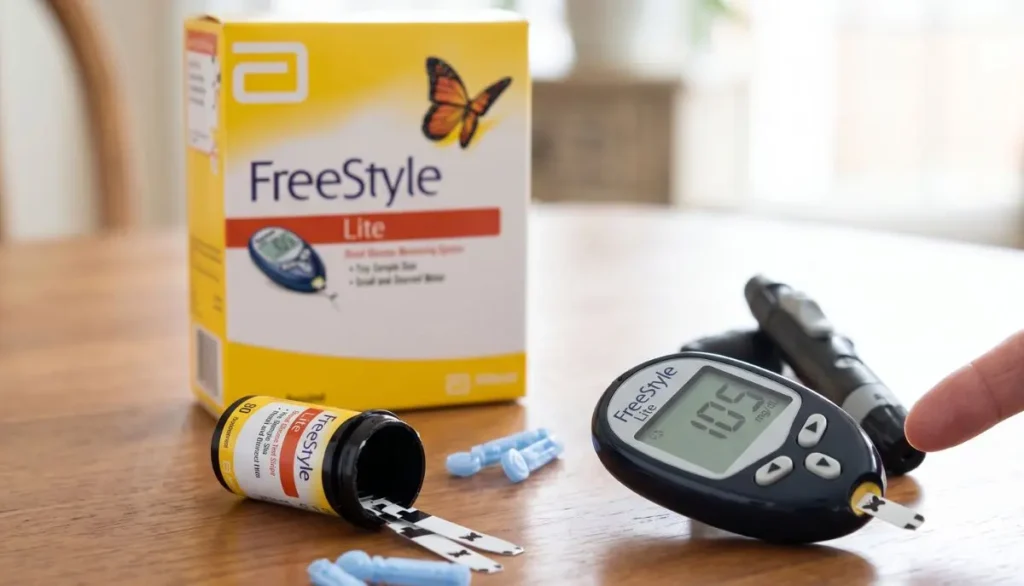
This distinction is important.
A CGM sensor measures glucose in interstitial fluid, while a traditional blood glucose meter measures glucose in a blood sample. Abbott explains that blood glucose and sensor glucose can differ slightly because they measure glucose in different body fluids and at different points in time.
For someone learning how to check glucose at home, the FreeStyle Lite system can provide a practical way to obtain an individual blood glucose reading.
Before learning freestyle lite blood glucose monitoring system how to use, gather everything you need.
Typically, you will need:
The FreeStyle Lite meter should be used with FreeStyle Lite test strips. Abbott’s instructions specifically warn that using other test strips or control solutions with the meter can result in inaccurate readings.
Before starting, check the expiration date on your test strips. Do not use expired strips because they may produce inaccurate results. Test strips should also remain in their original container and should be protected from heat, moisture, and direct sunlight.
Let’s walk through the process in simple terms.
Start with clean hands.
Wash your hands with soap and water and dry them completely. Clean, dry hands help reduce the chance that food, sugar, lotion, or other substances on your fingers will affect the sample.
This is an easy step to overlook, especially when you are in a hurry.
However, if you are checking glucose after eating, washing your hands is particularly important because traces of food can potentially contaminate your fingertips.
If you cannot wash your hands, follow the cleaning instructions provided with your meter and testing supplies.
Load a new sterile lancet into your lancing device according to its instructions.
Do not reuse lancets.
Using a fresh lancet can help maintain cleanliness and may make obtaining a blood sample more comfortable.
Set the lancing device according to the instructions supplied with the device. The appropriate depth can vary depending on the person and the lancing device.
If you regularly experience difficulty getting enough blood, ask your healthcare professional about the appropriate technique rather than repeatedly increasing the depth yourself.
Take one FreeStyle Lite test strip from its original container.
Close the container promptly after removing the strip.
This matters because exposure to moisture and environmental conditions can affect test strips.
Abbott’s instructions recommend keeping FreeStyle Lite test strips in their original vial, not transferring them to another container, and tightly closing the vial after removing a strip.
Check the strip before use. Do not use a strip if it appears damaged or if it is expired.
Insert the top end of the FreeStyle Lite test strip into the test strip port.
The meter turns on when the test strip is inserted. The strip should be inserted with the appropriate printed side facing up, as shown in the manufacturer’s instructions.
Once the meter is ready, you should see the appropriate blood-drop/test-strip indication on the display.
This is your signal that the meter is ready for the blood sample.
Use your lancing device to obtain a small blood sample.
The FreeStyle Lite system is designed to use a very small sample—approximately 0.3 μL.
The manufacturer’s information describes several possible testing areas, including:
However, alternative-site testing is not appropriate in every situation. Abbott specifically recommends using a fingertip when testing for hypoglycemia or when a person has hypoglycemia unawareness.
If you are unsure which testing site is appropriate for you, ask your healthcare professional.
For many people, the fingertip is the simplest and most reliable place to start.
Once you have a blood drop, carefully apply it to one sample area of the FreeStyle Lite test strip.
Do not apply blood to both sample areas.
Abbott’s instructions indicate that the blood or control solution should be applied to one sample area only. If additional sample is needed during the permitted filling period, it should be applied to the same sample area.
You do not need to cover the strip with a large amount of blood.
The system is designed to work with a small sample.
If you repeatedly have trouble producing enough blood, speak with your healthcare professional about proper lancing technique.
After the meter receives the appropriate blood sample, it processes the test and displays your blood glucose result.
Take a moment to read the number carefully.
Depending on your meter settings and location, glucose may be displayed in different units, such as:
Do not assume that a number is normal or abnormal without considering the units and the target range given to you by your healthcare professional.
Keeping track of your glucose readings can help you and your healthcare professional identify patterns.
Depending on your individual diabetes management plan, you may record:
The FreeStyle Lite system includes memory functions and can provide historical information, including averages over different periods. The manufacturer’s manual includes sections covering meter memory and 7-, 14-, and 30-day averages.
A single glucose result provides useful information, but patterns over time can often provide a clearer picture.
After the test is complete, remove the used test strip from the meter.
Dispose of it appropriately according to your local recommendations.
Do not reuse a test strip.
Lancets should also be disposed of in an appropriate sharps container rather than being left loose in household waste.
Safe disposal is an important part of home glucose monitoring that is sometimes forgotten.
There is no single testing schedule that is right for everyone.
Your healthcare professional may recommend testing:
Your testing schedule should be based on your diabetes type, medication, insulin use, glucose patterns, and healthcare plan.
For example, someone using insulin may have different testing requirements from someone managing diabetes through lifestyle changes alone.
The goal is not simply to collect as many numbers as possible. The goal is to obtain useful information that supports safer diabetes management.
One of the useful features of the FreeStyle Lite system is its small sample requirement.
The system uses approximately 0.3 microliters of blood for a test.
Even though the required sample is small, it is important to apply the sample correctly.
If the meter does not receive enough blood, do not simply smear blood around the strip.
Instead, follow the manufacturer’s instructions for adding additional blood to the same sample area when permitted.
Sometimes you may prick your finger and get a very small blood drop.
This can happen for several reasons.
For example:
Start with clean, warm hands.
Avoid aggressively squeezing the finger because this can be uncomfortable and may interfere with proper sampling.
If obtaining blood samples continues to be difficult, ask your healthcare professional or diabetes educator to demonstrate a suitable technique.
The FreeStyle Lite system’s manufacturer’s information identifies several possible testing areas, including the forearm, upper arm, hand, thigh, calf, and fingers.
However, alternative-site testing needs additional consideration.
A fingertip is especially important when you need information about your current glucose level during suspected hypoglycemia or when symptoms do not match what you expect.
Always follow the instructions for your particular meter and the testing guidance provided by your healthcare professional.
Sometimes a glucose meter can display an indication such as LO or HI instead of a standard number.
These readings require attention.
Do not simply ignore them or repeatedly test without considering how you feel.
If the reading seems inconsistent with your symptoms, repeat the test using a new test strip and a proper blood sample according to the manufacturer’s instructions.
If you have symptoms of severe low or high blood glucose, follow the emergency or treatment plan provided by your healthcare professional.
If you are uncertain about what a LO or HI reading means for your specific meter, consult the product instructions or contact your healthcare provider.
This is an important question.
Suppose you feel shaky, sweaty, weak, confused, or otherwise unwell, but your meter reading does not seem to match your symptoms.
Do not automatically assume that the meter is correct or that your symptoms are unrelated to glucose.
First, check the testing process:
If the reading still does not make sense, seek professional advice.
Your symptoms and glucose reading should both be taken seriously.
A control solution test can be useful when you want to confirm that your meter and test strips are functioning properly.
The manufacturer’s manual explains that control solution contains a known amount of glucose and can be used to check the performance of the meter and test strips.
You may consider a control solution test when:
Follow the exact control-solution instructions supplied with your FreeStyle Lite system.
Remember that a control-solution result should not be interpreted as a blood glucose result.
Even when a glucose meter is simple to operate, small mistakes can affect testing.
Always check the expiration date.
Expired strips may produce inaccurate results.
Close the vial immediately after removing a strip.
Use the test strips specified for your meter.
Abbott warns that using incompatible strips can result in inaccurate readings.
Food, sugar, lotion, and other substances can potentially affect the sample.
Wash and dry your hands before testing.
Use a new lancet for each test and never reuse test strips.
Apply the sample to the designated sample area according to the manufacturer’s instructions.
If a reading is unexpectedly high, unexpectedly low, or inconsistent with how you feel, follow your healthcare professional’s instructions and repeat the test when appropriate.
Proper storage is essential.
According to Abbott’s FreeStyle Lite information, test strips should be:
The manufacturer’s information lists a storage range of approximately 4°C to 30°C (40°F to 86°F) for the test strips and an operating range of approximately 4°C to 40°C (40°F to 104°F) for the FreeStyle Lite system.
Always check the current instructions supplied with your specific product because packaging and regional instructions can vary.
No.
This is one of the most common points of confusion.
FreeStyle Lite is a traditional blood glucose meter. You use a test strip and a blood sample to obtain a glucose reading.
FreeStyle Libre is a continuous glucose monitoring system that uses a sensor worn on the body. Abbott describes FreeStyle Libre systems as using sensors to track glucose and provide readings through a compatible app or reader.
For example:
| Feature | FreeStyle Lite | FreeStyle Libre |
| Testing method | Blood sample | Sensor-based glucose monitoring |
| Test strip | Yes | No fingerstick test strip for routine sensor readings |
| Lancet | Used for blood testing | Not routinely required for sensor readings |
| Wearable sensor | No | Yes |
| Main purpose | Individual blood glucose checks | Continuous/ongoing glucose monitoring |
| Device format | Blood glucose meter | Sensor + compatible app/reader |
Choosing between glucose-monitoring options depends on your diabetes management needs, healthcare recommendations, lifestyle, coverage, and personal preferences.
Testing regularly can become repetitive, but a few simple habits can make the experience easier.
Store your meter, test strips, lancets, and lancing device in one convenient location.
Testing at the same general times recommended by your healthcare professional can make it easier to remember.
Running out of test strips can interrupt your monitoring routine.
Heat, moisture, and improper storage can affect them.
Instead of focusing on one isolated number, look for patterns related to meals, exercise, medication, sleep, illness, and other factors.
If you are unsure about your testing technique, ask your healthcare professional or diabetes educator to watch you perform a test.
Sometimes one small correction can make home testing much easier.
At Alfa Healthcare Supply Inc., we understand that medical supplies are not just products sitting on a shelf. They are tools people depend on as part of their everyday health routines.
For someone managing diabetes, having appropriate glucose-monitoring supplies available when needed can make daily testing more convenient.
Alfa Healthcare Supply Inc. provides medical supplies and healthcare equipment and serves customers looking for dependable home healthcare products.
You can visit the Alfa Healthcare Supply website to explore available diabetes and medical supply products:
When purchasing blood glucose monitoring supplies, always verify that the test strips are compatible with your specific meter.
Learning freestyle lite blood glucose monitoring system how to use does not have to be complicated.
The basic process is simple:
Wash and dry your hands → prepare the lancing device → insert a compatible test strip → obtain a blood sample → apply the sample correctly → wait for the result → record the reading → safely dispose of used supplies.
The most important part is consistency. Use the correct test strips, store them properly, check expiration dates, keep your hands clean, and follow the testing schedule recommended by your healthcare professional.
Remember that a glucose meter is a tool—not a replacement for professional diabetes care. Your healthcare professional can help you understand your personal glucose targets and what actions to take when readings are higher or lower than expected.
For people who rely on regular blood glucose testing, having dependable supplies and understanding how to use them correctly can make everyday diabetes management feel a little less stressful.
Alfa Healthcare Supply Inc. is committed to helping patients and caregivers find medical supplies for everyday healthcare needs. Visit the website to explore available diabetes and home medical supply products.
Insert a compatible FreeStyle Lite test strip into the meter, obtain a small blood sample using a lancing device, apply the blood to the appropriate sample area on the strip, and wait for the meter to display the result. Always follow the manufacturer’s instructions for your specific system.
The FreeStyle Lite system is designed to use approximately 0.3 microliters of blood.
You should use the test strips specified for your FreeStyle Lite meter. Abbott warns that using other test strips may result in inaccurate readings.
Yes. Clean, dry hands are recommended before blood glucose testing. Washing your hands can help remove substances that could interfere with the sample.
The FreeStyle Lite is a blood glucose meter, so it requires a blood sample. Some versions of the manufacturer’s instructions identify alternative testing sites, but fingertip testing is particularly recommended when testing for hypoglycemia or when hypoglycemia unawareness is present.
Your healthcare professional should determine how often you need to test. The recommended frequency depends on factors such as your diabetes type, medications, insulin use, glucose control, and treatment plan.
Wash and dry your hands and repeat the test using a new test strip and a proper blood sample. If the result remains unexpected or does not match how you feel, contact your healthcare professional and follow your diabetes management plan.
Yes. Do not use test strips beyond their expiration date because they may provide inaccurate results.
Keep them in their original vial, tightly closed, and store them according to the temperature and storage requirements provided by the manufacturer. Protect them from heat, moisture, and direct sunlight.
No. FreeStyle Lite is a blood glucose meter that uses test strips and a blood sample. FreeStyle Libre is a sensor-based glucose monitoring system. Abbott describes FreeStyle Libre as using a wearable sensor to track glucose and provide readings through a compatible app or reader.
Requirements can vary depending on the product, location, insurance plan, and supplier. Check the specific product requirements and consult your healthcare provider or supplier if you are unsure.
This article provides general educational information and is not medical advice. Product instructions can vary by model, region, and product version. Always read the instructions supplied with your FreeStyle Lite meter and test strips. If you have questions about your glucose readings, testing schedule, symptoms, or diabetes treatment, consult a qualified healthcare professional. If you experience symptoms of a medical emergency, seek immediate medical attention.