


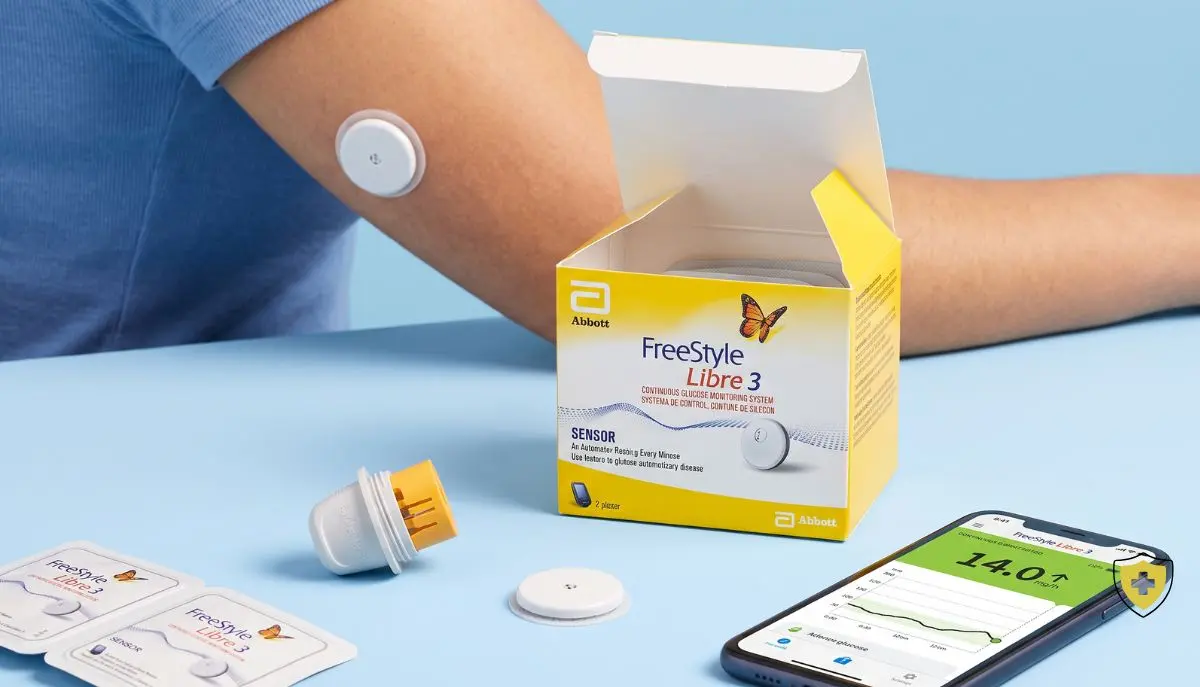
If you are starting continuous glucose monitoring (CGM), one of the simplest questions can sometimes be surprisingly confusing: how many FreeStyle Libre 3 sensors in a box?
If you have searched online, visited a pharmacy, checked an insurance prescription, or looked at a medical supply website, you may have seen quantities such as one sensor, two sensors, or even a 28-day or 30-day supply. That can make it difficult to understand exactly what you are buying.
For the original FreeStyle Libre 3 Sensor, the important point is that one individual sensor package contains one sensor. Abbott’s prescribing information for the U.S. described the FreeStyle Libre 3 prescription as 2 sensors per month, which generally represents approximately 28 days of sensor coverage because each original FreeStyle Libre 3 sensor was designed for up to 14 days of wear.
There is an important distinction here:
One sensor package is not necessarily the same thing as a monthly supply.
A monthly prescription could contain two individual sensor packages, with one sensor in each package.
At Alfa Healthcare Supply Inc., we understand why this question matters. When a glucose sensor becomes part of your everyday routine, knowing how many sensors you are receiving helps you plan your supplies, understand your prescription, and avoid surprises when it is time to replace a sensor.
This guide explains the answer in simple language and also covers sensor quantity, wear time, packaging, monthly supply, FreeStyle Libre 3 versus FreeStyle Libre 3 Plus, purchasing considerations, insurance, storage, and common questions.
The short answer is:
The original FreeStyle Libre 3 Sensor is supplied as one sensor per individual sensor package.
Abbott’s U.S. prescribing information listed 2 FreeStyle Libre 3 sensors per month for a typical pharmacy prescription.
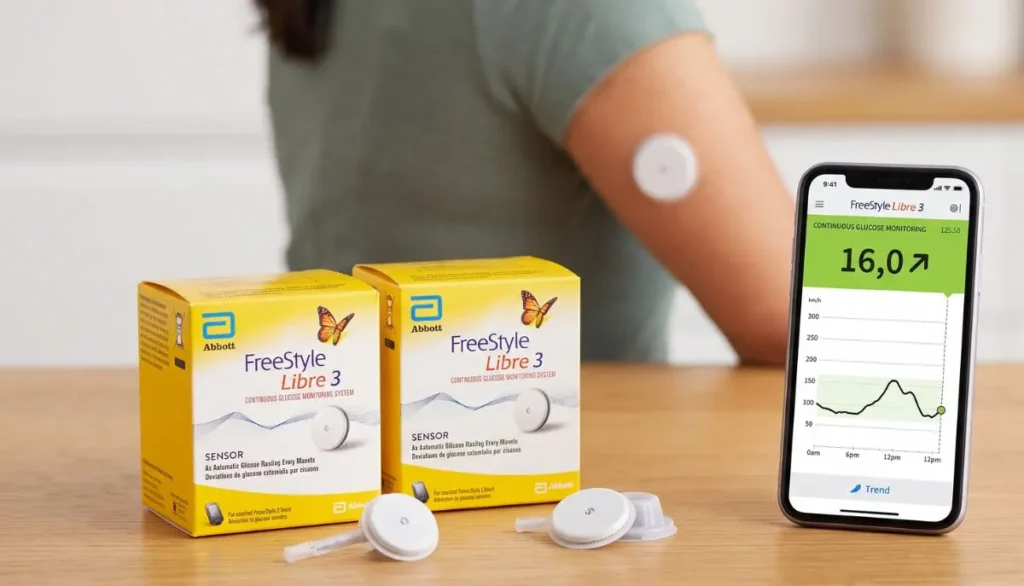
This means you should not automatically assume that a single FreeStyle Libre 3 sensor package contains two sensors.
A simple way to understand it is:
| Supply | Number of Sensors |
| 1 individual FreeStyle Libre 3 sensor package | 1 sensor |
| Typical 28-day supply | 2 sensors |
| 1 sensor wear period | Up to 14 days |
| 2 sensors | Approximately 28 days |
Abbott documentation confirms that the original FreeStyle Libre 3 sensor was designed for a 14-day wear period.
So if someone tells you that a prescription is for two FreeStyle Libre 3 sensors per month, that does not necessarily mean there are two sensors inside one individual box.
The prescription quantity and the physical packaging are two different things.
There are several reasons people become confused about FreeStyle Libre 3 packaging.
First, different FreeStyle Libre products have different packaging configurations.
Second, pharmacies and insurance companies often describe supplies by the number of sensors rather than by the number of physical packages.
Third, some websites may advertise a two-pack, which means the seller has grouped two individual sensors together for sale.
Fourth, the word “box” may mean different things depending on the seller.
For example, a website could list:
These descriptions are not necessarily describing the same physical package.
That is why it is better to look at the actual product description and quantity instead of assuming that every FreeStyle Libre product box contains the same number of sensors.
The FreeStyle Libre 3 is a continuous glucose monitoring system designed to help people monitor glucose levels using a small wearable sensor.
The sensor measures glucose in interstitial fluid and communicates glucose information to a compatible app or reader.
Abbott describes the FreeStyle Libre 3 sensor as a small, discreet CGM sensor. Abbott’s materials also describe the original FreeStyle Libre 3 sensor as having a wear duration of up to 14 days.
Instead of manually checking glucose every time with a traditional blood glucose meter, a CGM can provide ongoing glucose information.
For many people, this can make glucose monitoring more convenient.
A sensor can become part of everyday activities such as:
However, a CGM does not replace professional medical care. Your healthcare provider should determine whether a CGM is appropriate for you and how you should respond to glucose information.
This is one of the most important points to understand.
The original FreeStyle Libre 3 sensor was designed for up to 14 days of wear.
Because a month is longer than 14 days, a person using one sensor continuously would generally need more than one sensor during a month.
For example:
Sensor 1: Days 1–14
Sensor 2: Days 15–28
That gives approximately 28 days of monitoring.
This is why Abbott’s U.S. prescribing information described a quantity of 2 sensors per month for the original FreeStyle Libre 3 system.
So when you see “2 sensors per month,” think about it as a supply quantity rather than automatically thinking “two sensors inside one box.”
The original FreeStyle Libre 3 sensor was designed for up to 14 days of use.
After the sensor reached the end of its approved wear period, the user would remove the old sensor and apply a new sensor according to the manufacturer’s instructions.
This is different from the FreeStyle Libre 3 reader.
The sensor is a disposable wearable component.
The reader, when used, is a reusable device.
The smartphone app is software used with compatible devices.
Understanding these differences can help prevent confusion when purchasing supplies.
For the original FreeStyle Libre 3 sensor, a typical 28-day period required 2 sensors.
The calculation is straightforward:
14 days per sensor × 2 sensors = 28 days
This is one reason prescriptions and insurance quantities are commonly expressed as two sensors for approximately one month.
Abbott’s U.S. prescribing materials specifically listed 2 sensors/month for the original FreeStyle Libre 3 system.
Keep in mind that insurance benefit periods can use different definitions of a “month,” such as 28 days, 30 days, or a plan-specific refill period.
Therefore, your insurance company’s quantity limit may not exactly match the number of calendar days in a month.
If you are using the original FreeStyle Libre 3 sensor continuously and each sensor lasts its full 14-day period:
90 days ÷ 14 days = approximately 6.4 sensors
In practical supply planning, six sensors provide:
6 × 14 days = 84 days
Therefore, a typical three-month prescription quantity may be based on 6 sensors, depending on the prescription, payer rules, and dispensing practices.
Insurance plans can have their own quantity and refill requirements, so always confirm the actual quantity with your pharmacy, insurer, healthcare provider, or DME supplier.
For example, a payer policy published by Cigna in 2026 identifies the original FreeStyle Libre 3 Sensor as 1 sensor per box and describes a quantity limit of 2 sensors per 28 days.
That is a useful example of why “box” and “monthly quantity” should not be treated as identical terms.
Another source of confusion is the phrase two-pack.
A two-pack is generally a sales configuration containing two individual sensors.
For example, a retailer may sell:
FreeStyle Libre 3 Sensor — 1 sensor
or:
FreeStyle Libre 3 Sensors — 2-pack
The second listing does not necessarily mean Abbott originally packaged two sensors together in a single individual sensor package.
Instead, it can mean that the retailer is selling two sensor units together.
This is particularly important when comparing prices.
If one website lists a price for one sensor and another website lists a price for two sensors, the second price will naturally appear higher.
Always compare:
An individual FreeStyle Libre 3 sensor package is intended to provide the sensor and the components needed to apply it according to the manufacturer’s instructions.
Abbott’s getting-started documentation states that the sensor applicator contains one FreeStyle Libre 3 Sensor.
This is important because the applicator itself should not be mistaken for an additional sensor.
In simple terms:
One applicator = one sensor application.
You should follow the manufacturer’s instructions for application and use.
Do not attempt to reuse a disposable sensor or applicator unless the manufacturer specifically states that a component is reusable.
No, you should not assume that a FreeStyle Libre 3 sensor package includes a reader.
The sensor and reader are separate components.
Abbott’s materials describe the FreeStyle Libre 3 system as working with a compatible smartphone app or reader.
If you are purchasing sensors, check the product listing carefully.
A listing for:
FreeStyle Libre 3 Sensor
is different from:
FreeStyle Libre 3 Reader
and different again from:
FreeStyle Libre starter kit
A starter kit may contain multiple components, while an individual sensor package is intended for the sensor itself.
Yes, sellers may offer two sensors together as a two-pack.
This is consistent with the common two-sensor monthly quantity used for the original FreeStyle Libre 3 system in U.S. prescribing information.
However, the actual availability of the original FreeStyle Libre 3 has changed.
This brings us to an important 2025–2026 update.
If you are searching for how many FreeStyle Libre 3 sensors in a box today, it is important to distinguish the original FreeStyle Libre 3 from the newer FreeStyle Libre 3 Plus.
Abbott announced that the original FreeStyle Libre 3 and FreeStyle Libre 2 sensors would be discontinued in the U.S., with the transition to FreeStyle Libre 3 Plus and FreeStyle Libre 2 Plus. Abbott’s provider information states that the original FreeStyle Libre 3 and FreeStyle Libre 2 sensors were scheduled to be discontinued on September 30, 2025.
Abbott’s current FAQ also states that the company decided to discontinue the FreeStyle Libre 3 sensor following the introduction of the FreeStyle Libre 3 Plus sensor.
This means that someone shopping in 2026 may see fewer original FreeStyle Libre 3 products and more FreeStyle Libre 3 Plus products.
That distinction matters.
The original FreeStyle Libre 3 and FreeStyle Libre 3 Plus are not simply different names for the same product.
There are important differences.
According to Abbott’s safety information:
Because these products have different labeling, do not substitute one for the other based only on appearance.
If your prescription says FreeStyle Libre 3 Plus, make sure you receive the Plus version.
The FreeStyle Libre 3 Plus should be considered separately from the original FreeStyle Libre 3.
Current Abbott U.S. provider information describes 2 FreeStyle Libre 3 Plus sensors as a 30-day supply, with monthly filling.
However, this does not mean every physical box necessarily contains two sensors.
A 2026 Cigna quantity-management policy identifies the FreeStyle Libre 3 Plus Sensor as 1 sensor per box and lists 2 sensors per 30 days.
Therefore, the safest way to understand the quantity is:
1 individual sensor box = 1 sensor
Typical monthly supply = 2 sensors
The exact packaging you receive can depend on the supplier and market.
Knowing how many sensors you have is more than a shopping question.
It can help you plan your diabetes supplies.
Imagine that you receive a package and expect two sensors but discover that it contains only one.
If you misunderstand the quantity, you might think you have a full month’s supply when you actually have only one sensor.
This can create problems when the current sensor reaches the end of its wear period.
Before ordering, check:
These simple checks can save time and reduce confusion.
When shopping for a CGM sensor, do not look only at the product title.
Read the complete product description.
For example, look for wording such as:
Quantity: 1 sensor
or:
Quantity: 2 sensors
or:
Pack of 2
Also check whether the product is:
FreeStyle Libre 3
or:
FreeStyle Libre 3 Plus
This distinction is particularly important because of the transition away from the original FreeStyle Libre 3 in the U.S.
A product listing that says “Libre 3” should be checked carefully for the exact product version.
A medical supply store or DME supplier can be helpful when you have questions about product availability, prescriptions, documentation, or insurance.
Abbott states that FreeStyle Libre sensors and readers may be available through participating retail pharmacies and certain DME suppliers.
At Alfa Healthcare Supply Inc., our focus is on helping patients and caregivers find appropriate medical supplies and understand what they are ordering.
For people searching for diabetes supplies in New York, Alfa Healthcare Supply serves patients and caregivers across areas including Queens, Long Island, Brooklyn, the Bronx, Westchester, Manhattan, and other parts of New York.
You can explore the diabetes supply section of the Alfa Healthcare Supply website to see currently listed products.
Because product availability can change, always verify the exact sensor model and quantity before placing an order.
Insurance coverage can affect how many sensors you can receive at one time.
A prescription might specify two sensors per month, while an insurance plan may establish its own quantity limits and refill timing.
Medicare and commercial insurance plans can also have different eligibility and documentation requirements.
Abbott’s provider materials specifically note that Medicare and other payer criteria may apply.
Your coverage may depend on factors such as:
Do not assume that the retail cash price, insurance price, and DME price will be identical.
If you have insurance, ask your supplier or pharmacy how the product will be billed before ordering.
FreeStyle Libre products may be distributed through different channels.
A patient may receive a CGM through:
Abbott states that participating pharmacies and certain DME suppliers may provide FreeStyle Libre sensors and readers.
The correct channel can depend on your insurance plan.
For Medicare beneficiaries, DME requirements may apply.
For commercial insurance, pharmacy benefits may sometimes be used.
Because payer policies change, check with your insurer and healthcare provider rather than relying on an old prescription or website article.
Suppose you ordered two sensors but your shipment contains only one.
Do not immediately assume that the supplier made an error.
First check:
If the order clearly states two sensors and you received one, contact the supplier promptly.
Keep the packaging and shipping information available.
If insurance was used, you may also want to check how the claim was processed.
Keeping accurate records can make it easier for the supplier to investigate.
A sensor may sometimes need to be replaced before the expected wear period because of issues such as adhesive failure, insertion problems, signal loss, or connectivity problems.
A 2026 Cigna policy specifically identifies these types of situations when discussing possible quantity-limit exceptions.
If your sensor stops working unexpectedly, follow the manufacturer’s support instructions.
Abbott also provides sensor support resources for people experiencing sensor problems.
Do not simply assume that an early failure means you should permanently change your treatment routine.
Contact the appropriate manufacturer support team, supplier, pharmacist, or healthcare professional when needed.
Check the packaging before opening the product.
Abbott’s product instructions include warnings not to use a product if the package is damaged or the sterile barrier system has been compromised.
If you receive a damaged package:
This is especially important for medical devices.
When purchasing CGM sensors, expiration information matters.
Do not purchase a sensor solely because the price looks attractive.
Check the expiration date and make sure you have enough time to use the product according to its labeling.
If you are ordering multiple sensors at once, ask the supplier about the expiration dates if this information is not visible before purchase.
Proper storage and handling should also follow the manufacturer’s instructions.
Medical devices should be stored according to the manufacturer’s instructions.
Do not expose sensors to conditions outside the recommended storage requirements.
When purchasing multiple sensors, think about how many you realistically need and how long you will keep them before use.
Having a small supply available can be useful, but purchasing a large quantity without checking expiration dates can create unnecessary problems.
No.
The original FreeStyle Libre 3 sensor was designed for up to 14 days of wear.
Therefore, one sensor would not normally cover a full 28-day period.
Two sensors provide approximately:
14 days + 14 days = 28 days
For the FreeStyle Libre 3 Plus, the intended wear period is up to 15 days, and Abbott’s current U.S. provider information describes two sensors as a 30-day supply.
This difference is another reason to confirm which Libre sensor you are using.
No.
FreeStyle Libre 2 and FreeStyle Libre 3 are different products.
They have different sensor designs, apps, compatibility information, and labeling.
Abbott documentation states that FreeStyle Libre 2 and FreeStyle Libre 3 apps and sensors are not interchangeable.
This means you should not order a Libre 2 sensor simply because it looks similar to a Libre 3 sensor.
Always check your prescription and device compatibility.
No.
They are related products, but they have different specifications.
The original FreeStyle Libre 3 was designed for up to 14 days.
FreeStyle Libre 3 Plus is designed for up to 15 days. Abbott also lists differences in age eligibility and compatibility with compatible automated insulin dosing systems.
If your healthcare provider prescribed FreeStyle Libre 3 Plus, make sure you receive the Plus sensor.
Here are some mistakes that can easily happen.
The original FreeStyle Libre 3 individual sensor package is one sensor.
A monthly prescription may contain two sensors.
Those are different things.
Some retailers sell two individual sensors together as a two-pack.
Always check the quantity.
Libre 2, Libre 3, Libre 2 Plus, and Libre 3 Plus are not automatically interchangeable.
A lower advertised price may apply to one sensor rather than two.
Compare the price per sensor.
Your insurance plan may have specific quantity or refill requirements.
The original FreeStyle Libre 3 was discontinued in the U.S. in 2025, so current availability may differ from older articles and listings.
Let’s say a patient uses the original FreeStyle Libre 3 sensor.
The patient starts:
Sensor 1 → Day 1
The sensor is designed for up to 14 days.
Then:
Sensor 2 → Day 15
Sensor 2 provides another approximately 14 days.
Together:
2 sensors = approximately 28 days
Now compare that with a 30-day month.
There can be a small difference between the sensor supply period and the calendar month.
This is why prescription quantities and insurance refill dates may not always line up perfectly with the first and last day of a calendar month.
For the FreeStyle Libre 3 Plus, two sensors are currently described by Abbott as a 30-day supply because each sensor is designed for up to 15 days.
One reason the FreeStyle Libre system has attracted attention is its small sensor design.
Abbott describes the FreeStyle Libre 3 sensor as approximately the size of two stacked U.S. pennies.
The small design is intended to make the sensor relatively discreet when worn.
For many people, comfort and convenience matter just as much as the number of sensors in a package.
However, individual experiences can vary.
If you experience irritation, discomfort, repeated sensor problems, or other concerns, talk with your healthcare professional and follow the manufacturer’s instructions.
For the original FreeStyle Libre 3, Abbott’s instructions specify the back of the upper arm as the application site under the applicable labeling.
Alfa Healthcare Supply’s educational guide also explains the importance of following the approved placement instructions and avoiding areas such as scars, moles, stretch marks, lumps, and locations close to insulin injection sites.
Do not select a sensor location simply because another person uses it.
Different products can have different approved application sites.
Always follow the instructions for your specific sensor.
A CGM can reduce the need for routine fingerstick testing for many users, but there are circumstances where a blood glucose meter may still be needed.
Abbott’s safety information advises that if sensor glucose readings or alarms do not match symptoms or expectations, a fingerstick glucose measurement should be used for treatment decisions.
This is an important safety point.
Do not ignore symptoms simply because a CGM displays a number that looks reassuring.
Likewise, do not make major treatment changes without following your healthcare provider’s instructions.
A CGM is a monitoring tool.
It can provide information about glucose patterns and trends, but diabetes management is broader than simply looking at sensor numbers.
Your care plan may include:
Your healthcare provider can help you understand how your glucose information fits into your overall treatment plan.
At first, the question may sound like a simple shopping question.
But behind it are practical concerns:
Will I have enough sensors?
How often will I need to reorder?
How much will my insurance cover?
Is this a 28-day supply?
Does this package contain one or two sensors?
Is this the original Libre 3 or Libre 3 Plus?
These are reasonable questions.
A clear understanding of packaging can make ordering medical supplies much easier.
Before purchasing or accepting a shipment, check this list:
Look for:
FreeStyle Libre 3
or
FreeStyle Libre 3 Plus
Do not rely on a generic “Libre sensor” description.
Look for:
1 sensor
or:
2 sensors
Two individual boxes may mean two sensors.
Original FreeStyle Libre 3:
Up to 14 days
FreeStyle Libre 3 Plus:
Up to 15 days
Some products require a prescription depending on the product, location, and purchasing channel.
Coverage and quantity limits vary.
Make sure the product is within its labeled expiration period.
Alfa Healthcare Supply Inc. is a medical supply provider serving patients and caregivers in New York.
The company offers diabetes-related medical supplies and lists FreeStyle Libre products among its diabetic supply offerings.
When looking for a FreeStyle Libre sensor, it is important to confirm the exact product currently available because Abbott has transitioned from the original FreeStyle Libre 3 sensor to newer products in the U.S.
If you are searching for a FreeStyle Libre sensor, check the product name and quantity before ordering.
For questions about insurance, prescription requirements, or product availability, contacting the supplier directly can help you confirm the current details.
So, how many FreeStyle Libre 3 sensors in a box?
For the original FreeStyle Libre 3, the straightforward answer is:
One sensor per individual sensor package.
Because each original sensor was designed for up to 14 days, a typical monthly prescription was two sensors, providing approximately 28 days of sensor coverage. Abbott’s U.S. prescribing materials documented this two-sensor monthly quantity.
However, there is an important current update for anyone shopping in 2026: Abbott discontinued the original FreeStyle Libre 3 sensor in the U.S. and transitioned patients toward the FreeStyle Libre 3 Plus sensor.
The newer FreeStyle Libre 3 Plus sensor is designed for up to 15 days, and Abbott currently describes two sensors as a 30-day supply in its U.S. provider materials.
The best habit is therefore simple: check the exact sensor name, quantity, package description, and prescription before ordering.
At Alfa Healthcare Supply Inc., we understand that medical supplies are part of someone’s daily routine—not simply another product in a shopping cart. Taking a few moments to confirm what is inside the package can help make your CGM supply planning easier and more predictable.
If you are unsure whether you need the original FreeStyle Libre 3, FreeStyle Libre 3 Plus, a reader, or another diabetes supply, speak with your healthcare provider or medical supply provider before making a change.
Alfa Healthcare Supply Inc. is committed to helping patients and caregivers access medical supplies with clear information and practical support.
The original FreeStyle Libre 3 is supplied as one sensor per individual sensor package. Abbott’s U.S. prescribing information commonly described a monthly quantity of two sensors.
The original FreeStyle Libre 3 was designed for up to 14 days per sensor, so two sensors provide approximately 28 days.
An individual original FreeStyle Libre 3 sensor package contains one sensor. Some retailers may sell two individual sensors together as a two-pack, so check the product description.
The original FreeStyle Libre 3 sensor was designed for up to 14 days of wear.
For the original 14-day sensor, six sensors provide 84 days. Actual prescription quantities and insurance rules can vary.
Do not assume that it does. The sensor and reader are separate components.
Abbott announced the discontinuation of the original FreeStyle Libre 3 sensor in the U.S. and transition toward FreeStyle Libre 3 Plus.
Abbott’s current U.S. provider information describes two FreeStyle Libre 3 Plus sensors as a 30-day supply.
No. The Plus version has different labeling and specifications, including a 15-day wear period compared with the original sensor’s 14-day wear period.
Do not assume compatibility. Abbott states that FreeStyle Libre 2 and FreeStyle Libre 3 apps and sensors are not interchangeable.
Follow Abbott’s sensor support instructions and contact the manufacturer or supplier when appropriate. Do not change your diabetes treatment solely because a sensor has failed.
Do not use a product if its packaging or sterile barrier is compromised. Contact your supplier for assistance.
Abbott states that FreeStyle Libre sensors and readers are available through participating retail pharmacies and certain DME suppliers.