


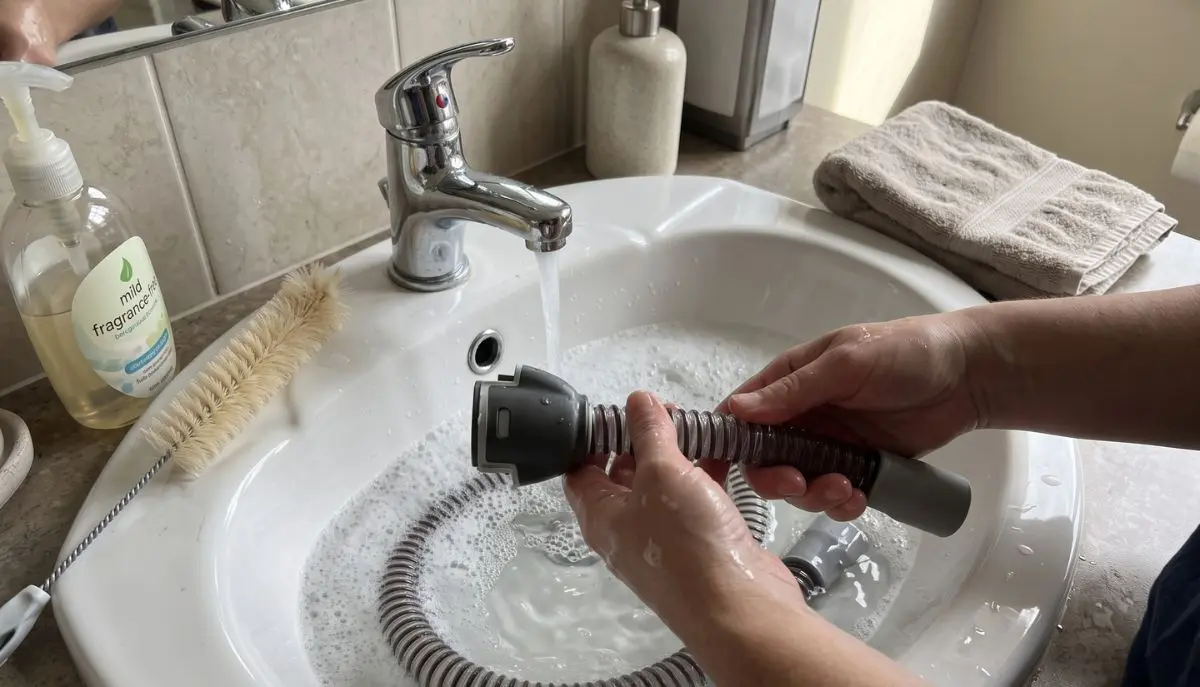
ResMed ClimateLineAir 11 Heated Tubing Cleaning
With a ResMed AirSense 11 and ResMed ClimateLineAir 11 heated tubing, cleaning the tubing is a vital component of your CPAP care routine. The tube transports the air you inhale from the CPAP apparatus to the mask, and it needs to be cleaned often and treated with care.
Fortunately, ResMed ClimateLineAir 11 heated tubing cleaning is easy. Normal household cleaning machines and equipment is sufficient for normal domestic use. ResMed recommends that the air tubing be cleaned once a week using warm water and mild household dishwashing liquid, then a further thorough rinse and air drying (away from direct sunlight or heat). Don’t put the tubing in a washing machine or dishwasher.
This informative guide from Alfa Healthcare Supply Inc. covers the use, non-use, inspection and re-connecting of tubing and when it should be replaced in simple terms.
What Is ClimateLineAir 11 Heated Tubing?
ClimateLineAir 11 is a heated air tubing for use with compatible ResMed AirSense 11 therapy systems. The heated tubing is a feature of the device’s climate-control system, unlike standard CPAP tubing which does not have this feature.The heated tubing is a special feature of the device’s climate-control system, as opposed to standard CPAP tubing.
It will be beneficial for those who have condensation or rain-out inside their CPAP tubing.
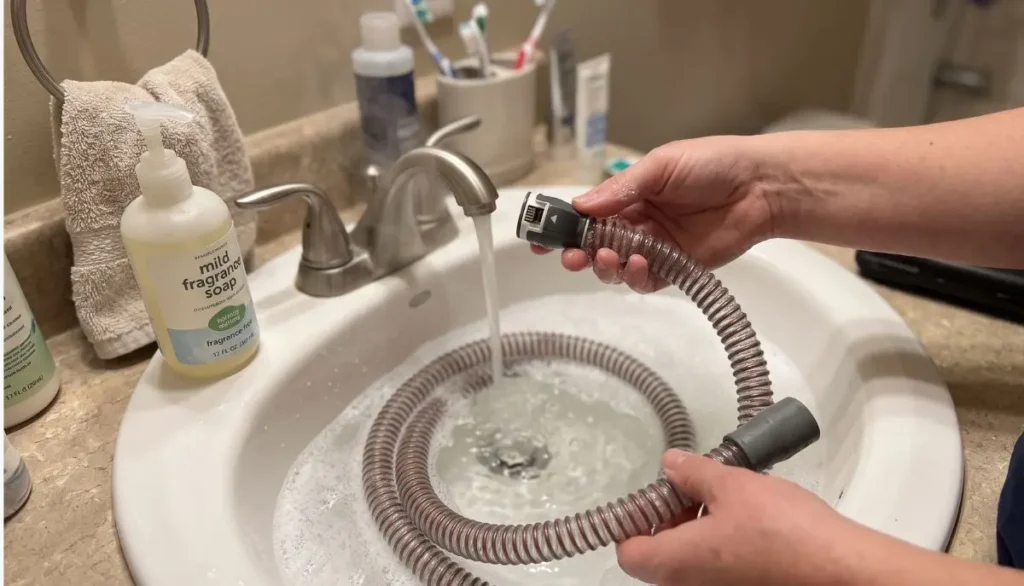
The ClimateLineAir 11 tubing is specifically designed to fit with the AirSense 11 humidification and temperature controls. ResMed’s specifications describe the ClimateLineAir 11 as a 2m heated tube and suggest regularly inspecting it for any holes, tears or cracks.
Cleaning it is similar to an ordinary household hose, but it’s a bit different because of the heating units inside the tube. It should be cleaned per the manufacturer’s recommendations and NOT with extreme chemicals, high temperatures or household appliances.
Why Is ResMed ClimateLineAir 11 Heated Tubing Cleaning Important?
The air pathway between your CPAP machine and mask includes your CPAP tubing. When it is used normally, the inner surface of the tubing may be moistened by humidification and environment.
The cleaning of the tubing promotes good condition of the equipment and hygiene for using the CPAP machine.
The air tubing is specifically recommended for cleaning once a week by ResMed. Other products should not be used in conjunction with the manufacturer’s instructions as they may cause damage to the tubing or interfere with the product.
Think of your tubing as one part of your regular CPAP routine:
Use → Disconnect → Clean → Rinse → Dry → Inspect → Reconnect
Following a simple routine can make CPAP equipment care much easier.
How Often Should You Clean ClimateLineAir 11 Tubing?
If used in a normal home environment, the ClimateLineAir 11 tubing needs to be cleaned weekly.
At present ResMed’s cleaning advice is to clean once a week for ClimateLineAir heated tubing. ResMed also recommends that the tubing is removed and stored in a clean and dry area between uses instead of in direct sunlight.
A simple routine
A simple routine
Every day:
- Disconnect the tubing as appropriate.
- Allow it to dry in a clean, dry area.
- Check for obvious problems.
Once a week:
- Wash the tubing with warm water and mild dishwashing liquid.
- Rinse thoroughly.
- Allow it to dry completely away from direct sunlight and heat.
Regularly:
- Inspect the tube for cracks, holes, tears, discoloration, or other visible deterioration.
- Replace damaged tubing rather than continuing to use it.
Also, the instructions on how the entire CPAP system works should be followed to the letter of the machine’s, mask’s and humidifier’s user guide.
What Do You Need for ClimateLineAir 11 Cleaning?
You do not need an expensive cleaning machine for normal home cleaning.
For routine tubing cleaning, you generally need:
- ClimateLineAir 11 heated tubing
- Warm, drinking-quality water
- Mild household dishwashing liquid
- A clean sink or basin
- A clean towel or drying area
The ResMed recommends using warm water and mild cleaning detergent for home-cleaning. The instruction on its guidance states that it is not recommended to use water that is above 131°F (55°C) for the ClimateLineAir 11 tubing.
You do not need
- A dishwasher
- A washing machine
- Bleach
- Chlorine-based cleaners
- Scented oils
- Harsh chemical cleaners
- Very hot water
Simple is better when caring for CPAP tubing.
Step-by-Step ResMed ClimateLineAir 11 Heated Tubing Cleaning
Step 1: Turn Off and Unplug Your AirSense 11
Turn off and unplug your CPAP machine before cleaning it.
This is a crucial safety measure, since this is a heated tubing and is attached to the CPAP machine.
ResMed’s cleaning instructions advise unplugging the CPAP machine before cleaning the air tubing.
Never start washing the tubing while the machine is running.
Step 2: Disconnect the Tubing Carefully
Remove the ClimateLineAir 11 tubing from the CPAP machine and mask.
When taking it out, be careful not to pull on the flexible tube hard, but be careful of pulling the cuff or connector.
In ResMed’s user guide for the ClimateLineAir, it is clear that the cuff should be removed by gently pulling the tubing away from the device. The guide also advises against the use of hands to hold and pull the tubing, as it could damage the tubing.
This is a small tip to help protect your tube.
Remember:
Pull from the connector—not the tube.
Step 3: Prepare Warm Water and Mild Dishwashing Liquid
Fill a clean sink or basin with warm drinking quality water.
Use a little bit of mild household dishwashing detergent.
The aim is not to make a strong chemical solution. All you need to get rid of the dirt in the tubing is a little mild soap.
The current ResMed cleaning advice is to use mild dishwashing soap and warm, potable water for cleaning the air tubing. It also warns against using more powerful cleaners that might be harmful to the tubing or leave behind an unwanted residue.
Step 4: Wash the Inside and Outside of the Tubing
Put the disconnected ClimateLineAir 11 tubing in the water.
Clean the tubing gently – inside and outside.
Be sure to clean inside the tube with the cleaning solution. The tubing may be slowly passed through the water in such a way that the solution will come into contact with the inside surface.
Strong scrubbing is not necessary.
The ClimateLineAir 11 user guide reads as follows: “Clean the air tubing in warm water with dish washing liquid and do not expose it to temperatures exceeding 131° F (55° C).”
Avoid aggressive handling
Do not:
- Bend the tubing sharply.
- Twist it forcefully.
- Pull on the flexible section.
- Scrub it aggressively.
- Use a stiff brush unless a specific manufacturer-approved procedure calls for it.
For ordinary home cleaning, gentle washing is the appropriate approach.
Step 5: Rinse the Tubing Thoroughly
Thoroughly clean ClimateLineAir 11 tubing with clean water after washing.
This step is crucial because you don’t want any detergent in the air pathway.
Rinse off as long as soap can be seen on the tubing.
ResMed’s instructions specifically call for thoroughly rinsing the air tubing after washing.
One of the simplest steps to miss is a thorough rinse, so take the time to do it.
Step 6: Allow the Tubing to Dry Completely
After rinsing, allow the tubing to dry naturally.
Place it in a clean, dry area away from:
- Direct sunlight
- Direct heat
- Radiators
- Heating vents
- Other strong heat sources
ResMed recommends allowing ClimateLineAir 11 tubing to dry out of direct sunlight and/or heat.
You can place it on a clean towel or in another clean location where air can circulate around it.
Do not rush the drying process
Avoid using a hair dryer, heater, or other direct heat source to speed up drying.
The tubing should be completely dry before you reconnect it to your CPAP system.
Step 7: Inspect the Tubing Before Reconnecting
Once the tubing is dry, inspect it carefully.
Look for:
- Holes
- Cracks
- Tears
- Splits
- Unusual discoloration
- Other visible deterioration
ResMed recommends regularly checking the air tubing and replacing it if holes, tears, or cracks are found.
This inspection only takes a few seconds but can become an important part of your routine.
What if you find damage?
Avoid taped on repair and continued use of damaged section.
A damaged CPAP tube can not work properly. If the tubing is damaged by holes, tears, cracks, or visible damage, it must be thrown away and replaced, according to ResMed.
Step 8: Reconnect the ClimateLineAir 11 Tubing
When the tube is dry and after your inspection, reconnect it.
Tightly attach one end to the air outlet on the AirSense 11.
Then, attach the other end to the finished mask.
ResMed’s ClimateLineAir 11 user guide provides the same simple reconnection process: secure the tubing to the air outlet of the device, and then secure the free end to the mask that is already assembled.
Double-check connections prior to your next therapy session.
ClimateLineAir 11 Cleaning at a Glance
| Step | What to Do |
| 1 | Turn off and unplug the CPAP machine |
| 2 | Disconnect the tubing carefully |
| 3 | Prepare warm drinking-quality water |
| 4 | Add mild household dishwashing liquid |
| 5 | Wash the inside and outside of the tube |
| 6 | Rinse thoroughly |
| 7 | Dry away from direct sunlight and heat |
| 8 | Inspect for damage |
| 9 | Reconnect when completely dry |
This is the basic ResMed ClimateLineAir 11 heated tubing cleaning routine for normal home care.
What Should You NOT Use to Clean ClimateLineAir 11?
Choosing the right cleaning product is just as important as cleaning the tube itself.
The ClimateLineAir 11 user guide warns against using:
- Bleach
- Chlorine-based solutions
- Aromatic-based solutions
- Moisturizing soaps
- Antibacterial soaps
- Scented oils
These products may damage the device or components, affect humidifier performance, or reduce product life.
What about vinegar?
There’s a critical difference here.
Some guidance from ResMed offers separate instructions for cleaning some humidifier parts, such as the humidifier water chamber with vinegar instructions. Usually, vinegar is not the best solution for ClimateLineAir 11 tubing, but this isn’t always the case.
Clean the heated tubing according to the manufacturer’s instructions for cleaning the tubing, not by applying a humidifier cleaning method to the tube.
Can You Put ClimateLineAir 11 Tubing in a Dishwasher?
No.
Do not put the ClimateLineAir 11 heated tubing in the dishwasher.
ResMed’s instructions make it clear not to wash the tubing in the dishwasher or washing machine.
This is a big distinction between some of the elements of CPAP devices.
For instance AirSense 11 humidifier components might also possess their own dishwasher directions. This does not imply that the heated tubing can be treated similarly.
Always refer to the cleaning instructions of the individual component.
Can You Wash ClimateLineAir 11 Tubing in a Washing Machine?
No.
Avoid placing ClimateLineAir 11 heated tubing in washing machines.
A washing machine is subjected to mechanical action, detergent, water pressure, and temperatures which are not suitable to the manufacturer’s recommended home-cleaning procedure.
Rather, do hand wash gently with warm water and gentle household dishwashing liquid.
Can You Use Hot Water?
Don’t use hot water.
According to the ResMed’s ClimateLineAir 11 user guide, the tubing shouldn’t be cleaned at temperatures exceeding 131°F (55°C).
For normal household cleaning, warm water will do.
The tube doesn’t require boiling water or extremely hot water to clean.
Actually, over heating can harm the tubing or its elements.
Can You Use Bleach?
No.
Bleach should not be used to clean ClimateLineAir 11 tubing.
The ResMed user guide specifically cautions against bleach and chlorine-based solutions.
The same applies to several other strong or scented cleaning products.
When cleaning medical equipment at home, stronger does not automatically mean better.
What About CPAP Cleaning Machines?
Many CPAP users have questions about ozone-based or other automated cleaning systems.
For ClimateLineAir 11, it is important not to replace the manufacturer’s cleaning instructions with an unapproved cleaning method.
ResMed’s user guide warns that exposure to ozone or other gases may damage the device, and such damage may not be covered by the manufacturer’s limited warranty.
For routine home cleaning, follow the manufacturer’s recommended manual cleaning procedure.
If you are unsure about a particular cleaning device or disinfectant, check the current ResMed documentation or ask your healthcare provider or equipment supplier before using it.
How Do You Know When ClimateLineAir 11 Tubing Needs Replacement?
Cleaning and replacement are two different things.
Cleaning is designed to help maintain the tubing. It cannot repair physical damage.
Inspect your ClimateLineAir 11 regularly for:
Cracks
Small cracks can become larger with continued use.
Tears
A torn tube should be replaced.
Holes
Any hole in the tubing can affect the air pathway.
Discoloration or deterioration
Visible deterioration is a reason to follow the manufacturer’s replacement guidance.
ResMed specifically says to replace tubing if holes, tears, or cracks are present. Its user guide also says that visible deterioration such as cracking, discoloration, or tears is a reason to discard and replace the component.
How Long Does ClimateLineAir 11 Tubing Last?
The replacement interval can depend on the condition of the tubing and the manufacturer’s recommendations for the particular product.
ResMed’s product information for ClimateLineAir 11 lists a six-month design life for the tubing.
However, do not wait for a calendar date if the tubing becomes damaged.
If you notice cracks, tears, holes, or other visible deterioration, the tubing may need replacement sooner.
Likewise, follow your healthcare provider, DME supplier, insurance requirements, and the manufacturer’s current recommendations when determining replacement needs.
Why Does My ClimateLineAir 11 Tube Get Wet Inside?
Moisture inside CPAP tubing can occur when humidified air cools as it travels through the tube.
This is commonly called rainout.
The heated ClimateLineAir system is designed to help maintain the temperature of humidified air and can help reduce condensation in the tubing.
If you notice excessive water in the tube, check your AirSense 11 climate-control settings and review the device user guide.
Do not attempt to solve condensation problems by using extremely hot water during cleaning or by applying unapproved treatments to the tubing.
Does Cleaning Affect the Heated Function?
Proper cleaning should follow the manufacturer’s instructions.
The ClimateLineAir 11 contains heating components, so it should be handled carefully.
Avoid:
- Excessive heat
- Aggressive pulling
- Sharp bends
- Harsh chemicals
- Washing machines
- Dishwashers
If the tubing appears damaged or if you notice a device or tubing error, consult the appropriate ResMed documentation or a qualified healthcare/equipment professional.
ResMed provides product support and documentation for ClimateLineAir accessories.
What If My ClimateLineAir 11 Tubing Does Not Feel Warm?
Do not assume that a tube is defective simply because it does not feel very hot.
The ClimateLineAir system is intended to control temperature as part of the AirSense climate-control system. Its purpose is not necessarily to make the tubing feel extremely hot to the touch.
If you believe the heated tubing is not functioning correctly:
- Confirm that the tubing is properly connected.
- Check the AirSense 11 settings.
- Review the device’s instructions.
- Look for error messages.
- Inspect the tubing for damage.
- Contact your equipment provider or ResMed support if the problem continues.
ResMed provides specific support resources for questions about heated tubing, including why heated tubing may not feel warm.
ClimateLineAir 11 Cleaning vs. Disinfection
For most people using CPAP at home, routine cleaning is different from clinical disinfection.
The standard home-care instructions call for weekly washing with warm water and mild detergent, followed by rinsing and drying.
ResMed also publishes separate disinfection procedures for specific clinical situations and equipment. Those procedures are not the same as ordinary home cleaning.
For example, ResMed’s AirSense 11 disinfection documentation contains more detailed procedures involving specific detergents, brushing, soaking, rinsing, and validated disinfection processes.
Therefore, do not take a clinical disinfection procedure and assume it is necessary for ordinary single-user home care.
For home use, follow the current user guide supplied with your equipment.
A Simple Weekly ClimateLineAir 11 Cleaning Routine
A routine makes CPAP cleaning easier.
You can use this simple sequence every week:
Sunday — or any convenient day
1. Unplug
Disconnect your AirSense 11 from power.
2. Disconnect
Remove the ClimateLineAir 11 tubing from the machine and mask.
3. Wash
Use warm water and mild household dishwashing liquid.
4. Rinse
Rinse the inside and outside thoroughly.
5. Dry
Place the tubing somewhere clean and dry, away from direct sunlight and heat.
6. Inspect
Look for cracks, holes, tears, and visible deterioration.
7. Reconnect
Once completely dry, reconnect the tubing to your AirSense 11 and mask.
The entire routine can become a normal part of your CPAP care.
Common ClimateLineAir 11 Cleaning Mistakes
Mistake 1: Using Very Hot Water
Hotter is not better.
Stay within the manufacturer’s recommended temperature limit.
Mistake 2: Using Bleach
Bleach can damage CPAP components and is specifically discouraged by ResMed for this tubing.
Mistake 3: Putting the Tube in a Dishwasher
The heated tubing should not go into a dishwasher.
Mistake 4: Washing It in a Machine
ClimateLineAir 11 tubing should be hand-washed.
Mistake 5: Drying It in Direct Sunlight
ResMed recommends drying the tubing away from direct sunlight and heat.
Mistake 6: Pulling the Tube Instead of the Cuff
Repeatedly pulling the flexible section can cause unnecessary stress.
Hold the connector/cuff when disconnecting.
Mistake 7: Reconnecting It While Wet
Allow the tubing to dry before reconnecting it to your CPAP system.
Mistake 8: Ignoring Cracks
Cleaning will not fix physical damage.
If the tubing is cracked, torn, or has holes, replace it.
ClimateLineAir 11 Cleaning Checklist
Save this simple checklist for your CPAP routine:
☐ Unplug AirSense 11
☐ Disconnect ClimateLineAir 11
☐ Use warm drinking-quality water
☐ Add mild household dishwashing liquid
☐ Wash inside and outside
☐ Rinse thoroughly
☐ Do not exceed 131°F / 55°C
☐ Do not use dishwasher
☐ Do not use washing machine
☐ Avoid bleach and chlorine
☐ Avoid scented oils and harsh cleaners
☐ Dry away from direct sunlight and heat
☐ Inspect for cracks, tears, and holes
☐ Reconnect only when completely dry
Practical Tips for Better CPAP Equipment Care
Good CPAP care does not have to become a complicated project.
A few simple habits can make it easier:
Keep your cleaning supplies together
Store your mild dishwashing liquid and cleaning supplies in one place. This makes your weekly routine easier to remember.
Give the tubing enough drying time
Do not clean the tube immediately before you need to use it if you can avoid doing so. Give it enough time to dry naturally.
Check the tube while you clean it
Cleaning provides an excellent opportunity to inspect the tubing.
Follow component-specific instructions
Your mask, humidifier chamber, air filter, and heated tubing may have different cleaning requirements.
Keep manufacturer instructions available
If you are unsure about a cleaning method, check the current ResMed user guide for your equipment.
ResMed provides product documentation and support resources for ClimateLineAir accessories.
Why Manufacturer Instructions Matter
CPAP equipment is medical equipment, and different components can have different care requirements.
For example, the cleaning instructions for a humidifier water chamber are not automatically the same as the instructions for heated tubing.
The ClimateLineAir 11 user guide provides specific instructions for disconnecting, cleaning, checking, and reconnecting the tubing.
Using the correct instructions helps avoid accidental damage.
This is especially important with heated tubing because it is more than just a simple plastic hose.
ResMed ClimateLineAir 11 Heated Tubing Cleaning: The Easy Version
If you only remember five things from this article, remember these:
1. Clean weekly.
ResMed recommends weekly cleaning of the air tubing.
2. Use warm water and mild dishwashing liquid.
3. Rinse thoroughly.
4. Dry away from direct sunlight and heat.
5. Replace the tube if you find cracks, holes, tears, or other visible deterioration.
That is the foundation of proper resmed climatelineair 11 heated tubing cleaning for normal home use.
Get CPAP Supplies From Alfa Healthcare Supply Inc.
At Alfa Healthcare Supply Inc., we understand that CPAP therapy is part of someone’s everyday routine. Small equipment-care questions—such as how to clean tubing, when to inspect a component, or when a replacement may be needed—can make a real difference in maintaining a consistent routine.
Alfa Healthcare Supply Inc. is a medical supply provider serving customers with a range of healthcare and durable medical equipment supplies.
If you need CPAP equipment or replacement supplies, you can explore the available products and resources through the Alfa Healthcare Supply website:
When purchasing replacement CPAP tubing, always verify compatibility with your specific machine. ClimateLineAir 11 tubing is designed for AirSense 11 systems, while other ClimateLineAir products may be designed for different ResMed platforms. ResMed’s product documentation should be checked before purchasing a replacement.
Final Thoughts
Proper resmed climatelineair 11 heated tubing cleaning does not need to be difficult.
A weekly wash with warm water and mild household dishwashing liquid, followed by a thorough rinse and careful air-drying, is the basic home-cleaning routine recommended by ResMed. Avoid dishwashers, washing machines, excessive heat, bleach, chlorine-based products, scented oils, and other unsuitable cleaning solutions.
Most importantly, make tubing inspection part of your routine. A clean tube is important, but a damaged tube should not simply be cleaned and reused. ResMed recommends replacing tubing when holes, tears, cracks, or other visible deterioration are found.
For anyone using an AirSense 11 with ClimateLineAir 11, a few minutes of simple care each week can help keep CPAP equipment organized, clean, and ready for the next night’s therapy.
Frequently Asked Questions
How often should I clean my ClimateLineAir 11 heated tubing?
For normal home use, ResMed recommends cleaning the air tubing weekly.
What should I use to clean ClimateLineAir 11 tubing?
Use warm water and mild household dishwashing liquid. Rinse the tubing thoroughly afterward.
Can I put ClimateLineAir 11 in the dishwasher?
No. ResMed says not to wash the heated tubing in a dishwasher or washing machine.
Can I use bleach on ClimateLineAir 11?
No. ResMed’s user guide specifically advises against bleach and chlorine-based solutions.
Can I use vinegar to clean the heated tubing?
Do not automatically apply vinegar cleaning instructions intended for the humidifier chamber to the heated tubing. Follow the tubing-specific ResMed instructions instead.
What temperature should I use?
Use warm water and do not wash the ClimateLineAir 11 tubing at temperatures above 131°F (55°C).
How should I dry the tubing?
Allow it to air-dry in a clean location away from direct sunlight and heat.
What if I see a crack in my tubing?
Replace damaged tubing. ResMed recommends replacing tubing if you find holes, tears, or cracks.
Can I use a CPAP cleaning machine?
For routine home care, follow ResMed’s recommended manual cleaning instructions. Avoid assuming that an automated ozone or other cleaning system is appropriate for your equipment.
Why is there water inside my ClimateLineAir 11?
Water can occur when humidified air condenses as it travels through the tubing. ClimateLineAir’s heated design is intended to help reduce condensation.
Does ClimateLineAir 11 need to be completely dry before use?
It is good practice to allow the tubing to dry completely before reconnecting it to the CPAP system, consistent with the manufacturer’s cleaning instructions.
How often should I inspect my tubing?
Inspect it regularly, particularly during your cleaning routine. Look for cracks, tears, holes, discoloration, or other visible deterioration.
Medical Note: This article is for general equipment-care information and does not replace the user guide supplied with your ResMed equipment or advice from your healthcare professional. If you experience therapy problems, equipment errors, breathing difficulties, or concerns about your CPAP treatment, contact your healthcare provider or qualified equipment professional.