


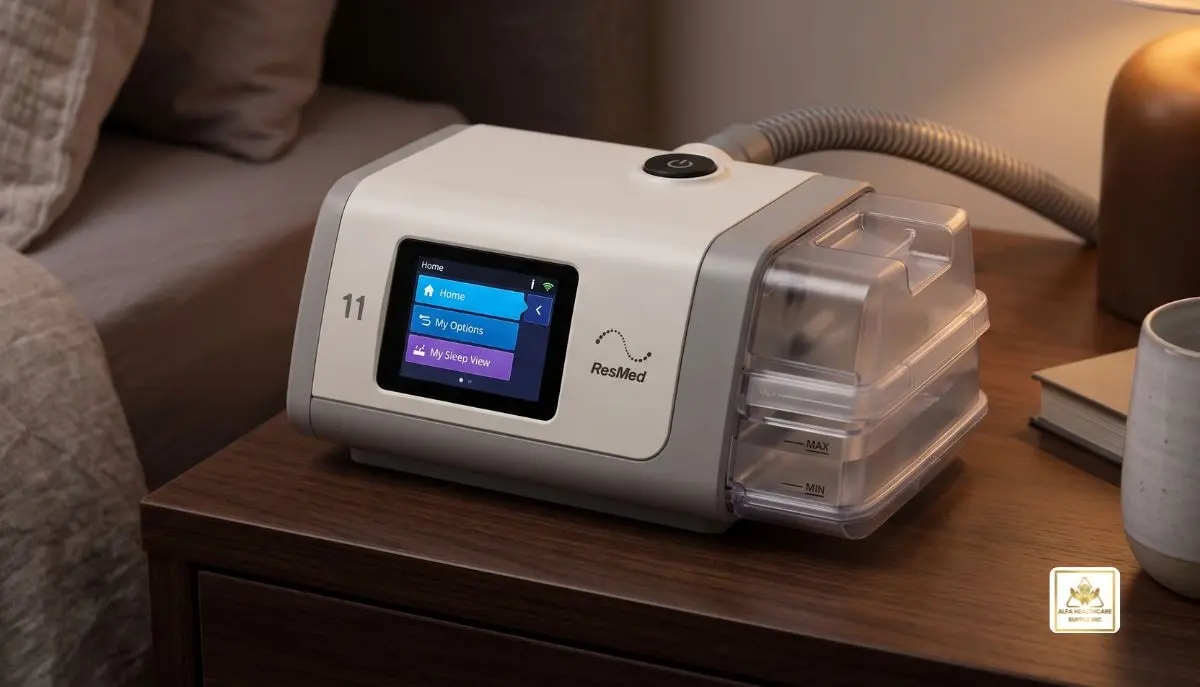
AirSense 11 Bilevel:
The right sleep therapy machine can make a huge difference in your sleep regime. When you’re looking into the AirSense 11 bilevel, you need to know what it’s capable of, how bilevel therapy works, and which AirSense device might be right for you.
We believe at Alfa Healthcare Supply Inc, that good healthcare begins with understanding and information. The equipment and all the procedures associated with it should be understandable to patients and caregivers before being purchased. This guide explains all the features, benefits, accessories and key buying considerations when purchasing the AirSense 11 or the bilevel version.
Important clarification: The ResMed AirSense 11 is a CPAP/APAP machine, not a bilevel machine. The ResMed AirCurve 11 is the bilevel product family. Understanding this difference is essential when searching for an AirSense 11 bilevel device.
What is the AirSense 11 Bilevel?
AirSense 11 bilevel refers to the use of a sleep therapy machine that is more contemporary in design, and offers the comfort of breathing support. ResMed, however, has split its AirSense and AirCurve product lines based on the therapy they provide.
Continuous or automatically adjusting positive airway pressure is the way the AirSense 11 can be used to treat OSA. It delivers a constant pressure or a pressure within a set range depending on the model it is.
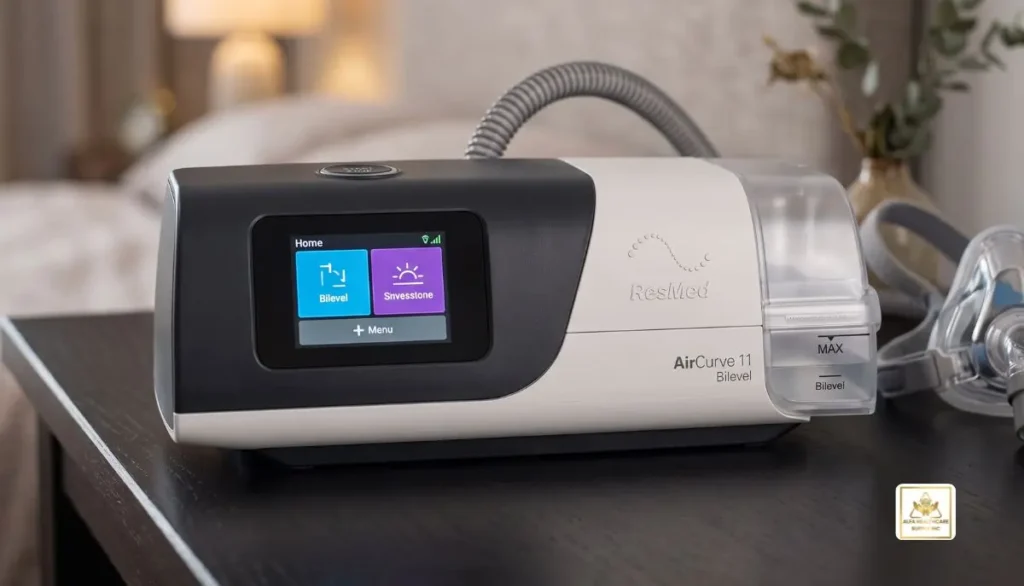
The AirCurve 11 is specifically made for bilevel positive airway pressure (BiPAP or bilevel PAP) therapy. It provides a greater pressure on inhale and a lower pressure on exhale.
When the doctor prescribes bilevel therapy and you are considering the AirCurve 11 VAuto or AirCurve 11 ASV, be sure to ask what device is recommended for you.
AirSense 11 vs. AirCurve 11: What Is the Difference?
Knowing the difference between both of these machines will help you to avoid ordering the wrong machine.
ResMed AirSense 11
The AirSense 11 is a contemporary sleep apnea machine indicated for patients that need CPAP or APAP treatment.
Its key features include:
- Fixed-pressure CPAP or automatic pressure adjustment, depending on the model.
- An integrated humidifier to help add moisture to the airflow.
- A touchscreen for navigating device settings.
- Access to the ResMed myAir app for therapy support and progress information.
- Personal Therapy Assistant and Care Check-In features designed to support users as they begin treatment.
These features can make daily therapy easier to manage, especially for people who are new to sleep apnea treatment.
ResMed AirCurve 11
The AirCurve 11 family provides bilevel therapy for patients who need two pressure levels.
Its features include:
- Higher inspiratory pressure and lower expiratory pressure.
- Different models designed for different prescribed therapy needs.
- An integrated humidifier.
- A touchscreen interface.
- Access to myAir and additional digital support features.
The AirCurve 11 VAuto is designed for certain patients with obstructive sleep apnea who benefit from bilevel support. The AirCurve 11 ASV is intended for specific breathing disorders, including certain forms of central sleep apnea.
Which is better? Neither machine is automatically better for everyone. The right choice depends on your diagnosis, prescription, breathing patterns, comfort requirements, and clinician’s recommendations.
How Does Bilevel Therapy Work?
Bilevel therapy uses two pressure levels to support breathing during sleep.
Inspiratory positive airway pressure (IPAP) is the higher pressure delivered when you breathe in.
Expiratory positive airway pressure (EPAP) is the lower pressure delivered when you breathe out.
This difference can make it easier for some patients to exhale against the air flow, than using a single pressure level. Bilevel therapy might be considered if standard CPAP therapy is not appropriate, or if a specific medical condition necessitates use of a different type of breathing assistance.
But not all sleep apnea sufferers need the bilevel treatment. Your health care provider should evaluate you to decide if you need CPAP, APAP, bilevel PAP, or other therapy.
If you have a prescription for bilevel therapy, be sure to research the AirCurve 11 range when considering the AirSense 11 bilevel.
Key Features to Consider
Whether you are comparing the AirSense 11 with an AirCurve 11 bilevel machine or researching replacement equipment, consider the following features.
1. User-Friendly Touchscreen
Using a simple interface can help to make nighttime routines more manageable. The AirSense 11 and AirCurve 11 come with touchscreen controls, which offer navigation to various settings and comfort options.
Each patient should be instructed to use the prescribed pressure with their specific device and not adjust treatment pressures without medical advice.
2. Integrated Humidification
For some PAP users, dry air may lead to their throat being irritated, uncomfortable and dry.
These device families contain an integrated humidifier which increases the moisture in the air flow. Clinical advice and room temperature/humidity conditions will dictate the appropriate setting.
The use of tubing that is compatible with the therapy machine as well as maintaining the water chamber as per the manufacturer’s instructions can also help to support comfortable therapy.
3. Digital Therapy Support
ResMed’s myAir app has been designed to support patients to understand and follow their therapy schedule. Depending on compatible device and services offered, users can be provided with therapy information, coaching, and setup instructions.
While these tools may help during the early stages of treatment, information on apps is not a substitute for medical advice or follow-up appointments.
4. Comfort Settings
Patients may find it easier to adjust to airflow when starting a session with certain comfort features, like ramp settings.
Machines and prescriptions vary in the settings available. Do not make changes to clinical settings without talking to your equipment supplier or clinician if you have trouble exhaling, high pressure, leaks or discomfort.
5. Mask and Tubing Compatibility
To provide therapy effectively, a PAP machine should have the correct tubing and mask.
There are various types of masks, such as nasal masks, nasal pillow masks, and full face masks. This will vary depending on your breathing patterns, sleeping position, facial fit and treatment requirements.
When purchasing accessories for the AirSense 11 bilevel search, check the specific AirSense model. Some compatibility may exist between AirSense 11 and AirCurve 11 accessories but it is recommended to check each accessory with the manufacturer’s compatibility list.
Who May Need a Bilevel Machine?
Bilevel therapy could be considered for individuals who require a different pressure experience than CPAP or those who have a medical condition for which bilevel therapy is prescribed.
Your clinician may evaluate factors such as:
- Whether you have obstructive or central sleep apnea.
- Your response to CPAP or APAP therapy.
- Whether breathing out against the prescribed pressure is difficult.
- Your sleep study results and other medical needs.
- Whether a particular bilevel mode is appropriate.
When choosing a bilevel device, don’t just rely on online reviews or the belief that two pressure levels are always more comfortable. The treatment should be tailored to your clinical needs.
How to Choose the Right Machine
If you are thinking about purchasing the AirSense 11 bilevel, apply the following guidelines to guide your decision.
Step 1: Review your prescription. Confirm whether your provider prescribed CPAP, APAP, bilevel PAP, or another therapy.
Step 2: Identify the exact device. If your prescription calls for bilevel therapy, ask whether an AirCurve 11 model is appropriate instead of an AirSense 11.
Step 3: Check the model and accessories. Verify the machine, mask, tubing, humidifier chamber, filters, and power supply requirements.
Step 4: Review insurance coverage. Coverage, documentation requirements, out-of-pocket costs, and supplier arrangements vary by plan.
Step 5: Ask about setup and support. Find out whether your supplier can help you understand equipment use, routine cleaning, replacement supplies, and troubleshooting.
These steps can help reduce confusion and make it easier to start therapy with the correct equipment.
Buying Considerations for AirSense 11 and AirCurve 11
When buying a sleep therapy machine, consider the entire equipment specifications, not just the machine.
Your purchase considerations may include:
- The prescribed machine and therapy mode.
- A compatible mask and headgear.
- Standard or heated tubing, as appropriate.
- The humidifier water chamber.
- Replacement filters and other approved supplies.
- Warranty, servicing, and supplier support.
- Prescription and insurance documentation.
The prices vary according to accessories, supplier and insurance benefits. Request a straight-forward quotation that includes details of extras and whether there are extras to sell.
Customers looking into Alfa Healthcare Supply Inc can find more information about equipment options and view available healthcare supplies via our website and make inquiries about respiratory and durable medical equipment.
Maintenance Tips for Long-Term Use
Regular care helps keep PAP equipment clean and ready for use.
- Clean the mask regularly: Follow the manufacturer’s cleaning instructions for the cushion, frame, and headgear.
- Maintain the humidifier: Empty and clean the water chamber as directed.
- Check the tubing: Inspect it for visible damage, residue, or signs of wear.
- Replace filters and supplies: Follow the device instructions and your supplier’s recommended schedule.
- Keep the machine in a suitable location: Place it on a stable, dry surface with adequate airflow around the air intake.
- Report ongoing problems: Contact your healthcare professional if therapy remains uncomfortable or your symptoms worsen.
Always use the recommended cleaning products and replacement parts for your particular device. Avoid modifying the equipment or using unapproved accessories.
Common Mistakes to Avoid
When shopping for an AirSense 11 bilevel device, a few simple precautions can help prevent unnecessary expense and frustration.
Confusing AirSense 11 with AirCurve 11: These product families deliver different types of therapy.
Choosing based only on price: A less expensive machine is not a suitable substitute if it does not match your prescription.
Assuming all masks fit every machine: Confirm the connector, tubing, and mask compatibility before ordering.
Changing pressure settings without guidance: Prescribed pressure settings should be managed by your healthcare professional.
Ignoring maintenance: Dirty or worn accessories can affect comfort, hygiene, and equipment performance.
Taking time to verify the model and prescription can make your buying experience more straightforward.
Final Thoughts: AirSense 11 Bilevel
The initial step to selecting the best sleep treatment gear is to know what kind of therapy you require. While many people will search for AirSense 11 bilevel, the main difference is AirSense 11 is a CPAP/APAP family, whereas AirCurve 11 is ResMed’s bilevel family.
The right machine, the right fitted mask, the right compatible accessories and regular maintenance can make it easier to confidently follow your prescribed therapy.
Alfa Healthcare Supply Inc. makes healthcare supply information easier to understand to help patients and caregivers making research on respiratory equipment. Check your prescription, compare the right product family and consult a qualified health care professional or equipment supplier before deciding.
Frequently Asked Questions: AirSense 11 Bilevel
1. Is the AirSense 11 a bilevel machine?
No. The ResMed AirSense 11 is a CPAP/APAP machine. The ResMed AirCurve 11 is the product family that provides bilevel therapy.
2. What is the difference between AirSense 11 and AirCurve 11?
AirSense 11 machines provide fixed or automatically adjusting single-level PAP therapy, depending on the model. AirCurve 11 bilevel machines provide separate inspiratory and expiratory pressure levels.
3. Is the AirCurve 11 better than the AirSense 11?
Not for everyone. The appropriate machine depends on your diagnosis, prescription, and response to treatment. Your clinician can determine which therapy is right for you.
4. Can I use an AirSense 11 mask with an AirCurve 11?
Some masks and accessories may be compatible with both families, but compatibility depends on the specific equipment. Check the manufacturer’s compatibility guidance before purchasing.
5. Does the AirCurve 11 have a humidifier?
AirCurve 11 configurations include an integrated humidification system. Confirm the included water chamber and tubing configuration with your supplier before ordering.
6. Can I buy an AirCurve 11 without a prescription?
In the United States, a prescription is required for an AirCurve 11 bilevel PAP device. Suppliers and insurers may also require supporting documentation.
7. Does insurance cover bilevel PAP machines?
Coverage depends on your insurance plan, medical documentation, eligibility criteria, and supplier requirements. Contact your insurer and equipment supplier to understand your benefits before purchasing.
8. Where can I find AirSense 11 or AirCurve 11 supplies?
You can visit Alfa Healthcare Supply Inc. to explore healthcare supply options. Confirm current availability, the exact product model, and compatibility before placing an order.
Medical disclaimer: This article is for general educational purposes only and does not replace medical advice, diagnosis, or treatment. Always follow your healthcare professional’s instructions and the manufacturer’s user guide.