


Managing diabetes is not simply about checking a number on a glucose meter. It is part of everyday life—planning meals, monitoring blood sugar, following a treatment plan, caring for your feet, keeping supplies available, and knowing where to turn when something needs to be replaced.
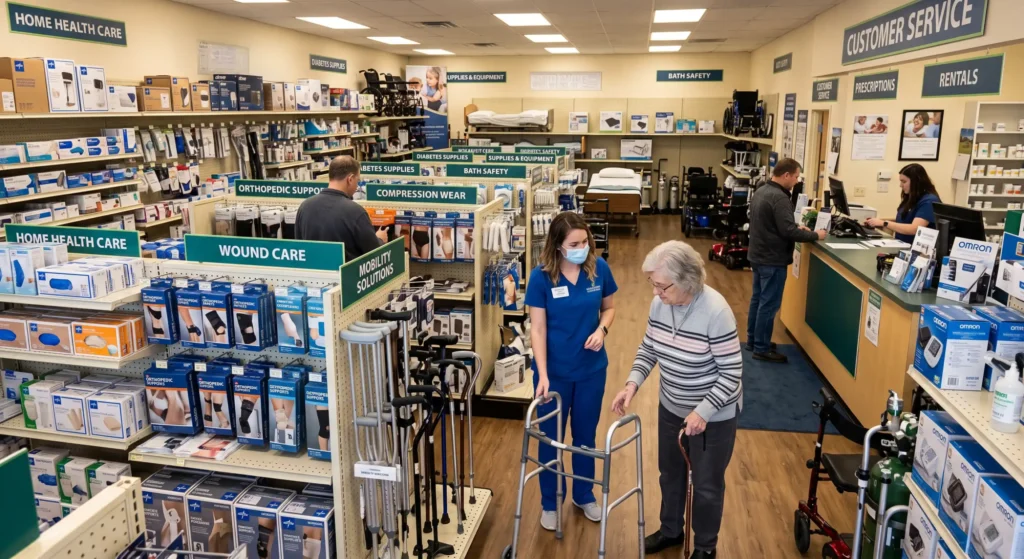
For patients and caregivers searching for a diabetes supply store Bronx NY, having access to dependable diabetes products can make daily routines feel more manageable. Alfa Healthcare Supply Inc. is a New York durable medical equipment and medical supply provider that serves patients and healthcare providers throughout the Bronx, Queens, Brooklyn, Manhattan, Long Island, Westchester, and other areas of New York. The company lists diabetes supplies among its core product categories, including blood glucose monitors, testing supplies, diabetic footwear, and related diabetes-management products.
What is a Diabetes Supply Store?
A diabetes supply store is a healthcare supplier that provides products used to support diabetes management and related daily-care needs. Depending on the supplier, the selection may include glucose-monitoring equipment, testing accessories, insulin-related supplies, diabetic footwear, and foot-care products.
For someone living with diabetes, convenience matters. Running out of test strips or discovering that a glucose-monitoring accessory needs replacement can interrupt an established routine. A dependable supplier can make it easier to keep commonly used products available.
At Alfa Healthcare Supply Inc., diabetic supplies are part of a broader healthcare catalog that also includes durable medical equipment, respiratory products, orthopedic supports, incontinence supplies, mobility equipment, and home-care products.
Diabetes Supplies Available Through Alfa Healthcare Supply Inc.
Every person’s diabetes-management needs are different. Products should be selected according to the individual’s healthcare plan and, when applicable, the recommendations of their physician or other qualified healthcare professional.
Common diabetes-related products include:
Blood Glucose Monitors
Blood glucose meters are commonly used to measure blood sugar from a small blood sample. A reliable monitor can become an important part of a person’s daily routine.
When selecting a glucose monitor, patients may want to consider:
- Ease of use
- Display readability
- Testing requirements
- Size and portability
- Availability of compatible testing supplies
- Features recommended by their healthcare professional
Alfa Healthcare Supply Inc. identifies blood glucose monitors and diabetes testing supplies among its diabetic product offerings.
Test Strips and Lancets
Test strips and lancets are everyday consumables for many people who monitor blood glucose with a traditional glucose meter.
It is important to use testing supplies that are compatible with the specific monitoring system. Patients should follow the manufacturer’s instructions and their healthcare provider’s recommendations rather than assuming that all strips or lancets work with every device.
Insulin-Related Supplies
Some people with diabetes use insulin as part of their prescribed treatment. Depending on the individual’s prescribed system, diabetes supply needs may include insulin pen needles and other accessories.
The appropriate product, size, and usage should always be determined according to the patient’s prescription and healthcare guidance.
Diabetic Shoes and Shoe Inserts
Foot care deserves special attention for people living with diabetes. Diabetes can be associated with foot-related complications, making regular foot checks and appropriate footwear important parts of preventive care.
Specialized diabetic shoes and therapeutic inserts may provide additional cushioning, support, and room for the feet. Alfa Healthcare Supply Inc. lists diabetic footwear and diabetic shoe inserts among its diabetes-related offerings.
However, footwear should not be selected solely because it is marketed as “diabetic.” Proper fit and individual medical needs matter. A healthcare professional can help determine whether therapeutic footwear is appropriate.
Why Reliable Diabetes Supplies Matter
Diabetes management often depends on consistency.
A person may have a morning routine that includes checking blood glucose, taking prescribed medication, eating breakfast, and preparing for the day. When the necessary supplies are easy to access, maintaining that routine can be less stressful.
Reliable supplies can help patients:
- Keep essential monitoring products available
- Follow their established diabetes-management routine
- Replace commonly used supplies when needed
- Support appropriate foot-care practices
- Prepare for travel and daily activities
- Coordinate supply needs with caregivers or healthcare providers
A medical supply provider can also be useful when diabetes care overlaps with other healthcare needs, such as mobility limitations, orthopedic support, respiratory equipment, or home-care requirements.
More Than Diabetes Supplies: Medical Equipment Bronx NY
Many people searching for a medical equipment Bronx NY provider need more than diabetes products.
Recovery, aging, injury, chronic health conditions, and changes in mobility can create additional equipment needs. Alfa Healthcare Supply Inc. offers a broader selection of durable medical equipment and healthcare products.
Its listed categories include mobility aids, respiratory equipment, orthopedic supports, diabetic and incontinence supplies, and home-care equipment.
Depending on individual needs, medical equipment may include:
- Wheelchairs
- Walkers
- Rollators
- Mobility aids
- CPAP equipment
- Respiratory products
- Nebulizers
- Orthopedic braces
- Compression products
- Home-care equipment
- Bathroom safety equipment
The right equipment should be selected according to the user’s physical needs, home environment, prescribed treatment, and healthcare guidance.
Surgical Supplies Bronx NY for Recovery and Home Care
Diabetes care and surgical recovery can sometimes overlap. A person may require medical supplies after a procedure while continuing to manage diabetes at home.
For those searching for surgical supplies Bronx NY, it can be helpful to work with a supplier that understands the broader healthcare picture rather than focusing on only one product category.
Alfa Healthcare Supply Inc. provides multiple healthcare supply categories and serves patients and healthcare professionals throughout New York. Its broader catalog is designed to support home care, mobility, respiratory needs, orthopedic care, diabetes management, and other healthcare requirements.
Patients recovering from surgery should follow the specific instructions provided by their surgeon or healthcare team. Medical supplies should support—not replace—professional medical advice.
Medical Supplies Bronx NY for Home Healthcare
Home healthcare can feel very different from care received in a clinical setting. At home, patients and caregivers often have to organize equipment, supplies, medications, appointments, and everyday routines themselves.
This is where access to dependable medical supplies Bronx NY can be valuable.
A well-organized home medical supply plan may help families prepare for:
- Diabetes monitoring
- Mobility assistance
- Respiratory care
- Orthopedic support
- Incontinence care
- Recovery after surgery
- Daily personal care
- Long-term home healthcare
Alfa Healthcare Supply Inc. states that it works with patients, caregivers, healthcare professionals, and healthcare facilities and offers ordering support through its website, by phone, and through provider-oriented referral channels.
Choosing the Right Diabetes Supply Provider
Not every diabetes supply provider offers the same products, services, or ordering process. Before choosing a supplier, consider several practical questions.
1. Does the Supplier Carry the Products You Need?
Start by identifying the specific supplies recommended for your diabetes-management plan. Confirm that the supplier carries the appropriate monitor, strips, lancets, footwear, or other products.
2. Can the Supplier Help With Ordering?
A straightforward ordering process can be especially helpful for recurring supplies.
Alfa Healthcare Supply Inc. states that customers can order through its website or by calling its support team, while healthcare providers can use its referral process and Parachute Health workflow.
3. Is Insurance Assistance Available?
Some medical equipment and supplies may involve insurance requirements, prescriptions, eligibility rules, or documentation.
Alfa Healthcare Supply Inc. states that it offers insurance billing assistance and an insurance-first ordering approach. Coverage varies by plan and product, so patients should confirm their individual benefits before assuming that an item will be covered.
4. Does the Supplier Serve Your Area?
Although Alfa Healthcare Supply Inc. is based in Floral Park, NY, its website states that it delivers to patients in the Bronx and other New York communities.
This can be useful for Bronx residents who prefer working with an established New York-area DME supplier.
A More Personal Approach to Diabetes Supply Shopping
Healthcare shopping can sometimes feel surprisingly stressful. When you are buying a household item, choosing between brands may be simple. Medical supplies are different.
You may be thinking about insurance coverage, prescriptions, compatibility, sizing, delivery, or whether you have chosen the correct product.
That is why good communication matters.
A diabetes supply provider should make it easier to understand what you are purchasing and how the ordering process works. Patients should feel comfortable asking questions about product compatibility, documentation, replacement schedules, and insurance requirements.
Alfa Healthcare Supply Inc. describes its approach as patient-focused and says its team provides personalized assistance for healthcare equipment and supply needs.
Diabetes Foot Care Should Not Be Overlooked
Diabetes management extends beyond blood glucose monitoring.
Foot care is another important consideration. People with diabetes should follow their healthcare provider’s recommendations for routine foot examinations and care. Individuals should also pay attention to changes such as wounds, blisters, redness, swelling, or other unusual symptoms and seek professional medical advice when appropriate.
Proper footwear can help support comfort and protect vulnerable areas of the feet. Diabetic shoes and therapeutic inserts may be appropriate for certain patients, but the correct choice depends on individual needs.
A medical supply professional can help with product information, while a qualified healthcare professional should determine medical necessity and treatment recommendations.
Supporting Caregivers and Families
Diabetes does not affect only the person diagnosed with the condition. Family members and caregivers may also become involved in ordering supplies, organizing equipment, monitoring routines, and helping with appointments.
Having one supplier for multiple healthcare categories can simplify that process.
For example, a family caring for an older adult may need diabetes supplies along with a walker, incontinence products, orthopedic supports, or other home-care equipment. Alfa Healthcare Supply Inc.’s catalog includes several of these categories, allowing customers to explore multiple healthcare product needs through one provider.
Serving Bronx Patients From a New York-Based DME Provider
Alfa Healthcare Supply Inc. is located at 261-12 E Williston Avenue in Floral Park, New York. The company lists Monday through Friday business hours and provides a phone-based customer service option at (718) 343-3860.
The company’s website states that it has more than 25 years of experience, has served more than 10,000 patients, and provides coverage across more than 50 cities.
For Bronx residents, this means the supplier can be considered when looking for diabetes products without limiting the search to a store located directly within the Bronx.
Final Thoughts: Diabetes Supply Store Bronx NY
Finding a dependable diabetes supply store Bronx NY can make an important everyday difference. Diabetes management requires consistency, preparation, and access to the right products at the right time.
Whether you need a blood glucose monitor, testing supplies, diabetic footwear, or additional home healthcare equipment, choosing a supplier with a broad product range and a clear ordering process can make the experience easier for patients and caregivers.
Alfa Healthcare Supply Inc. combines diabetes supplies with a wider selection of DME, medical equipment, orthopedic products, respiratory supplies, and home healthcare essentials. For Bronx residents and healthcare providers looking for a New York-based supplier, it offers a convenient option to explore for ongoing medical supply needs.
Important: Medical supply information is educational and does not replace individualized medical advice. Patients should consult their physician or qualified healthcare professional regarding diabetes treatment, glucose-monitoring schedules, medication, footwear, and other clinical decisions.
Frequently Asked Questions: Diabetes Supply Store Bronx NY
What can I find at a diabetes supply store Bronx NY?
Depending on the supplier, diabetes products may include blood glucose monitors, testing supplies, lancets, insulin-related supplies, diabetic footwear, and therapeutic shoe inserts. Alfa Healthcare Supply Inc. lists diabetic supplies as one of its primary product categories.
Does Alfa Healthcare Supply Inc. serve Bronx customers?
Yes. Alfa Healthcare Supply Inc. states that it serves patients in the Bronx as part of its New York service area, although its physical location is in Floral Park, NY.
Can I order medical equipment along with diabetes supplies?
Yes. Alfa Healthcare Supply Inc. offers diabetes products alongside broader DME and home healthcare categories, including mobility, respiratory, orthopedic, and home-care equipment.
Can insurance cover diabetes supplies?
Some diabetes supplies and medical equipment may be covered depending on the patient’s insurance plan, medical necessity, prescription requirements, and eligibility. Patients should verify coverage with their insurance provider and supplier before ordering.
Are diabetic shoes necessary for everyone with diabetes?
Not necessarily. The need for therapeutic or diabetic footwear depends on individual circumstances. Patients should discuss foot health and footwear needs with their healthcare professional.
How can I contact Alfa Healthcare Supply Inc.?
Alfa Healthcare Supply Inc. lists its phone number as (718) 343-3860 and its address as 261-12 E Williston Avenue, Floral Park, NY 11001. Its listed hours are Monday through Friday, 9:00 AM to 5:30 PM.
Home Medical Supply Woodhaven:
When medical care moves from a hospital or clinic into the home, having the right equipment can make everyday life feel much more manageable. A walker can provide confidence after surgery. A blood pressure monitor can make routine health tracking easier. A properly selected bathroom safety aid can help reduce the risk of falls. For families looking for home medical supply Woodhaven solutions, choosing a dependable supplier is about much more than finding a product—it is about finding practical support for daily care.
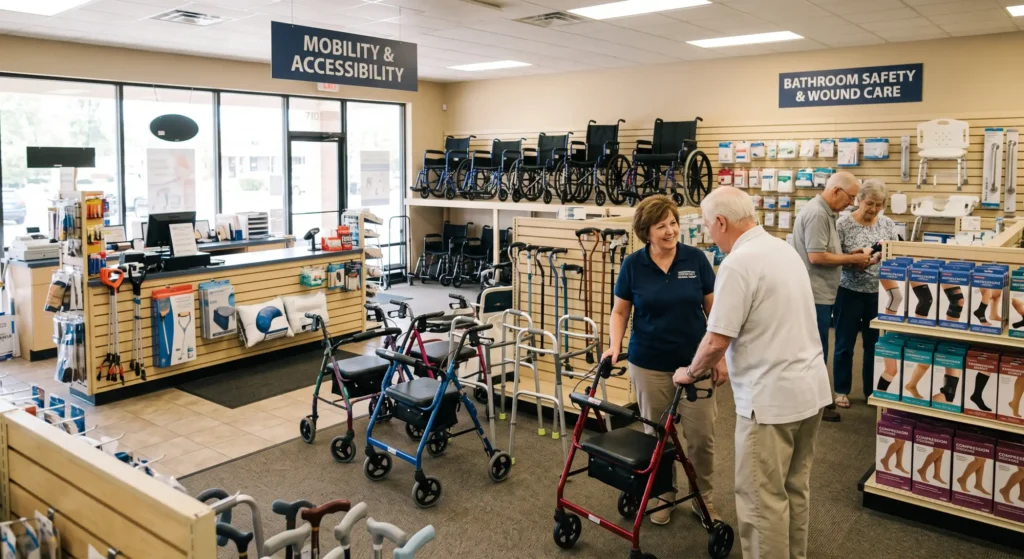
Alfa Healthcare Supply Inc serves patients, caregivers, healthcare professionals, and families throughout Queens and the greater New York area. The company offers durable medical equipment (DME), diabetic supplies, orthopedic products, respiratory equipment, mobility aids, and other healthcare essentials. Its website states that the company has more than 25 years of experience serving the New York healthcare community.
What is Home Medical Supply?
Home medical supplies are products designed to help people manage healthcare needs outside traditional medical facilities. They may support recovery after an operation, mobility limitations, chronic disease management, respiratory care, personal safety, or everyday living.
Depending on an individual’s needs, home healthcare equipment may include:
- Walkers and rollators
- Wheelchairs and transport chairs
- Hospital beds
- Patient lifts
- Bathroom safety equipment
- Blood pressure monitors
- Pulse oximeters
- Diabetic testing supplies
- Compression products
- Orthopedic supports
- Respiratory equipment
- CPAP accessories
- Incontinence products
- Wound-care and general medical supplies
The right product depends on the person’s condition, home environment, mobility, and recommendations from their healthcare professional.
Why Quality Home Medical Supplies Matter
Medical equipment is used in situations where comfort and safety are important. A poorly fitted mobility aid, unsuitable support product, or difficult-to-use device can create unnecessary frustration.
Quality equipment can help people:
Improve Mobility
Walkers, wheelchairs, rollators, and other mobility products can help individuals move around the home with greater confidence.
Support Safer Recovery
After surgery or an injury, equipment such as hospital beds, shower chairs, commodes, and mobility aids can make everyday activities easier while a person recovers.
Encourage Independence
The right home equipment can allow individuals to perform certain daily activities with less assistance from caregivers.
Reduce Caregiver Strain
Patient lifts, transfer equipment, and appropriate support surfaces can make some caregiving tasks safer and more manageable.
Make Monitoring More Convenient
Home monitoring products such as blood pressure monitors and pulse oximeters can support routine health tracking when recommended by a healthcare professional.
Choosing a Home Medical Supply Provider in Woodhaven
Searching for medical supply Woodhaven options can produce many results, but not every supplier provides the same level of product selection or customer support.
Before purchasing, consider several important factors.
1. Product Selection
A supplier with a broad catalog can make it easier to obtain several types of healthcare products from one source.
Alfa Healthcare Supply Inc. describes its catalog as covering daily medical consumables, PPE, durable medical equipment, diabetic supplies, orthopedic products, respiratory equipment, and other healthcare solutions.
2. Product Quality
Healthcare equipment should come from reputable manufacturers and meet applicable safety and quality requirements. Alfa Healthcare states that it sources FDA-approved and compliant healthcare products.
For specialized equipment, patients should also follow their physician’s or other qualified healthcare professional’s recommendations.
3. Personalized Assistance
Buying medical equipment is not always as simple as selecting an item from a shelf. Size, fit, intended use, weight capacity, features, and compatibility can all matter.
A knowledgeable supplier can help customers understand product choices and determine what information they may need before ordering.
4. Insurance Support
Some durable medical equipment may qualify for insurance coverage depending on the patient’s plan, medical necessity, documentation, and other requirements.
Alfa Healthcare Supply Inc. reports working with Medicare, Medicaid, Workers’ Compensation, No-Fault, and commercial insurance providers, although coverage depends on the individual’s plan.
It is always wise to confirm coverage and authorization requirements with the supplier and insurance provider before purchasing.
Hospital Supply Woodhaven for Home Recovery
The phrase hospital supply Woodhaven can refer to equipment and healthcare products used by hospitals, clinics, caregivers, and patients receiving care at home.
Some hospital-grade products can be particularly useful during home recovery.
Hospital Beds
Adjustable hospital beds can make positioning and getting in and out of bed easier for people with limited mobility or specific recovery requirements.
Patient Lifts
Patient lifts can assist caregivers with transfers when a person has significant mobility limitations. Proper training and professional guidance are important when using this type of equipment.
Pressure-Relieving Support Surfaces
Individuals spending extended periods in bed may require specialized support surfaces based on their clinical needs.
Wheelchairs and Mobility Equipment
Wheelchairs, walkers, rollators, and transport chairs can support mobility inside and outside the home.
Alfa Healthcare Supply’s DME catalog includes mobility solutions, home hospital beds, patient lifts and slings, support surfaces, and bath-safety products.
Medical Supply Store Woodhaven: What Can You Find?
A reliable medical supply store Woodhaven resource should ideally serve more than one healthcare need.
Mobility Supplies
Mobility products may include:
- Walkers
- Rollators
- Wheelchairs
- Transport chairs
- Canes
- Crutches
- Mobility accessories
The correct device should be selected according to the user’s physical needs and, where appropriate, professional recommendations.
Diabetic Supplies
People managing diabetes may need supplies for routine glucose monitoring and foot care.
Depending on individual treatment plans, products can include:
- Blood glucose monitors
- Test strips
- Lancets
- Diabetic shoes
- Diabetic inserts
- Other diabetes-care accessories
Consistent access to appropriate supplies can make routine diabetes management less stressful.
Orthopedic Products
Orthopedic supports can assist with certain mobility and musculoskeletal needs. Common categories include knee braces, wrist supports, ankle supports, back braces, and compression products.
The appropriate product should depend on the individual’s condition and healthcare provider’s guidance.
Respiratory Supplies
People managing respiratory conditions may need products such as nebulizers, CPAP accessories, and other respiratory-care supplies.
Because respiratory equipment can be highly specific to the patient’s treatment, compatibility and professional recommendations are particularly important.
Bathroom Safety Equipment
Bathrooms can present challenges for people with reduced balance or mobility. Products such as shower chairs, commodes, grab bars, and other safety aids may help create a more accessible environment.
Home Medical Equipment for Seniors
Older adults may benefit from medical equipment that supports safe movement and daily independence.
For example, a rollator may provide mobility assistance while also offering convenient features for everyday use. A shower chair can provide seated support during bathing. A bedside commode may be useful when getting to the bathroom is difficult.
However, equipment should not be selected solely because it is popular. The individual’s strength, balance, home layout, and ability to use the equipment safely should all be considered.
When in doubt, ask a physician, physical therapist, occupational therapist, or qualified medical equipment professional for guidance.
Supporting Recovery After Surgery
Returning home after surgery can be an emotional transition. The familiar surroundings may feel comforting, but ordinary activities can suddenly become difficult.
Getting dressed, bathing, walking to another room, or getting into bed may require more effort than expected.
Preparing the home with appropriate medical equipment can help make recovery more manageable.
Depending on the procedure and the patient’s needs, equipment may include:
- A walker or wheelchair
- Hospital bed
- Shower chair
- Raised toilet or commode
- Grab bars
- Patient transfer equipment
- Compression products
- Wound-care supplies
Not every patient needs all of these products. The appropriate equipment should be based on the discharge plan and healthcare professional’s recommendations.
How Alfa Healthcare Supply Inc. Supports Home Healthcare
For families researching home medical supply Woodhaven, experience and service can be just as important as product selection.
Alfa Healthcare Supply Inc. says it provides healthcare products for patients and healthcare providers and offers support with product selection, bulk ordering, and account management. Its stated process includes consultation and assessment, product selection, and ordering and delivery.
The company also reports serving Queens, Brooklyn, the Bronx, Manhattan, Long Island, and Westchester, providing access to healthcare supplies beyond a single neighborhood.
For someone caring for a parent, recovering from an operation, or managing a long-term condition, this type of support can make the purchasing process feel less overwhelming.
Why Local Access Can Make a Difference
Medical supplies are not always something people can afford to wait weeks for.
A family may suddenly need a walker after a hospital discharge. A caregiver may need bathroom safety equipment before an older adult returns home. A patient may need replacement diabetic or respiratory supplies to continue an established routine.
Having a healthcare supplier serving the local community can make it easier to ask questions, compare appropriate products, and arrange supplies when needed.
Alfa Healthcare Supply Inc. states that it provides priority local medical supply delivery across Queens and offers shipping services to multiple areas throughout New York.
How to Choose the Right Medical Equipment
Before purchasing home medical equipment, consider these questions:
What is the equipment intended to accomplish?
Define the specific healthcare or mobility need first.
Has a healthcare professional recommended it?
For specialized equipment, professional guidance can help ensure the product is appropriate.
Does it fit the user?
Size and fit can significantly affect comfort and safe use.
Will it fit the home?
Measure doorways, hallways, bedrooms, bathrooms, and other relevant spaces when purchasing larger equipment.
Does insurance cover it?
Ask about eligibility, documentation, prescriptions, deductibles, and authorization requirements.
Will the caregiver know how to use it?
Certain equipment requires instruction before use.
A More Human Approach to Home Healthcare
Healthcare can sometimes feel like a long list of appointments, prescriptions, instructions, and equipment. But behind every order is a real person.
It may be a daughter helping her father regain mobility after surgery. It may be a spouse trying to make a home safer. It may be someone managing diabetes and simply wanting reliable supplies available when needed.
That human side of healthcare matters.
A good medical equipment supplier should understand that customers are not merely buying products. They are often trying to make someone’s day a little easier, safer, and more comfortable.
That is why selecting a supplier based on experience, product quality, support, and reliability can be worthwhile.
Final Thoughts: Home Medical Supply Woodhaven
Finding dependable home medical supply Woodhaven solutions is about more than locating equipment. It is about creating a safer, more comfortable environment where people can recover, manage their health, and maintain as much independence as possible.
From mobility aids and diabetic products to respiratory equipment, orthopedic supports, hospital beds, and bathroom safety products, the right supplies can make a meaningful difference in everyday life.
Alfa Healthcare Supply Inc. offers a broad selection of durable medical equipment and healthcare supplies while serving patients and healthcare professionals throughout Queens and the surrounding New York communities. With more than 25 years of experience, the company focuses on reliable products, personalized support, insurance assistance, and home healthcare solutions.
When healthcare becomes part of everyday home life, having a dependable medical supply partner can provide something every family values: greater confidence in the care of someone they love.
Frequently Asked Questions About Home Medical Supply Woodhaven
Where can I find home medical supplies for Woodhaven residents?
Alfa Healthcare Supply Inc. provides durable medical equipment and healthcare supplies for patients and caregivers throughout Queens and the greater New York area. Its catalog includes mobility equipment, diabetic supplies, orthopedic products, respiratory equipment, and home healthcare products.
What types of home medical equipment are available?
Depending on individual needs, home medical equipment can include walkers, wheelchairs, hospital beds, patient lifts, bathroom safety equipment, support surfaces, and other DME products.
Can medical supplies be covered by insurance?
Some products may qualify for insurance coverage, but eligibility varies according to the product, medical necessity, documentation, and insurance plan. Alfa Healthcare Supply Inc. works with several insurance programs and recommends confirming coverage before ordering.
Do I need a prescription for medical equipment?
Prescription requirements depend on the specific product and insurance requirements. Some general healthcare supplies can be purchased without a prescription, while certain DME and specialized equipment may require one.
Can medical equipment be used after surgery?
Yes. Many types of DME are commonly used to support recovery at home, including mobility aids, hospital beds, bathroom safety equipment, and other products. The appropriate equipment should be determined according to the patient’s discharge instructions and healthcare needs.
How do I select the right medical supply?
Start with the medical need, then consider the user’s size, mobility, home environment, comfort, and intended use. For specialized equipment, ask a qualified healthcare professional or medical equipment specialist for guidance.
When medical needs arise, having access to dependable supplies can make an overwhelming situation feel much more manageable. Whether someone is recovering from a procedure, caring for a family member at home, or managing an ongoing health condition, the quality and availability of medical supplies matter.
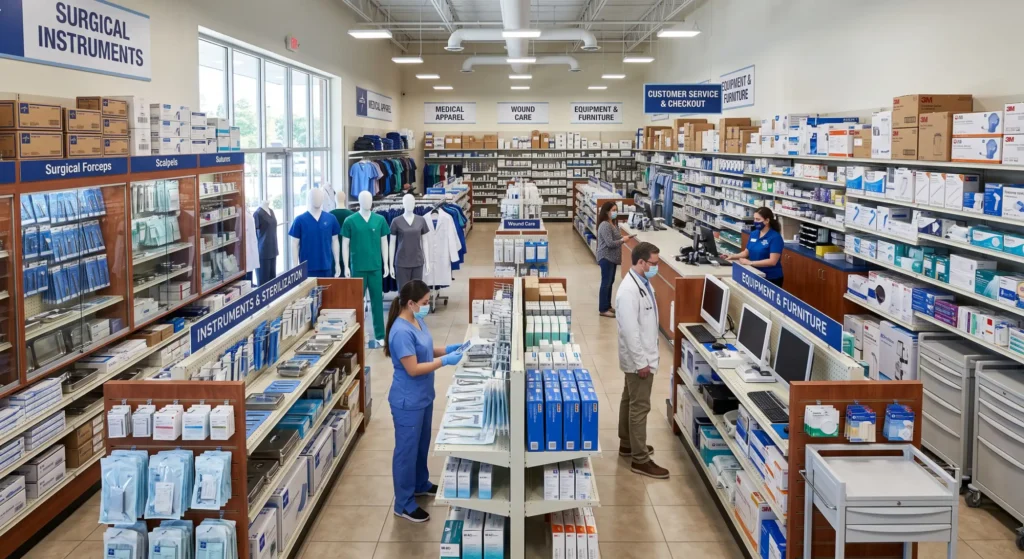
For people searching for surgical supply Steinway, choosing a supplier that combines product variety with knowledgeable service can make a meaningful difference. Alfa Healthcare Supply Inc. provides medical equipment, durable medical equipment (DME), surgical supplies, orthopedic products, respiratory equipment, diabetic supplies, and other healthcare essentials for customers throughout Queens and the greater New York area. The company states that it has more than 25 years of experience serving patients, caregivers, and healthcare providers.
What to Look for in a Surgical Supply Provider
Not every medical supply provider offers the same selection or level of support. When looking for surgical supplies, consider more than just price.
A dependable supplier should offer:
- A broad selection of healthcare products
- Quality-focused product sourcing
- Clear product information
- Helpful customer service
- Convenient ordering options
- Reliable shipping or delivery
- Experience serving patients and healthcare professionals
- Assistance with insurance and ordering requirements when applicable
These factors can be especially important after surgery, when patients may already be dealing with pain, limited mobility, or changes to their daily routine.
Surgical Supplies for Recovery and Home Care
Surgery does not necessarily end when a patient leaves the hospital. Recovery may continue for days or weeks at home, and the right supplies can help make that transition more comfortable.
Depending on a person’s specific healthcare plan, supplies may be needed for:
- Wound care
- Dressing changes
- General patient care
- Mobility assistance
- Orthopedic support
- Compression therapy
- Personal hygiene
- Home safety
- Respiratory care
The exact products needed should always be determined according to the patient’s medical instructions and the recommendations of their healthcare professional.
Alfa Healthcare Supply Inc. maintains a broad medical catalog that includes surgical and medical consumables as well as DME and home healthcare products. Its website also highlights categories such as orthopedic supplies, diabetic supplies, respiratory equipment, urinary supplies, incontinence products, and OBGYN supplies.
Hospital Supply Steinway for Healthcare Facilities
The need for dependable supplies extends beyond individual patients. Clinics, healthcare professionals, rehabilitation providers, and other facilities also require consistent access to medical products.
When searching for hospital supply Steinway, healthcare organizations may consider:
Consistent Product Availability
A facility cannot afford unnecessary interruptions when essential supplies are required for patient care. A supplier with a broad catalog can make routine procurement easier.
Bulk Ordering
Healthcare facilities may need larger quantities than individual customers. Alfa Healthcare Supply Inc. states that it supports B2B wholesale medical supplies and recurring or bulk orders for clinics and facilities.
Reliable Ordering
A straightforward ordering process can reduce administrative headaches. Alfa Healthcare Supply Inc. offers online and phone ordering and also works with the Parachute Health platform for healthcare-provider ordering.
Professional Support
Healthcare staff may need assistance identifying the appropriate product or confirming ordering requirements. A knowledgeable supplier can help customers navigate product choices while leaving clinical decisions to qualified healthcare professionals.
Supporting Patients After Surgery
Recovery can be an emotional experience as well as a physical one.
A person who was independent yesterday may suddenly need a walker, brace, bathroom safety equipment, wound-care supplies, or help from a caregiver. Even simple daily activities can feel difficult.
That is why medical equipment should not be viewed simply as another purchase.
The right equipment can help a person move more safely, maintain dignity, and regain confidence while recovering. It can also give family caregivers greater peace of mind when they know the home has been prepared for the patient’s needs.
Alfa Healthcare Supply Inc. describes its goal as helping patients and caregivers find healthcare products that support comfort, mobility, and well-being.
DME and Mobility Products
Surgical recovery sometimes involves temporary or long-term mobility limitations. Depending on the patient’s needs, durable medical equipment may become an important part of the recovery environment.
Common examples include:
- Walkers
- Rollators
- Wheelchairs
- Transport chairs
- Crutches
- Hospital beds
- Patient safety equipment
- Bathroom safety products
The appropriate equipment depends on factors such as mobility level, home layout, weight capacity, duration of use, and the patient’s healthcare recommendations.
Alfa Healthcare Supply Inc. highlights DME solutions designed to support mobility, recovery, independence, and home care.
Orthopedic Support After an Injury or Procedure
Some patients may require additional support for a joint or injured area during recovery.
Orthopedic products can include:
- Knee braces
- Wrist braces
- Ankle supports
- Back braces
- Shoulder supports
- Compression products
A brace should not be selected solely because it looks comfortable or has good reviews. Fit, intended use, support level, and the patient’s specific condition should be considered. When a healthcare professional has recommended a particular type of support, patients should follow that guidance.
Respiratory and Home Healthcare Supplies
Medical supply needs are not limited to surgery.
People managing respiratory conditions or recovering at home may require equipment such as nebulizers, CPAP accessories, or other respiratory therapy supplies. Alfa Healthcare Supply Inc. lists COPD/asthma supplies and respiratory equipment among its healthcare categories.
For patients using respiratory equipment, proper product selection, cleaning, maintenance, and operation are important. Manufacturer instructions and professional guidance should always be followed.
Why Experience Matters When Choosing a Supplier
Healthcare products are different from ordinary household purchases. A mistake in selecting the wrong product can create inconvenience—or, depending on the equipment, affect patient safety.
Experience can therefore be valuable.
Alfa Healthcare Supply Inc. says it has more than two decades of experience serving the New York healthcare community and works with patients, caregivers, healthcare providers, and facilities.
That experience can be particularly useful when customers have questions about product categories, ordering processes, insurance documentation, or equipment needs.
A Convenient Option for Steinway-Area Customers
Steinway is part of a larger Queens community with many patients and families seeking convenient access to healthcare products.
While Alfa Healthcare Supply Inc. is located in Floral Park rather than directly on Steinway Street, the company serves customers throughout Queens and offers local delivery options in the area. Its website states that it serves Queens along with Brooklyn, the Bronx, Westchester, Long Island, and other areas of New York.
For customers who prefer ordering remotely, the company provides online and phone ordering options.
How to Choose the Right Surgical Supply
Before purchasing a medical or surgical product, it helps to ask a few practical questions:
- Was this product recommended by my healthcare professional?
- Is the product appropriate for my specific condition or recovery stage?
- Do I need a particular size, model, or specification?
- Will I need the item temporarily or on an ongoing basis?
- Is the product covered by my insurance?
- How should the product be cleaned, stored, or maintained?
- Can the supplier help if I have questions about ordering or documentation?
These questions can prevent unnecessary purchases and help patients obtain products that better match their actual needs.
Why Quality Matters in Medical Supplies
A surgical or medical supply is often directly connected to patient care.
Quality products can contribute to:
- Comfort
- Hygiene
- Mobility
- Safety
- Recovery support
- Better home-care organization
- Greater caregiver confidence
Alfa Healthcare Supply Inc. states that it sources medical products from trusted, compliant brands and emphasizes patient safety and quality assurance.
Patients should still check product labeling, manufacturer instructions, expiration dates where applicable, and any requirements provided by their healthcare professional.
Personalized Support Can Make Healthcare Easier
Sometimes the most valuable part of a medical supply experience is not the product itself—it is having someone available to answer a question.
A caregiver may wonder whether they ordered the correct item. A patient may need help understanding how an equipment category differs from another. A clinic may need to coordinate a recurring order.
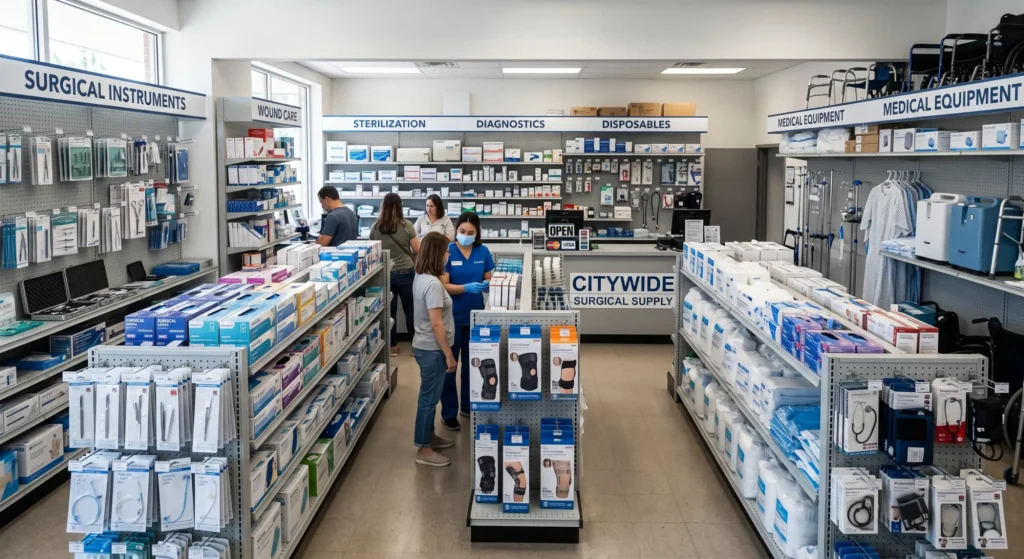
Having a supplier that understands these practical concerns can reduce stress.
Alfa Healthcare Supply Inc. says its process includes consultation and assessment, product selection, ordering, and delivery, with customer support available to help customers through the process.
A Healthcare Supplier Focused on More Than Products
Finding surgical supply Steinway should not be only about locating the nearest product on a shelf. For patients, caregivers, and healthcare professionals, reliability, product quality, service, and convenience all matter.
Alfa Healthcare Supply Inc. combines a broad medical catalog with experience serving the New York healthcare community. From surgical and orthopedic supplies to DME, respiratory products, diabetic care, and home healthcare equipment, the company aims to make access to essential medical products simpler and more dependable.
For someone recovering from surgery, supporting a loved one, or managing ongoing healthcare needs, having a dependable medical supply partner can provide something genuinely valuable: one less thing to worry about when taking care of yourself or someone you love.
Frequently Asked Questions About Surgical Supply Steinway
What does a surgical supply store provide?
A surgical supply provider may offer products used for wound care, recovery, patient support, orthopedic care, mobility, home healthcare, and other medical needs. Product availability varies by supplier.
Can I find hospital supplies near Steinway?
Yes. Customers searching for hospital supply Steinway can explore medical suppliers serving the Steinway and broader Queens area. Alfa Healthcare Supply Inc. serves Queens and offers a broad selection of medical equipment and healthcare supplies.
Does Alfa Healthcare Supply Inc. serve Queens?
Yes. Alfa Healthcare Supply Inc. states that it serves Queens as well as Brooklyn, the Bronx, Long Island, Westchester, and other areas of New York.
Can surgical supplies be used at home?
Many medical and surgical supplies are intended for home healthcare, but the appropriate product depends on the patient’s condition and medical instructions. Always follow your healthcare provider’s recommendations.
Does Alfa Healthcare Supply Inc. offer DME?
Yes. The company provides durable medical equipment, including mobility and home-care equipment.
Can healthcare facilities place bulk orders?
Yes. Alfa Healthcare Supply Inc. states that it supports wholesale medical supplies and recurring or bulk orders for clinics and healthcare facilities.
Managing diabetes is not just about doctor appointments and medication. For many people, it is a daily routine that includes checking glucose levels, following treatment instructions, protecting foot health, and keeping essential supplies available when they are needed.
That is why finding a dependable diabetes medical supply Springfield provider can make everyday diabetes management feel more organized and less stressful. The right supplier can help patients, caregivers, healthcare professionals, and families find appropriate monitoring equipment and related products while making the ordering process easier.

Alfa Healthcare Supply Inc. is a New York-based durable medical equipment and healthcare supply provider with more than 25 years of experience. Its product range includes diabetic supplies, blood glucose monitors, testing supplies, diabetic shoe inserts, therapeutic footwear, and continuous glucose monitoring systems.
Why Reliable Diabetes Medical Supplies Matter
Diabetes management often depends on consistency. A person may need to monitor blood glucose regularly, replace testing supplies, maintain an adequate supply of lancets, or use specialized footwear to help protect vulnerable feet.
When supplies are difficult to obtain, even a well-established care routine can become inconvenient.
Reliable diabetes medical supplies can help patients:
- Monitor blood glucose according to their healthcare plan
- Keep commonly used testing supplies available
- Support safer diabetes-management routines
- Maintain foot comfort and protection
- Reduce unnecessary interruptions in daily care
- Give caregivers greater confidence when assisting loved ones
The specific products a person needs depend on their diabetes treatment plan and recommendations from their healthcare professional. A medical supply provider should complement—not replace—professional medical guidance.
What Can You Find at a Diabetes Medical Supply Provider?
A well-stocked supplier can offer several categories of diabetes-related products. Alfa Healthcare Supply Inc.’s diabetic catalog includes blood glucose monitors, diabetic shoe inserts, continuous glucose monitoring systems, test strips, alcohol prep pads, and universal twist-top lancets.
Blood Glucose Monitors
A blood glucose meter can provide an important snapshot of blood sugar levels when used as directed. Different meters may vary in display, testing process, memory capacity, and compatibility with particular test strips.
Patients should use the meter and testing supplies recommended for their individual needs and follow the manufacturer’s instructions.
Test Strips
Test strips are an essential part of many traditional blood glucose monitoring systems. Because strips are designed for specific meters, patients should confirm compatibility before purchasing replacement supplies.
Keeping track of remaining strips can also prevent the frustration of discovering that supplies have run out at an inconvenient time.
Lancets
Lancets are small but important components of blood glucose testing. They are used to obtain a small blood sample for compatible glucose meters.
As with other diabetes supplies, proper use and disposal are important. Patients should follow their healthcare professional’s and product manufacturer’s instructions.
Continuous Glucose Monitoring Systems
Continuous glucose monitoring, or CGM, has become an important option for many people managing diabetes. CGM systems can provide glucose information through a sensor-based system and may help users and their healthcare teams identify glucose patterns.
Alfa Healthcare Supply Inc. lists FreeStyle Libre 2 and 3 CGM systems among its diabetic products.
Whether a CGM is appropriate depends on the individual’s medical needs, treatment plan, insurance coverage, and healthcare provider’s recommendation.
Diabetic Footwear and Shoe Inserts
Foot care deserves special attention for many people with diabetes. Diabetes can be associated with foot-related complications, making appropriate footwear and regular foot checks an important part of comprehensive care.
Specialized diabetic shoes and inserts may provide additional comfort, cushioning, space, or support depending on the product and the patient’s needs.
Alfa Healthcare Supply Inc. offers diabetic shoe inserts and therapeutic footwear as part of its broader healthcare product range.
Looking for Springfield Surgical Supply?
People searching for Springfield surgical supply may actually have a range of healthcare needs beyond diabetes. Surgical and medical supply requirements can include wound-care products, orthopedic supports, mobility equipment, respiratory equipment, and other home-care essentials.
For patients recovering at home, convenience matters. Having access to a supplier that carries multiple categories of healthcare products can make it easier to coordinate different aspects of care.
Alfa Healthcare Supply Inc. provides products across several categories, including DME equipment, orthopedic supplies, respiratory supplies, incontinence products, urinary supplies, OBGYN supplies, and diabetic products.
Hospital Supply Store Springfield: What Should You Look For?
A search for a hospital supply store Springfield may come from a healthcare professional, caregiver, family member, or patient preparing for home recovery.
The most important consideration should not simply be how many products a supplier lists. Quality, product suitability, service, ordering support, and dependable fulfillment all matter.
When comparing suppliers, consider:
1. Product Selection
Look for a supplier that offers the products relevant to your needs rather than forcing you to purchase every item from different sources.
2. Product Quality
Medical equipment should come from reputable manufacturers and meet applicable quality and safety requirements. Alfa Healthcare Supply Inc. states that it sources FDA-approved and compliant healthcare products.
3. Customer Support
Healthcare products can sometimes be confusing, particularly when insurance documentation, referrals, prescriptions, or product compatibility are involved.
A knowledgeable support team can help make the process easier.
4. Insurance Assistance
Insurance coverage varies by plan and product. Alfa Healthcare Supply Inc. provides insurance-related assistance and describes services including insurance verification and documentation support for qualifying diabetic supplies.
5. Ordering and Delivery
For recurring supplies, dependable ordering and delivery can be especially valuable. Alfa Healthcare Supply Inc. offers online and phone ordering and states that it provides nationwide shipping along with local delivery services in its primary service areas.
Choosing the Best Surgical Supply Store Springfield
Searching for the best surgical supply store Springfield should involve more than choosing the first result online.
Healthcare needs are personal. A product that works well for one individual may not be appropriate for another. Instead of focusing only on price, consider the supplier’s experience, product range, customer support, insurance assistance, and ability to provide the products you may need repeatedly.
For patients and caregivers, a supplier that understands the practical side of home healthcare can be particularly helpful.
Alfa Healthcare Supply Inc. describes its approach as beginning with consultation and assessment, followed by product selection and ordering support.
Medical Supply Springfield: Supporting Care Beyond the Hospital
Modern healthcare increasingly extends into the home. Someone may leave a hospital after surgery and need equipment for recovery. Another person may be managing diabetes for decades and require recurring testing supplies. A caregiver may need mobility equipment, while another family member needs respiratory or orthopedic products.
This is where a comprehensive medical supply Springfield provider can become an important part of the healthcare experience.
Medical supplies can support:
- Home recovery
- Chronic condition management
- Mobility and independence
- Respiratory care
- Orthopedic support
- Diabetes management
- Incontinence care
- Long-term home healthcare
Alfa Healthcare Supply Inc. serves patients and healthcare providers across New York, including Queens, Long Island, Brooklyn, the Bronx, and Westchester, with a broad range of DME and healthcare products.
How to Build a Practical Diabetes Supply Routine
A little organization can make diabetes management easier.
Keep a Regular Supply Check
Rather than waiting until the last few supplies are gone, periodically check your glucose-monitoring products, test strips, lancets, sensors, and other essentials.
Verify Product Compatibility
Test strips, sensors, meters, and other components are not universally interchangeable. Check the manufacturer’s information or consult an appropriate healthcare professional or supplier before ordering replacements.
Store Supplies Correctly
Follow the manufacturer’s storage instructions for each product. Temperature, moisture, expiration dates, and packaging can matter.
Keep Your Healthcare Team Informed
Your healthcare provider can tell you how often to monitor glucose and which equipment or supplies are appropriate for your treatment plan.
Plan for Recurring Needs
If you use supplies regularly, knowing when you will need your next order can help avoid unnecessary interruptions.
A More Personal Approach to Medical Supply Shopping
When someone searches for medical equipment, they may simply see a product catalog. But behind that search is often a person trying to solve a very real problem.
It could be a parent helping a child manage diabetes. It could be an adult caring for an aging family member. It could be someone newly diagnosed and trying to understand an entirely new routine.
Good medical supply service should recognize that human side of healthcare.
Alfa Healthcare Supply Inc. emphasizes patient support, personalized consultations, product selection assistance, insurance billing support, and customer service as part of its healthcare approach.
Why Consider Alfa Healthcare Supply Inc.?
For people researching diabetes medical supply Springfield, Alfa Healthcare Supply Inc. offers a broad healthcare catalog rather than focusing on only one type of product.
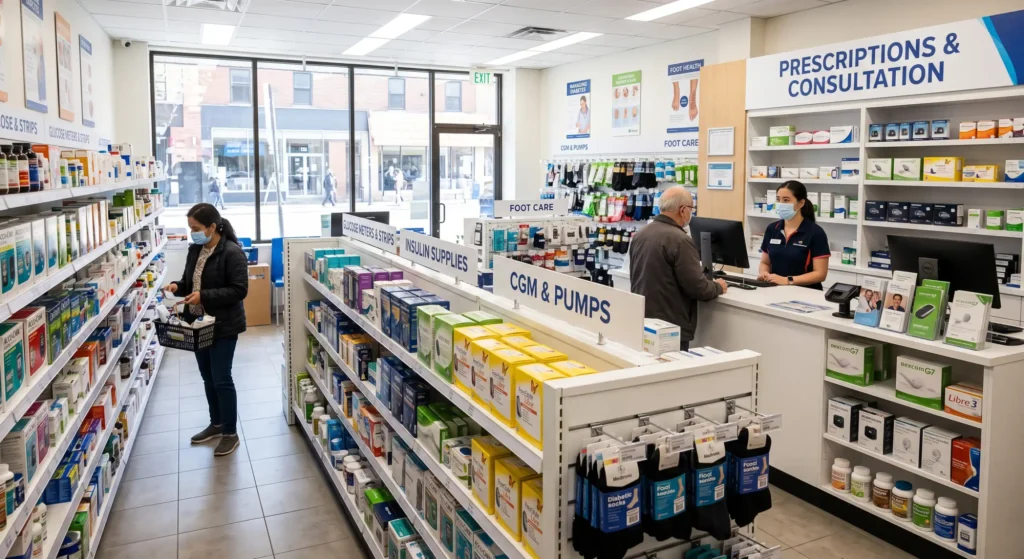
The company reports more than 25 years of experience and provides diabetic supplies alongside DME, mobility, respiratory, orthopedic, incontinence, urinary, OBGYN, and other healthcare products.
Its diabetic product selection includes:
- Blood glucose monitors
- Test strips
- Lancets
- CGM systems
- Diabetic shoe inserts
- Diabetic footwear
- Alcohol prep pads
- Related diabetes-management supplies
For providers, Alfa Healthcare Supply Inc. also offers referral and documentation services and integrates with Parachute Health for digital referrals and ordering.
Final Thoughts
Finding dependable diabetes medical supply Springfield services is about more than finding a place to purchase a glucose meter or replacement supplies. It is about creating a reliable connection between everyday healthcare needs and the products that help support them.
Whether you are researching Springfield surgical supply, a hospital supply store Springfield, or a trusted medical supply Springfield provider, look for experience, product quality, support, insurance assistance, and dependable fulfillment.
For patients and caregivers looking for a broader healthcare supply partner, Alfa Healthcare Supply Inc. provides diabetic products and a comprehensive range of durable medical equipment and home healthcare supplies throughout New York.
Diabetes Medical Supply Springfield: Frequently Asked Questions
1. What diabetes medical supplies are commonly available?
Common diabetes supplies include blood glucose monitors, test strips, lancets, insulin-related supplies, continuous glucose monitoring (CGM) systems, diabetic shoes, and diabetic shoe inserts. Alfa Healthcare Supply Inc. offers a range of diabetes-care products designed to support everyday glucose monitoring and diabetes management.
2. Can I order diabetes medical supplies for home use?
Yes. Many diabetes supplies are intended for convenient home use, including glucose meters, test strips, lancets, and certain monitoring systems. Having dependable supplies available can make it easier to maintain a regular diabetes-care routine.
3. Does Alfa Healthcare Supply Inc. offer glucose monitoring products?
Yes. The company provides blood glucose monitoring systems and related testing supplies. Its diabetic supply category includes blood glucose monitors, test strips, lancets, and CGM systems.
4. Are continuous glucose monitors available?
Yes. Alfa Healthcare Supply Inc. lists CGM systems among its diabetes-care products. Availability of a particular brand or model may depend on current inventory, prescription requirements, and insurance eligibility.
5. Do I need a prescription for diabetes medical supplies?
It depends on the product. Some everyday diabetes-care products may be purchased without a prescription, while certain regulated DME products and specialized diabetic footwear may require appropriate documentation or a prescription. Alfa Healthcare Supply advises customers to confirm requirements for the specific product they need.
6. Can insurance help cover diabetes supplies?
Potentially. Coverage depends on the patient’s insurance plan, the product, medical necessity, and applicable documentation. Alfa Healthcare Supply Inc. states that it accepts Medicare Part B and works with many private insurance plans.
7. What information may be needed for an insurance-covered order?
Depending on the product and insurance plan, documentation may include a prescription or detailed written order, clinical notes, and insurance information. The supplier can help customers understand what documentation is needed for their particular order.
8. Can I get diabetic shoes and shoe inserts?
Yes. Diabetic shoes and therapeutic shoe inserts are among the diabetes-related products offered by Alfa Healthcare Supply Inc. Proper footwear can be an important part of protecting foot health for people with diabetes, particularly when recommended by a qualified healthcare professional.
9. How often should I replace diabetes testing supplies?
Replacement schedules vary by product. Test strips, lancets, CGM sensors, and other supplies have their own usage and expiration requirements. Always follow the manufacturer’s instructions and your healthcare professional’s recommendations rather than using expired or damaged supplies.
10. Can diabetes supplies be delivered?
Yes. Alfa Healthcare Supply Inc. provides shipping services and prioritizes processing for customers in New York service areas. Delivery timing can vary according to the product, order processing, and destination.
11. Can I order recurring diabetes supplies?
Recurring fulfillment may be available for regularly used products. Alfa Healthcare Supply Inc. describes recurring programs for supplies such as test strips, lancets, and sensors, helping patients maintain access to essential products.
12. How do I choose the right diabetes medical supply?
The right product depends on your individual diabetes-management needs, prescribed treatment, lifestyle, and healthcare professional’s recommendations. Consider factors such as ease of use, compatibility, accuracy, ongoing supply requirements, insurance coverage, and manufacturer instructions.
13. Why choose a specialized diabetes medical supply provider?
A specialized provider can make it easier to find multiple diabetes-care products in one place while providing product information and ordering support. Alfa Healthcare Supply Inc. offers diabetes supplies alongside other home healthcare and DME products.
14. Can caregivers order diabetes supplies for a family member?
In many situations, caregivers can assist with ordering supplies, particularly when they are helping a patient manage ongoing healthcare needs. Prescription, insurance, and authorization requirements may apply depending on the product and payer.
15. Where can I get help with diabetes medical supply questions?
For questions about product availability, ordering, insurance, or documentation, you can contact Alfa Healthcare Supply Inc. directly. The company lists customer support at 718-343-3860 and provides additional ordering assistance through its website.
Important: This article is for general educational purposes and is not a substitute for medical advice. Always consult your physician or qualified healthcare professional when selecting diabetes-management equipment or changing your diabetes-care routine.
CONTOUR NEXT Blood Glucose Monitoring System How to Use
Learning how to check your blood glucose at home can feel overwhelming at first. There are test strips, lancets, a meter, blood samples, numbers to understand, and sometimes a few unfamiliar symbols on the screen. If you are using a CONTOUR®NEXT blood glucose monitoring system, the process can become much easier once you understand the basic routine.
This guide explains CONTOUR NEXT blood glucose monitoring system how to use it in simple, practical language. It covers preparing your supplies, washing and drying your hands, inserting a test strip, obtaining a blood sample, applying blood to the strip, understanding your result, caring for your meter, avoiding common testing mistakes, and knowing when to ask a healthcare professional for help.
Alfa Healthcare Supply Inc. provides healthcare and medical supply products for everyday health needs. You can learn more about its medical supply resources at Alfa Healthcare Supply Inc..
Important: CONTOUR NEXT is a family of blood glucose meters, and instructions and features can differ between models such as CONTOUR NEXT EZ, CONTOUR NEXT ONE, and CONTOUR NEXT GEN. Always read the user guide supplied with your particular meter and follow the manufacturer’s instructions. The information below is educational and does not replace advice from your doctor, diabetes educator, pharmacist, or other qualified healthcare professional.
What is the CONTOUR NEXT Blood Glucose Monitoring System?
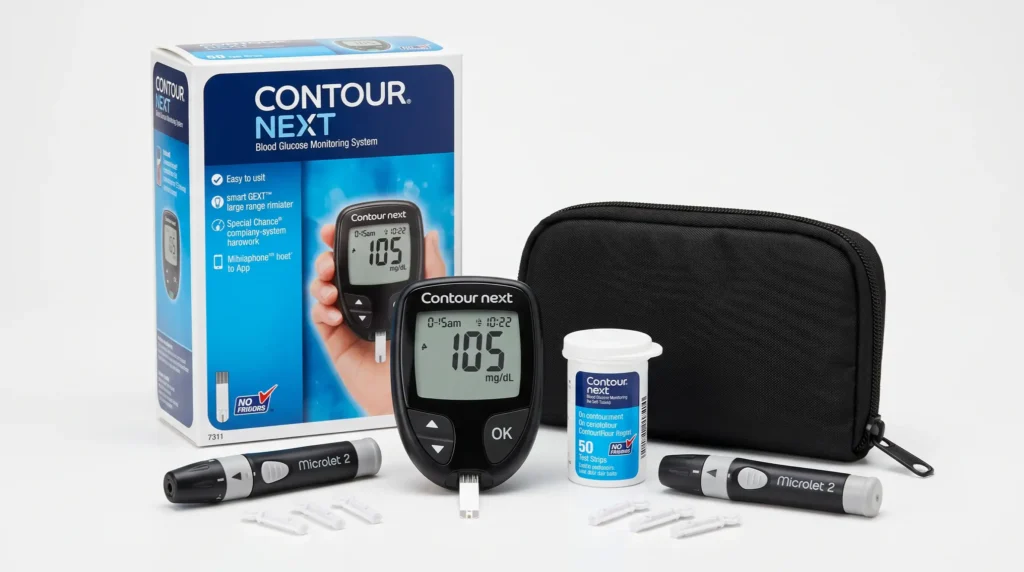
The CONTOUR NEXT blood glucose monitoring system is a blood glucose testing system designed to help people measure their blood glucose using a small blood sample.
A typical system includes a blood glucose meter, compatible CONTOUR NEXT test strips, and a lancing device with lancets. Depending on the model and package, additional accessories or features may be included.
The basic testing process is straightforward:
- Prepare the meter and supplies.
- Wash and completely dry your hands.
- Insert a compatible CONTOUR NEXT test strip.
- Obtain a small blood sample using the lancing device.
- Apply the blood to the test strip.
- Wait for the meter to process the sample.
- Review the displayed blood glucose result.
- Record or synchronize the result if your model supports those functions.
- Remove the used test strip and safely dispose of the used lancet.
The manufacturer’s CONTOUR NEXT EZ guide confirms that the meter uses CONTOUR NEXT blood glucose test strips and identifies the test-strip port, display, buttons, and memory controls as key components of the device.
The goal is not simply to get a number on a screen. Regular monitoring can give you and your healthcare team useful information about glucose patterns and how your individual diabetes-management plan is working.
Why Learning to Use Your Meter Correctly Matters
A glucose meter is only useful when it is used correctly.
Something as simple as testing with wet hands, using an incorrect test strip, applying too little blood, or storing strips improperly can interfere with your testing routine.
This is why learning CONTOUR NEXT blood glucose monitoring system how to use is more than learning where to press a button.
It means learning the entire process.
You want to know:
- Which test strips belong with your meter
- How to prepare your hands
- How to use your lancing device
- Where to apply the blood
- What to do when the meter says the sample is insufficient
- How to care for your meter
- How to store your testing supplies
- How to recognize an unexpected result
- When to contact your healthcare professional
Once you understand those basics, testing can become a familiar daily routine instead of something that feels intimidating.
CONTOUR NEXT Blood Glucose Monitoring System: What You Need
Before testing, gather everything you need.
Depending on your particular CONTOUR NEXT model and package, you may need:
- CONTOUR NEXT blood glucose meter
- Compatible CONTOUR NEXT blood glucose test strips
- Lancing device
- New sterile lancet
- Tissue or gauze
- Carrying case, if desired
Some CONTOUR NEXT packages include a MICROLET NEXT lancing device and lancets, while package contents can vary by model.
Do not assume that every CONTOUR NEXT model has exactly the same accessories or functions.
The manufacturer provides separate resources for CONTOUR NEXT GEN, CONTOUR NEXT ONE, CONTOUR NEXT EZ, and other products in the CONTOUR family.
Step 1: Prepare a Clean Testing Area
Choose a clean, dry surface for your testing supplies.
Place your meter, test strips, lancing device, and other necessary items within easy reach.
You do not need a complicated setup.
A small organized area can make testing feel much easier.
For example:
Meter → Test strips → Lancing device → Lancet → Tissue
Keeping your supplies together also helps prevent the frustrating situation of having your meter ready but realizing that your lancets or test strips are somewhere else.
If you regularly test outside your home, consider keeping your supplies organized in an appropriate carrying case.
Step 2: Check Your Test Strips
Before using a test strip, check its packaging and expiration information.
Use only test strips designed for your specific CONTOUR NEXT meter.
The CONTOUR NEXT EZ user guide specifically states that the meter uses CONTOUR NEXT blood glucose test strips.
Do not assume that another glucose meter’s strips will work simply because they look similar.
Also pay attention to storage instructions.
If your strips are supplied in a container, close the container promptly after removing a strip. Protecting test strips from unsuitable environmental conditions is an important part of maintaining your testing supplies.
If a strip appears damaged, contaminated, or otherwise unsuitable, do not use it.
Step 3: Wash and Dry Your Hands
This is one of the simplest—and most important—parts of the process.
Wash your hands thoroughly with soap and water.
Rinse them well.
Then dry them completely.
Your fingertips should be clean and dry before testing.
Why does this matter?
Your hands can have traces of food, drinks, lotions, or other substances. Moisture can also affect the blood sample.
A clean testing routine can help reduce avoidable testing problems.
The CONTOUR NEXT quick reference materials specifically instruct users to wash their hands with soap and water before and after handling the meter, lancing device, or test strips.
A simple habit to remember is:
Wash → Rinse → Dry → Test
If you are helping another person with glucose testing, hand hygiene is equally important.
Step 4: Prepare a New Lancet
Use a fresh lancet according to the instructions for your lancing device.
A lancet is the small sterile component used to obtain a blood sample.
If you are using a MICROLET lancing device or another device supplied with your meter, follow its specific instructions for:
- Loading the lancet
- Removing the protective cap
- Replacing the endcap
- Selecting the depth
- Preparing the device
- Obtaining the sample
Do not share lancets.
Do not share lancing devices between people unless the manufacturer specifically states that a device is designed and approved for such use and appropriate infection-control procedures are followed. Bloodborne pathogen transmission is a serious concern with shared blood-testing equipment. The CONTOUR NEXT EZ user guide includes warnings about multiple-patient use and bloodborne pathogens.
For personal home testing, using your own equipment is the safest approach.
Step 5: Insert the CONTOUR NEXT Test Strip
Take one compatible test strip from its packaging.
For models such as CONTOUR NEXT EZ, the gray-square end of the test strip is inserted into the test-strip port.
Insert the strip according to your meter’s instructions.
The meter may automatically power on when the test strip is inserted.
Depending on the model, the display will indicate that the meter is ready for a blood sample.
Take a moment to look at the screen.
Do not rush.
If the meter is not responding as expected, check that the strip is inserted correctly and that you are using a compatible strip.
Step 6: Wait for the Blood-Drop Symbol or Testing Prompt
Once the meter is ready, it will prompt you for a blood sample.
Depending on the model, you may see a blood-drop symbol or another testing instruction.
This is your signal that the meter is ready.
Now prepare your fingertip.
If you are nervous, take a breath.
You do not need to rush the process.
Step 7: Obtain a Small Blood Sample
Use your prepared lancing device to obtain a blood sample from your fingertip.
Use the instructions provided with your specific lancing device.
The objective is to obtain enough blood for the test without unnecessarily increasing discomfort.
If you regularly have difficulty getting a sufficient sample, talk with your healthcare professional about your lancing technique and device settings.
Avoid aggressively squeezing your fingertip.
If you experience repeated difficulty obtaining a suitable sample, it is worth reviewing your technique rather than simply increasing the depth setting without guidance.
Step 8: Apply the Blood to the Test Strip
This is the moment when the meter actually receives the blood sample.
Bring the test-strip sample area to the blood drop according to your meter’s instructions.
The strip is designed to automatically draw the blood sample into the designated testing area.
Keep the strip in contact with the blood until the meter indicates that the sample has been received.
Avoid spreading blood across the strip unnecessarily.
Do not add blood in a way that is inconsistent with your meter’s instructions.
With some CONTOUR NEXT models, the meter provides an indication when enough blood has been received.
Take your time and watch the screen.
Step 9: What If There Is Not Enough Blood?
Sometimes a meter may indicate that the blood sample is insufficient.
This can happen, especially when someone is new to blood glucose testing.
Do not panic.
Certain CONTOUR NEXT models include Second-Chance® Sampling, a feature that can allow additional blood to be applied to the same test strip within the permitted time.
If your model supports this feature, follow the instructions displayed by the meter.
Do not automatically discard the strip unless the meter’s instructions tell you to do so.
However, Second-Chance Sampling availability and operation can vary by model.
If your meter does not support the feature, follow the instructions in your specific user guide.
Step 10: Wait for the Result
Once the meter has received the appropriate blood sample, allow it to process the test.
The blood glucose result should appear on the screen.
Do not try to interpret the number in isolation.
Your personal glucose targets depend on your individual circumstances and treatment plan.
Factors that can affect your appropriate target range include:
- Type of diabetes
- Age
- Medications
- Food intake
- Physical activity
- Pregnancy
- Other health conditions
- Timing of the test
- Individual treatment goals
Your healthcare professional should determine the blood glucose targets appropriate for you.
Step 11: Record the Result
Depending on your meter and your diabetes-management routine, record the result.
You may want to note:
- Date
- Time
- Blood glucose result
- Before or after a meal
- Exercise
- Medication information, when appropriate
- Unusual circumstances
- Symptoms, if relevant
Keeping useful records can help you identify patterns.
For example, you might notice that your readings are consistently different at certain times of the day.
Instead of trying to remember every number, maintaining organized records can make discussions with your healthcare professional more productive.
Step 12: Remove and Dispose of Used Supplies
After testing, remove the used test strip according to your meter’s instructions.
Dispose of used lancets safely in an appropriate sharps container or according to local disposal guidance.
Do not leave used lancets loose on a table, bedside surface, or inside an open bag.
If you test several times each day, establishing a consistent disposal routine is especially important.
Understanding the CONTOUR NEXT Meter Display
Your meter’s display communicates information during the testing process.
Depending on the model, you may see:
- Blood glucose results
- Blood-drop prompts
- Battery information
- Time and date
- Error messages
- Memory information
- Target-range indicators
- Meal markers
- Reminder information
The exact symbols and functions depend on your specific CONTOUR NEXT model.
For example, CONTOUR NEXT EZ includes a display, memory button, up/down buttons, and test-strip port.
If a symbol appears that you do not recognize, check your model-specific user guide rather than guessing.
What is SmartLIGHT®?
Some CONTOUR NEXT meters include SmartLIGHT® technology.
SmartLIGHT can provide a visual indication related to the target range programmed into the meter.
This can make it easier to recognize how a result compares with the meter’s configured target range.
However, the light should not be treated as a medical diagnosis.
The actual glucose value remains important, and your healthcare professional determines the appropriate targets for your individual situation.
SmartLIGHT behavior and availability can vary between CONTOUR NEXT models, so check the instructions for your specific device.
Understanding Your Blood Glucose Number
Seeing a number on your meter can sometimes create anxiety.
You may wonder:
“Is this good?”
“Is this too high?”
“Is this too low?”
There is no universal target number that applies to every person.
Your target range is personal.
Your healthcare professional can explain:
- Your usual target range
- When you should test
- What readings should concern you
- When you should repeat a test
- What actions you should take for unusually high or low readings
Never change insulin, medication, or another diabetes treatment solely because of a single unexpected reading unless your healthcare professional has already provided you with an appropriate action plan.
If a result seems unusual, consider whether there could have been a testing issue.
What Should You Do With an Unexpected Result?
An unexpected result does not automatically mean your meter is defective.
First, think about how the test was performed.
Ask yourself:
- Did I wash my hands?
- Were my hands completely dry?
- Did I use the correct test strip?
- Was the strip expired?
- Was the strip stored properly?
- Did I obtain enough blood?
- Did I apply the blood correctly?
- Did I follow the meter’s instructions?
- Was the meter or strip exposed to unsuitable conditions?
If you suspect a testing problem, follow the troubleshooting instructions in your meter’s user guide.
If readings remain unexpectedly high or low, contact your healthcare professional.
If your glucose result is accompanied by concerning symptoms, seek appropriate medical care rather than relying solely on the meter.
Common Mistakes When Using a CONTOUR NEXT Meter
Understanding common mistakes can make testing easier.
Mistake 1: Testing With Wet Hands
Water can interfere with the sample.
Always dry your hands completely after washing.
Mistake 2: Using the Wrong Test Strip
Use only test strips that are specifically designed for your CONTOUR NEXT meter.
Do not substitute another strip simply because it physically fits or looks similar.
Mistake 3: Using Expired Test Strips
Check the expiration information before testing.
Do not use expired strips.
Mistake 4: Leaving the Strip Container Open
Environmental exposure can affect test-strip quality.
If your strips are supplied in a container, close it promptly after removing a strip.
Mistake 5: Applying Too Little Blood
If the meter indicates that the sample is insufficient, follow the model-specific instructions.
Some CONTOUR NEXT models provide Second-Chance Sampling.
Mistake 6: Sharing Lancets
Never share your lancet.
Used lancets can carry bloodborne pathogens.
Mistake 7: Ignoring the User Guide
The CONTOUR NEXT product family includes different models.
A feature available on one model may not be available on another.
Mistake 8: Changing Treatment Based on Guesswork
A meter provides a glucose measurement. It does not independently determine your medication dose or treatment plan.
Follow your healthcare professional’s instructions.
How to Make Finger-Prick Testing More Comfortable
For many people, the finger prick is the part they worry about most.
A few practical habits may help.
Keep your hands warm
Cold fingers can sometimes make obtaining a blood sample more difficult.
Use the correct lancing depth
The correct setting depends on your device and your individual needs. Use the lowest setting that reliably provides an adequate sample, following your lancing-device instructions.
Rotate testing areas
If your healthcare professional has recommended fingertip testing, rotating fingers or testing sites appropriately may reduce repeated irritation in one location.
Avoid excessive squeezing
Aggressive squeezing can be uncomfortable and may make the process more frustrating.
Keep your equipment organized
Searching for supplies when you are ready to test can add unnecessary stress.
Take your time
The goal is a consistent routine—not a race.
How to Care for Your CONTOUR NEXT Blood Glucose Meter
Your meter is an electronic medical device, so it needs appropriate care.
Follow the cleaning and disinfection instructions supplied with your particular model.
General principles include:
- Keep the meter clean.
- Keep the meter dry.
- Avoid excessive moisture.
- Do not immerse the meter in water.
- Protect the test-strip port.
- Do not use unapproved cleaning products.
- Store the meter according to the manufacturer’s instructions.
- Inspect the meter for damage.
The exact cleaning procedure can vary between CONTOUR NEXT models.
For example, the CONTOUR NEXT EZ user guide includes a specific section covering cleaning and disinfecting the meter.
When in doubt, consult the instructions for your model.
Why You Should Protect the Test-Strip Port
The test-strip port is where the strip connects with the meter.
Keep this area clean and dry.
Do not pour liquid into the opening.
Do not soak the meter.
Do not attempt aggressive cleaning inside the port.
If you see blood, dirt, or another substance inside the test-strip area, follow the manufacturer’s cleaning instructions or contact the appropriate support resource.
Storing Your CONTOUR NEXT Test Strips
Test strips are an important part of your blood glucose testing system.
Treat them carefully.
Remember:
- Check the expiration date.
- Follow the manufacturer’s storage instructions.
- Keep strips protected from unsuitable environmental conditions.
- Close the container promptly when applicable.
- Do not use damaged strips.
- Do not use strips that appear contaminated.
- Do not use a strip if you are unsure whether it has been properly stored.
Good storage habits can become part of your everyday diabetes-management routine.
What is a Control Solution Test?
A control solution test is different from a blood glucose test.
A normal blood glucose test uses your blood.
A control solution test uses an appropriate control solution to check aspects of the testing system.
The exact control-test procedure depends on the CONTOUR NEXT model and the manufacturer’s instructions.
A general control-solution procedure may involve:
- Preparing the meter.
- Inserting an appropriate test strip.
- Selecting or identifying control testing if required by the model.
- Applying the recommended control solution.
- Waiting for the result.
- Comparing the result with the applicable control range.
Always use the control solution recommended for your specific system.
Do not use a control-solution result to make insulin or medication decisions.
When Might a Control Test Be Useful?
Follow your manufacturer’s instructions regarding when control testing is appropriate.
A control test may be useful when you want to check the testing system or when troubleshooting an unexpected result.
For example, if you are repeatedly receiving results that do not make sense, reviewing your technique, strip storage, expiration dates, and meter condition is important.
If appropriate for your system, a control solution test may be part of that troubleshooting process.
However, if you are experiencing symptoms or have a concerning glucose result, contact your healthcare professional rather than relying only on a control test.
CONTOUR NEXT and Smartphone Connectivity
Not every CONTOUR NEXT meter has the same connectivity features.
Some models, including CONTOUR NEXT ONE and CONTOUR NEXT GEN, support Bluetooth connectivity with the CONTOUR DIABETES app.
The CONTOUR NEXT EZ has different capabilities and does not provide the same Bluetooth app-pairing function.
Ascensia provides model-specific instructional videos for CONTOUR NEXT GEN, CONTOUR NEXT ONE, CONTOUR NEXT EZ, and the CONTOUR DIABETES app.
If your model supports app connectivity, pairing can provide a convenient way to transfer and review readings.
How Smartphone Connectivity Can Help
For compatible meters, automatic synchronization can reduce the need to manually record every reading.
Depending on the supported meter and app functions, you may be able to review:
- Blood glucose readings
- Trends
- Notes
- Meal information
- Reminders
- Other diabetes-management information
This can make it easier to discuss your readings with your healthcare professional.
However, app features can change, and compatibility requirements may vary.
Always follow the current instructions for your specific meter and smartphone.
What If Your Meter Will Not Connect to Your Phone?
If you have a compatible CONTOUR NEXT meter and experience connectivity problems, check the basics first.
Make sure:
- Bluetooth is enabled when required.
- Your meter is compatible with the app.
- The app is installed correctly.
- The app is updated when appropriate.
- The meter has sufficient battery power.
- The meter and smartphone are near each other.
- The meter has been paired correctly.
- You are following the current app instructions.
Ascensia provides dedicated resources covering app setup and meter pairing.
If the issue persists, refer to the manufacturer’s support resources for further assistance.
CONTOUR NEXT Blood Glucose Monitoring System: A Simple Daily Routine
If you want an easy way to remember the process, use this sequence:
Wash → Prepare → Insert → Prick → Apply → Read → Record → Dispose
Wash
Wash and dry your hands.
Prepare
Prepare your meter, test strip, lancing device, and new lancet.
Insert
Insert the compatible CONTOUR NEXT test strip.
Prick
Use your lancing device to obtain the blood sample.
Apply
Touch the sample area of the test strip to the blood.
Read
Wait for the meter to display the result.
Record
Record or synchronize the result when appropriate.
Dispose
Remove the used strip and safely dispose of the lancet.
Once you practice this sequence several times, it can become second nature.
How Often Should You Check Your Blood Glucose?
There is no single testing schedule that is right for everyone.
Your recommended testing frequency can depend on:
- Type of diabetes
- Medications
- Insulin use
- Treatment goals
- Meal patterns
- Exercise
- Pregnancy
- Illness
- Other medical conditions
- Your healthcare professional’s recommendations
Some people may be instructed to test before meals, after meals, at bedtime, or at other specific times.
Others may have a different monitoring plan.
Follow the testing schedule provided by your healthcare professional.
Do not increase or decrease your testing frequency solely because another person tests more or less frequently.
Why Consistent Testing Can Be Helpful
Blood glucose is not a fixed number.
It changes throughout the day.
Food, physical activity, medication, stress, illness, sleep, and many other factors can affect glucose levels.
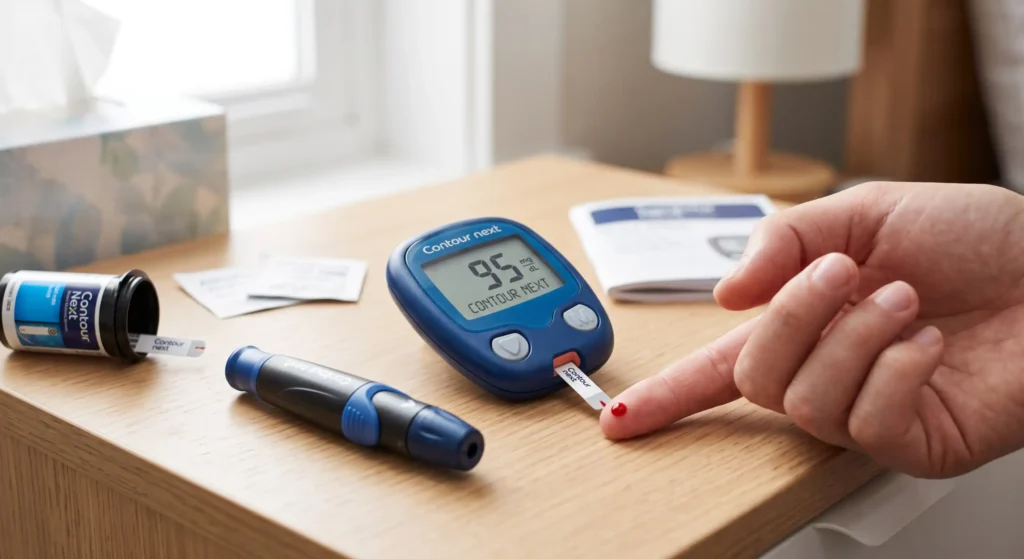
A consistent testing routine can help you and your healthcare team identify patterns.
For example, a series of readings might show that your glucose is regularly different:
- Before breakfast
- After a particular meal
- Before exercise
- After exercise
- At bedtime
Patterns can be more informative than one isolated number.
What Should You Write Down With a Blood Glucose Reading?
You do not necessarily need to create a long diary for every test.
However, useful context can include:
Time: When was the test taken?
Meal: Was it before or after eating?
Activity: Had you recently exercised?
Medication: Was medication taken according to your prescribed plan?
Symptoms: Did you feel different from usual?
Special circumstances: Were you sick, traveling, unusually stressed, or experiencing another situation that might affect your routine?
These details can help your healthcare professional understand your readings more effectively.
How to Use the CONTOUR NEXT Meter With Confidence
Confidence comes with repetition.
Your first few tests may feel slow.
You may double-check every step.
You may wonder whether you inserted the strip correctly or whether you have enough blood.
That is completely understandable.
Instead of trying to memorize everything at once, focus on the core routine.
First, learn the equipment.
Know your meter, test strips, and lancing device.
Second, learn the preparation.
Wash and dry your hands.
Third, learn the testing sequence.
Insert → Blood sample → Apply → Result.
Fourth, learn the care routine.
Dispose of used supplies and store your equipment appropriately.
Fifth, learn when to ask for help.
You don’t have to handle every challenge on your own.
CONTOUR NEXT Blood Glucose Monitoring System How to Use: Troubleshooting Guide
Problem: The meter does not turn on
Check whether:
- The test strip is inserted correctly.
- The meter has sufficient battery power.
- The strip is appropriate for the meter.
If the problem continues, consult the user guide for your specific model.
Problem: The meter says there is not enough blood
Follow the on-screen instructions.
If your model supports Second-Chance Sampling, use it according to the manufacturer’s instructions.
If additional blood cannot be added, follow the instructions for your specific meter.
Problem: You cannot get enough blood
Consider:
- Washing and drying your hands properly.
- Warming your hands if they are cold.
- Reviewing your lancing technique.
- Checking the lancing-device depth setting according to the manufacturer’s instructions.
If this continues to be a problem, ask a healthcare professional for guidance.
Problem: The result seems unusually high or low
Do not immediately assume the meter is faulty.
Review:
- Hand cleanliness
- Hand dryness
- Test-strip compatibility
- Strip expiration
- Strip storage
- Sample size
- Testing technique
If the result remains unexpected, follow your healthcare professional’s instructions.
Problem: The meter displays an error message
Do not guess what the error means.
Check the user guide supplied with your exact model.
Different models can use different messages, symbols, or troubleshooting procedures.
CONTOUR NEXT EZ: Important Model-Specific Information
The CONTOUR NEXT EZ is one member of the CONTOUR NEXT family.
Its official user guide identifies several components, including:
- Display
- Up/down buttons
- Memory button
- Test-strip port
It is designed to use CONTOUR NEXT blood glucose test strips.
The guide also describes Basic and Advanced modes, allowing users to access different meter features and settings.
Because this article covers the CONTOUR NEXT family generally, do not assume every feature described here is available on the CONTOUR NEXT EZ.
Always check the exact model name printed on your meter.
CONTOUR NEXT ONE and CONTOUR NEXT GEN
CONTOUR NEXT ONE and CONTOUR NEXT GEN are other models in the family.
Certain versions provide features such as:
- Bluetooth connectivity
- CONTOUR DIABETES app integration
- SmartLIGHT
- Second-Chance Sampling
- Additional result-management features
The manufacturer provides separate instructional resources for these models.
This is why identifying your exact meter before following model-specific instructions is important.
Why You Should Read the User Guide
Online articles can provide useful educational information, but your meter’s official instructions are the primary source for operating that specific device.
The user guide can tell you:
- Which strips are compatible
- How to insert the strip
- How to use your lancing device
- What display symbols mean
- How to perform a control test
- How to clean the meter
- How to change settings
- How to troubleshoot errors
- How to care for the device
- What warnings and precautions apply
Ascensia also provides instructional videos covering blood glucose testing for several CONTOUR NEXT models.
Safety Tips for Home Blood Glucose Testing
Safety should always come first.
Do not share your lancet
A lancet is intended for single-person use.
Do not share your lancing device
Unless specifically designed and approved for appropriate multiple-patient use under proper infection-control procedures, personal lancing devices should not be shared.
Keep used lancets contained
Use an appropriate sharps disposal method.
Keep test strips protected
Follow the manufacturer’s storage requirements.
Keep your meter dry
Avoid soaking or exposing it to excessive moisture.
Do not use damaged equipment
If your meter or supplies appear damaged, consult the manufacturer’s instructions.
Follow your healthcare professional’s treatment plan
A glucose reading should be interpreted in the context of your individual care plan.
How Families Can Help Someone Learning to Test
Sometimes the person learning to use a blood glucose meter is not the only person involved.
A family member, caregiver, or partner may also be learning the routine.
The best support is often calm and practical.
Instead of saying:
“You’re doing it wrong.”
Try:
“Let’s check the instructions together.”
Blood glucose testing can already feel emotionally tiring.
A supportive approach can make the routine less stressful.
Caregivers should also follow appropriate infection-control practices and should never share personal lancets or testing equipment inappropriately.
Helping Older Adults Learn the CONTOUR NEXT System
Older adults may appreciate a slower, simpler teaching approach.
Consider breaking the process into small steps:
- Identify the meter.
- Identify the correct test strip.
- Wash and dry hands.
- Prepare the lancet.
- Insert the strip.
- Obtain the sample.
- Apply the sample.
- Read the result.
- Record the result.
- Dispose of used supplies.
A printed reminder near the testing area may be useful if appropriate.
The objective is not to memorize technical terminology.
It is to make the process familiar.
Teaching Someone Who Is Newly Diagnosed With Diabetes
Being diagnosed with diabetes can bring many emotions.
There may be questions about food, medication, exercise, appointments, and blood glucose monitoring—all at the same time.
Learning CONTOUR NEXT blood glucose monitoring system how to use can feel like one more thing to remember.
Take it one step at a time.
First learn how to perform one test correctly.
Then practice.
Then learn how to review the result.
Then learn how to recognize patterns.
You do not need to understand every feature of your meter on day one.
How Alfa Healthcare Supply Inc. Can Support Your Medical Supply Needs
Alfa Healthcare Supply Inc. is a medical supply company serving customers with healthcare and durable medical equipment needs.
For people looking for diabetes-management supplies, having access to appropriate products can make everyday care more convenient.
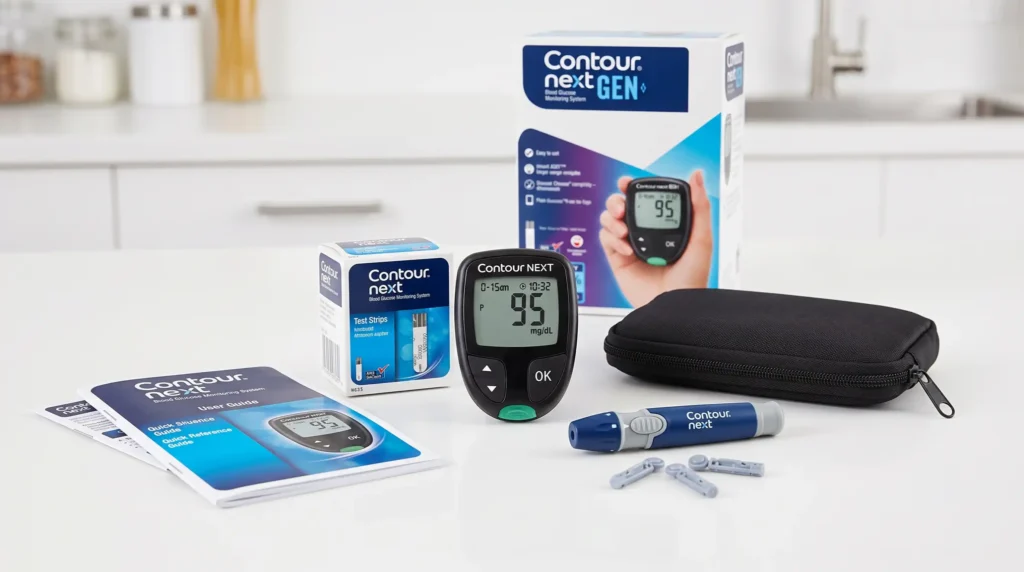
The important thing is to choose supplies that match your healthcare needs and your specific device.
If you are shopping for a CONTOUR NEXT blood glucose monitoring system or related diabetes supplies, confirm the exact model and compatibility before ordering.
You can visit Alfa Healthcare Supply Inc. to explore its healthcare supply resources.
A Quick CONTOUR NEXT Testing Checklist
Before testing:
- Wash your hands.
- Dry your hands completely.
- Prepare the meter.
- Check the test strip.
- Confirm the strip is compatible.
- Check the expiration information.
- Prepare a new lancet.
- Prepare the lancing device.
During testing:
- Insert the test strip correctly.
- Wait for the blood-sample prompt.
- Obtain a blood sample.
- Apply blood to the test strip.
- Wait for the result.
- Follow the meter’s instructions if the sample is insufficient.
After testing:
- Review the result.
- Record or synchronize it if appropriate.
- Remove the used test strip.
- Dispose of the lancet safely.
- Store the meter and supplies appropriately.
A 30-Second Reminder
If you need a very short version of CONTOUR NEXT blood glucose monitoring system how to use, remember:
1. Wash your hands.
2. Dry them completely.
3. Prepare a compatible test strip.
4. Insert the strip into the meter.
5. Prepare a fresh lancet.
6. Obtain a fingertip blood sample.
7. Apply the blood to the strip.
8. Wait for the reading.
9. Record or sync the result if appropriate.
10. Dispose of used supplies safely.
That’s the basic routine.
Building a Blood Glucose Testing Habit
- The most useful glucose meter is one you can comfortably incorporate into your daily routine.
- At first, testing may interrupt your day.
- You may need to stop, find your supplies, wash your hands, prepare the lancet, and check the meter.
- After a while, the routine can become much more natural.
- Try keeping your supplies organized.
- Keep your meter where it is appropriate and convenient.
- Know where your test strips are stored.
- Keep fresh lancets available.
- Follow your healthcare professional’s testing schedule.
- And give yourself permission to take your time while learning.
- You are learning a skill that can become part of your everyday diabetes-management routine.
Final Thoughts: CONTOUR NEXT Blood Glucose Monitoring System How to Use
Understanding CONTOUR NEXT blood glucose monitoring system how to use does not have to be complicated.
The process begins with good preparation:
Clean hands. Correct supplies. Fresh lancet. Compatible test strip.
Then comes the actual test:
Insert. Prick. Apply. Wait. Read.
Finally, complete the routine:
Record. Dispose. Store.
The CONTOUR NEXT family includes several models, so some features and instructions differ. CONTOUR NEXT EZ, CONTOUR NEXT ONE, and CONTOUR NEXT GEN should not automatically be treated as identical devices. Ascensia Diabetes Care offers separate user guides and instructional materials for each of its blood glucose monitoring models.
Most importantly, your glucose meter is a tool for monitoring—not a replacement for personalized medical care. Your healthcare professional can help you determine when to test, what your individual target range should be, and what to do when your readings are outside that range.
If you are just beginning, remember that confidence comes with practice. The first few tests may take longer. You may make mistakes. You may need to reread the instructions.
That’s okay.
Take one step at a time.
With the right supplies, proper technique, and a consistent routine, using a CONTOUR NEXT blood glucose monitoring system can become a manageable part of everyday diabetes care.
For healthcare and medical supply resources, visit Alfa Healthcare Supply Inc..
Frequently Asked Questions About CONTOUR NEXT Blood Glucose Monitoring System How to Use
1. How do I use the CONTOUR NEXT blood glucose monitoring system?
Start by washing and drying your hands. Prepare a compatible CONTOUR NEXT test strip and a new lancet. Insert the test strip into the meter, obtain a fingertip blood sample using the lancing device, and apply the blood to the test strip. Wait for the meter to display the result, then record or synchronize it if appropriate.
The exact procedure can vary by model.
2. Which test strips does the CONTOUR NEXT meter use?
CONTOUR NEXT meters are designed for compatible CONTOUR NEXT blood glucose test strips. For example, the official CONTOUR NEXT EZ guide specifies the use of CONTOUR NEXT blood glucose test strips.
Always verify compatibility with your exact meter.
3. Do I need to wash my hands before testing?
Yes. Wash your hands with soap and water and dry them completely before testing.
Clean, dry hands are an important part of preparing a blood glucose sample.
4. Where should I get the blood sample?
For routine fingertip testing, use the lancing device according to its instructions.
If you have questions about alternative testing sites, speak with your healthcare professional and consult the instructions for your specific device.
5. What happens if I do not get enough blood?
If your meter indicates that the sample is insufficient, follow the instructions on the meter.
Some CONTOUR NEXT models include Second-Chance Sampling, allowing additional blood to be applied to the same strip within the permitted time.
6. Can I reuse a lancet?
It is recommended to use a fresh lancet for each test according to the manufacturer’s instructions and good infection-control practices.
Never share a lancet with another person.
7. Can I use another brand’s test strips?
Do not assume another brand’s strips will work with your meter.
Use the test strips specified for your CONTOUR NEXT model.
8. Why should I dry my hands before testing?
Water remaining on your fingertips can affect the blood sample.
Dry hands also help ensure that the sample is obtained from a clean surface.
9. Can I use the CONTOUR NEXT meter without a smartphone?
Yes, depending on your model.
Some CONTOUR NEXT meters have Bluetooth connectivity and app integration, while other models do not.
You do not need to assume that every CONTOUR NEXT meter requires a smartphone.
10. Does CONTOUR NEXT EZ connect to a smartphone?
The CONTOUR NEXT EZ has different capabilities from Bluetooth-enabled CONTOUR NEXT models and does not provide the same app-pairing function.
Always check your exact model before expecting smartphone connectivity.
11. What is SmartLIGHT?
SmartLIGHT is a feature available on certain CONTOUR NEXT meters that provides a visual indication related to the meter’s configured target range.
Its availability and behavior depend on the model and settings.
12. What is Second-Chance Sampling?
Second-Chance Sampling is a feature available on certain CONTOUR NEXT meters that can allow additional blood to be applied to the same test strip when the first sample is insufficient.
Follow the instructions shown by your particular meter.
13. How should I store CONTOUR NEXT test strips?
Follow the storage instructions supplied with your specific test strips.
Keep them protected from unsuitable environmental conditions, check expiration dates, and close the strip container promptly when applicable.
14. Can I clean my CONTOUR NEXT meter with any disinfectant?
No.
Do not assume that every household cleaner, alcohol product, or disinfectant is safe for your meter.
Follow the cleaning and disinfection instructions for your specific model.
15. What should I do if the result does not look right?
Review your testing technique and supplies.
Check your hands, test-strip compatibility, expiration date, storage conditions, and sample collection.
If the result remains unexpected, follow your healthcare professional’s instructions.
If you have concerning symptoms, seek appropriate medical advice.
16. How often should I check my blood glucose?
Your healthcare professional should recommend the testing schedule that is appropriate for you.
The frequency can depend on your diabetes type, medication, insulin use, treatment plan, and other factors.
17. Should I change my medication based on one reading?
Do not make medication changes based solely on an isolated reading unless your healthcare professional has already given you a specific action plan.
If you are unsure what a result means, contact your healthcare professional.
18. Can children use a CONTOUR NEXT meter?
Whether a particular meter is appropriate for a child depends on the product’s intended use and the child’s healthcare plan.
Parents or caregivers should follow the manufacturer’s instructions and guidance from the child’s healthcare professional.
19. What should I do if the meter displays an error?
Look up the error in the user guide for your exact CONTOUR NEXT model.
Do not guess at the meaning of an unfamiliar error message.
20. Where can I find instructions for my CONTOUR NEXT meter?
Ascensia Diabetes Care provides model-specific user guides and instructional videos for CONTOUR NEXT products.
The official CONTOUR NEXT EZ guide is also available through Ascensia’s resources.
Medical Disclaimer: This article is intended for general educational and informational purposes. It is not a substitute for diagnosis, treatment, or personalized medical advice. Always follow the instructions supplied with your specific CONTOUR NEXT meter and test strips and consult your healthcare professional for questions about blood glucose targets, testing frequency, medication, insulin, or treatment decisions.
How to Change Dexcom G7 Sensor With Receiver
Living with diabetes often means managing several small routines throughout the day. Checking glucose, keeping supplies organized, paying attention to trends, and changing a continuous glucose monitoring (CGM) sensor can all become part of everyday life. At first, replacing a CGM sensor may feel a little intimidating. After doing it a few times, however, the process can become much more familiar and manageable.
If you use a Dexcom G7 sensor with receiver, knowing exactly what to expect when your sensor session ends can make the change much less stressful. This guide explains how to change Dexcom G7 sensor with receiver, from ending the old sensor session to inserting the new sensor, entering the pairing code, and waiting for warmup.
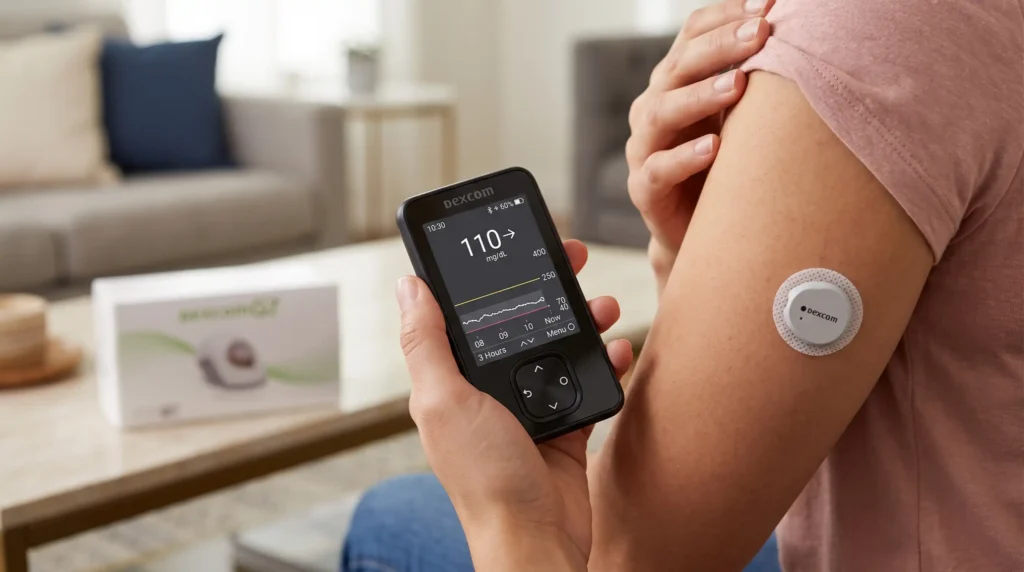
For people looking for diabetes-management supplies and healthcare products, Alfa Healthcare Supply Inc. provides medical equipment and healthcare supply resources. Always follow the instructions supplied with your specific Dexcom G7 system, because product instructions, indications, and available features can change over time.
What Is the Dexcom G7 Sensor With Receiver?
The Dexcom G7 sensor with receiver is a continuous glucose monitoring system designed to provide glucose readings and alerts through a compatible display device. Instead of requiring you to manually check your glucose every time you want a reading, the CGM system continuously monitors glucose and communicates information to the receiver.
The Dexcom G7 system uses an all-in-one sensor. When using the receiver, the sensor communicates wirelessly with that receiver so you can view glucose information, trends, and alerts.
Dexcom states that the standard G7 sensor can provide glucose data for up to 10 days, followed by a 12-hour grace period. After the sensor session and grace period are over, a new sensor is required to continue receiving readings and alerts.
The exact sensor model matters. Dexcom also offers a G7 15 Day sensor in certain markets, so users should follow the instructions for the specific product they have.
How to Change Dexcom G7 Sensor With Receiver
Changing a Dexcom G7 sensor when using the receiver generally involves four main stages:
- End the old sensor session.
- Remove the old sensor.
- Insert the new Dexcom G7 sensor.
- Pair the new sensor with the receiver and complete warmup.
Dexcom’s official receiver replacement instructions follow this general process.
The process is designed to be straightforward, but taking your time is worthwhile. A clean insertion site, correct pairing code, and properly completed receiver instructions can help you avoid unnecessary frustration.
Before You Change Your Dexcom G7 Sensor
A few minutes of preparation can make sensor replacement easier.
Before starting, gather:
- Your new Dexcom G7 sensor applicator
- Your Dexcom G7 receiver
- An alcohol wipe
- A clean, dry area where you can work
- Your official Dexcom instructions, if needed
- A suitable sensor insertion site
It is also helpful to make sure your receiver has enough battery power.
Before handling or inserting the sensor, wash your hands thoroughly with soap and water, then dry them completely. Dexcom’s receiver setup guidance recommends clean, dry hands before starting the sensor insertion process.
A simple preparation routine
Find a comfortable location where you will not be rushed. Have your receiver nearby and make sure you can clearly see the pairing code printed on the new applicator.
This may sound like a small detail, but having everything ready can make the experience feel much calmer.
Step 1: Check Whether Your Current Sensor Is Ready to Be Replaced
A standard Dexcom G7 sensor is designed for up to 10 days of use, followed by a 12-hour grace period.
During the grace period, the sensor can continue operating while giving you additional time to replace it. Dexcom says users can either replace the sensor during this period or allow the grace period to finish.
The receiver will provide alerts as the sensor session approaches its end.
This is helpful because you do not necessarily have to change the sensor at the exact moment the 10-day period ends.
Can you replace the sensor early?
Yes. Dexcom provides an option to end the current session early.
According to Dexcom’s instructions for the receiver, go to the Menu and select:
Replace Sensor — when you want to begin a new sensor immediately.
or
Stop Sensor Session — when you want to stop the current sensor without immediately starting another one.
If you want continuous CGM monitoring, the Replace Sensor option is generally the relevant choice.
Step 2: End the Current Sensor Session
On the Dexcom G7 receiver, open the menu.
Select:
Menu → Replace Sensor
The receiver will guide you through the process.
If the sensor has already completed its session and grace period, the receiver can prompt you to start a new sensor.
Dexcom explains that the old sensor session must be ended before starting a new sensor.
Why this step matters
It can be tempting to simply remove the old sensor and put on a new one. However, the receiver needs to know that the previous sensor session has ended.
Following the receiver’s prompts helps keep the sensor transition organized.
Step 3: Remove the Old Dexcom G7 Sensor
Once the old sensor session has ended, remove the sensor from your skin.
Dexcom recommends peeling the sensor patch off like a bandage.
If the adhesive feels especially secure, avoid aggressively pulling at the skin.
Take your time and remove the patch carefully.
After removing the sensor
Check your skin.
A small amount of temporary redness can occur after removing an adhesive product, but if you notice significant irritation, swelling, severe discomfort, or another concerning reaction, seek appropriate medical advice.
Do not immediately place a new sensor over an irritated or damaged area.
Choosing a healthy insertion location can make the next sensor experience more comfortable.
Step 4: Choose a Suitable Site for Your New Dexcom G7 Sensor
Selecting a good site is an important part of sensor replacement.
Dexcom’s current information indicates that G7 sensor placement depends on age and the specific G7 model. For the standard G7, the back of the upper arm is an indicated location for users ages 2 years and older, while the upper buttocks may also be indicated for children ages 2–6 years.
Always follow the instructions for your specific product and age group.
Avoid problematic areas
Dexcom advises avoiding areas:
- With insufficient fatty tissue
- Near muscle or bone
- That are frequently bumped or pressed
- Where you regularly sleep
- Near a waistband
- With irritation or scarring
- With tattoos or substantial hair
- Too close to an infusion or injection site
Dexcom’s receiver setup information also recommends choosing a location that is less likely to be bumped or pushed.
Give your skin a break
If you have been using the same general area repeatedly, rotating sites may help reduce irritation.
Do not place the new sensor directly over the previous insertion location.
Step 5: Clean the New Sensor Site
Once you have selected an appropriate location, clean the area with an alcohol wipe.
Allow the skin to dry completely.
Dexcom’s instructions recommend allowing the alcohol-cleaned area to dry for at least 10 seconds before insertion.
Why should the skin be dry?
A dry surface can help the adhesive attach properly.
Applying the sensor while the skin is still wet may make the adhesive less effective.
Try not to touch the cleaned area unnecessarily after cleaning it.
Step 6: Prepare the Dexcom G7 Applicator
Take your new Dexcom G7 applicator.
Inspect the packaging and make sure it is the correct sensor for your system.
Do not use a damaged product.
Dexcom’s G7 is an all-in-one sensor and applicator system, meaning the sensor is built into the applicator.
Remove the applicator cap
Unscrew the cap as directed.
Avoid touching the inside of the applicator.
Dexcom specifically instructs users not to touch inside the applicator during the insertion process.
This is one of those moments when slowing down is better than rushing.
Step 7: Insert the New Dexcom G7 Sensor
Place the applicator firmly against the prepared insertion site.
According to Dexcom’s receiver setup instructions, the applicator should be held firmly against the skin before pressing the button.
Press the applicator button as instructed.
Once the sensor has been inserted, remove the applicator according to the instructions.
Keep the insertion controlled
Do not repeatedly press or manipulate the applicator.
Use the official Dexcom instructions for your exact sensor model if the physical design or insertion instructions differ.
Step 8: Help Secure the Sensor Patch
After insertion, make sure the adhesive patch is properly attached.
Dexcom’s setup instructions recommend rubbing firmly around the patch three times and then gently pressing on the sensor for approximately 10 seconds.
A secure patch can be especially useful if you are active during the day, sweat frequently, or move your arms often.
However, avoid placing unnecessary pressure on the sensor itself.
Step 9: Find the Pairing Code
This is one of the most important steps when changing a Dexcom G7 sensor with receiver.
Each new G7 sensor has a 4-digit pairing code.
Dexcom explains that G7 sensors are factory calibrated, so you do not enter the sensor calibration code used with older systems such as G6. However, you still need the 4-digit pairing code to pair the new sensor with a compatible receiver or smart device.
The pairing code is provided on the body of the new G7 applicator.
Do not confuse the pairing code with a calibration code
This is a common point of confusion.
The G7 does not require users to enter the older-style sensor calibration code.
Instead, you enter the 4-digit pairing code associated with the new sensor.
Carefully enter the correct four digits.
Step 10: Confirm the New Sensor on the Receiver
Return to your Dexcom G7 receiver.
The receiver should guide you through the replacement process.
Confirm that you have inserted the new sensor when prompted.
Then enter the 4-digit pairing code from the new applicator.
Dexcom’s receiver instructions describe this as part of the pairing process.
Take a moment to check the number
Before confirming, look at the applicator again.
A single incorrect digit can prevent the sensor from pairing correctly.
If the receiver does not accept the code or the pairing process does not proceed as expected, follow the troubleshooting instructions supplied by Dexcom rather than repeatedly guessing.
Step 11: Wait for the Sensor to Pair
After entering the pairing code, the receiver will attempt to communicate with the new sensor.
Give the system time to complete the pairing process.
Once pairing is complete, the receiver will guide you to the next step.
Dexcom’s official replacement instructions state that after pairing, users select Finish and proceed to sensor warmup.
Step 12: Complete the Dexcom G7 Sensor Warmup
The new sensor needs a warmup period before glucose readings and alerts become available.
Dexcom states that the G7 warmup can take up to approximately 30 minutes.
The receiver will show the warmup progress.
During this period, keep the receiver close enough to communicate with the sensor as directed by Dexcom.
Why does the warmup happen?
The sensor needs time to begin its new monitoring session.
The warmup period is a normal part of starting a new sensor and does not necessarily indicate a problem.
Do not remove the new sensor simply because it does not provide readings immediately after insertion.
Wait for the receiver to complete the warmup process.
Step 13: Confirm That Your New Sensor Is Working
When warmup is complete, check your receiver.
You should begin seeing glucose information and, when applicable, alerts according to your system settings.
Take a moment to make sure:
- The new sensor is attached securely.
- The receiver recognizes the sensor.
- Glucose readings are appearing.
- Alerts are functioning as expected.
- The sensor session has started correctly.
If something does not appear as expected, consult the official Dexcom troubleshooting information.
What Happens During the Dexcom G7 Sensor Warmup?
The warmup period is the transition between inserting the new sensor and receiving glucose information from the new session.
Dexcom’s receiver instructions describe the warmup timer as the period before readings and alerts begin.
The receiver will display information about the warmup process.
This can be reassuring because you do not have to guess whether the sensor is doing anything.
Be patient
One of the most common mistakes people can make during any technology setup is assuming that something is wrong simply because it takes a few minutes.
A new sensor needs time to start.
If the receiver is showing the expected warmup process, allow it to continue.
How Long Does a Dexcom G7 Sensor Last?
The standard Dexcom G7 sensor is designed to provide glucose data for up to 10 days, followed by a 12-hour grace period.
Dexcom describes this grace period as additional time that can make sensor replacement more convenient.
This means you do not necessarily have to replace your sensor immediately when the standard 10-day sensor session ends.
However, after the grace period ends, the sensor must be replaced to continue receiving glucose readings and alerts.
Can You Restart a Dexcom G7 Sensor?
No.
Dexcom states that a G7 sensor cannot be restarted after the sensor session has ended.
This is important for people who may have used older CGM systems with different procedures.
Once the G7 sensor session has ended, plan to use a new sensor rather than trying to restart the old one.
Can You Change the Dexcom G7 Sensor Before 10 Days?
A user may end the sensor session early if necessary.
Dexcom’s receiver instructions provide a Replace Sensor option when the user wants to start a new sensor immediately.
However, changing a sensor early may affect your available supplies.
If you are replacing a sensor because it has failed, fallen off, or is behaving unexpectedly, follow Dexcom’s support process and your healthcare professional’s advice where appropriate.
What If Your Dexcom G7 Sensor Falls Off Early?
Sometimes an adhesive sensor may loosen or come off before the expected end of its session.
Do not simply assume that the sensor is defective.
First, follow the instructions supplied with your system regarding sensor problems and replacement.
If you believe the sensor failed prematurely, Dexcom provides a sensor replacement process. Dexcom asks users reporting product issues to provide identifying information such as the sensor’s serial number and contact details.
Dexcom’s sensor replacement policy says confirmed product failures during the intended sensor life may qualify for replacement, while some non-defective situations may qualify for a courtesy replacement on a case-by-case basis.
What If the Dexcom G7 Will Not Pair With the Receiver?
If your new sensor does not pair, do not panic.
Start by checking the basics.
Check the pairing code
Make sure you entered the correct 4-digit pairing code from the new applicator.
Remember that G7 uses a pairing code rather than the older sensor code used by some previous Dexcom systems.
Check that the old sensor session has ended
A new sensor cannot simply be started while the previous session is still active.
Dexcom states that the existing session or grace period must be ended before starting a new sensor.
Follow the receiver prompts
The receiver is designed to guide users through the setup process.
If a specific error appears, use the official Dexcom troubleshooting instructions rather than repeatedly attempting the same action.
What If the Receiver Says It Cannot Find the Sensor?
Several factors can affect the pairing process.
Start by reviewing:
- Whether the correct pairing code was entered
- Whether the old sensor session has ended
- Whether the new sensor was inserted correctly
- Whether the receiver is following the expected setup sequence
- Whether the receiver has sufficient battery power
If the issue continues, consult Dexcom support or the official user guide.
Dexcom maintains official G7 receiver guides and training resources for users who need additional help.
What If the New Sensor Is Uncomfortable?
Some users may notice mild discomfort after insertion.
However, significant pain is not something to simply ignore.
If the sensor causes substantial discomfort, appears to have been placed incorrectly, or you develop a concerning skin reaction, contact an appropriate healthcare professional and follow the manufacturer’s guidance.
Do not attempt to modify the sensor or applicator.
What If the Sensor Adhesive Is Not Sticking Well?
A sensor works best when it remains securely attached.
Before insertion, make sure the skin is clean and dry. Dexcom specifically recommends cleaning the site with an alcohol wipe and allowing it to dry before insertion.
Avoid applying the sensor over:
- Moist skin
- Irritated skin
- Heavy lotion or oil
- Areas where clothing constantly rubs
- Scarred or damaged skin
If you routinely have difficulty keeping the sensor attached, ask your healthcare professional or follow Dexcom’s approved guidance for adhesive support.
Should You Use the Same Sensor Location Every Time?
It is generally sensible to rotate appropriate sensor locations rather than repeatedly inserting into exactly the same spot.
Repeated use of the same area can contribute to local skin irritation.
Choose only locations approved for your particular Dexcom G7 product and age group.
Dexcom’s current instructions identify approved placement areas based on the product and age.
If you are uncertain about where your sensor should be placed, review the instructions for your exact model.
Dexcom G7 Sensor With Receiver vs. Smartphone
The Dexcom G7 can be used with compatible display devices, depending on the product and market.
Some users prefer a smartphone because it is already part of their daily routine.
Others prefer the dedicated Dexcom G7 receiver because it provides a separate device for viewing CGM information.
The replacement process is similar in principle, but the on-screen steps differ.
This article specifically focuses on how to change Dexcom G7 sensor with receiver.
Dexcom provides separate training materials for replacing a sensor using the app and using the receiver.
Why Some People Prefer a Dexcom G7 Receiver
A dedicated receiver can be useful for people who prefer not to depend entirely on a smartphone.
It can also provide a straightforward, focused display for glucose information.
The best display option depends on the user’s needs, compatible devices, preferences, and healthcare situation.
Before switching display methods, check Dexcom’s current compatibility information and instructions.
Important Tips for Changing a Dexcom G7 Sensor
The following habits can make the replacement process easier.
1. Keep your new sensor available before the old one ends
Don’t wait until the last minute to discover that you are out of sensors.
Keeping your supplies organized can reduce unnecessary stress.
2. Check the applicator before insertion
Look at the product before opening or using it.
If the packaging appears damaged, follow the manufacturer’s instructions rather than using a questionable product.
3. Keep the pairing code visible
Before throwing away the applicator, make sure you have entered the required pairing code.
4. Clean the skin properly
Clean the site and allow it to dry.
5. Avoid irritated skin
Give irritated areas time to recover.
6. Follow your receiver’s instructions
The on-screen prompts are there to guide you.
7. Do not restart an expired G7 sensor
Dexcom states that G7 sensors cannot be restarted after the session has ended.
8. Keep your receiver charged
A low battery can make an already stressful situation more difficult.
9. Keep backup supplies organized
Having your next sensor available can make replacement much easier.
Common Mistakes When Changing a Dexcom G7 Sensor
Understanding common mistakes can help you avoid them.
Mistake 1: Forgetting to end the previous session
A new sensor needs to be started through the appropriate receiver process.
Mistake 2: Entering the wrong pairing code
The G7 uses a 4-digit pairing code associated with the new applicator.
Mistake 3: Applying the sensor to wet skin
Allow the alcohol to dry before insertion.
Mistake 4: Choosing an unsuitable location
Avoid areas that are frequently bumped, pressed, irritated, or otherwise unsuitable according to Dexcom’s instructions.
Mistake 5: Removing the sensor during warmup
Warmup is expected after starting a new sensor.
Mistake 6: Trying to restart an expired sensor
Dexcom does not allow G7 sensor restarts after the session has ended.
Mistake 7: Ignoring repeated sensor problems
If you repeatedly experience failures, contact Dexcom support and speak with your healthcare professional when appropriate.
What Should You Do if the Sensor Fails Before 10 Days?
A sensor that stops working before the expected end of its intended life may require troubleshooting or replacement.
Dexcom recommends contacting its technical support team for product issues.
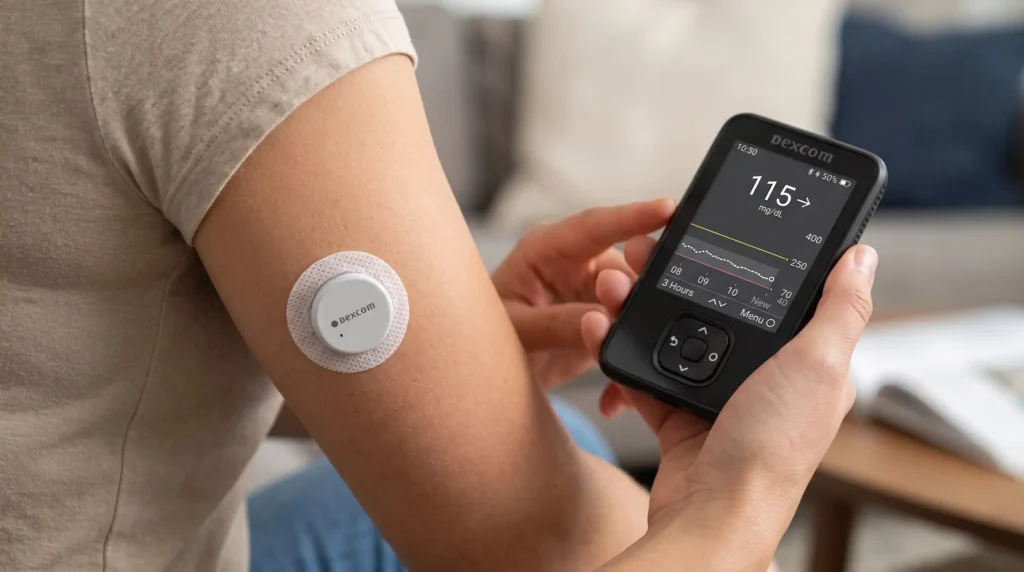
When reporting a sensor issue, Dexcom says you may need the sensor’s identifying information, including its serial number.
Keep the packaging or product information available until you are confident the sensor is functioning properly.
This can save time if support asks for identifying information.
Why Keeping the Sensor Packaging Can Be Helpful
It is easy to throw away packaging immediately after inserting a sensor.
However, keeping the applicator packaging or relevant product information until the sensor is working properly can be useful.
If a sensor fails, you may need identifying information when communicating with Dexcom support.
Dexcom specifically recommends having the sensor serial number available when reporting product issues.
A small organizational habit can make a frustrating situation easier.
What to Do During a Gap Between Sensors
Sometimes there can be a short period between removing one sensor and starting another.
During such situations, follow the glucose-monitoring plan provided by your healthcare professional.
Do not assume that a missing CGM reading means you should guess your glucose level.
If you have been instructed to use a blood glucose meter when CGM information is unavailable, follow those instructions.
Treatment decisions should be made according to your prescribed diabetes-management plan and the instructions for your specific CGM system.
Understanding CGM Readings After Replacing Your Sensor
Once your new sensor finishes warmup, you can begin receiving glucose information again.
Remember that CGM readings represent glucose information measured by the sensor and may not always exactly match a blood glucose meter value.
Dexcom provides educational information about differences between CGM readings and blood glucose meter values.
If your readings seem unusual or do not match how you feel, follow the instructions provided with your Dexcom system and your healthcare professional’s recommendations.
When Should You Contact Your Healthcare Professional?
Changing a sensor is a technical task, but diabetes management is much broader than sensor replacement.
Contact your healthcare professional if you have questions about:
- Your glucose targets
- Medication or insulin dosing
- Repeated unexplained glucose changes
- How to respond to high or low glucose
- Persistent symptoms
- Skin reactions
- Whether a particular sensor location is appropriate
- Using CGM information for treatment decisions
Do not change medication doses solely because of information in a general online article.
Your healthcare professional can help you understand how CGM information fits into your individual treatment plan.
When Should You Contact Dexcom Support?
Dexcom support can be particularly useful for product-specific problems.
Consider contacting Dexcom if:
- A sensor fails unexpectedly
- The receiver repeatedly cannot pair with a new sensor
- You receive an unfamiliar sensor error
- The sensor stops working prematurely
- You need help with product-specific troubleshooting
- You need information about sensor replacement
Dexcom provides product support resources and a sensor replacement process.
A Quick Dexcom G7 Sensor Replacement Checklist
Use this simplified checklist when changing your sensor:
- Have the new Dexcom G7 sensor ready.
- Charge or check the receiver battery.
- Wash and dry your hands.
- End the current sensor session using the receiver.
- Remove the old sensor carefully.
- Choose an approved new insertion site.
- Clean the site with an alcohol wipe.
- Allow the site to dry.
- Prepare the new applicator.
- Avoid touching inside the applicator.
- Insert the new sensor according to the instructions.
- Make sure the adhesive is securely attached.
- Locate the new sensor’s 4-digit pairing code.
- Confirm the sensor is inserted on the receiver.
- Enter the pairing code.
- Wait for pairing.
- Select Finish when prompted.
- Complete the sensor warmup.
- Confirm glucose readings and alerts are available.
- Keep the product information available in case support is needed.
How Alfa Healthcare Supply Inc. Can Support Your Healthcare Supply Needs
Managing diabetes often involves more than one product. Depending on an individual’s healthcare needs, patients and caregivers may need glucose-monitoring supplies, durable medical equipment, diabetic supplies, mobility products, incontinence supplies, or other healthcare products.
Alfa Healthcare Supply Inc. is a healthcare supply company serving customers who need medical equipment and healthcare products.
When choosing a medical supply provider, it is important to look beyond simply finding a product online. Consider product availability, ordering support, product information, customer service, and whether the supplier is familiar with the type of healthcare equipment you need.
For diabetes-related supplies, always make sure you are purchasing the correct product and model for your healthcare needs.
Why Understanding Your Dexcom G7 Replacement Routine Matters
A CGM sensor can become part of a person’s everyday routine.
For someone who has been using CGM technology for months or years, changing the sensor may eventually feel like changing a battery or replacing another everyday healthcare item.
But there can still be moments of uncertainty.
What if the sensor is about to expire and you are away from home?
What if you cannot remember where the pairing code is?
What if the receiver does not immediately connect?
Knowing the process in advance can make these situations much less stressful.
The most important idea is simple:
You do not need to rush.
Prepare the supplies, follow the receiver prompts, insert the new sensor according to the manufacturer’s instructions, enter the correct pairing code, and allow the sensor to complete its warmup.
A Simple Memory Trick for Dexcom G7 Sensor Replacement
If you find the full process difficult to remember, think of the replacement as:
End → Remove → Clean → Insert → Pair → Warm Up → Check
End
End the old sensor session.
Remove
Remove the old sensor carefully.
Clean
Clean the new insertion site and let it dry.
Insert
Insert the new G7 sensor according to the manufacturer’s instructions.
Pair
Enter the new 4-digit pairing code into the receiver.
Warm Up
Allow the new sensor to complete warmup.
Check
Confirm that glucose readings and alerts are working as expected.
This simple sequence can help make the procedure easier to remember.
Final Thoughts: Changing Your Dexcom G7 Sensor With Confidence
Learning how to change Dexcom G7 sensor with receiver does not have to be overwhelming.
The first few times may require extra attention, especially when you are learning where to find the pairing code or navigating the receiver prompts. With practice, the process can become a familiar part of your diabetes-care routine.
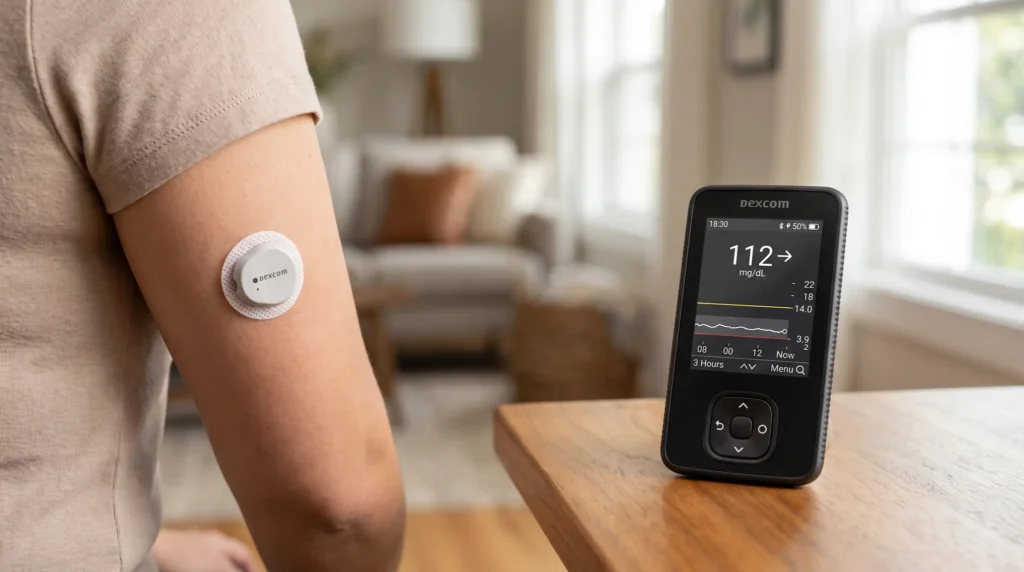
For the standard Dexcom G7, the sensor provides up to 10 days of glucose data followed by a 12-hour grace period. When it is time for a new sensor, the receiver can guide you through ending the old session, replacing the sensor, entering the new pairing code, and completing warmup.
Remember these essentials:
- End the old sensor session before starting a new one.
- Remove the old sensor carefully.
- Select an appropriate approved insertion site.
- Clean and dry the skin.
- Follow the applicator instructions carefully.
- Use the new sensor’s 4-digit pairing code.
- Allow the sensor to complete warmup.
- Do not attempt to restart an expired G7 sensor.
- Contact Dexcom support if you experience a suspected product failure.
- Speak with your healthcare professional about treatment decisions and medical concerns.
Give yourself permission to slow down and take the time you need. Healthcare routines do not need to be rushed. A calm, consistent approach can make changing a Dexcom G7 sensor with receiver feel much more manageable.
For official product instructions, always refer to the documentation provided with your Dexcom G7 system and the latest information from Dexcom. Dexcom maintains current G7 user guides and receiver resources on its official website.
Frequently Asked Questions About How to Change Dexcom G7 Sensor With Receiver
1. How do I change a Dexcom G7 sensor using the receiver?
First, end the current sensor session from the receiver using the Menu and Replace Sensor option. Remove the old sensor, prepare an approved new site, clean and dry the skin, insert the new G7 sensor, and then use the receiver to confirm insertion and enter the new sensor’s 4-digit pairing code. Wait for pairing and complete the warmup.
2. How long does a Dexcom G7 sensor last?
The standard Dexcom G7 sensor is designed to last up to 10 days, followed by a 12-hour grace period.
3. Can I replace my Dexcom G7 during the grace period?
Yes. The grace period provides additional time to replace the sensor. You can either wait until it ends or replace the sensor earlier by ending the current session through the receiver.
4. Can I restart a Dexcom G7 after it expires?
No. Dexcom states that the G7 sensor cannot be restarted after its session has ended.
5. Does Dexcom G7 use a sensor code?
The G7 is factory calibrated and does not require the traditional sensor calibration code used by older Dexcom systems. However, you still need the 4-digit pairing code printed on the G7 applicator to pair the sensor with the receiver.
6. Where is the Dexcom G7 pairing code?
The 4-digit pairing code is provided on the body of the new Dexcom G7 applicator.
7. How long does Dexcom G7 warmup take?
Dexcom’s receiver training information states that G7 warmup can take up to approximately 30 minutes.
8. Can I use the Dexcom G7 receiver instead of a smartphone?
Yes, the Dexcom G7 system has a receiver option in supported configurations. Dexcom provides specific setup and replacement instructions for users operating the G7 with the receiver.
9. What should I do if my G7 sensor does not pair?
Check that the previous sensor session has ended and that you entered the correct 4-digit pairing code from the new applicator. If the problem continues, follow Dexcom’s troubleshooting guidance or contact Dexcom technical support.
10. What if my Dexcom G7 sensor falls off?
If the sensor comes off unexpectedly, follow the manufacturer’s instructions for sensor problems and replacement. If you believe the sensor failed prematurely, contact Dexcom support. You may need the sensor’s identifying information when reporting the issue.
11. Can I insert the new sensor in the same place?
It is better to follow Dexcom’s site-selection instructions and avoid placing a new sensor over irritated or unsuitable skin. Rotate appropriate sites when possible and follow the instructions for your specific G7 model.
12. Should I clean the skin before applying the sensor?
Yes. Dexcom’s instructions recommend cleaning the insertion site with an alcohol wipe and allowing it to dry before insertion.
13. Why does my new Dexcom G7 not show readings immediately?
A new sensor goes through a warmup period before readings and alerts become available. Dexcom states that the warmup can take up to approximately 30 minutes.
14. What if the sensor is painful?
If you experience significant or persistent pain, follow the product instructions and contact an appropriate healthcare professional. Do not ignore a concerning reaction simply because the sensor is new.
15. What should I do with the old applicator?
Dispose of used sensor components according to the manufacturer’s instructions and applicable local requirements. Keep relevant product information until you are confident the new sensor is working correctly, particularly if you may need to contact technical support.
16. Can I change the Dexcom G7 sensor myself?
Many users can follow the manufacturer’s instructions to replace their own sensor. However, children, people with limited dexterity, or anyone who is uncomfortable with the process may benefit from assistance from a trained caregiver or healthcare professional.
17. Is changing a Dexcom G7 sensor difficult?
For many people, the first replacement can feel unfamiliar. Once you understand the sequence—end the old session, remove the old sensor, prepare the site, insert the new sensor, enter the pairing code, and complete warmup—the routine can become much easier.
18. Do I need a new pairing code for every G7 sensor?
Yes. Each new sensor has its own 4-digit pairing code that is used to pair that sensor with the receiver.
19. Can I use an expired Dexcom G7 sensor?
Do not use a sensor beyond its approved use period. The standard G7 sensor is intended for up to 10 days plus the specified 12-hour grace period.
20. Where can I learn more about changing the G7 sensor?
Dexcom provides official G7 guides, receiver instructions, training videos, and replacement information. Its training resources include a dedicated video for replacing the G7 sensor using the receiver.
Disclaimer: This educational article is not medical advice and does not replace the official Dexcom instructions for use, product labeling, or advice from a qualified healthcare professional. Product availability, approved insertion sites, features, and instructions may vary by age, product version, country, and regulatory approval. If your glucose readings do not match how you feel, or you experience symptoms that concern you, follow your healthcare professional’s instructions and the safety guidance provided with your CGM system.
When you search for “freestyle libre 3 reader near me,” you are usually looking for more than a medical device. You may need a reliable way to view glucose information, manage your diabetes routine, and avoid the frustration of searching from store to store for the right equipment.
For many people, having access to a dedicated glucose reader can make diabetes management feel more organized. The FreeStyle Libre 3 Reader is designed to work with the FreeStyle Libre 3 system and provides glucose readings from a compatible sensor, along with alarms and historical information. Abbott states that the reader is available through participating durable medical equipment (DME) suppliers and retail pharmacies, although availability can vary.
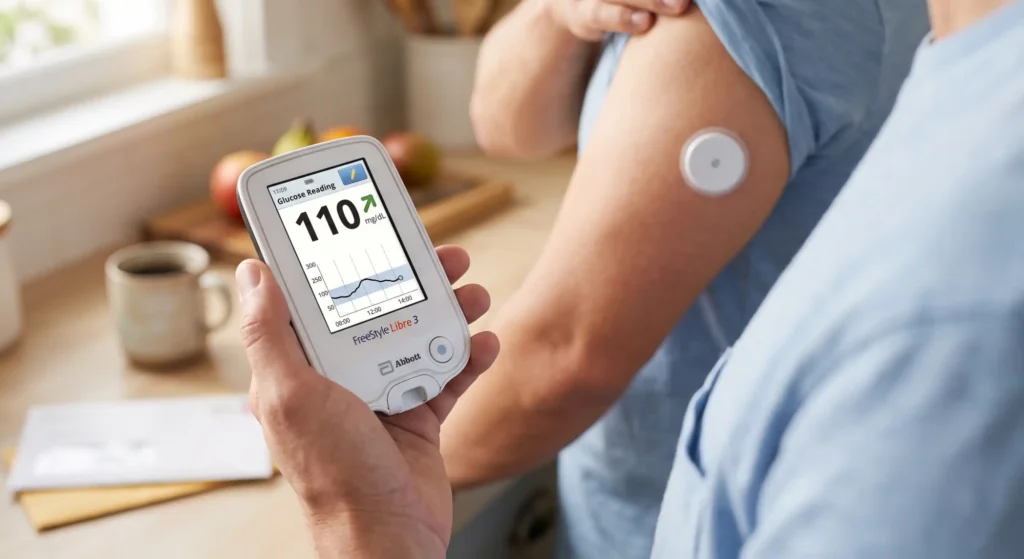
For customers seeking diabetes supplies and essential medical equipment, Alfa Healthcare Supply Inc. is a trusted choice. a healthcare supply resource serving customers across New York. You can explore its available products and services through
What is the FreeStyle Libre 3 Reader?
The FreeStyle Libre 3 Reader is a small, handheld device designed to display glucose information from a compatible FreeStyle Libre 3 sensor. It is part of Abbott’s continuous glucose monitoring (CGM) system and gives people a dedicated alternative to using a compatible smartphone for viewing their glucose information.
Once a compatible sensor is activated, the sensor automatically sends glucose readings to the FreeStyle Libre 3 Reader, so users do not need to repeatedly scan the sensor to receive readings.
Key Features of the FreeStyle Libre 3 Reader
The reader is designed with everyday diabetes management in mind and includes:
- Backlit color touchscreen for viewing glucose information
- Real-time glucose readings streamed from the compatible sensor
- Optional glucose alarms for certain high- and low-glucose conditions
- Glucose history for reviewing patterns over time
- Activity notes for recording information such as meals, exercise, or insulin use
- Built-in blood glucose meter for compatible blood glucose testing
- Storage for approximately 90 days of glucose history and notes
One useful advantage is that the reader provides a dedicated screen for glucose monitoring, which can be convenient for people who do not want to depend entirely on their smartphone.
How Does It Work?
The process is straightforward. A compatible FreeStyle Libre 3 sensor is applied to the back of the upper arm. The reader can then be used to start the sensor. After the required warm-up period, the sensor begins providing glucose information to the reader.
The reader can then help you see your current glucose level and understand how your glucose is changing throughout the day.
For someone searching for “freestyle libre 3 reader near me,” it is important to remember that the reader and sensor are part of a compatible system. Abbott states that the FreeStyle Libre 3 Reader works with the FreeStyle Libre 3 sensor and FreeStyle Libre 3 Plus sensor, subject to the applicable system requirements.
Reader vs. Smartphone
The FreeStyle Libre 3 system can provide glucose information through an appropriate app on a compatible smartphone, but the dedicated reader offers another option. The reader can be particularly helpful for someone who prefers having a separate medical device for diabetes management.
It is important to choose either the reader or the compatible app when starting a sensor. Abbott explains that you cannot use both the FreeStyle Libre 3 reader and app interchangeably with the same sensor after starting it.
Is the FreeStyle Libre 3 Reader a Blood Glucose Meter?
It can perform blood glucose testing because it includes a built-in blood glucose meter, but its primary role is to receive glucose information from the FreeStyle Libre 3 sensor. Compatible test strips and other testing supplies are required separately for blood glucose testing.
For treatment decisions, users should follow Abbott’s instructions and their healthcare professional’s guidance, particularly when readings do not match symptoms or when the system displays a blood-glucose-check indication.
Why Look for a FreeStyle Libre 3 Reader Near Me?
When you search “freestyle libre 3 reader near me,” finding a nearby medical supply provider can make it easier to ask about availability, prescriptions, insurance requirements, and compatible diabetes supplies.
A local DME supplier such as Alfa Healthcare Supply Inc. can be a convenient place to inquire about diabetes monitoring equipment and other medical supplies. Availability and coverage can vary, so contacting the supplier before visiting is recommended.
Searching for “FreeStyle Libre 3 Reader Near Me”
Searching online for “freestyle libre 3 reader near me” is a good starting point, but proximity should not be your only consideration.
A nearby supplier may not necessarily carry the exact reader you need. Product availability can change, and insurance or prescription requirements may also affect how you obtain the device.
Abbott specifically advises customers to contact its Customer Care Team for a list of participating DME suppliers.
When contacting a local medical supply store, consider asking:
- Do you carry the FreeStyle Libre 3 Reader?
- Is the reader currently available?
- Do you work with my insurance provider?
- Do you require a prescription?
- Can you help with DME documentation?
- Do you also carry compatible FreeStyle Libre sensors?
- Can you help me understand which supplies I need?
- Do you offer local pickup or delivery?
These questions can save time, particularly when you need your diabetes supplies promptly.
Why Choose a Medical Supply Store for Your FreeStyle Libre 3 Reader?
When you search for “freestyle libre 3 reader near me,” choosing a medical supply store can offer more than simply finding a place that sells diabetes equipment. A specialized medical supply provider may help you understand product availability, prescription requirements, compatible supplies, and purchasing options before you place an order.
For people managing diabetes, that extra support can make the process feel much easier.
1. Get Help Finding the Right Product
The FreeStyle Libre product family includes different sensors, readers, and accessories. A medical supply store can help you identify the specific product you are looking for and confirm availability before you purchase.
This is particularly useful if you are replacing an existing reader or switching from another glucose monitoring system.
2. Ask About Prescription Requirements
The FreeStyle Libre 3 Reader is a prescription product in the U.S. Before purchasing, it is important to understand what documentation your supplier requires.
A medical supply provider can explain its ordering process and let you know what information may be needed to fulfill your prescription.
3. Explore Diabetes Supplies in One Place
A reader is only one part of a diabetes management routine. Depending on your treatment plan, you may also need glucose sensors, blood glucose testing supplies, lancets, test strips, diabetic footwear, or other medical equipment.
Working with a medical supply store can make it easier to look for related products without having to search for each item separately.
4. Get Personalized Assistance
Online shopping can be convenient, but sometimes you simply want to speak with someone.
A medical supply professional can help answer practical questions about ordering, product availability, compatible supplies, and general equipment information. For someone purchasing diabetes equipment for the first time, that personal interaction can provide valuable peace of mind.
5. Local Convenience Matters
Searching “freestyle libre 3 reader near me” often means you want a convenient option rather than waiting unnecessarily for a product.
A nearby medical supply provider may offer local pickup or other fulfillment options, depending on its service area and inventory. Calling ahead is always a good idea because availability can change.
6. Support Beyond the Reader
A good medical supply store can become a useful resource for your broader healthcare equipment needs.
For example, Alfa Healthcare Supply Inc. offers a range of medical equipment and supplies, including products for diabetes care, mobility, respiratory care, orthopedic needs, and home healthcare.
You can learn more about its products and services at Alfa Healthcare Supply Inc..
Choosing a Trusted Supplier
When looking for a FreeStyle Libre 3 Reader near me, don’t choose a supplier based solely on distance. Consider whether the provider:
- Carries the product you need
- Can verify current availability
- Understands DME purchasing requirements
- Can discuss prescription documentation
- Offers other diabetes supplies
- Provides responsive customer service
- Clearly explains ordering and fulfillment options
Ultimately, the right medical supply store should make obtaining your healthcare equipment simpler, clearer, and less stressful.
For customers looking for diabetes monitoring equipment and other healthcare supplies, Alfa Healthcare Supply Inc. can be a convenient resource to explore. Always verify current product availability, compatibility, prescription requirements, and insurance coverage before purchasing.
FreeStyle Libre 3 Reader vs. Smartphone
When comparing the FreeStyle Libre 3 Reader vs. smartphone, the biggest difference is how you prefer to access your glucose information. Both options can work with compatible FreeStyle Libre 3 system sensors, but they offer a different everyday experience.
A smartphone may be the more convenient choice for someone who already carries a compatible phone everywhere. A dedicated reader, on the other hand, can be a practical option for someone who prefers keeping diabetes management separate from their personal device.
Abbott confirms that the FreeStyle Libre 3 system can be used with a compatible reader or smartphone app, although the features are similar rather than identical.
FreeStyle Libre 3 Reader
The FreeStyle Libre 3 Reader is a dedicated handheld device designed to receive glucose readings from a compatible sensor. It includes a backlit color touchscreen, glucose alarms, and the ability to store approximately 90 days of glucose history and notes.
A dedicated reader may be especially appealing if you:
- Prefer not to use your smartphone for medical information
- Do not have a compatible smartphone
- Want a separate device dedicated to glucose monitoring
- Prefer a simple, focused interface
- Want an option that does not depend on your personal phone
Abbott’s compatibility guidance notes that people without a supported smartphone or operating system can still view sensor readings using a prescribed Libre systems reader.
FreeStyle Libre 3 Smartphone App
Using a compatible smartphone can make glucose monitoring feel more integrated into your daily routine. The Libre app can display glucose information on a compatible iPhone or Android device, and Abbott provides a compatibility checker because not every phone or operating-system combination is supported.
A smartphone may be a good choice if you:
- Already carry your phone throughout the day
- Have a compatible device
- Prefer viewing glucose information on a larger, familiar screen
- Want convenient digital features and data sharing
- Prefer not to carry an additional device
Abbott also explains that glucose data can be shared with healthcare professionals through LibreView and, where supported, with family or caregivers through LibreLinkUp.
FreeStyle Libre 3 Reader vs. Smartphone: Quick Comparison
| Feature | FreeStyle Libre 3 Reader | Compatible Smartphone |
| Dedicated glucose device | Yes | No |
| Displays sensor glucose readings | Yes | Yes |
| Glucose alarms | Yes | Yes, when supported and enabled |
| Touchscreen | Yes | Yes |
| Requires compatible smartphone | No | Yes |
| Easy to carry | Yes | Yes |
| Other everyday phone functions | No | Yes |
| Digital data-sharing options | Supported | Supported |
| Device compatibility concerns | Reader-specific | Phone and OS compatibility must be checked |
The reader and app have similar but not identical features, so the best option depends on your personal needs and the specific Libre system you are using.
Which Option Is More Convenient?
For many people, the smartphone wins on convenience simply because it is already in their pocket.
You don’t have to remember to carry another device, and you can combine glucose information with other digital tools available through the compatible Libre app.
However, convenience is personal.
Someone who frequently changes phones, has an older unsupported smartphone, has limited phone access, or simply prefers a dedicated medical device may find the FreeStyle Libre 3 Reader more comfortable for everyday use.
Which Is Better for Older Adults?
There is no single answer for everyone.
Some older adults may appreciate having a dedicated reader with a straightforward purpose rather than navigating a smartphone and multiple applications. Others may already be comfortable using a smartphone and prefer seeing glucose information alongside other apps.
If a family member or caregiver is helping with diabetes management, it can be useful to consider which device is easiest for that person to understand and use consistently.
What About Data Sharing?
Smartphone-based monitoring can be particularly useful when data sharing is an important part of your routine.
Abbott states that compatible Libre apps can support sharing glucose information with healthcare professionals through LibreView and with designated family members or caregivers through LibreLinkUp, subject to the applicable requirements.
The reader also supports data management features, so choosing a reader does not necessarily mean giving up the ability to review glucose history.
An Important Compatibility Consideration
Before choosing either option, check compatibility first.
Not every smartphone supports the Libre app. Abbott recommends checking the current smartphone and operating-system compatibility information before using the app.
It is also important to understand that you generally need to choose how you start a sensor. Abbott states that if a FreeStyle Libre 3 sensor is started with the reader, the same sensor cannot then be used with the app.
That makes it worth deciding whether you prefer the reader or smartphone before starting a new sensor.
What Should You Choose?
If you are searching for a “freestyle libre 3 reader near me,” a dedicated reader may make sense when you want a dependable, separate device for glucose monitoring.
A smartphone may be preferable when you already have a compatible device and want an integrated digital experience.
Think about your daily routine:
Choose the reader if you value:
- A dedicated medical device
- Independence from your smartphone
- A simple glucose-focused interface
- Having an alternative when your phone is incompatible
Choose a smartphone if you value:
- Convenience
- Carrying fewer devices
- Digital data-sharing features
- Using a familiar touchscreen
- Keeping glucose information on your phone
Ultimately, neither option is universally “better.” The right choice is the one that fits your diabetes management routine and your healthcare professional’s recommendations.
Need a FreeStyle Libre 3 Reader Near You?
If you prefer a dedicated reader, finding a reliable medical supply provider is an important part of the process. Before ordering, confirm current availability, prescription requirements, insurance coverage, and compatibility with the sensor you have been prescribed.
Alfa Healthcare Supply Inc. provides medical equipment and healthcare supplies and can be a resource for customers looking for diabetes-related equipment.
Visit Alfa Healthcare Supply Inc. to explore its medical supply offerings or contact the company about current product availability.
How Does the FreeStyle Libre 3 Reader Work?
The FreeStyle Libre 3 Reader is designed to make continuous glucose monitoring more convenient by receiving glucose information directly from a compatible FreeStyle Libre 3 sensor. Instead of relying on repeated finger-prick tests to see glucose trends, the system uses a small sensor worn on the back of the upper arm to collect glucose information and send it to the reader. Abbott describes the FreeStyle Libre 3 Reader as a lightweight, handheld device with a backlit color touchscreen, glucose alarms, and storage for approximately 90 days of glucose history and notes.
For someone searching for a “freestyle libre 3 reader near me,” understanding how the reader and sensor work together can make it easier to decide whether this type of CGM equipment fits their daily routine.
1. Apply the FreeStyle Libre Sensor
The process starts with applying the compatible sensor to the back of the upper arm. The sensor is designed to measure glucose in the interstitial fluid beneath the skin.
Abbott recommends preparing the skin properly before applying the sensor and following the manufacturer’s instructions for placement and activation.
The sensor is small and designed to remain on the arm while you go about your normal activities.
2. Activate the Sensor With the Reader
After the sensor has been applied, the FreeStyle Libre 3 Reader is used to activate and pair with the sensor according to the system instructions.
Abbott’s FreeStyle Libre 3 information explains that the sensor streams glucose readings directly to the reader once it is active. Unlike earlier Libre systems that required scanning to obtain each reading, the FreeStyle Libre 3 sensor automatically sends real-time glucose readings to the compatible reader.
3. The Sensor Measures Glucose
Once activated, the sensor continuously monitors glucose levels.
The sensor collects glucose information from interstitial fluid and sends that information to the reader. Abbott describes FreeStyle Libre systems as providing minute-to-minute glucose information, helping users see not only their current glucose level but also how glucose is changing over time.
This can provide a more complete picture than a traditional blood glucose test, which represents glucose at a particular point in time.
4. Glucose Information Is Sent to the Reader
The FreeStyle Libre 3 Reader receives the glucose information wirelessly from the compatible sensor.
The important difference is that you don’t need to repeatedly scan the FreeStyle Libre 3 sensor just to receive glucose readings. The sensor automatically streams glucose information to the reader when the sensor and reader are within the required communication range.
That means you can look at the reader when you want to check your current glucose information rather than manually scanning every time.
5. View Your Glucose Level and Trends
The reader’s touchscreen allows you to view glucose information and understand trends.
Instead of seeing only a single number, the system can help you understand whether your glucose is moving upward, downward, or remaining relatively steady. This trend information can be useful when discussing glucose patterns with your healthcare professional.
Abbott notes that the FreeStyle Libre 3 Reader can store approximately 90 days of glucose history and notes, including information users enter about activities such as eating, exercising, or taking insulin.
6. Receive Optional Glucose Alarms
The FreeStyle Libre 3 Reader can also provide glucose alarms when the applicable alarm settings are enabled.
These alerts can notify users about certain glucose conditions, helping them pay attention to potential high or low glucose situations. The reader needs to remain within the required communication range of the sensor for the applicable alarms and readings to be received.
Alarm settings should be configured according to the manufacturer’s instructions and your healthcare professional’s recommendations.
7. Review Your Glucose History
One of the benefits of a CGM system is the ability to look beyond an individual glucose reading.
With the reader’s stored information, you can review glucose history and identify patterns. For example, you may notice changes associated with meals, physical activity, sleep, or other aspects of your daily routine.
These observations can give you and your healthcare professional useful information when discussing your diabetes management plan.
8. The Reader Also Includes a Blood Glucose Meter
The FreeStyle Libre 3 Reader is not limited to receiving sensor data. Abbott’s product information states that the reader also includes a built-in meter for blood glucose testing. However, compatible test strips, control solution, lancing equipment, and lancets are required separately.
This can be useful when a blood glucose test is appropriate.
It is important to follow the manufacturer’s instructions and your healthcare professional’s guidance, particularly when your glucose reading does not match how you feel.
FreeStyle Libre 3 Reader: Simple Process
The overall process can be summarized as:
Apply Sensor → Activate With Reader → Sensor Measures Glucose → Data Streams to Reader → View Readings & Trends → Respond to Alerts → Review History
This streamlined process is one reason people looking for a FreeStyle Libre 3 Reader near me may prefer a dedicated reader rather than relying exclusively on a smartphone.
Reader vs. Traditional Blood Glucose Meter
A traditional blood glucose meter generally provides a glucose measurement from a blood sample at a specific moment.
The FreeStyle Libre 3 system is designed for continuous glucose monitoring. The sensor collects glucose information throughout the day, allowing users to see glucose patterns and trends rather than relying solely on individual measurements.
That doesn’t mean traditional blood glucose testing is no longer important. There are circumstances in which a blood glucose test may be needed, particularly when readings do not agree with symptoms or when the system instructs you to check your blood glucose.
What Happens If the Reader Loses Connection?
Like other wireless medical devices, the reader and sensor need to remain within the manufacturer’s specified communication range for real-time communication and alarms.
The sensor can retain glucose information, which can help maintain historical data when communication is temporarily interrupted. Specific data-recovery and communication behavior depends on the FreeStyle Libre product and configuration being used.
If the reader displays an error, signal-loss notification, or other warning, follow the instructions provided by Abbott for your particular system.
Why the FreeStyle Libre 3 Reader Can Be Convenient
For many people, diabetes management is already part of a busy daily schedule. Having a dedicated reader can make glucose information easier to access without needing to unlock a personal smartphone.
The reader can be especially appealing to people who:
- Prefer a dedicated medical device
- Do not have a compatible smartphone
- Want a separate screen for glucose information
- Like having glucose history available on the reader
- Want access to compatible alarm features
- Prefer a straightforward CGM-focused device
Looking for a FreeStyle Libre 3 Reader Near You?
If you’re searching for “freestyle libre 3 reader near me,” consider more than just distance. Before purchasing, confirm that the supplier carries the exact reader you need, understands prescription requirements, and can help you determine whether compatible sensors and other diabetes supplies are available.
Alfa Healthcare Supply Inc. provides medical equipment and healthcare supplies and can be a resource for customers searching for diabetes monitoring equipment. You can explore its medical supply offerings at Alfa Healthcare Supply Inc..
A quick call before visiting can help you confirm current availability, ordering requirements, and other important details.
Does the FreeStyle Libre 3 Reader Require a Prescription?
Yes. Abbott’s current FAQ states that the FreeStyle Libre 3 Reader requires a valid prescription.
Prescription and insurance requirements can vary based on the individual, payer, and eligibility criteria.
If you are searching for a freestyle libre 3 reader near me, it is a good idea to have your prescription and insurance information ready when contacting a DME supplier.
This can help the supplier determine what documentation may be required.
Does Insurance Cover the FreeStyle Libre 3 Reader?
Insurance coverage is not identical for every patient.
Abbott notes that Medicare and other payer criteria may apply.
Coverage may depend on factors such as:
- Your insurance plan
- Medical eligibility
- Prescription requirements
- Diabetes treatment
- Insulin use
- DME benefits
- Supplier participation
- Prior authorization requirements, when applicable
For Medicare beneficiaries, eligibility and coverage requirements should be confirmed before ordering.
A medical supply provider can help you understand what documentation may be needed, but your insurance company ultimately determines coverage under your plan.
FreeStyle Libre 3 Reader Features
The FreeStyle Libre 3 Reader is designed to give people using the FreeStyle Libre 3 system a dedicated way to view and manage their glucose information. Instead of relying entirely on a smartphone, the handheld reader receives glucose readings from a compatible sensor and displays them on a backlit color touchscreen. Abbott describes the reader as lightweight and capable of storing approximately 90 days of glucose history and notes.
For someone searching for a “freestyle libre 3 reader near me,” understanding its features can make it easier to determine whether a dedicated reader is the right choice for their diabetes-monitoring routine.
1. Real-Time Glucose Readings
One of the key features of the FreeStyle Libre 3 Reader is its ability to receive glucose readings streamed from a compatible sensor. The FreeStyle Libre 3 system is designed to provide frequent glucose information, helping users see their glucose level and understand how it is changing throughout the day.
This can provide a more complete picture than checking glucose only at individual points during the day.
2. Backlit Color Touchscreen
The reader features a backlit color touchscreen, giving users a dedicated display for viewing glucose information and navigating the device.
For people who prefer not to use a smartphone for diabetes management, having a separate touchscreen device can be convenient and straightforward.
3. Glucose Alarms
The FreeStyle Libre 3 Reader can provide glucose alarms when the appropriate alarm settings are enabled. Abbott identifies low-glucose, high-glucose, and signal-loss alerts as features of the FreeStyle Libre 3 system.
Alarm notifications require the applicable settings to be enabled and the sensor to remain within the specified communication range of the reading device.
These alerts are designed to help users notice important glucose changes rather than constantly checking the reader throughout the day.
4. Approximately 90 Days of Glucose History
The reader can store approximately 90 days of glucose history and user-entered notes, according to Abbott’s product information. Notes can include activities such as eating, exercising, or taking insulin.
Having this historical information can help users and healthcare professionals identify patterns and better understand how everyday activities may affect glucose levels.
5. Activity Notes
The FreeStyle Libre 3 Reader allows users to record notes about relevant activities.
For example, a person may want to document:
- Meals
- Exercise
- Insulin use
- Other diabetes-related activities
Over time, these notes can provide useful context when reviewing glucose patterns with a healthcare professional.
6. Built-In Blood Glucose Meter
Another notable feature is the reader’s built-in blood glucose meter. Abbott states that compatible blood glucose test strips, control solution, a lancing device, and lancets are required to use this function, and these supplies are not included in the reader kit.
This gives users an additional method of checking blood glucose when a fingerstick measurement is appropriate.
Importantly, users should follow the manufacturer’s instructions regarding when fingerstick testing is required, including situations where readings do not match symptoms or the system indicates that blood glucose should be checked.
7. Dedicated Device for Diabetes Management
A smartphone can be convenient, but not everyone wants to depend on their personal phone for glucose monitoring.
The FreeStyle Libre 3 Reader provides a separate device specifically intended for the Libre system. This may appeal to people who:
- Prefer a dedicated medical device
- Do not have a compatible smartphone
- Want to keep diabetes information separate from their phone
- Prefer a simple glucose-focused interface
- Want another option for accessing glucose information
Abbott notes that the Libre app and FreeStyle Libre 3 Reader have similar but not identical features, so users should compare the options based on their individual needs.
8. Data Management and LibreView Connectivity
The FreeStyle Libre ecosystem can support glucose-data management through LibreView. Abbott states that glucose data from compatible Libre readers can be uploaded to LibreView, allowing healthcare professionals to review historical glucose information and reports.
This can be useful during healthcare appointments because historical glucose information can provide more context than a few isolated readings.
9. Compatible With FreeStyle Libre 3 Plus
The current FreeStyle Libre ecosystem also includes the FreeStyle Libre 3 Plus sensor. Abbott states that the FreeStyle Libre 3 Plus sensor is compatible with the FreeStyle Libre 3 Reader.
Because product compatibility can vary by market and system version, always verify the exact sensor and reader combination before purchasing.
10. Compact and Portable Design
The FreeStyle Libre 3 Reader is designed as a handheld device, making it convenient to carry throughout the day. Its compact design means users can have a dedicated glucose-reading device available without carrying a traditional larger monitoring setup.
For someone who travels, works outside the home, or simply prefers having a separate reader available, portability can be an important advantage.
FreeStyle Libre 3 Reader Features at a Glance
| Feature | What It Offers |
| Glucose monitoring | Receives glucose readings from a compatible sensor |
| Touchscreen | Backlit color touchscreen |
| Alarms | Supports applicable glucose and signal-loss alarms |
| History | Approximately 90 days of glucose history and notes |
| Activity notes | Records information such as meals, exercise, and insulin |
| Blood glucose testing | Built-in meter with separately purchased compatible supplies |
| Data management | Compatible with LibreView for supported data uploads |
| Portability | Dedicated handheld reader |
| Sensor compatibility | Designed for compatible FreeStyle Libre 3 system sensors |
Why These Features Matter
The value of a glucose reader is not simply in the number displayed on the screen. For many people, understanding patterns and trends is equally important.
A reader that combines current glucose information, alarms, historical data, and activity notes can help users see a broader picture of their daily glucose management. It can also give healthcare professionals additional information to consider when reviewing diabetes-management data.
At the same time, a CGM reader is a monitoring tool—not a replacement for professional medical advice. Treatment decisions should be made according to the instructions for the specific FreeStyle Libre system and guidance from the individual’s healthcare professional.
Looking for a FreeStyle Libre 3 Reader Near You?
If you’re searching for “freestyle libre 3 reader near me,” consider checking more than just distance. Before purchasing, confirm the exact reader model, current availability, prescription requirements, compatible sensors, insurance considerations, and any additional supplies you may need.
Alfa Healthcare Supply Inc. provides medical equipment and healthcare supplies and can be a resource for customers looking for diabetes-monitoring equipment. Visit Alfa Healthcare Supply Inc. to explore its medical supply offerings.
FreeStyle Libre 3 Sensor and Reader Compatibility
Compatibility is an important consideration before purchasing.
The FreeStyle Libre 3 sensor is designed to work with the FreeStyle Libre 3 reader or compatible Libre applications. Abbott states that the FreeStyle Libre 3 reader communicates with one sensor at a time.
Because diabetes technology changes over time, always verify compatibility for the exact sensor, reader, app, and smartphone you plan to use.
This is especially important if you are transitioning between different generations of FreeStyle Libre products.
What About the FreeStyle Libre 3 Plus Sensor?
If you are searching for a FreeStyle Libre 3 Reader near me, you may also come across the FreeStyle Libre 3 Plus Sensor. The Libre 3 Plus is the newer sensor in the FreeStyle Libre 3 system and builds on the features of the original Libre 3 sensor.
One of the biggest differences is wear time. Abbott states that the FreeStyle Libre 3 Plus sensor can be worn for up to 15 days, compared with the 14-day wear period of the original FreeStyle Libre 3 sensor. It also offers real-time glucose readings and is designed to work with compatible diabetes technology, including certain automated insulin delivery systems.
What Is the FreeStyle Libre 3 Plus Sensor?
The FreeStyle Libre 3 Plus is a continuous glucose monitoring (CGM) sensor designed to provide glucose information throughout the day.
After the sensor is applied and activated with a compatible reader or app, it can provide real-time glucose readings without requiring the user to repeatedly scan the sensor for each reading. Abbott describes the Libre 3 Plus as providing glucose readings every minute.
For someone managing diabetes, this means glucose information can be available throughout the day, helping users see current levels as well as changing trends.
Up to 15 Days of Sensor Wear
One of the most noticeable improvements is the extended wear period.
The FreeStyle Libre 3 Plus sensor provides up to 15 days of wear, giving users an additional day compared with the original Libre 3 sensor.
For people who use CGM technology continuously, an additional day of wear can mean fewer sensor changes over time and a little more convenience in the daily routine.
Real-Time Glucose Readings
The Libre 3 Plus sensor is designed to provide minute-by-minute glucose readings to a compatible reader or app.
Rather than relying only on occasional glucose checks, users can view changing glucose information throughout the day. This can help provide greater context around meals, physical activity, sleep, and other daily activities.
Works With the FreeStyle Libre 3 Reader
If you already have a compatible FreeStyle Libre 3 Reader, the Libre 3 Plus sensor can be used with it. Abbott’s current U.S. information confirms that the FreeStyle Libre 3 Plus sensor works with the FreeStyle Libre 3 reader.
This is particularly important if you are searching for a “freestyle libre 3 reader near me” because you may not necessarily need to purchase an entirely new reader when transitioning to the newer sensor.
However, always confirm the exact product and compatibility information for your market before purchasing.
Smartphone Compatibility
The Libre 3 Plus sensor can also work with compatible Libre apps and smartphones. Abbott maintains a compatibility checker because supported phones and operating systems can vary.
If your smartphone is not supported, Abbott states that a doctor-prescribed Libre systems reader can be used to view sensor readings.
This gives some users the flexibility to choose between a dedicated reader and a compatible smartphone.
Compatibility With Automated Insulin Delivery Systems
Another important development with the Libre 3 Plus sensor is its compatibility with selected automated insulin delivery (AID) systems.
Abbott currently lists compatibility in the U.S. with systems including Omnipod 5, Tandem t:slim X2, iLet Bionic Pancreas, and twiist, subject to the applicable system requirements and labeling.
Not every insulin pump works with every CGM sensor, so patients considering an integrated system should confirm compatibility with their healthcare professional and the pump manufacturer.
Designed for a Broader Age Range
The FreeStyle Libre 3 Plus sensor is indicated for people with diabetes age 2 and older in the U.S. Abbott notes that children between ages 2 and 12 require an adult caregiver to supervise, manage, and assist with use and interpretation.
This expanded age indication is another difference between the newer Plus sensor and the original Libre 3 system.
FreeStyle Libre 3 Plus vs. FreeStyle Libre 3
| Feature | FreeStyle Libre 3 | FreeStyle Libre 3 Plus |
| Sensor type | CGM | CGM |
| Wear time | Up to 14 days | Up to 15 days |
| Real-time readings | Yes | Yes |
| FreeStyle Libre 3 Reader compatibility | Yes | Yes |
| Smartphone option | Compatible devices | Compatible devices |
| Selected AID/pump compatibility | More limited | Expanded compatibility |
| Age indication in U.S. | 4+ | 2+ |
Product availability and indications can differ by country, so customers should verify the current information applicable to their location. Abbott also states that the original FreeStyle Libre 3 sensor is being discontinued in the U.S. as the company transitions users toward the Libre 3 Plus sensor.
Can I Use the Same Reader With the Libre 3 Plus?
Yes, Abbott’s current U.S. information states that the FreeStyle Libre 3 Plus sensor works with the FreeStyle Libre 3 Reader.
This can be useful for existing Libre 3 users who are moving to the newer Plus sensor.
There is an important consideration, however: when starting a sensor, you need to use the appropriate reader or app according to the manufacturer’s instructions. Abbott explains that you cannot use both the reader and app interchangeably to obtain glucose readings from the same sensor after it has been started.
Is the FreeStyle Libre 3 Plus Better?
“Better” depends on what you need.
The Plus sensor offers several meaningful updates, particularly:
- Up to 15 days of wear
- Real-time glucose readings
- Compatibility with the FreeStyle Libre 3 Reader
- Compatibility with compatible smartphone apps
- Expanded age indication
- Integration with selected automated insulin delivery systems
For someone already using the Libre 3 system, the longer wear period alone may make the Plus sensor attractive.
However, your healthcare professional should determine whether the Libre 3 Plus is appropriate for your diabetes-management plan.
What If You Are Looking for a FreeStyle Libre 3 Reader Near Me?
If you are searching “freestyle libre 3 reader near me” because you are starting or switching to the FreeStyle Libre 3 Plus sensor, check with your medical supply provider before purchasing.
Ask about:
- Current reader availability
- Libre 3 Plus sensor availability
- Prescription requirements
- Insurance coverage
- Reader and sensor compatibility
- Smartphone compatibility
- Additional diabetes supplies
Alfa Healthcare Supply Inc. provides medical equipment and healthcare supplies and can be a resource for customers looking for diabetes-monitoring products. You can explore its available medical supplies at Alfa Healthcare Supply Inc..
Why a Dedicated Reader Can Be Helpful
Smartphones are convenient, but they are not ideal for everyone.
Some people simply prefer having a dedicated medical device. Others may have concerns about phone compatibility, battery life, notifications, or keeping medical information separate from everyday smartphone activity.
A dedicated reader can provide a simple routine:
Sensor → Reader → Glucose Information → Review Trends → Discuss With Healthcare Professional
For someone managing diabetes every day, that consistency can be reassuring.
The goal isn’t to make diabetes management more complicated. It is to make glucose information easier to access and understand.
What Should You Ask Before Buying?
Before purchasing a FreeStyle Libre 3 Reader from a local supplier, consider confirming the following:
Product Availability
Ask whether the exact FreeStyle Libre 3 Reader is currently available.
Prescription Requirements
Confirm that your prescription meets the supplier’s requirements.
Insurance
Ask whether the supplier accepts your insurance and whether the reader qualifies under your DME benefits.
Sensor Compatibility
Make sure the reader works with the specific sensor you have been prescribed.
Additional Supplies
Ask whether you need to purchase compatible test strips, lancets, control solution, or other supplies separately.
Pickup or Delivery
If convenience matters, ask whether local pickup or delivery is available.
Finding a FreeStyle Libre 3 Reader Near You in New York
For New York residents, searching “freestyle libre 3 reader near me” can help identify nearby medical equipment providers and pharmacies.
However, a local search should be followed by a direct availability check.
A supplier may serve your area but have limited inventory at a particular time. For this reason, calling ahead can be much more efficient than making an unnecessary trip.
Alfa Healthcare Supply Inc. serves customers throughout New York and provides access to a broad selection of healthcare and durable medical equipment. Customers looking for diabetes supplies can contact the company directly to ask about current product availability, prescription requirements, and ordering options.
Visit Alfa Healthcare Supply Inc. to learn more about its medical equipment and supply offerings.
FreeStyle Libre 3 Reader Near Me: Why Local Support Matters
Living with diabetes means managing many small decisions every day.
Sometimes the hardest part isn’t understanding that glucose monitoring is important. It’s finding the right supplies when you need them.
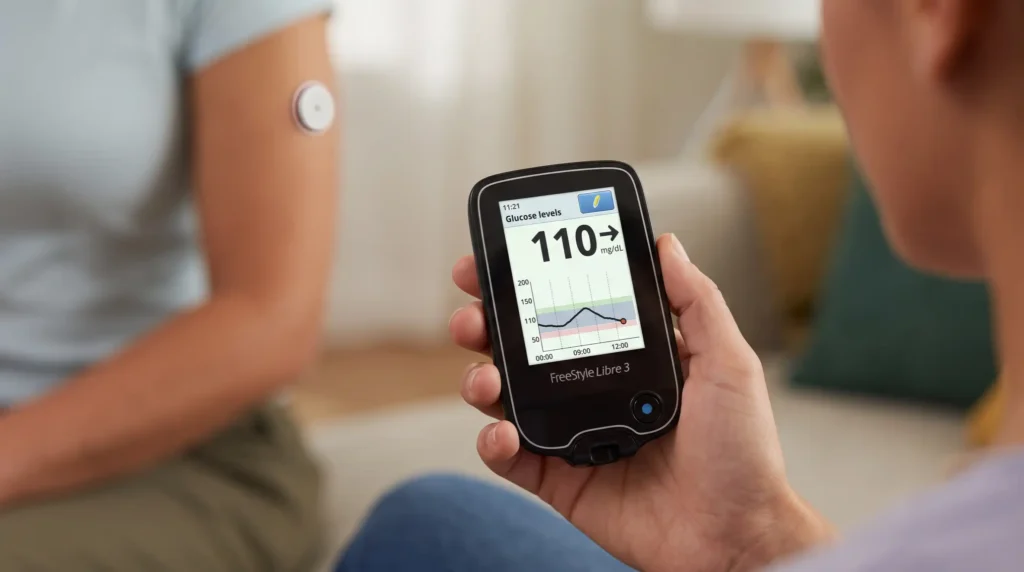
A local medical supply provider can offer a more direct experience than searching through countless online listings. You can ask questions, discuss equipment requirements, and determine whether the product you’re looking for is appropriate for your prescription.
For families, caregivers, older adults, and anyone who prefers personal assistance, local support can make the purchasing process feel less overwhelming.
Important Safety Information
A continuous glucose monitoring system provides valuable information, but users should follow the manufacturer’s instructions and their healthcare professional’s recommendations.
Abbott advises that fingerstick blood glucose testing is required for treatment decisions when the system displays the appropriate Check Blood Glucose symbol or when glucose readings and alarms do not match symptoms or expectations.
Do not make medication or insulin changes solely because of information presented in an online article.
If your glucose readings do not match how you feel, follow the manufacturer’s instructions and contact your healthcare professional as appropriate.
Frequently Asked Questions About the FreeStyle Libre 3 Reader
Where can I buy a FreeStyle Libre 3 Reader near me?
The reader is available through participating DME suppliers and retail pharmacies. Availability can vary by location and supplier. Abbott recommends contacting its Customer Care Team for information about participating DME suppliers.
You can also contact a local medical supply company such as Alfa Healthcare Supply Inc. to ask about current availability and ordering requirements.
Does the FreeStyle Libre 3 Reader require a prescription?
Yes. Abbott states that the FreeStyle Libre 3 Reader requires a valid prescription.
Can I use the FreeStyle Libre 3 Reader without a smartphone?
The reader is designed as a standalone handheld option within the FreeStyle Libre system, so a compatible smartphone is not necessarily required for using the reader itself. However, product and sensor compatibility should always be confirmed before purchase.
Does the FreeStyle Libre 3 Reader work with FreeStyle Libre 2 sensors?
No. The FreeStyle Libre 3 sensor is designed to work with the FreeStyle Libre 3 reader or compatible applications, and the FreeStyle Libre 3 reader is not simply interchangeable with earlier Libre systems.
How much glucose history can the reader store?
Abbott’s product information states that the reader can store approximately 90 days of glucose history and notes.
Can the FreeStyle Libre 3 Reader test blood glucose?
Yes. The reader includes a built-in blood glucose meter, but compatible test strips and other testing supplies are purchased separately.
Can the reader connect to LibreView?
Yes. Abbott states that the FreeStyle Libre 3 Reader is compatible with LibreView, which can help patients and healthcare professionals review historical glucose information.
How many sensors can the reader communicate with?
The FreeStyle Libre 3 Reader communicates with one sensor at a time.
How do I charge the FreeStyle Libre 3 Reader?
The reader kit includes a USB cable and power adapter for charging. Abbott recommends keeping the reader, adapter, and USB cable away from water and other liquids.
Finding the right medical supply store Ridgewood NY residents can rely on is about much more than locating a place that sells healthcare products. When someone needs a walker after surgery, a CPAP machine for nighttime breathing support, diabetic supplies for everyday monitoring, or incontinence products for a loved one, the quality of the equipment and the support behind it can make a meaningful difference.
Healthcare needs are often personal and sometimes unexpected. A family may suddenly need mobility equipment after a hospital discharge. A caregiver may need dependable home-care supplies for an aging parent. Someone managing diabetes may need consistent access to glucose-monitoring products. In these moments, having a dependable medical equipment supplier can make an already stressful situation easier.
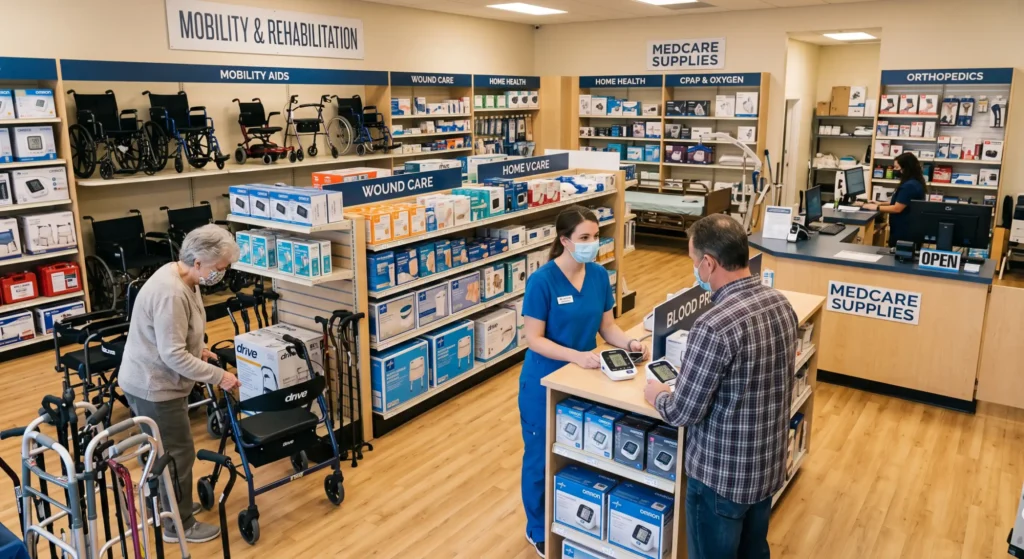
For residents of Ridgewood and surrounding Queens communities, Alfa Healthcare Supply Inc. provides medical equipment and healthcare supplies for patients, caregivers, healthcare professionals, and facilities throughout New York. The company is based in Floral Park and serves Queens, Long Island, Brooklyn, the Bronx, Westchester, Manhattan, and other areas of New York. Its website describes more than 25 years of experience in healthcare equipment and medical supply services.
Why Choosing the Right Medical Supply Store Ridgewood NY Matters
Medical equipment is not like an ordinary household purchase. A product may need to fit a person’s physical needs, lifestyle, home environment, and healthcare plan.
For example, a wheelchair that works well for one individual may not be appropriate for another. A CPAP mask needs to provide a comfortable and appropriate fit. A mobility aid should match the user’s stability and mobility requirements. Diabetes-management supplies need to be compatible with the person’s monitoring routine.
That is why choosing a medical supply store Ridgewood NY shoppers can trust involves looking beyond price.
A reliable supplier should offer:
- A broad selection of medical and home-care products
- Reputable healthcare equipment brands
- Knowledgeable assistance
- Clear product information
- Convenient ordering
- Support for patients and caregivers
- Appropriate DME solutions
- Reliable delivery options
- Assistance with insurance-related processes when available
Alfa Healthcare Supply emphasizes personalized consultations, insurance billing assistance, professional equipment support, and products sourced from trusted manufacturers.
What Can You Find at a Medical Supply Store in Ridgewood?
Medical supply needs vary considerably from one household to another. Some customers may need a single item, while others may require several products to support long-term home care.
Alfa Healthcare Supply’s catalog includes several major healthcare categories, including DME equipment, diabetic supplies, COPD/asthma supplies, incontinence supplies, orthopedic products, and other home healthcare essentials.
1. Durable Medical Equipment
Durable Medical Equipment, commonly called DME, is designed to support people with mobility, recovery, daily living, or long-term healthcare needs.
Depending on individual requirements, DME may include:
- Wheelchairs
- Walkers
- Rollators
- Mobility scooters
- Hospital beds
- Patient-support equipment
- Other home-care equipment
The right equipment can help a person move around more safely and maintain greater independence at home.
Alfa Healthcare’s published information specifically highlights wheelchairs, walkers, scooters, and other mobility aids as part of its healthcare solutions.
2. Diabetic Supplies
Diabetes management often requires regular access to appropriate supplies.
A medical supply provider may carry products such as:
- Blood glucose monitors
- Glucose-testing supplies
- Insulin-related supplies
- Diabetic footwear
- Diabetic shoe inserts
- Other diabetes-care products
Alfa Healthcare Supply lists diabetic supplies as one of its core product categories and describes its selection as including glucose monitoring systems and recurring diabetic supplies.
For people managing diabetes, convenient access to supplies can make routine care less disruptive.
3. Respiratory and COPD/Asthma Supplies
Breathing-related conditions can require specialized equipment at home.
Depending on a person’s healthcare requirements and prescription, respiratory equipment may include:
- CPAP equipment
- Oxygen-related equipment
- Nebulizers
- Respiratory accessories
- COPD and asthma supplies
Alfa Healthcare Supply identifies CPAP machines, oxygen concentrators, and breathing equipment among its respiratory solutions.
Respiratory equipment should always be selected and used according to appropriate medical guidance.
4. Orthopedic Supports
Recovery from an injury or surgery can sometimes involve orthopedic support.
Products may include:
- Knee braces
- Back supports
- Ankle braces
- Wrist supports
- Shoulder supports
- Compression products
The purpose is not simply to purchase a brace but to find a product appropriate for the individual’s situation. Fit, comfort, movement, and intended use all matter.
5. Incontinence and Urological Supplies
Incontinence can be difficult to discuss, but dependable products can provide greater confidence and dignity.
Medical supply providers may offer products intended to support:
- Bladder management
- Incontinence care
- Urological needs
- Personal hygiene
- Home-care routines
The right products can help caregivers create a cleaner, more comfortable, and more manageable daily routine.
Medical Supply Ridgewood Customers Can Access Beyond Basic Retail Products
The phrase medical supply Ridgewood can cover a much wider range of products than basic first-aid items.
A comprehensive healthcare supplier may support several stages of care—from recovery following hospitalization to long-term home management.
For example, a person returning home after surgery might need mobility equipment, orthopedic support, and other home-care products. A senior with limited mobility may need a walker or wheelchair. Someone managing diabetes may require recurring monitoring supplies. A person receiving respiratory treatment may need appropriate respiratory equipment.
This broader approach is important because healthcare needs rarely exist in isolation.
Why Home Healthcare Equipment Is Becoming Increasingly Important
Home healthcare allows many people to receive support in familiar surroundings.
Being at home can provide emotional comfort, but the home environment may need to be adapted to the person’s changing abilities.
A patient recovering from surgery may need equipment that makes movement easier. A senior may need mobility assistance to reduce difficulties with everyday activities. A caregiver may need equipment that makes routine care more manageable.
Good medical equipment does not replace professional medical care. Instead, it can complement a healthcare plan by helping people carry out daily activities more comfortably and safely.
What Makes a Medical Supply Provider Trustworthy?
When evaluating a medical supply store Ridgewood NY, consider several important factors.
Experience
Healthcare equipment can involve specialized products and terminology. An experienced supplier may be better positioned to help customers understand available options.
Alfa Healthcare Supply states that it has more than 25 years of experience serving patients, caregivers, and healthcare providers.
Product Variety
A supplier with multiple categories can be useful when healthcare needs change.
Instead of searching for different providers for every item, customers may be able to obtain several types of products from one healthcare supplier.
Quality and Compliance
Medical equipment should come from reputable sources and meet applicable quality and regulatory requirements.
Alfa Healthcare Supply states that it sources FDA-approved and compliant healthcare products and works with trusted manufacturers and DME-compliant suppliers.
Customers should still verify that a particular product is appropriate for their individual healthcare needs and follow the instructions provided by the manufacturer and healthcare professional.
Customer Support
Healthcare purchases sometimes raise questions after the order has been placed.
A supplier that provides product guidance, equipment support, and troubleshooting can be more useful than a seller focused only on completing a transaction.
Alfa Healthcare describes support that can include equipment servicing, replacement parts, troubleshooting, and professional setup for certain complex DME products.
Surgical Supply Store Ridgewood NY: What Should Customers Consider?
People searching for a surgical supply store Ridgewood NY may have very different requirements.
Some may be healthcare professionals looking for clinical supplies, while others may be patients or caregivers preparing for home recovery.
Before purchasing surgical or post-operative supplies, consider:
- What exactly is required?
Start with the physician’s, nurse’s, or healthcare provider’s recommendations. - Is the product appropriate for home use?
Some clinical equipment requires professional handling or instruction. - Does the product have the appropriate specifications?
Medical products can vary considerably in size, design, intended use, and compatibility. - Is professional guidance needed?
When unsure, ask an appropriate healthcare professional or qualified supplier representative. - Will additional supplies be required later?
Planning ahead can help avoid interruptions in routine care.
A surgical supply provider should complement—not replace—the advice of a qualified medical professional.
The Human Side of Medical Supplies
It is easy to think of medical supplies as boxes, devices, accessories, and equipment.
But behind every order is a person.
It might be a daughter trying to help her father remain independent. It might be a spouse preparing a bedroom for recovery. It might be a patient learning how to manage a new healthcare routine. It might be a physical therapist helping someone regain mobility.
That human element matters.
A good supplier should understand that customers may be unfamiliar with medical terminology or unsure about which product to choose. Clear communication and patience can be just as valuable as product selection.
At Alfa Healthcare Supply, the company’s stated mission centers on dependable healthcare equipment, patient care, and supporting healthcare professionals and caregivers.
How Alfa Healthcare Supply Serves Ridgewood and Queens
Although Alfa Healthcare Supply’s physical address is in Floral Park, its service area extends across Queens and other parts of the New York region. The company states that it provides local medical supply delivery across Queens and serves communities including Queens, Brooklyn, Manhattan, the Bronx, Nassau County, and Westchester.
This makes it a potential option for Ridgewood residents who prefer working with a regional healthcare supplier rather than limiting their search to a storefront within the neighborhood.
The company offers ordering through its website and by phone, while healthcare providers can also use its Parachute Health partnership for ordering..
A Simple Approach to Choosing Medical Equipment
If you’re looking for medical supply Ridgewood residents can access, start with your actual healthcare requirements.
Step 1: Identify the Need
Write down what you need and why you need it.
For example:
- Mobility assistance
- Diabetes monitoring
- Respiratory support
- Post-surgical recovery
- Orthopedic support
- Incontinence care
- Home-care assistance
Step 2: Ask Your Healthcare Professional
For specialized equipment, ask your doctor, therapist, nurse, or other qualified healthcare professional about the appropriate product type.
Step 3: Compare Product Features
Don’t automatically choose the cheapest option. Consider:
- Fit
- Intended use
- Comfort
- Ease of operation
- Durability
- Maintenance requirements
- Compatibility
- Manufacturer instructions
Step 4: Check Supplier Support
Ask whether the supplier provides assistance with ordering, setup, replacement parts, maintenance, or other relevant services.
Step 5: Understand Insurance Requirements
If insurance coverage is important, ask the supplier about documentation, eligibility, billing, and ordering requirements before purchasing.
Alfa Healthcare Supply states that it offers insurance billing assistance and works with insurance providers.
Why Local Access Still Matters
Online shopping has made medical products easier to find, but healthcare equipment is not always something people want to purchase without assistance.
A local or regional supplier can offer a more personal experience.
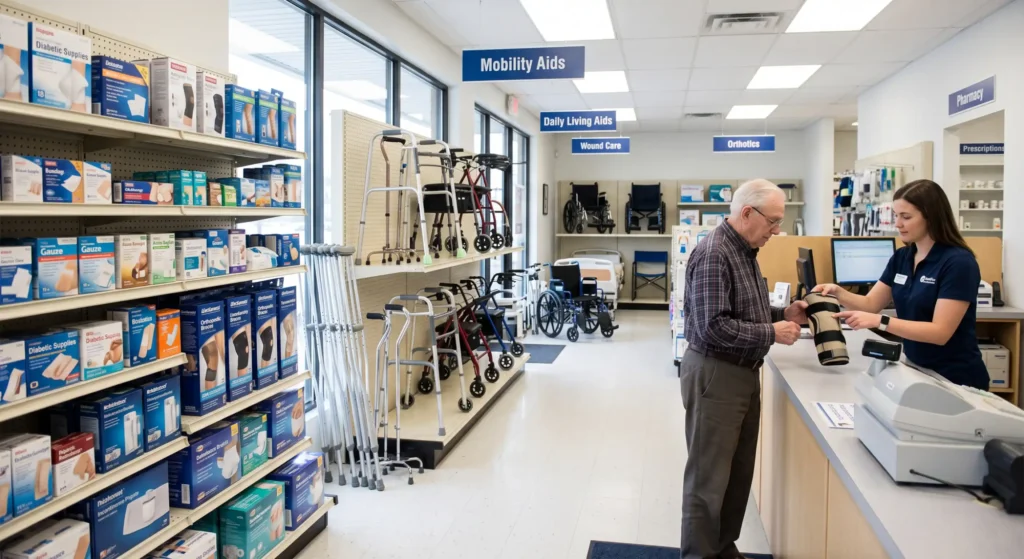
For someone caring for an elderly parent, being able to speak with a knowledgeable supplier can make the process less overwhelming. For healthcare professionals, dependable ordering and delivery can help maintain continuity of care.
For Ridgewood families, the benefit is having access to a healthcare supplier serving the broader Queens area without necessarily needing to search for every product independently.
Frequently Asked Questions
What is a medical supply store?
A medical supply store provides healthcare products and equipment for patients, caregivers, healthcare professionals, and facilities. Depending on the supplier, products may include DME, mobility aids, diabetic supplies, orthopedic supports, respiratory equipment, incontinence products, and other healthcare essentials.
Where can I find a medical supply store Ridgewood NY residents can use?
Ridgewood residents can consider regional medical equipment suppliers serving Queens. Alfa Healthcare Supply Inc. is based in Floral Park and states that it serves Queens and surrounding New York communities with medical supplies and DME.
Does Alfa Healthcare Supply sell durable medical equipment?
Yes. Alfa Healthcare Supply lists DME equipment among its primary product categories, including mobility-related products and home-care equipment.
Does Alfa Healthcare Supply offer diabetic supplies?
Yes. The company’s product catalog includes diabetic supplies such as glucose monitoring products and other diabetes-care supplies.
Can I purchase respiratory equipment?
Alfa Healthcare Supply lists respiratory solutions including CPAP machines, oxygen concentrators, and other breathing-related equipment. Specific equipment should be selected based on appropriate medical guidance.
Does Alfa Healthcare Supply deliver to Queens?
The company states that it prioritizes local medical supply delivery across Queens and provides shipping services to customers in New York and nationwide.
How can I contact Alfa Healthcare Supply?
Alfa Healthcare Supply lists its phone number as (718) 343-3860 and its physical address as 261-12 E Williston Avenue, Floral Park, NY 11001. Its published business hours are Monday through Friday, 9:00 AM to 5:30 PM.
Surgical Supply Store Rosedale:
When you or someone you love needs medical or surgical supplies, finding the right supplier can make an already stressful situation a little easier. Whether the need comes after surgery, during recovery, while managing a chronic condition, or when caring for a family member at home, dependable equipment and supplies can provide comfort, safety, and peace of mind.
For residents searching for a surgical supply store Rosedale, it is important to look beyond simply finding a nearby place that sells medical products. A good supplier should offer appropriate products, dependable service, knowledgeable assistance, and convenient access to the equipment patients and caregivers actually need.
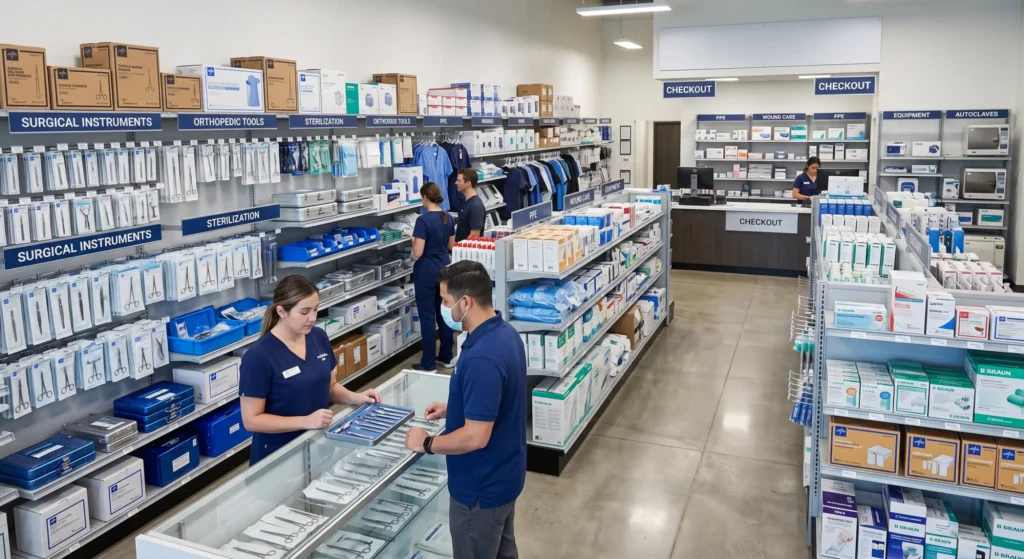
Alfa Healthcare Supply Inc. serves customers throughout Queens and the greater New York area with medical supplies, durable medical equipment (DME), respiratory products, diabetic supplies, orthopedic products, mobility equipment, and other healthcare essentials. Its website states that the company has more than 25 years of experience and serves Queens, Long Island, Brooklyn, the Bronx, Westchester, and New York.
What Should You Expect From a Surgical Supply Store in Rosedale?
A surgical supply provider should do more than place products on a shelf or process an online order. Healthcare supplies are often purchased because someone has a specific need: recovering from an operation, protecting a wound, improving mobility, managing diabetes, supporting breathing, or making daily activities safer.
A dependable supplier can help customers understand available options and find products appropriate for their situation.
Common categories may include:
- Wound-care supplies
- Surgical dressings
- Gauze and medical tape
- Disposable healthcare products
- Mobility aids
- Orthopedic supports
- Compression products
- Respiratory equipment
- Diabetic supplies
- Incontinence and urological products
- Home-care equipment
- Durable medical equipment
Alfa Healthcare’s published catalog includes DME, diabetic supplies, COPD/asthma supplies, incontinence supplies and other healthcare categories.
Why Local Access to Surgical Supplies Matters
Rosedale is a residential community in southeastern Queens, and healthcare needs can arise without much warning. A patient may be discharged from a hospital and suddenly discover that additional supplies are needed at home. A caregiver may need mobility equipment for an older family member. Someone recovering from an injury may need orthopedic support or equipment to make everyday movement easier.
In these situations, access to a dependable medical supply store Rosedale residents can rely on can reduce unnecessary stress.
Instead of searching for individual products from several unrelated sources, customers may benefit from working with a supplier that offers multiple healthcare categories.
The goal is simple: make obtaining appropriate healthcare products easier while helping patients and caregivers feel more confident about the next step.
Surgical Supplies for Recovery and Home Care
After surgery, the focus naturally shifts toward healing. Patients may need supplies for wound care, dressing changes, hygiene, mobility, or general comfort.
Depending on the individual’s treatment plan, healthcare professionals may recommend products such as:
Wound-Care Products
Wound care can require specific dressings, gauze, tape, and related products. The exact supplies should always be based on instructions from the treating healthcare professional.
A surgical supply provider can be a convenient source for obtaining the products recommended by a doctor or nurse.
Medical Dressings
Dressings are available in different materials and designs for different applications. Selecting the appropriate product is important, particularly when a wound requires specialized care.
Customers should follow their healthcare provider’s instructions rather than choosing a dressing solely because it appears similar to another product.
Medical Tape and Gauze
Basic supplies such as gauze and medical tape can become important parts of a home-care routine. Having appropriate supplies available can make scheduled care more organized.
Durable Medical Equipment for Rosedale Residents
Surgical recovery does not always involve wound care alone. Some patients temporarily or permanently need equipment that helps them move around safely or complete daily activities.
Alfa Healthcare Supply Inc. offers a range of DME and mobility solutions, including wheelchairs, walkers, scooters, and other mobility aids.
Depending on medical necessity and professional recommendations, useful equipment may include:
- Wheelchairs
- Walkers
- Rollators
- Transport chairs
- Crutches
- Hospital beds
- Bathroom safety equipment
- Mobility accessories
The right equipment can make a meaningful difference in everyday independence.
For a person recovering from surgery, even simple tasks such as getting out of bed, walking to the bathroom, or moving around the house may temporarily become difficult. Appropriate DME can help create a safer environment when used correctly.
More Than a Surgical Supply Store
One of the advantages of choosing a comprehensive healthcare supplier is the ability to address multiple needs through one provider.
Someone searching for medical supply Rosedale products may not actually need a single category of equipment.
For example, a patient managing diabetes might also need footwear or mobility support. A person with respiratory difficulties may need respiratory equipment as well as home-care supplies. An older adult recovering from surgery may need both mobility equipment and bathroom safety products.
A broad medical catalog can make this process more convenient.
Alfa Healthcare’s product information highlights categories including respiratory equipment, DME, diabetic supplies, incontinence supplies, orthopedic supports, and home-care equipment.
Diabetic Supplies
Diabetes management often requires regular access to supplies. Depending on the individual’s treatment plan, these can include blood glucose monitoring equipment and other diabetes-related products.
Alfa Healthcare lists blood glucose monitors and essential diabetic testing supplies among its offerings.
For people managing diabetes, convenience matters. Running out of necessary supplies can disrupt a routine, which is why planning ahead and maintaining an adequate supply can be helpful.
Orthopedic Supports
Injuries, surgeries, arthritis, and other conditions can affect joints and mobility.
Orthopedic products may include:
- Knee braces
- Back supports
- Ankle braces
- Wrist supports
- Shoulder supports
- Compression products
The appropriate support depends on the individual’s condition. A healthcare professional should be consulted when a brace or support is being used to manage an injury or medical condition.
Respiratory and Breathing Supplies
Respiratory care is another important part of home healthcare.
Alfa Healthcare lists respiratory products including CPAP equipment, oxygen-related equipment, and nebulizers.
For people managing respiratory conditions, having dependable equipment and replacement supplies can help maintain an established care routine.
Patients should use respiratory equipment according to the manufacturer’s instructions and guidance from their healthcare provider.
Incontinence and Urological Supplies
Some patients require products related to bladder control or urological care, particularly older adults and people recovering from certain medical procedures or managing chronic conditions.
These needs can be personal and sometimes uncomfortable to discuss. A professional medical supplier should treat these purchases with discretion and respect.
A good Rosedale medical supply provider recognizes that healthcare is personal. Customers should feel comfortable asking questions without feeling judged or rushed.
What Makes a Good Medical Supply Provider?
Suppliers can vary significantly in the quality of service they provide, so it’s important to evaluate several key factors before making your choice.
1. Product Selection
A supplier with multiple categories can be more convenient than one that specializes in only a narrow range of products.
Look for access to the types of supplies you are likely to need, including DME, surgical products, diabetic supplies, respiratory equipment, orthopedic supports, and home-care products.
2. Product Quality
Healthcare products should be selected carefully. Customers should pay attention to manufacturer information, product specifications, intended use, and applicable regulatory requirements.
Alfa Healthcare states on its website that it sources FDA-approved and compliant healthcare products and emphasizes quality assurance.
3. Knowledgeable Assistance
Medical equipment can be confusing. A wheelchair, CPAP accessory, orthopedic brace, or other healthcare product may have specifications that are not immediately obvious.
A knowledgeable supplier can help customers understand product differences and determine what information they should confirm with their healthcare professional.
4. Convenience
When someone is recovering at home, convenience matters.
Easy ordering, dependable communication, delivery options, and access to replacement products can make the healthcare-supply process less stressful.
Alfa Healthcare says it provides online and phone ordering and priority local medical supply delivery across Queens.
5. Respectful Customer Service
Healthcare is about people, not just products.
A caregiver ordering supplies for a parent may already be balancing appointments, medications, transportation, and household responsibilities. A patient recovering from surgery may simply want the process to be straightforward.
Patient-focused customer service can make a noticeable difference.
Alfa Healthcare Supply Inc. for Rosedale and Queens
For people searching for a surgical supply store Rosedale, Alfa Healthcare Supply Inc. is one option to consider when looking for a broader healthcare supplier serving Queens.
The company is based in Floral Park and states that it serves customers across Queens and the greater New York area. Its website describes more than 25 years of experience serving patients, caregivers, and healthcare providers.
Its healthcare categories extend beyond surgical products to include:
- Durable medical equipment
- Mobility aids
- Respiratory equipment
- Diabetic supplies
- Orthopedic products
- Incontinence supplies
- Home healthcare products
- Other medical supplies
This broader selection can be useful for families whose healthcare needs change during recovery.
A Patient-Centered Approach to Medical Supplies
When someone searches for Rosedale medical supply, they may be thinking about finding a particular product.
But behind that search is usually a person.
It may be a daughter looking for a walker for her mother. It may be someone preparing for surgery. It may be a caregiver trying to make a home safer. Or it may be a patient who simply wants to regain some independence after an injury.
That human side of healthcare should never be overlooked.
The best medical supply experience is one where customers can find reliable products, receive useful information, and feel respected throughout the process.
How to Choose the Right Surgical Supplies
Before purchasing a surgical or medical product, consider these practical questions:
What did my healthcare provider recommend?
Start with professional instructions. If your doctor, nurse, physical therapist, or other qualified healthcare professional has recommended a specific product or specification, use that information when shopping.
Is the product appropriate for my situation?
Medical supplies are not necessarily interchangeable. A product designed for one purpose may not be suitable for another.
Do I understand how to use it?
Ask questions about setup, cleaning, replacement schedules, storage, and safe use when appropriate.
Will I need replacement supplies?
Some products are consumable or require periodic replacement. Planning ahead can prevent last-minute shopping.
Does my insurance cover the item?
Coverage depends on the product, insurance plan, medical necessity, documentation, and other factors. Confirm coverage directly with your insurer and supplier before assuming an item is covered.
Supporting Caregivers, Too
Caregivers are often the people quietly making everything work.
They organize appointments, help with mobility, manage household routines, and make sure medical supplies are available when needed. A dependable supplier can remove one more task from an already demanding list.
Having access to a broad range of products can be especially helpful when a patient’s needs change during recovery.
For caregivers in Rosedale and surrounding Queens communities, finding a supplier that can provide both everyday medical supplies and DME may make ongoing home care more manageable.
Why Trust and Experience Matter
Experience does not replace professional medical advice, but it can matter when choosing a healthcare supply company.
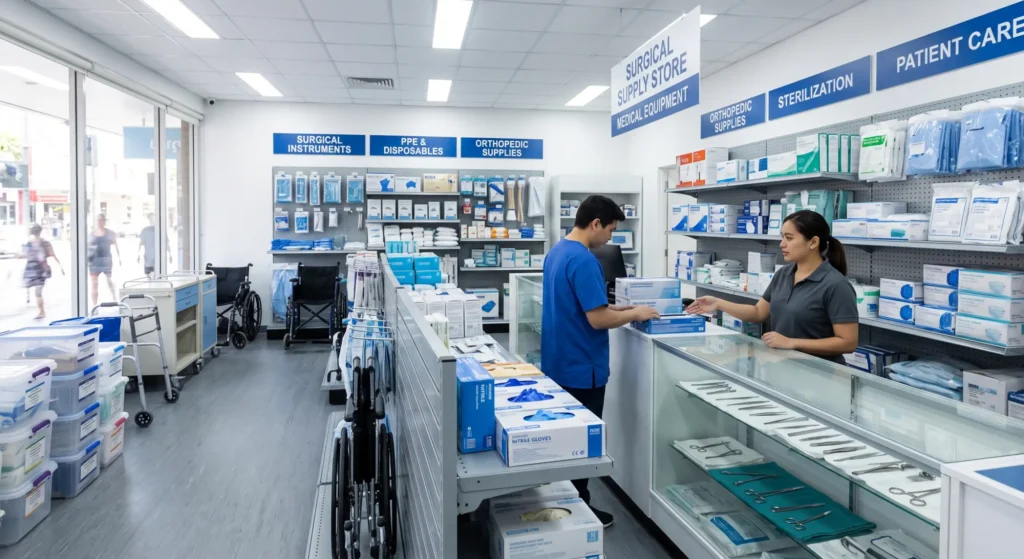
Alfa Healthcare Supply Inc. describes itself as an established healthcare equipment supplier with more than 25 years of experience. The company also states that it works with patients, caregivers, and healthcare providers and provides product support and equipment services.
Its website also identifies partnerships and registry information as part of its compliance and supplier credentials.
For customers, these details can provide useful information when evaluating a medical supply provider.
Frequently Asked Questions: Surgical Supply Store Rosedale
What can I find at a surgical supply store in Rosedale?
Depending on the supplier, you may find surgical and wound-care products, dressings, gauze, medical tape, DME, orthopedic supports, mobility equipment, respiratory products, diabetic supplies, and home-care items.
Is Alfa Healthcare Supply Inc. located directly in Rosedale?
Alfa Healthcare Supply Inc. is based in Floral Park, NY, and states that it serves Queens and surrounding New York communities. Customers in Rosedale can contact the company to confirm product availability, delivery options, and ordering details.
Can I get medical equipment for home use?
Yes. Medical supply providers may carry DME and home healthcare equipment such as walkers, wheelchairs, hospital beds, respiratory equipment, and other products. The appropriate equipment should be based on the patient’s needs and professional recommendations.
Does Alfa Healthcare Supply Inc. offer diabetic supplies?
Yes. Its published catalog includes diabetic supplies such as blood glucose monitors and diabetes testing products.
Can a medical supply store help with mobility equipment?
A medical supply provider may offer products such as walkers, wheelchairs, rollators, scooters, and related mobility aids. Alfa Healthcare specifically lists mobility aids among its healthcare solutions.
Should I ask my doctor before purchasing medical equipment?
For equipment used to treat, manage, or support a medical condition, it is generally wise to follow your healthcare professional’s recommendation. Some products require proper sizing, fitting, configuration, or training.