


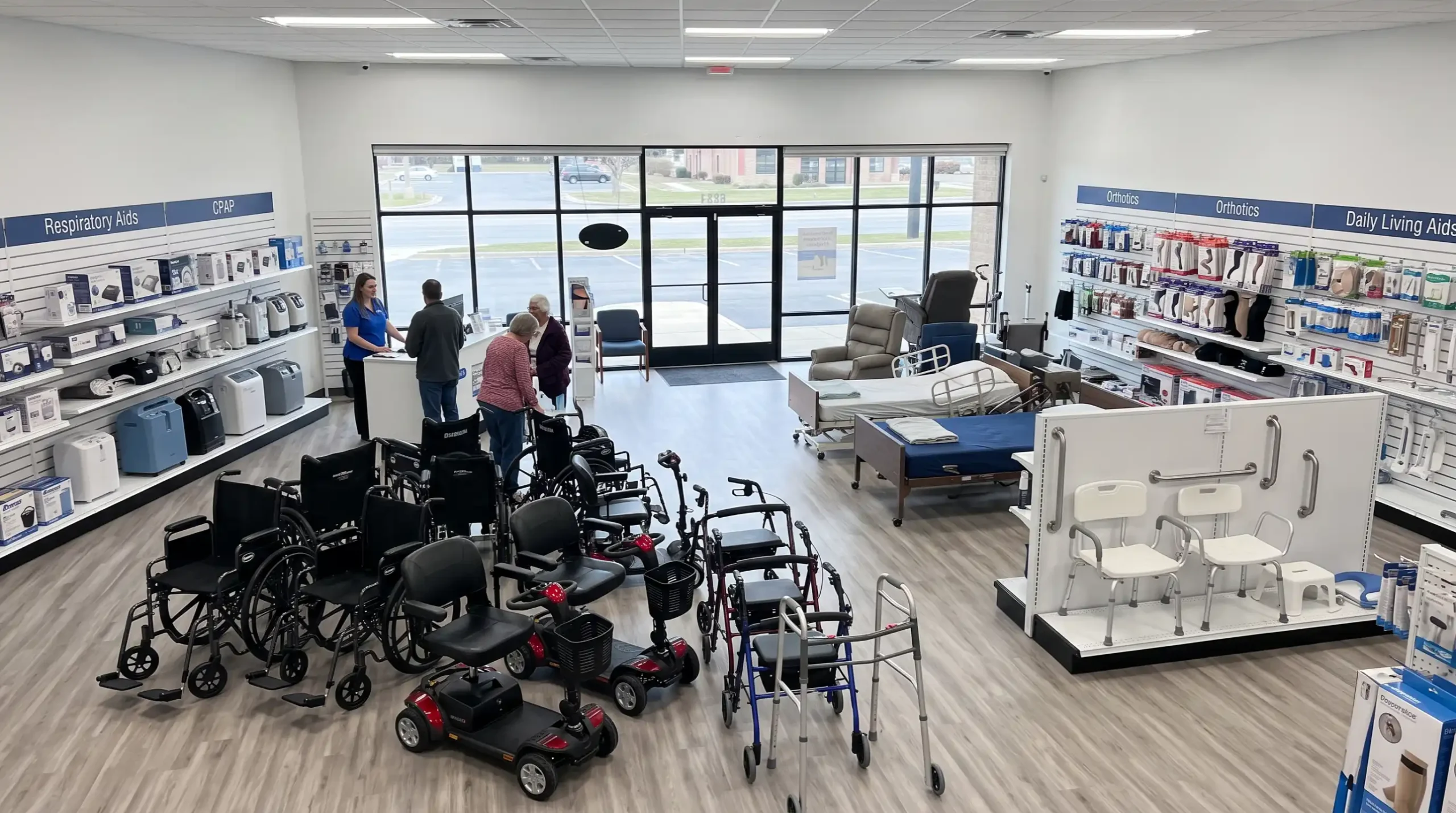
Finding the right healthcare equipment can make everyday life easier, safer, and more comfortable. For someone recovering from surgery, managing a long-term health condition, living with limited mobility, or caring for an aging family member, the right equipment is more than a product—it can become an important part of daily life.
If you are searching for durable medical equipment Bronx NY, it is important to choose a supplier that understands both the equipment and the people who depend on it. A wheelchair needs to be comfortable and appropriate for the user’s mobility needs. A hospital bed needs to fit the home environment while providing suitable positioning. A walker needs to offer stability without creating unnecessary difficulty.
Alfa Healthcare Supply Inc. helps patients, caregivers, healthcare professionals, and families access a broad range of durable medical equipment and healthcare supplies throughout the Bronx and the greater New York area. The company provides mobility equipment, respiratory devices, home-care equipment, orthopedic products, diabetic supplies, incontinence supplies, and other healthcare products. Its website states that it serves New York, including the Bronx, Brooklyn, Queens, Long Island, and Westchester.
This guide explains what durable medical equipment is, what types of equipment may be useful at home, how to select equipment, what to consider when dealing with insurance, and why personalized support matters when choosing medical equipment.
What is Durable Medical Equipment?
Durable Medical Equipment, commonly called DME, refers to medical equipment designed for repeated use. Unlike disposable medical supplies, DME is generally intended to remain useful over an extended period.
Examples include:
- Wheelchairs
- Walkers
- Mobility scooters
- Hospital beds
- Patient lifts
- Shower chairs
- Bedside commodes
- Pressure-relief mattresses
- Respiratory equipment
- CPAP equipment
- Oxygen-related equipment
- Certain orthopedic support equipment
- Other home-care devices
The exact equipment a person needs depends on their medical condition, mobility, home environment, doctor’s recommendations, and daily activities.
For example, someone recovering from knee surgery may temporarily need a walker and shower chair. A person with long-term mobility limitations may require a wheelchair or mobility scooter. Someone recovering at home after hospitalization may need a hospital bed, patient lift, or pressure-relief surface.
The important point is that DME should be selected according to the individual’s needs rather than simply choosing the most popular or least expensive product.
Why Durable Medical Equipment Matters in the Bronx
The Bronx is home to people with many different healthcare needs. Some residents are recovering after hospitalization, while others are managing chronic conditions or caring for older family members.
For many families, healthcare does not end when a patient leaves the hospital. Recovery and ongoing care often continue at home.
That is where appropriate medical equipment can make a meaningful difference.
A properly selected wheelchair may help someone move around their home more independently. A hospital bed may make repositioning easier for both the patient and caregiver. A shower chair may make bathing safer. A walker may provide additional support during recovery.
These are everyday concerns, but they can have a significant effect on comfort and independence.
When families search for durable medical equipment Bronx NY, they are often not simply looking for a store. They are looking for a reliable way to obtain equipment that fits their situation.
Alfa Healthcare Supply Inc. and DME Support
Alfa Healthcare Supply Inc. is a New York healthcare equipment supplier serving patients and healthcare providers across the region. Its company information describes more than two decades of experience and a focus on medical equipment, supplies, patient support, and healthcare procurement.
The company offers a range of DME categories, including mobility solutions, home hospital beds, patient lifts, support surfaces, bath-safety products, and other home-care equipment.
Its approach includes consultation and assessment, product selection, ordering, delivery, equipment setup or training for applicable equipment, and ongoing support.
That process is important because medical equipment is not always as simple as ordering a regular household product.
A person may need help understanding:
- Which equipment is appropriate
- What size is required
- How the equipment should be used
- Whether accessories are necessary
- Whether a prescription or medical documentation is needed
- Whether insurance may cover the equipment
- How the equipment should be maintained
- What to do if something stops working
Having access to knowledgeable support can make the process less stressful.
Types of Durable Medical Equipment Available for Home Care
Different situations require different types of equipment. Below are some of the major DME categories that may be useful for Bronx residents.
1. Wheelchairs
Wheelchairs can help individuals who cannot walk safely or comfortably for extended periods.
Depending on the person’s needs, there are different wheelchair designs and configurations. Some are intended for occasional transportation, while others are designed for more frequent daily use.
When choosing a wheelchair, consider:
- Seat width
- Seat depth
- Weight capacity
- Overall wheelchair weight
- Portability
- Indoor maneuverability
- Footrest configuration
- Armrest configuration
- Cushion requirements
- User’s ability to propel the chair
- Transportation requirements
A wheelchair should not be selected solely based on appearance or price.
The right fit can influence comfort, positioning, maneuverability, and everyday usability.
2. Walkers
Walkers provide additional stability for people who have difficulty maintaining balance or walking independently.
Common options include standard walkers, rolling walkers, and other mobility-support designs.
A walker may be useful during:
- Post-surgical recovery
- Rehabilitation
- Temporary mobility limitations
- Balance difficulties
- Certain long-term mobility conditions
Proper height adjustment is important. A walker that is too high or too low may be uncomfortable and may not provide appropriate support.
A healthcare professional can help determine whether a particular walker is appropriate.
3. Rollators
Rollators typically include wheels and may have hand brakes and a built-in seat.
They can be useful for people who need walking support but are able to walk independently with appropriate assistance.
A rollator may provide a combination of mobility and convenience. The seat can also be useful when someone needs to rest during longer activities.
However, not every person who needs walking assistance should automatically use a rollator. Stability, strength, balance, coordination, and the person’s ability to operate the brakes should all be considered.
4. Mobility Scooters
Mobility scooters may provide another option for individuals who have difficulty walking longer distances but can safely operate a scooter.
When evaluating a mobility scooter, consider:
- Where it will be used
- Turning radius
- Battery range
- Weight capacity
- Seat comfort
- Portability
- Transportation needs
- Indoor versus outdoor use
- User’s ability to operate the controls
A scooter that works well outdoors may not be the best option for navigating narrow indoor spaces.
5. Home Hospital Beds
A home hospital bed can be helpful when a patient needs positioning or bed features that a conventional household bed cannot provide.
Alfa Healthcare Supply’s DME information lists semi-electric and full-electric home hospital beds among its equipment categories.
Depending on the model, hospital beds can offer adjustable positioning that may help with:
- Getting into and out of bed
- Repositioning
- Rest
- Caregiver assistance
- Post-surgical recovery
- Long-term home care
Before purchasing or renting a hospital bed, families should consider available room space, electrical requirements, mattress compatibility, side-rail needs, and the patient’s mobility.
6. Patient Lifts
Patient lifts can assist caregivers with transferring individuals who cannot safely move from a bed to a wheelchair or another surface independently.
Alfa Healthcare Supply lists patient lifts and slings among its DME offerings.
Transfers can place significant physical demands on caregivers. Using appropriate equipment can help make transfers more controlled and reduce unnecessary physical strain.
However, patient lifts require proper training. Patients and caregivers should understand how the equipment operates before attempting transfers.
7. Pressure-Relief Support Surfaces
People who spend extended periods in bed or in a wheelchair may have increased risk of pressure-related skin problems.
Pressure-relief mattresses and support surfaces are designed to help distribute pressure and provide additional support.
Alfa Healthcare Supply includes pressure-relief mattresses and low-air-loss overlays within its DME categories.
The correct support surface depends on the individual’s clinical needs. A healthcare professional should help determine the appropriate option, particularly for people at elevated risk of skin breakdown.
8. Bathroom Safety Equipment
The bathroom can present significant challenges for people with limited mobility or balance.
Useful equipment may include:
- Shower chairs
- Transfer benches
- Bedside commodes
- Grab bars
- Raised toilet seats
- Other bathroom safety aids
A shower chair, for example, may allow someone to bathe while seated rather than standing for an extended period.
Alfa Healthcare Supply lists commodes, shower chairs, grab bars, and other bath-safety products among its home-care equipment.
The goal is not to fill a bathroom with equipment. The goal is to identify the products that address actual safety and mobility needs.
How to Choose Durable Medical Equipment
Choosing DME can feel overwhelming, particularly when the equipment is being purchased after an unexpected hospital stay.
A simple approach can make the process easier.
Start With the Medical Need
The first question should always be:
What problem does the equipment need to solve?
For example:
- Is the patient having difficulty walking?
- Is the patient unable to safely climb stairs?
- Does the patient need help transferring?
- Is extended bed rest expected?
- Is the person recovering from surgery?
- Does the caregiver need assistance with daily care?
- Does the person need respiratory support?
Understanding the problem helps narrow down the equipment choices.
Consider the Patient’s Abilities
Two people with the same diagnosis may have very different equipment requirements.
Consider:
- Strength
- Balance
- Height
- Weight
- Coordination
- Hand function
- Cognitive ability
- Vision
- Endurance
- Ability to operate equipment
The equipment should match the person who will actually use it.
Consider the Home Environment
A product can be medically appropriate but difficult to use in a particular home.
Before selecting equipment, consider:
- Doorway widths
- Hallway space
- Staircases
- Bathroom layout
- Bedroom size
- Flooring
- Electrical outlets
- Storage space
- Vehicle access
- Elevator availability
This is especially important for larger equipment such as hospital beds, wheelchairs, patient lifts, and mobility scooters.
Consider Transportation
If the patient travels to medical appointments, transportation should be considered before selecting large equipment.
Ask:
- Will the wheelchair fit inside the vehicle?
- Is a wheelchair-accessible vehicle available?
- Can the equipment be folded?
- Does the equipment need to be disassembled?
- Is assistance required to load it?
A product that is convenient at home may be difficult to transport.
Think About Long-Term Use
If equipment will be used regularly, durability matters.
Ask about:
- Manufacturer specifications
- Warranty coverage
- Replacement parts
- Maintenance requirements
- Service support
- Availability of accessories
The lowest purchase price does not always represent the lowest overall cost.
Medical Equipment Should Fit the Person—not Just the Diagnosis
One of the most important principles in selecting DME is personalization.
A diagnosis alone does not tell the complete story.
Imagine two people recovering from the same surgery. One person may be strong enough to use a standard walker, while another may need a different mobility solution. One may live in a one-story apartment, while another lives in a multi-level home.
Their equipment needs can therefore be very different.
This is why consultation can be valuable.
Alfa Healthcare Supply describes a consultation and assessment process intended to understand the user’s requirements before recommending products.
Durable Medical Equipment After Hospital Discharge
Hospital discharge can be an emotional time for families.
Everyone may be relieved that the patient is going home, but suddenly there are new responsibilities:
- Medication schedules
- Follow-up appointments
- Mobility assistance
- Wound care
- Personal care
- Equipment setup
- Transportation
- Caregiver coordination
Sometimes the home needs to be prepared before the patient arrives.
Medical equipment such as a hospital bed, walker, wheelchair, commode, or other DME may need to be available at discharge.
This is one reason reliable DME coordination matters.
Alfa Healthcare Supply states that it supports hospital discharge needs and offers equipment fulfillment and training for applicable products.
Families should communicate with the hospital discharge team early whenever home equipment may be required.
Insurance and Durable Medical Equipment
The cost of DME can vary substantially depending on the product.
Insurance coverage may also depend on factors such as:
- Medical necessity
- Diagnosis
- Physician documentation
- Prescription requirements
- Insurance plan rules
- Supplier eligibility
- Prior authorization
- Frequency limitations
- Specific equipment requirements
Do not assume that every product is covered simply because it is classified as medical equipment.
Likewise, do not assume that insurance will not cover a product without checking your specific plan.
Alfa Healthcare Supply states that it works with insurance providers and assists with insurance billing and medical-necessity documentation.
Because insurance policies can change, patients should confirm current coverage requirements directly with their insurance provider and healthcare team.
Medicare and Medicaid Considerations
Medicare and Medicaid have specific rules governing DME coverage.
Coverage can depend on the patient’s eligibility, medical necessity, documentation, product category, supplier requirements, and other conditions.
Alfa Healthcare Supply’s DME page states that it is a Medicare Part B and New York Medicaid provider and describes assistance with medical-necessity documentation.
However, coverage is not guaranteed simply because a supplier participates in a program.
Before ordering equipment, patients should verify:
- Whether the equipment is covered.
- Whether a prescription is required.
- What documentation is needed.
- Whether prior authorization applies.
- Whether the supplier is approved for the patient’s plan.
- What portion of the cost might the patient have to pay?
This can help prevent unexpected expenses.
Why Proper Training Matters
Buying medical equipment is only the beginning.
The user also needs to know how to operate it safely.
This is particularly important for:
- Hospital beds
- Patient lifts
- CPAP equipment
- Oxygen-related equipment
- Wheelchairs with specialized features
- Mobility scooters
- Other complex equipment
Alfa Healthcare Supply states that trained professionals provide guidance for applicable complex equipment and hands-on support for patients and caregivers.
Training can help answer practical questions such as:
- How do I adjust the equipment?
- How do I lock the wheels?
- How do I charge the battery?
- How do I safely transfer a patient?
- How should the equipment be cleaned?
- What should I do if an alarm sounds?
- Who should I contact if the equipment stops working?
When someone is already dealing with a stressful health situation, clear instructions can provide reassurance.
Mobility Equipment and Independence
Mobility is closely connected to independence.
For many people, being able to move safely from the bedroom to the kitchen, get into the bathroom, or leave the home for an appointment is extremely important.
A wheelchair, walker, rollator, or mobility scooter may support that independence.
But mobility equipment should not be viewed as simply a way to “move around.”
It can also help people participate in everyday activities.
Being able to move independently may allow someone to:
- Visit family
- Attend appointments
- Spend time outdoors
- Participate in social activities
- Perform daily routines
- Remain engaged with their household
The right equipment can therefore support more than physical movement—it can support quality of life.
Respiratory Durable Medical Equipment
Respiratory equipment is another important area of home healthcare.
People with certain respiratory conditions may use equipment such as:
- CPAP devices
- Oxygen concentrators
- Nebulizers
- Respiratory accessories
- Other breathing-support equipment
Alfa Healthcare Supply lists CPAP machines, oxygen concentrators, and breathing equipment within its respiratory equipment offerings.
Respiratory equipment should be used according to instructions from a healthcare professional.
Patients should also understand equipment maintenance, cleaning, replacement schedules, and what to do if equipment malfunctions.
Diabetes-Related Home Healthcare Equipment
People managing diabetes may also use various medical devices and supplies at home.
These may include:
- Blood glucose monitors
- Test strips
- Lancets
- Insulin-related supplies
- Diabetic footwear
- Diabetic shoe inserts
- Other diabetes-management products
Alfa Healthcare Supply identifies diabetic supplies as one of its healthcare product categories.
While many diabetic supplies are disposable rather than traditional DME, they are often an important part of a broader home healthcare plan.
Patients should use glucose-monitoring devices according to the manufacturer’s instructions and their healthcare provider’s recommendations.
Orthopedic and Support Equipment
Orthopedic products may help provide support during recovery or ongoing mobility challenges.
Depending on individual needs, these products can include:
- Braces
- Supports
- Compression products
- Mobility aids
- Other orthopedic equipment
Alfa Healthcare Supply lists orthopedic supports, braces, compression therapy, and orthopedic equipment among its product categories.
The correct product should be selected based on the body area involved, intended use, fit, and professional recommendations where appropriate.
DME for Seniors
Older adults may experience changes in balance, strength, mobility, and endurance.
The goal of medical equipment should not be to make someone feel less independent. In many situations, the opposite is true.
The right equipment can help an older adult remain active and participate safely in daily routines.
Possible equipment may include:
- Walkers
- Rollators
- Wheelchairs
- Shower chairs
- Grab bars
- Bedside commodes
- Hospital beds
- Patient lifts
Family caregivers should consider both the individual’s needs and their ability to use the equipment safely.
DME for Post-Surgical Recovery
Recovery after surgery can temporarily change a person’s mobility.
A patient who was independent before surgery may need assistance for several weeks.
Depending on the procedure, a healthcare team may recommend equipment such as:
- Walker
- Wheelchair
- Shower chair
- Raised toilet equipment
- Hospital bed
- Commode
- Other mobility aids
The equipment should support the recovery plan rather than replace professional medical guidance.
Ask the surgeon, physical therapist, occupational therapist, or discharge planner what equipment is appropriate before purchasing.
Equipment for Caregivers
DME is not only about the patient.
Caregivers also need equipment that makes care safer and more manageable.
For example, a patient lift may help with transfers. An adjustable hospital bed may make repositioning easier. A bedside commode may reduce the need for difficult nighttime bathroom trips.
Caregivers should never feel that they must physically lift or transfer a patient without appropriate training.
If a transfer feels unsafe, ask the patient’s healthcare team about safer techniques and appropriate equipment.
What Makes a Reliable DME Supplier?
When searching for durable medical equipment Bronx NY, consider more than inventory.
A reliable supplier should ideally provide:
Product Knowledge
Staff should understand the products they sell and be able to explain basic differences between equipment options.
Appropriate Guidance
The supplier should encourage customers to choose equipment based on actual needs rather than simply recommending the most expensive option.
Clear Ordering Information
Customers should understand pricing, documentation, insurance requirements, delivery arrangements, and other important details.
Equipment Support
For complex equipment, setup and training can be extremely valuable.
Reliable Communication
Healthcare needs do not always follow a convenient schedule. Families appreciate having a clear way to ask questions or report equipment problems.
Manufacturer Support
A supplier should be able to explain warranty or replacement processes when applicable.
Alfa Healthcare Supply describes ongoing support, troubleshooting, replacement parts, and equipment servicing as part of its approach to DME support.
Questions to Ask Before Ordering DME
Before purchasing equipment, consider asking the supplier:
- Is this product appropriate for the intended user?
- What size should I order?
- What is the equipment’s weight capacity?
- Will it fit inside my home?
- Can it be transported?
- Does it require assembly?
- Is professional setup available?
- Will someone explain how to use it?
- Does the product require a prescription?
- Can insurance cover it?
- What documentation is required?
- What is the warranty?
- Are replacement parts available?
- What should I do if the equipment stops working?
- Are accessories or replacement components needed?
These questions can help you make a more informed decision.
How to Prepare Your Home for DME
Bringing medical equipment into the home may require some preparation.
Clear Walking Areas
Remove unnecessary objects from pathways.
Check Doorways
Measure doorways before ordering large mobility equipment.
Organize the Bedroom
Make sure there is enough space around the bed for caregivers and equipment.
Improve Bathroom Safety
Remove loose rugs and clutter where appropriate. Consider whether additional safety equipment is needed.
Plan Equipment Storage
Large items such as wheelchairs and walkers need a practical storage location.
Check Electrical Access
Some equipment requires an electrical outlet. Make sure the location is suitable.
Consider Emergency Access
Do not block doors, hallways, or other important access routes with medical equipment.
Maintaining Durable Medical Equipment
Proper maintenance can extend the useful life of equipment and help maintain safe operation.
Maintenance requirements vary by product, but basic practices may include:
- Follow manufacturer instructions.
- Keep equipment clean.
- Inspect components regularly.
- Check wheels and brakes where applicable.
- Look for loose hardware.
- Monitor batteries and chargers.
- Replace worn components as recommended.
- Do not modify equipment without professional guidance.
- Report problems promptly.
If equipment appears damaged or unsafe, stop using it when appropriate and contact the supplier or healthcare professional for guidance.
What to Do When Medical Equipment Breaks
A broken wheelchair, hospital bed, CPAP device, or other essential equipment can be stressful.
First, determine whether the problem creates an immediate safety issue.
Do not attempt repairs that you are not qualified to perform.
Contact the supplier and provide:
- Product name
- Model number if available
- Description of the problem
- When the issue started
- Any error message or alarm
- Photos or videos if requested
Alfa Healthcare Supply states that its support team can assist with troubleshooting, warranty replacement parts, and repair-related needs for applicable equipment.
The Human Side of Medical Equipment
It is easy to think of medical equipment as hardware: wheels, frames, motors, beds, cushions, monitors, and accessories.
But behind every order is a person.
It may be a father trying to walk safely after surgery.
It may be a grandmother who wants to remain independent in her own home.
It may be a spouse learning how to care for a partner.
It may be a daughter arranging equipment for a parent after a hospital discharge.
For these people, receiving the right equipment can mean relief.
It can mean fewer worries about getting from the bed to the bathroom.
It can mean a caregiver does not have to struggle with an unsafe transfer.
It can mean someone can sit comfortably at home instead of feeling completely dependent on others.
That is why choosing a DME supplier should involve more than comparing product prices.
Compassion, communication, product knowledge, and reliable support matter too.
Why Local DME Support Can Be Valuable
A local or regionally experienced supplier can understand some of the practical challenges involved in serving patients in a large metropolitan area.
For Bronx families, timely communication can be particularly valuable when equipment is needed after a hospital discharge.
Alfa Healthcare Supply states that it serves patients in the Bronx as well as Queens, Brooklyn, Long Island, Westchester, and other areas of New York.
The company is based in Floral Park, New York, and its listed contact information includes its address and telephone numbers.
Patients should always confirm current delivery availability and timing before placing an urgent order.
DME and Home Independence
One of the biggest advantages of appropriate home medical equipment is the potential to support independence.
Independence does not necessarily mean doing everything alone.
Sometimes independence means having the right tools to perform a task safely.
A walker may allow a person to walk to the kitchen.
A shower chair may allow someone to bathe with less assistance.
A wheelchair may make it possible to attend a doctor’s appointment.
A hospital bed may help a caregiver provide care more comfortably.
A patient lift may make transfers more manageable.
In each case, the equipment is supporting a person’s ability to live their daily life.
How Healthcare Professionals Can Help
Patients should not have to determine every equipment need on their own.
Healthcare professionals can provide important guidance.
Depending on the situation, this may include:
- Physicians
- Nurses
- Physical therapists
- Occupational therapists
- Respiratory therapists
- Discharge planners
- Case managers
- Home healthcare professionals
These professionals can help determine whether equipment is medically appropriate and may provide specifications or documentation needed for the supplier.
For complex mobility and home-care situations, professional input is particularly important.
A Simple DME Selection Process
If you are beginning your search for durable medical equipment Bronx NY, the following process can make things easier.
Step 1: Identify the Need
Write down what the patient is struggling to do.
Step 2: Talk With the Healthcare Team
Ask whether DME is recommended and what type may be appropriate.
Step 3: Check Measurements
Measure the patient and relevant areas of the home when necessary.
Step 4: Review Equipment Options
Compare appropriate products based on functionality, fit, safety, and durability.
Step 5: Check Insurance
Confirm coverage, documentation, authorization, and potential out-of-pocket costs.
Step 6: Choose a Reliable Supplier
Look for product expertise, support, delivery options, and clear communication.
Step 7: Arrange Delivery and Setup
For complex equipment, ask whether professional installation or training is available.
Step 8: Learn How to Use It
Make sure the patient and caregiver understand basic operation and safety.
Step 9: Maintain the Equipment
Follow manufacturer instructions and report problems promptly.
Frequently Asked Questions About Durable Medical Equipment Bronx NY
1. What is durable medical equipment?
Durable Medical Equipment (DME) refers to reusable medical equipment designed to support healthcare needs over an extended period. Common examples include wheelchairs, walkers, hospital beds, patient lifts, shower chairs, commodes, and certain respiratory equipment.
2. Where can I find durable medical equipment in the Bronx?
Bronx residents can work with medical equipment suppliers that serve the New York City area. Alfa Healthcare Supply Inc. states that it delivers medical equipment and supplies to patients in the Bronx, Brooklyn, Queens, Manhattan, Westchester, and other areas of New York.
3. What types of durable medical equipment are available?
Depending on individual needs, DME can include:
- Wheelchairs
- Walkers
- Transport chairs
- Hospital beds
- Patient lifts and slings
- Pressure-relief mattresses
- Commodes
- Shower chairs
- Grab bars
- Mobility equipment
- Certain respiratory equipment
Alfa Healthcare Supply lists these types of equipment within its DME product range.
4. Does Alfa Healthcare Supply serve the Bronx?
Yes. Alfa Healthcare Supply identifies the Bronx among the New York communities it serves and offers medical equipment and supply delivery to Bronx patients and healthcare providers.
5. Do I need a prescription for durable medical equipment?
It depends on the equipment. Some basic products may be available without a prescription, while certain regulated DME products require a valid prescription or medical documentation. Alfa Healthcare Supply notes that requirements vary by product and specifically identifies items such as CPAP machines and oxygen concentrators as requiring a prescription.
6. Does insurance cover durable medical equipment?
Some DME may be covered when it meets the requirements of the patient’s insurance plan and is considered medically necessary. Coverage can depend on the equipment, diagnosis, prescription, documentation, and insurance policy.
Alfa Healthcare Supply states that it works with Medicare Part B and many private insurance plans and can assist with benefit verification and documentation.
7. Does Medicare cover DME?
Medicare may cover certain medically necessary DME when applicable requirements are met. Coverage is not automatic for every product, so patients should verify their specific benefits and documentation requirements.
Alfa Healthcare Supply states that it is a Medicare-enrolled provider and accepts assignment on covered DME items.
8. Does Medicaid cover medical equipment in New York?
Eligible New York Medicaid beneficiaries may have coverage for qualifying medical equipment, subject to program requirements and medical necessity. Patients should confirm current benefits with their plan and healthcare provider.
Alfa Healthcare Supply states that it works with Managed Medicaid plans in the Five Boroughs and Long Island.
9. Can Alfa Healthcare Supply help with insurance paperwork?
Yes. The company states that its billing team assists with insurance verification, prior authorization, and documentation such as Certificates of Medical Necessity and Detailed Written Orders.
10. How do I choose the right medical equipment?
The right equipment depends on the patient’s medical needs, mobility, physical abilities, home layout, equipment features, and expected duration of use.
For example, someone who needs occasional walking assistance may have different requirements from someone who cannot safely walk independently.
Alfa Healthcare Supply says its staff considers factors such as mobility, home setup, device features, and longevity when helping customers select equipment.
11. Can I get a wheelchair for home use?
Yes. Wheelchairs are commonly used as home mobility equipment. The appropriate wheelchair depends on factors such as the user’s height, weight, mobility level, home environment, transportation needs, and ability to operate or propel the chair.
12. Can I get a hospital bed for home use?
Yes. Home hospital beds are available as part of DME services when medically appropriate. Alfa Healthcare Supply lists semi-electric and full-electric hospital beds with adjustable positioning among its DME products.
13. Are patient lifts available for home care?
Yes. Patient lifts and slings can help caregivers transfer individuals who have difficulty moving independently. Alfa Healthcare Supply lists manual and hydraulic patient lifts among its DME offerings.
Because patient lifts involve safety-sensitive transfers, users and caregivers should receive appropriate instruction before operating them.
14. Does DME help people remain independent at home?
It can. Appropriate equipment may make everyday activities easier and safer. A walker may help someone move around the home, while a wheelchair or mobility device may make it easier to attend appointments or participate in daily activities.
The goal is to select equipment that supports the person’s actual abilities and healthcare needs.
15. Can I get bathroom safety equipment?
Yes. Bathroom safety products may include shower chairs, commodes, grab bars, and other daily-living aids. Alfa Healthcare Supply lists these products as part of its home-care and DME offerings.
16. Is DME useful after surgery?
Yes. Some patients may temporarily require equipment during recovery from surgery. Depending on the procedure and the healthcare professional’s recommendations, equipment may include walkers, wheelchairs, hospital beds, shower chairs, or commodes.
Always follow the equipment recommendations provided by your healthcare team.
17. Can caregivers receive training on medical equipment?
For certain complex equipment, yes. Alfa Healthcare Supply states that its trained professionals provide setup and safe-use training for applicable DME, including equipment such as hospital beds and patient lifts.
Training can be especially valuable when a caregiver is using medical equipment for the first time.
18. How quickly can durable medical equipment be delivered to the Bronx?
Delivery times depend on the equipment, availability, order requirements, insurance processing, and location. Alfa Healthcare Supply states that it prioritizes local New York orders and offers expedited delivery options.
If equipment is needed urgently after hospital discharge, ask the supplier about current inventory and delivery timing before placing the order.
19. Can I rent or purchase DME?
Some DME may be available through rental or purchase arrangements, depending on the product, insurance coverage, and individual circumstances. Alfa Healthcare Supply states that rental and purchase options may be available for applicable equipment.
20. What should I consider before ordering a hospital bed?
Consider:
- Available bedroom space
- Bed dimensions
- Patient weight
- Required positioning
- Mattress compatibility
- Side-rail requirements
- Electrical access
- Caregiver access
- Delivery and setup requirements
It is also important to confirm that the bed meets the patient’s healthcare needs.