

The "Hip Kit" Explained: 5 Tools You Need After Hip Replacement Surgery
After surgery, your doctor or physical therapist will likely give you a strict rule: The 90-Degree Rule. You must not bend your hip past a 90-degree angle, cross your legs, or twist your hip inward. This precaution is vital to prevent your new hip joint from dislocating while it heals.
But if you can’t bend past 90 degrees, how do you put on your socks? How do you pick up the remote control you dropped? How do you wash your feet?
Enter the “Hip Kit.”
Here is a breakdown of the 5 essential tools found in a standard Hip Kit and why you can’t recover without them.
1. The Reacher Grabber
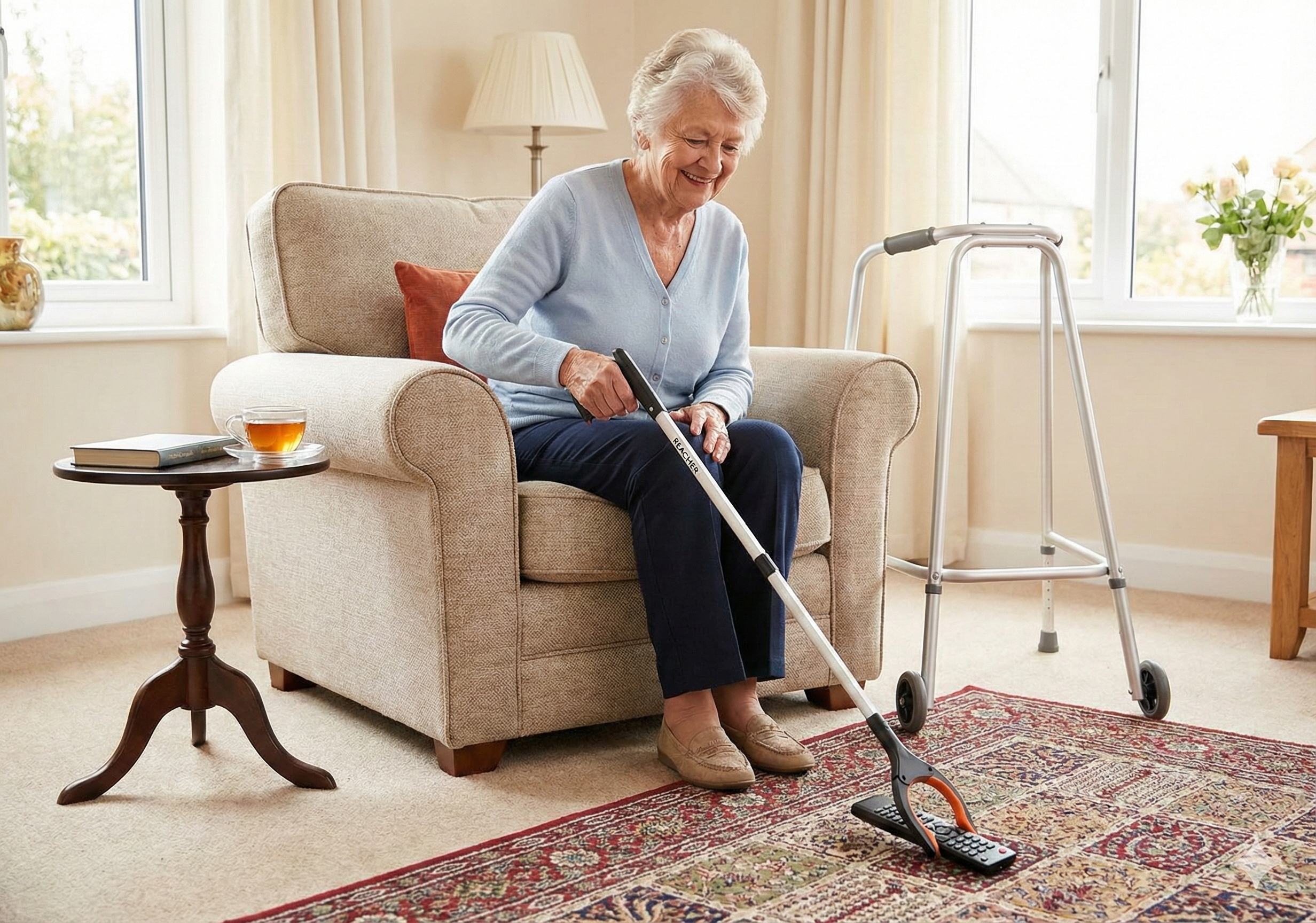
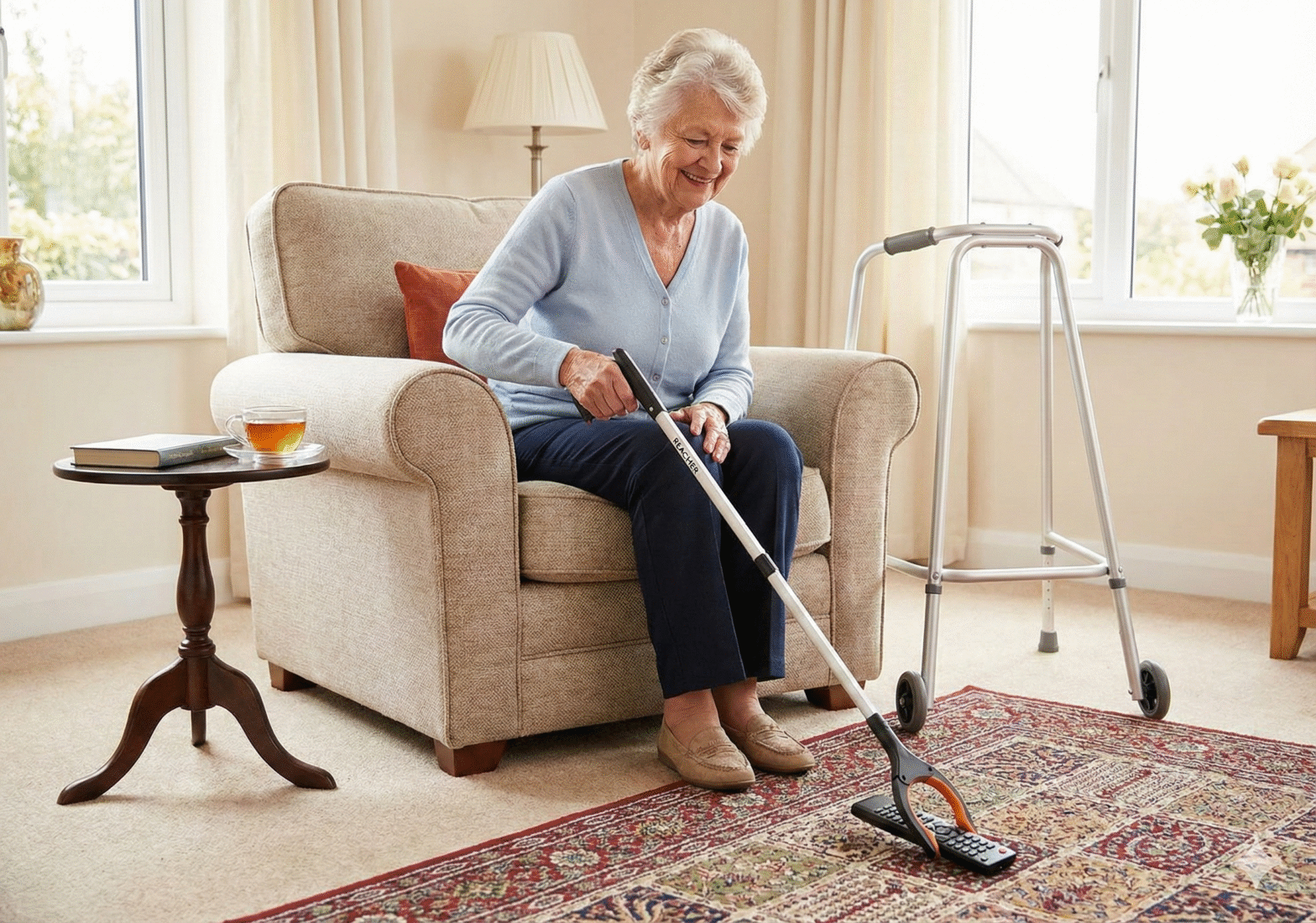
The MVP (Most Valuable Player) of your recovery will undoubtedly be the reacher. This is a lightweight pole with a handle at one end and a mechanical jaw at the other.
- Why you need it: Bending over to pick up objects from the floor is the #1 way patients accidentally break the 90-degree rule.
- How to use it: Use it to pick up dropped items, reach books on low shelves, or even pull your pants up to your knees before you stand.
- Tip: Many of our clients buy two—one for the bedroom and one for the living room/kitchen—so they never have to walk around looking for it.
2. The Sock Aid
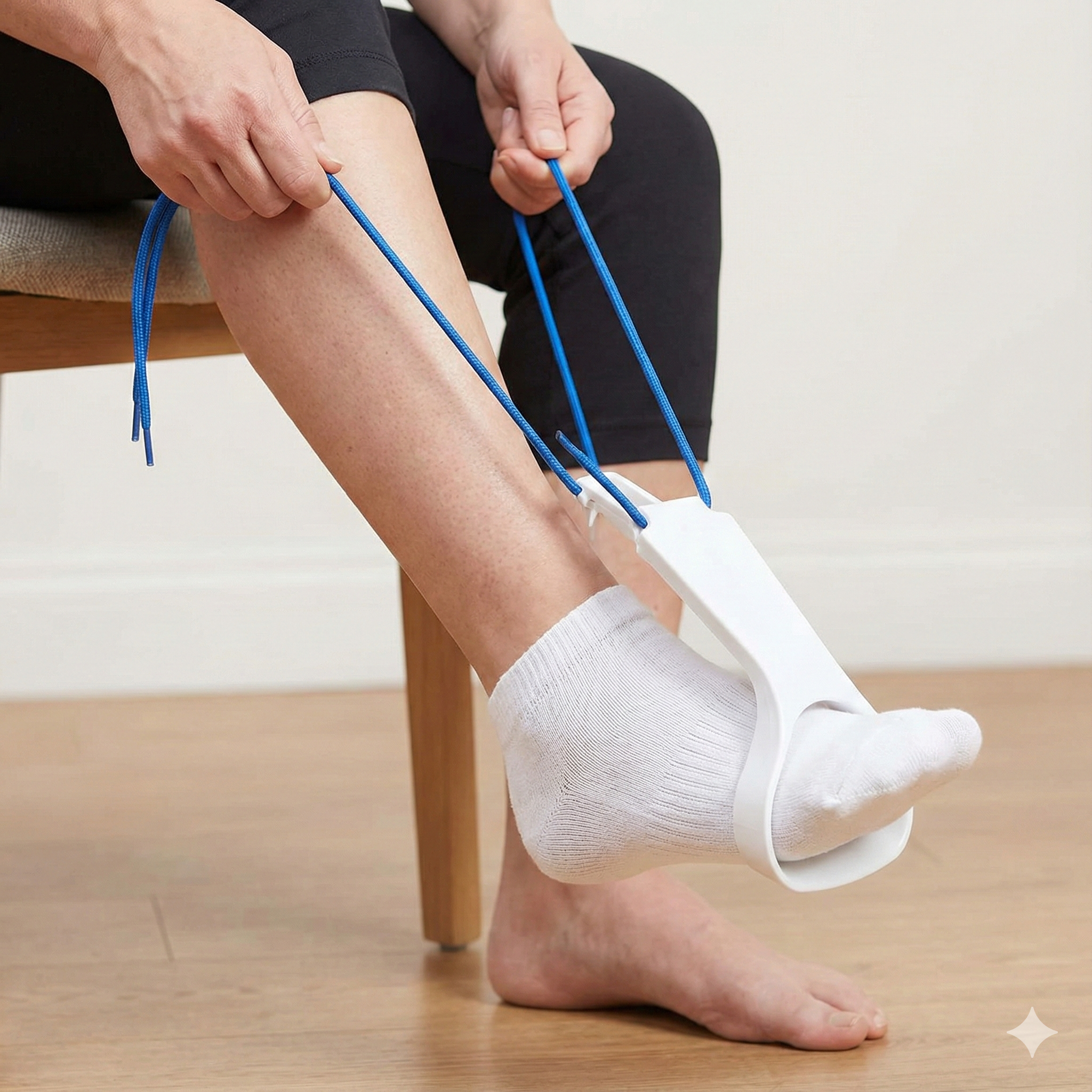
Ask anyone who has had hip surgery what their biggest frustration is, and they will likely say, “Putting on socks.” It is physically impossible to put on a sock without bending your hip too far unless you have help or the right tool.
- Why you need it: Independence. You don’t want to have to call a caregiver every time your feet get cold.
- How it works: The reacher grabber sock aid combo is often talked about, but the sock aid is a specific device. You slide your sock over a flexible plastic tube attached to long cords. You drop the tube to the floor (holding the cords), slide your foot in, and pull. The sock slides perfectly onto your foot without you bending an inch.
3. Long-Handled Shoe Horn
Once your socks are on, you need shoes. Sturdy, non-slip shoes are crucial for learning to walk again, but jamming your heel into a sneaker requires force and bending.
- Why you need it: To protect your heels and your new hip. A standard shoe horn is too short. A long-handled version (usually 18-24 inches) allows you to guide your foot into the shoe while standing upright or sitting safely.
4. Long-Handled Bath Sponge
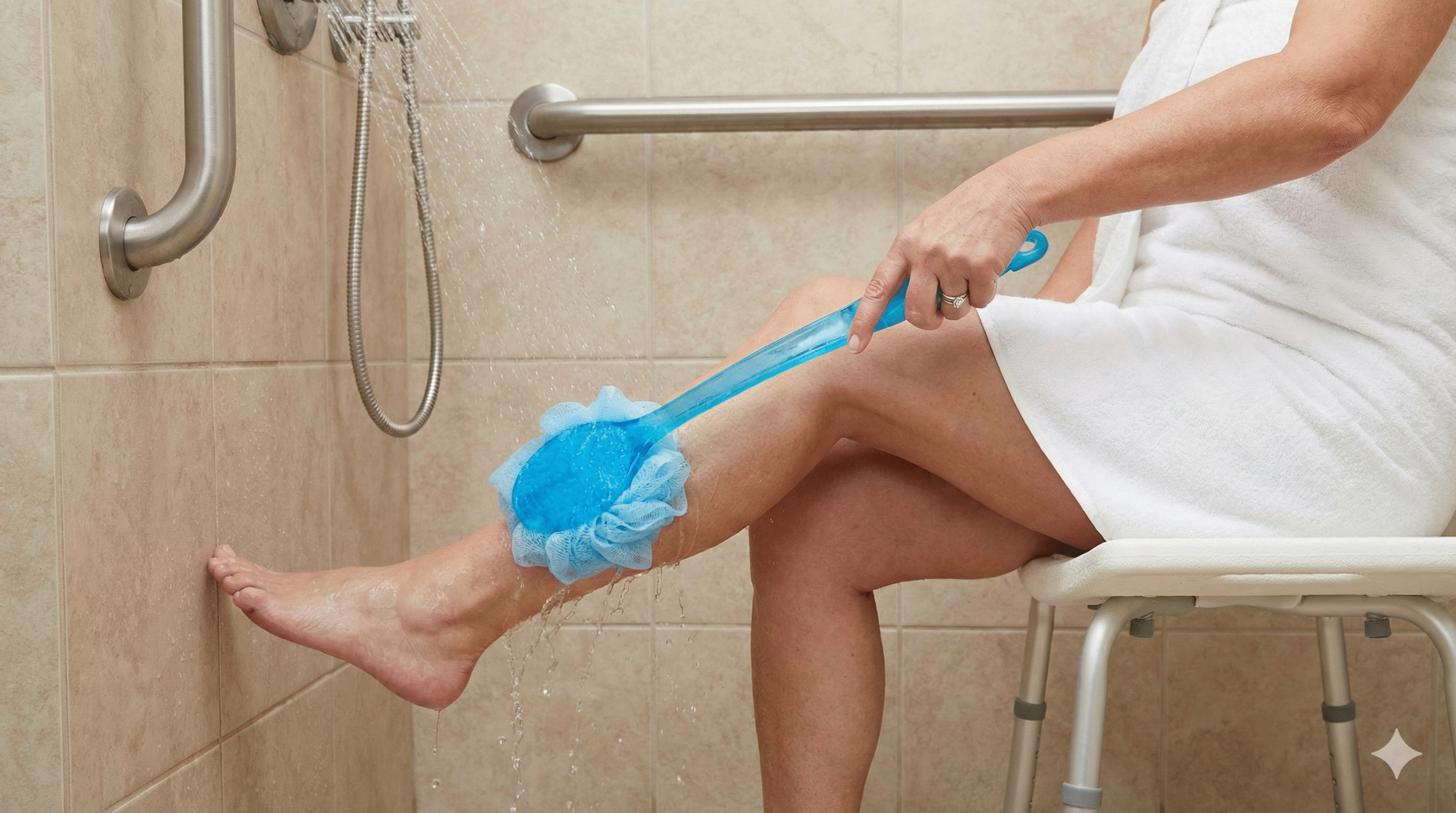
Hygiene is important for preventing infection and feeling like yourself again. However, reaching your lower legs, feet, and back in the shower can be dangerous on a slippery surface.
- Why you need it: Safety in the shower.
- How to use it: These sponges are mounted on a long, often curved handle. They allow you to scrub your feet and back without twisting your torso or bending down, significantly reducing the risk of a slip-and-fall accident in the bathroom.
5. The Dressing Stick
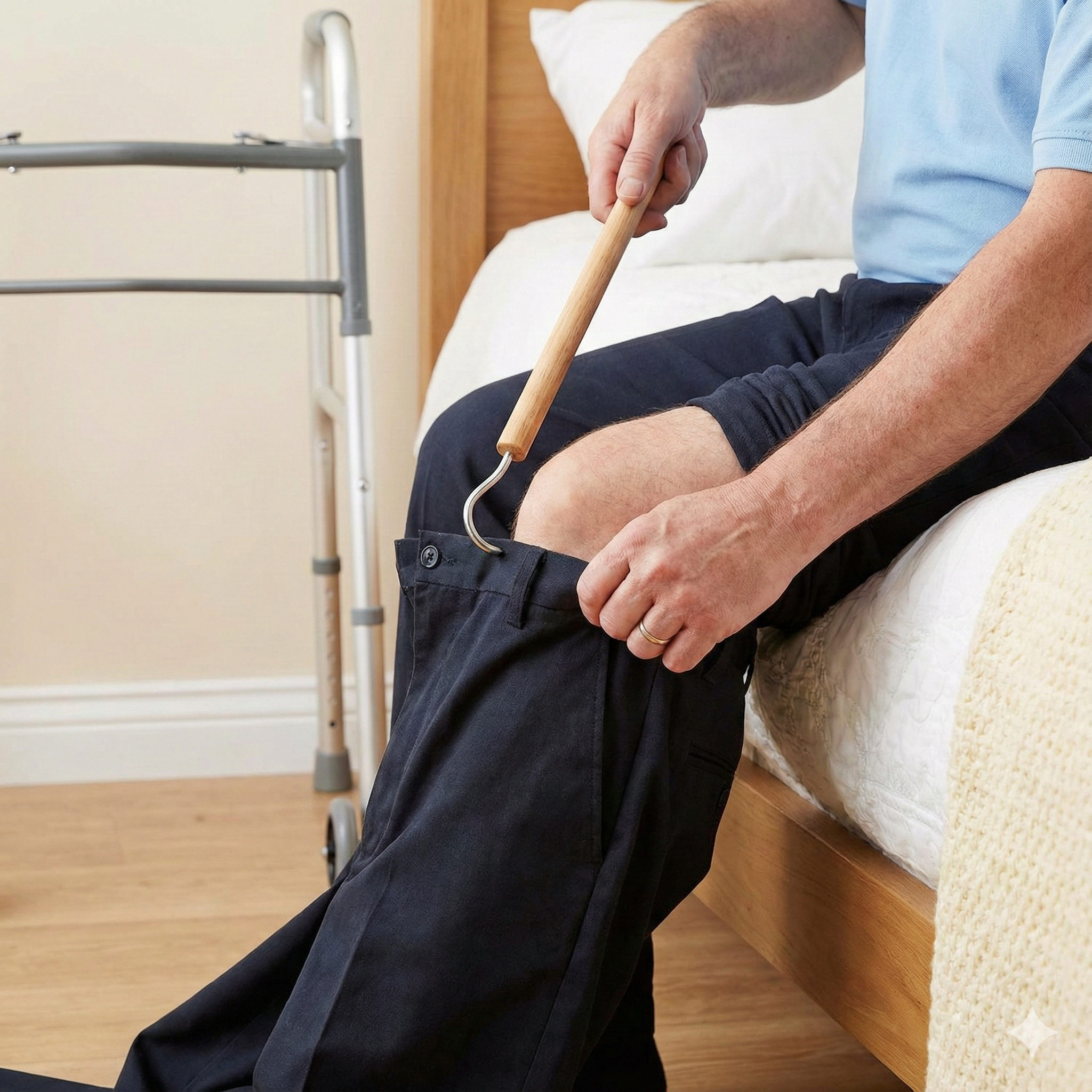
This looks like a simple wooden dowel with hooks on both ends, but it is a versatile tool for getting dressed.
- Why you need it: Dressing your lower body is tricky.
- How to use it: The hooks help you pull up trousers, straighten skirts, or push down socks that are bunched up. It acts as an extension of your arm, handling the fabrics that are just out of reach.
Why Buy a Kit Instead of Separate Items?
While you can purchase these items individually, buying a pre-packaged “Hip Kit” from a medical supply provider like Alfa Healthcare Supply Inc. is usually more cost-effective. Furthermore, these kits are curated by experts who know exactly what quality of hip replacement recovery equipment is required for daily hospital-grade use.
Recovery Tip: Practice using these tools before your surgery. It takes a little coordination to master the sock aid or the reacher. If you practice while you are mobile, you will be a pro by the time you get home from the hospital.

