


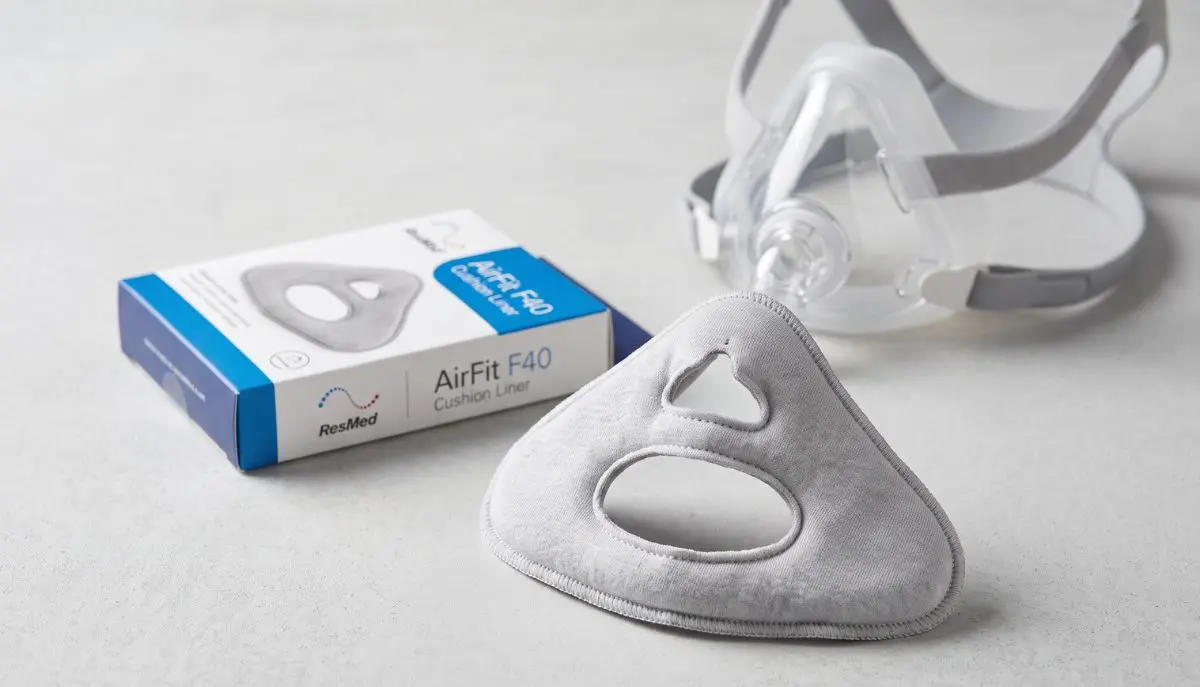
ResMed F40 Cushion Liner:
If you start using a CPAP machine every night, it becomes an integral part of a night’s sleep. But even if your machine is functioning correctly, an uncomfortable mask can make it more difficult to enjoy a restful night’s sleep. There are several reasons people seek to enhance their mask experience, including skin irritation, leaks, pressure marks, and facial discomfort.
If you wish to make your CPAP mask feel more comfortable, a resmed f40 cushion liner may be something you’re looking at. It is important to understand how the ResMed AirFit F40 cushion works, what a mask cushion liner may provide and how to select the correct liner for your mask before making a choice.
We know how important it is to make small comfort improvements in your everyday CPAP experience at Alfa Healthcare Supply Inc. This guide will help you understand the basics in a simple way, so you can choose the right CPAP mask accessories.
What is a ResMed F40 Cushion Liner?
The “resmed f40 cushion liner” is a term used by those seeking an extra cushion or cover for the cushion section of ResMed AirFit F40 CPAP mask. A liner can be a soft fabric or another material intended to be placed between the mask cushion and the skin depending on the product.
Unlike the original mask cushion, a liner is made to fit over the mask. The cushion is the silicone that comes in contact with the face to form a seal for CPAP therapy. An accessory which can fit with an appropriate mask – as long as the accessory manufacturer states that it is suitable for that particular mask model.
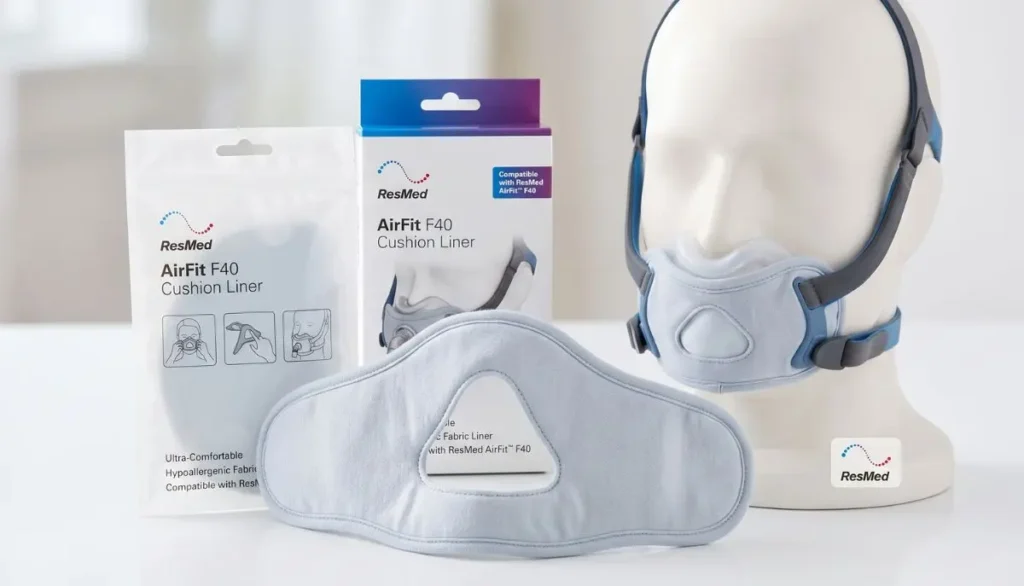
The AirFit F40 CPAP machine is a compact, full face mask with a soft silicone AdaptiSeal cushion that conforms to the face, says ResMed. Mask is worn under the nose and over the mouth.
Please note that not all ResMed mask cushion liners will work with the Resmed F40 mask. Always read the compatibility information of the product.
Why Do CPAP Users Look for a Cushion Liner?
Each CPAP user is unique in terms of comfort needs. Some people adapt to their masks easily, others may need to take time to find a mask that fits them and to establish a mask-cleaning regimen.
The following are some of the reasons to think about a resmed f40 cushion liner.
1. To Improve Skin Comfort
Pressure, facial oils, and frequent contact with the materials of masks can cause discomfort around the nose and mouth. Some of the users check out soft fabric liners to make that contact less hard.
But a liner is not a sure thing to reduce skin irritation. Adding the wrong material or not ensuring the liner fits properly can lead to further rubbing or discomfort. If there is continued irritation, consult your health care provider.
2. To Help Manage Minor Mask Leaks
To ensure delivery of prescribed air pressure, a CPAP mask must have a proper seal. For some users, the reason to look for liners is that they have some small leakages around the cushion.
It is important to note that a liner that is compatible may have an impact on the fit of the cushion at your face but it will not be assumed to prevent leakage. If the liner is either too thick or improperly installed, or is the wrong type for the F40, it may actually cause a worse seal.
If the mask leaks, start by checking the position of the cushion, the headgear, and the condition of the cushion.
3. To Make Nightly Mask Use More Comfortable
If the mask is not comfortable, it can interfere with sleep or reduce adherence to the CPAP. For some users, the use of an appropriate accessory can enhance fit to the skin.
Various factors have an impact on comfort, such as the size of the cushions, the tension on the headgear, the positioning and the shape of the face while sleeping. There’s more than one alternative to consider: a liner.
4. To Address Facial Marks
Some wearers report leaving marks around the nose or mouth after putting their mask on and taking it off. These marks can appear when the mask is too tight or it is not worn properly.
If the tension of the headgear is too great, a liner should not be used. Rather, fit the mask as per manufacturer instructions. See professional advice if marks are painful, persist or are accompanied by broken skin.
Understanding the ResMed AirFit F40 Cushion
It’s best to know the original cushion before purchasing a resmed f40 cushion liner.
The AirFit F40 is a minimally-contacting full face CPAP mask that sits under the nose and covers the mouth. It has a silicone cushion that conforms to the shape of the user’s face and helps to create a seal.
The original cushion is available in three sizes:
- Small Wide: Designed for users who need the corresponding wider cushion shape.
- Medium: The medium-size option for users whose measurements match the fitting guide.
- Large: The larger cushion option for users who need that size.
ResMed classifies these as small, wide and large. It is important to choose the correct size, not by guesswork but by using the manufacturer’s fitting template.
If the cushion is too small or too big it can be a problem and cause leaks. When your cushion isn’t fitting the right way, getting the right replacement might help you more than adding an accessory.
How to Choose a ResMed F40 Cushion Liner
Choosing the right resmed f40 cushion liner begins with checking the exact mask model and the accessory’s design.
Confirm AirFit F40 Compatibility
This is the first and most crucial step. Any liner that is marketed for an AirFit F20 or F30 or another mask will not necessarily fit the F40.
Look for an explicit indication on the product packaging and/or manufacturer’s website that the accessory is compatible with the ResMed AirFit F40. Don’t order if compatibility is not certain, check with the seller first.
Check the Material
For fabric liner accessories, check the material specifications and cleaning instructions. Seek out clear information on washing, drying and re-using it.
Don’t take anything for granted: not all fabrics or foam products are appropriate for use with a CPAP mask. The material should be designed for this use and should be used in accordance with the manufacturer’s instructions.
Consider the Effect on the Seal
The AirFit F40 cushion should be positioned right under the nose and around the mouth. If the cushion undergoes a change in the way it is in contact with the skin due to an accessory, it may impact the seal.
Once any approved accessory is fitted, look for any unusual air leakage, discomfort or mask performance issues. Use the mask and attachment as directed and if you are unable to obtain a good fit, consult your equipment supplier or your clinician.
Review Cleaning and Replacement Instructions
If a liner comes in contact with skin, then it requires regular maintenance. Determine if it is washable, how often it needs to be washed and when it needs to be replaced.
Avoid lining with materials that are not within the manufacturer’s recommended service life. Fabric wear, damaged seams, residue or changes in shape can impact comfort and hygienic qualities.
Compare the Complete Product Details
Check the product name, compatible mask models, included parts, material, cleaning directions and return policy before purchasing.
If the product description is only “ResMed mask liner,” it may not be enough to determine F40 compatibility.
How to Improve AirFit F40 Comfort Without a Liner
You may be able to improve your mask experience by making a few adjustments to your regular routine.
Step 1: Clean the Cushion Daily
The silicone cushion can trap facial oils and dirt, which may impair its skin-to-silk contact. ResMed recommends cleaning of the vent ring, elbows and short tube every day.
Please use warm drinking quality water and mild liquid detergent in accordance with the AirFit F40 user guide. Thoroughly clean and let them dry in the air, away from direct sunlight.
Do not use strong cleaning materials, as they can damage the material or can leave unwanted residue on the mask.
Step 2: Reposition the Cushion
Use the fitting guide to position the cushion under your nose. Be sure it is not folded, twisted or lying crooked against your face.
If a leak is detected, carefully re-position the cushion then tighten the straps. If the mask is too tight, it will be less comfortable.
Step 3: Adjust the Headgear Evenly
The mask should fit snugly but not be so tight that it causes discomfort. Follow the manufacturer’s instructions to adjust the upper and lower straps evenly.
If the straps have to be pulled tight to stop any leakage, try to check the size and state of the cushion, not the tightness of the straps.
Step 4: Inspect the Cushion for Wear
Inspect for visible damage, distortion, rips or anything that will not fit easily. If the cushion is damaged, it may need to be replaced.
According to ResMed’s replacement advice for the USA, the cushion replacement cycle is every month; this could be different depending on your coverage and replacement program. Adhere to your equipment provider’s instructions and current equipment manufacturer’s recommendations.
Step 5: Ask for Professional Fitting Help
If there is discomfort or leakage, request a reassessment of the mask fit from your CPAP equipment provider or health care provider. They can be helpful in establishing if it is a sizing and positioning problem, cushion problem or other problem of the system.
How Often Should You Replace a ResMed F40 Cushion Liner?
The replacement schedule varies according to type of accessory and manufacturer’s recommendations. There is no single replace interval for all liners.
If you use a compatible liner, check it regularly for:
- Fraying, tears, or damaged edges.
- A stretched or misshapen fit.
- Persistent residue or unpleasant odors after cleaning.
- Reduced comfort or increased rubbing.
- Instructions indicating that the product has reached the end of its service life.
Change the accessory when recommended by the manufacturer, or when it is damaged or cannot be properly cleaned.
Remember, the liner and original silicone cushion are not one in the same. Replacement of one does not necessarily imply replacement of the other.
Common Mistakes to Avoid
When searching for a resmed f40 cushion liner, it is easy to focus only on comfort claims. A few precautions can help you make a better choice.
Buying a liner without checking compatibility: A liner designed for another mask may not sit correctly on the F40.
Using a liner to hide a poor fit: An accessory cannot reliably correct the wrong cushion size or excessively loose headgear.
Ignoring cleaning instructions: A liner that is not maintained correctly may collect skin oils, dirt, and residue.
Blocking mask openings: Never cover or obstruct the mask’s vent openings or other functional components. Use only accessories that are intended for the specific mask and follow all supplied instructions.
Continuing to use an uncomfortable setup: If an accessory causes pressure, rubbing, increased leaks, or breathing discomfort, stop using it and seek guidance from your equipment provider or clinician.
Where Can You Find ResMed F40 Cushion Accessories?
Alfa Healthcare Supply Inc. provides medical supply information and helps customers explore products for their home healthcare needs.
If you are looking for a resmed f40 cushion liner, verify that the particular accessory is available and explicitly listed as compatible with the AirFit F40 before placing an order. Availability, product specifications, and prices can change, so confirm the current details with the supplier.
You can visit the Alfa Healthcare Supply Inc. website at https://alfahealthcaresupplyinc.com/ to explore available medical supplies and contact the business with questions about product compatibility.
If you need a replacement cushion rather than a liner, look specifically for the genuine ResMed AirFit F40 replacement cushion in your correct size. The original cushion is a separate product from an aftermarket liner.
Final Thoughts: ResMed F40 Cushion Liner
A comfortable CPAP mask can make your nightly routine easier to manage. If you are considering a resmed f40 cushion liner, start by confirming that the accessory is designed for the ResMed AirFit F40. Then consider the material, cleaning requirements, fit, and possible effect on the cushion seal.
Sometimes, the best solution is a compatible liner. In other cases, cleaning the cushion, correcting the fit, or replacing a worn silicone cushion may be more appropriate.
At Alfa Healthcare Supply Inc., the goal is to help customers make informed choices about their medical supplies. Check product specifications carefully, follow the manufacturer’s instructions, and consult your healthcare professional if mask discomfort or leaks continue.
Frequently Asked Questions: ResMed F40 Cushion Liner
1. What is a ResMed F40 cushion liner?
A resmed f40 cushion liner generally refers to an accessory intended to provide an additional layer between a CPAP mask cushion and the skin. Product designs differ, so check the exact item and its compatibility with the AirFit F40.
2. Does the ResMed AirFit F40 come with a separate liner?
The standard AirFit F40 cushion is made from silicone. A separate fabric liner should not be assumed to be included with the mask or replacement cushion. Check the specific package contents before buying.
3. Can a cushion liner stop CPAP mask leaks?
Not necessarily. A compatible liner may change how the cushion contacts the skin, but it can also affect the seal. Correct sizing, positioning, cushion condition, and headgear adjustment should be checked first.
4. Which AirFit F40 cushion size should I choose?
The AirFit F40 offers Small Wide, Medium, and Large cushion sizes. Use ResMed’s fitting template and sizing guidance to choose the correct option.
5. How often should I clean my AirFit F40 cushion?
ResMed recommends cleaning the cushion daily. Use mild liquid detergent and warm water, rinse thoroughly, and allow it to dry away from direct sunlight. Follow the complete user guide for all mask components.
6. Can I use a liner made for another ResMed mask?
Do not assume it will fit. Check the accessory manufacturer’s compatibility information and confirm that the product is specifically suitable for the AirFit F40.
7. Should I replace the cushion or buy a liner?
If the original cushion is worn, damaged, or no longer fits properly, a compatible replacement cushion may be the appropriate option. A liner is a separate accessory and is not a substitute for a damaged cushion.
8. Where can I ask about ResMed F40 accessories?
You can contact Alfa Healthcare Supply Inc. through its website to ask about product availability and compatibility. Confirm the exact model and product details before ordering.