


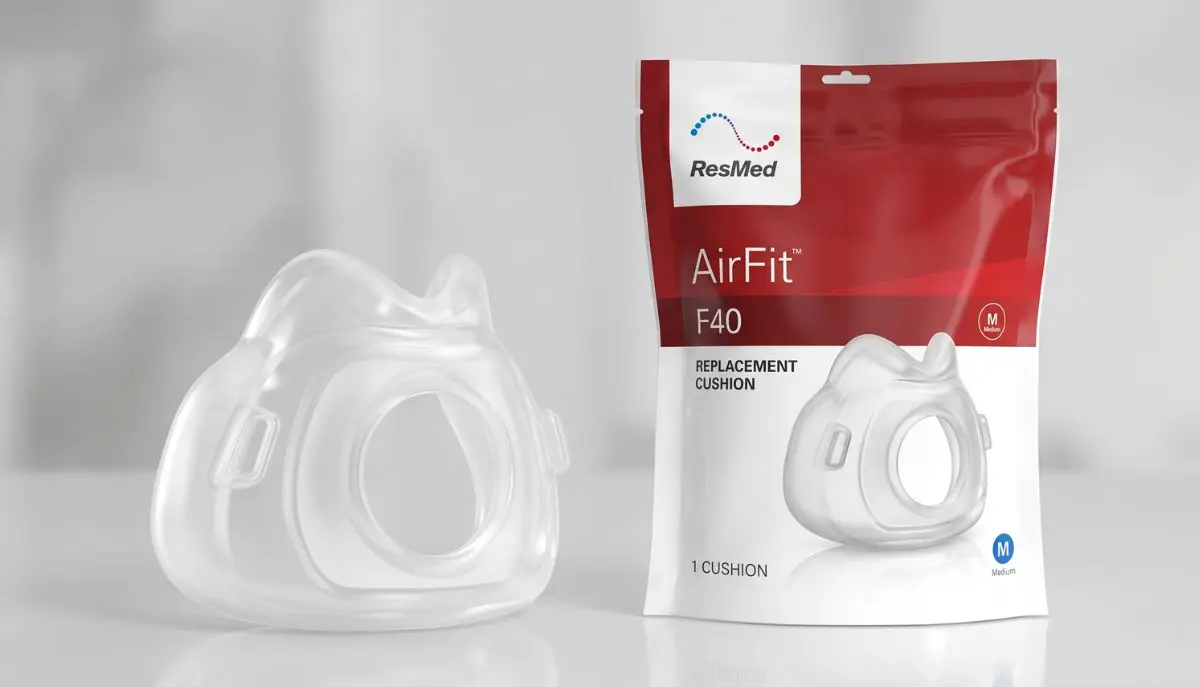
ResMed F40 Mask Cushion:
Using a CPAP machine every night becomes much easier when your mask is comfortable and fits properly. However, even a well-designed mask can wear out over time, causing the cushion to deteriorate. This can lead to air leaks, skin irritation, or difficulty in achieving a proper fit. Choosing the right replacement ensures that you can continue your sleep therapy routine without interruption.
The ResMed F40 mask cushion is a replacement component designed for the ResMed AirFit F40 full-face CPAP mask. It features a soft silicone design that sits under the nose and conforms to the contours of your face, creating a comfortable seal. If only the cushion has worn out, there is no need to replace the entire mask; you can simply replace this specific component.
At Alfa Healthcare Supply Inc., we understand that finding the right CPAP supplies can be confusing, especially when many different parts look similar. This guide explains how the ResMed F40 mask cushion works, how to select the correct size, how to clean it, and when you should consider replacing it.
What is the ResMed F40 Mask Cushion?
The ResMed F40 mask cushion is the soft, flexible component of the AirFit F40 mask that rests on the face, positioned beneath the nose. It is designed to maintain an effective seal, allowing air from the CPAP system to reach the user’s airway during sleep apnea therapy.
Unlike traditional full-face mask cushions that rest over the bridge of the nose, the AirFit F40 uses an innovative under-the-nose design for a more comfortable fit. This low-profile, compact design may be preferred by users who wish to minimize contact with the upper part of their face.
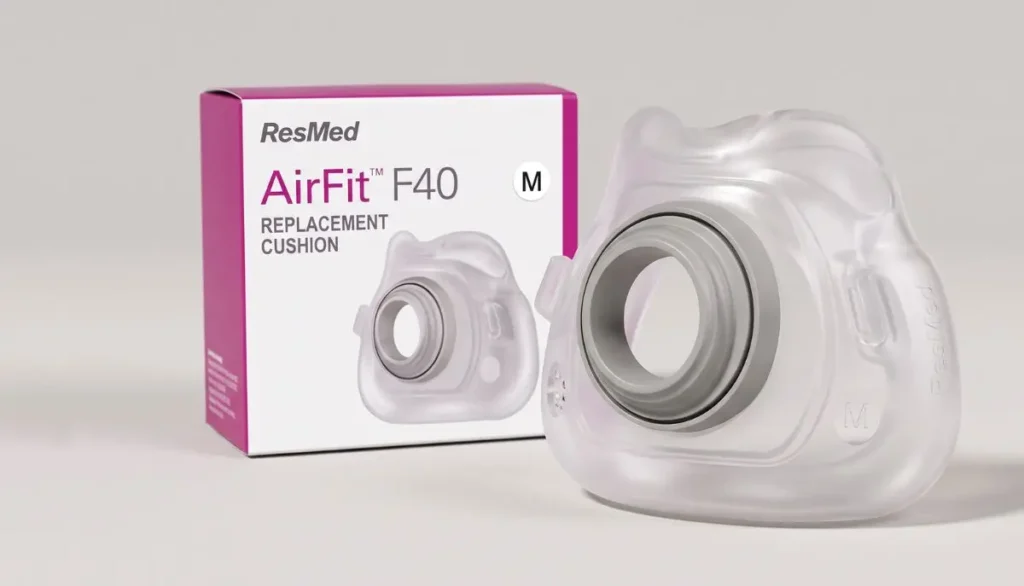
The cushion incorporates ResMed’s “AdaptiSeal” technology, which conforms to the contours of the user’s face to help maintain a secure seal. Its flexible construction also allows for comfortable movement during sleep.
Keep in mind that the cushion is just one component of the mask. For the complete mask system to function correctly, its various components—including the frame, headgear, elbow, and vent assembly—must work together.
Key Features of the ResMed F40 Mask Cushion
Before purchasing a replacement, it helps to understand what makes this component different.
1. Soft Silicone Construction
The ResMed F40 mask cushion is crafted from soft, flexible silicone for a comfortable fit. It is designed to fit comfortably on the face, with no rigid parts. Its soft texture can help reduce the sensation of having a bulky mask around the nose.
Since everyone’s comfort needs differ, it is essential that the mask fits correctly.
2. Under-the-Nose Design
The cushion rests beneath the nose instead of covering the bridge of the nose. Some CPAP users prefer this design because it leaves the upper part of the face more open.
To achieve a proper seal, it is essential that the cushion is positioned correctly beneath the nose.
3. Adaptive Seal
The cushion is designed to conform to the specific area of the face with which it comes into contact. A properly fitted cushion can help minimize unwanted air leakage during the prescribed therapy.
However, no cushion can guarantee a leak-free fit for every face. Factors such as the size of the cushion, the adjustment of the headgear, facial movement, and the way it is worn can all influence its performance.
4. Replaceable Component
A major advantage of the ResMed F40 mask cushion is that it can be purchased separately from the rest of the mask system. If the cushion wears out while the other components remain in good condition, replacing just the cushion can be a practical option.
Before purchasing, make sure the cushion is specifically designed for the ResMed AirFit F40 mask and that you select the correct size for your needs.
5. Designed for Everyday CPAP Use
With regular cleaning and proper handling, the cushion can remain a long-lasting part of your CPAP routine. Daily care helps remove facial oils and other residues that could otherwise affect the cushion’s seal and the condition of its material.
How to Choose the Right ResMed F40 Mask Cushion Size
Choosing the right size when purchasing a replacement is one of the most important steps. A cushion that is too small or too large can be uncomfortable, or it may cause air to leak out.
ResMed lists three AirFit F40 cushion sizes:
- Small-Wide: Intended for users whose measurements correspond to the Small-Wide fitting guide.
- Medium: Intended for users whose measurements correspond to the Medium fitting guide.
- Large: Intended for users whose measurements correspond to the Large fitting guide.
Do not choose a size simply because it sounds like the size you usually wear in another CPAP mask. Different mask models can fit differently.
Tips for Finding Your Size
- Locate the official AirFit F40 fitting template or sizing guide.
- Stand in front of a mirror and position the template as instructed.
- Compare your nose measurements with the available size markings.
- Choose the size that matches the fitting guide.
- Confirm the size marking on your current cushion, if available.
If you are between sizes or experience repeated leaks, ask your CPAP equipment provider or healthcare professional for fitting assistance.
When Should You Replace the ResMed F40 Mask Cushion?
A cushion does not last forever. Constant use, exposure to facial oils, the cleaning process, and everyday wear and tear can gradually affect its flexibility and sealing ability.
According to ResMed guidelines, the AirFit F40 cushion should be replaced every month. The timing for replacing the cushion may depend on its condition, the advice of your equipment supplier, and your insurance coverage.
Consider inspecting your ResMed F40 mask cushion for the following signs:
- Visible cracks, tears, or other damage.
- A cushion that has become noticeably deformed.
- Persistent air leaks despite correct positioning and adjustment.
- Reduced flexibility or a worn sealing surface.
- Skin irritation that may be associated with residue or deteriorating equipment.
These signs do not necessarily mean that the cushion is the sole cause of the problem. Incorrect adjustment of the headgear, an improper size, or issues with other parts of the mask could also be responsible.
Replacing a worn-out cushion promptly helps maintain a proper mask fit and avoids the hassle of frequent adjustments.
How to Clean the ResMed F40 Mask Cushion
Regular cleaning of your CPAP mask is essential for its maintenance. Facial oils, sweat, and other residues can accumulate on the cushion, which may interfere with its seal.
To clean your mask properly, follow the instructions provided in the official user guide for the AirFit F40.
Daily Cleaning Steps
Step 1: Remove the cushion.
Separate the cushion from the frame according to the manufacturer’s instructions.
Step 2: Wash gently.
Use the cleaning method and mild cleaning product specified in the user guide. Gently rub the cushion in warm, drinking-quality water to remove oils and residue.
Step 3: Rinse thoroughly.
Make sure no soap or cleaning residue remains on the silicone.
Step 4: Inspect the cushion.
Check for cracks, tears, discoloration, or changes in shape.
Step 5: Air-dry completely.
Place the cushion in a clean area and allow it to air-dry away from direct sunlight before reassembling the mask.
Do not use harsh chemicals, abrasive brushes, or cleaning products that are not approved for use with your mask. Do not assume that disinfectant solutions intended for clinical equipment are suitable for everyday home use.
Just a few minutes of daily care will keep your equipment clean. It also allows you to easily check for any wear and tear, ensuring that your nightly routine remains uninterrupted.
How to Replace the ResMed F40 Mask Cushion
Replacing the cushion is generally straightforward when you follow the correct instructions.
- Turn off the CPAP machine and disconnect the mask from the air tubing as appropriate.
- Remove the mask components according to the AirFit F40 user guide.
- Gently release the existing cushion from the frame.
- Inspect the frame and the cushion connection points for visible damage or residue.
- Position the new cushion correctly and insert its attachment points into the corresponding frame openings.
- Reassemble the vent ring and other components as instructed.
- Check that the cushion is secure and that all components are correctly assembled.
- Put on the mask and adjust the headgear evenly.
- Turn on the CPAP machine and check the fit and air seal.
Do not force a cushion into place. If the attachment points do not align, confirm that you have the correct replacement part and consult the manufacturer’s fitting instructions.
If you continue to experience significant leaks after replacing the cushion, contact your equipment provider or healthcare professional for help with fit and device settings.
ResMed F40 Mask Cushion vs. Replacing the Complete Mask
Should you buy only a replacement cushion or purchase an entirely new mask? The answer depends on the condition of your existing equipment.
Replacing the cushion may make sense when:
- The cushion is worn or damaged.
- The frame and headgear remain in good condition.
- You are satisfied with the current mask model and fit.
- You have confirmed that the replacement cushion is compatible.
Consider inspecting or replacing other components when:
- The frame is cracked or damaged.
- The headgear no longer holds the mask securely.
- The elbow or vent assembly is damaged.
- Multiple parts are worn or the mask continues to fit poorly.
A replacement cushion is not the same as a complete mask system. Check the product description carefully so you know which components are included in your order.
Common Problems and Helpful Tips
Air Leaks Around the Nose
Make sure the cushion is positioned correctly beneath the nose and is not folded or creased. Adjust the headgear evenly instead of tightening it excessively.
If leaks continue, check the cushion size and condition.
Red Marks or Skin Discomfort
Excessive strap tension, an unsuitable size, or residue on the cushion may contribute to discomfort. Clean the cushion and review the fitting instructions.
If irritation continues, becomes painful, or causes skin damage, seek advice from your healthcare professional.
Cushion Keeps Coming Loose
Check that the cushion attachment points and frame openings are aligned correctly. Inspect the components for damage and review the manufacturer’s reassembly instructions.
The Mask Feels Different After Replacement
A new cushion may feel different from an older, softened one. Recheck the sizing and fit instructions rather than tightening the straps too much. Contact your equipment provider if you cannot achieve a comfortable fit.
Where to Buy the ResMed F40 Mask Cushion
When purchasing a replacement product, be sure to check the correct product name, size, and compatibility information. The ResMed F40 mask cushion is specifically designed for the AirFit F40; therefore, do not assume that it will fit other ResMed masks.
Alfa Healthcare Supply Inc. provides medical supply information to help customers identify the equipment and replacement products they need. Visit Alfa Healthcare Supply Inc. to explore available CPAP supplies and check whether the required cushion is listed.
Before ordering, confirm:
- Your mask model is ResMed AirFit F40.
- The replacement size matches your fitting requirements.
- The product listing specifies a cushion-only replacement if that is what you need.
- The seller’s current price, availability, shipping details, and return policy meet your requirements.
Availability and prices can change, so verify current product details before completing your purchase.
Final Thoughts: ResMed F40 Mask Cushion
The ResMed F40 mask cushion is an important part of maintaining a comfortable and reliable CPAP mask fit. Selecting the correct size, cleaning the cushion regularly, and replacing it when recommended can help support a consistent sleep therapy routine.
If your current cushion is showing signs of wear, take a moment to check its condition and confirm the correct replacement. At Alfa Healthcare Supply Inc., our goal is to help customers make informed decisions about their medical supplies and find products that match their equipment needs.
Frequently Asked Questions: ResMed F40 Mask Cushion
1. What is the ResMed F40 mask cushion used for?
It is the replaceable silicone cushion for the ResMed AirFit F40 full face CPAP mask. It rests beneath the nose and helps create a seal during prescribed CPAP therapy.
2. What sizes are available for the ResMed F40 mask cushion?
The available sizes are Small-Wide, Medium, and Large. Use the official sizing guide to determine which size is appropriate for your face.
3. How often should I replace my ResMed F40 mask cushion?
ResMed’s published guidance recommends monthly replacement. Actual needs may vary depending on wear, equipment coverage, and supplier recommendations.
4. Can I replace the cushion without buying a new mask?
Yes. A compatible replacement cushion can be purchased separately. You can generally keep the existing frame and headgear if they remain in good condition and are compatible with the replacement.
5. How often should I clean the cushion?
Clean the cushion daily, or after each use, following the official AirFit F40 cleaning instructions. Allow it to dry fully before use.
6. Will a new cushion stop all air leaks?
Not necessarily. A new cushion may help if the old one is worn, but leaks can also result from incorrect sizing, poor positioning, loose or damaged headgear, or other mask problems.
7. Is the ResMed F40 mask cushion compatible with other ResMed masks?
Do not assume it is. It is designed for the AirFit F40 mask. Confirm compatibility before ordering replacement parts.
8. What should I check before buying a replacement?
Confirm the mask model, required cushion size, product contents, current availability, and seller’s return policy.
Medical disclaimer: This article provides general product information and is not a substitute for professional medical advice. Follow your device’s official user guide and your healthcare professional’s recommendations for CPAP treatment, mask fitting, and replacement schedules.