


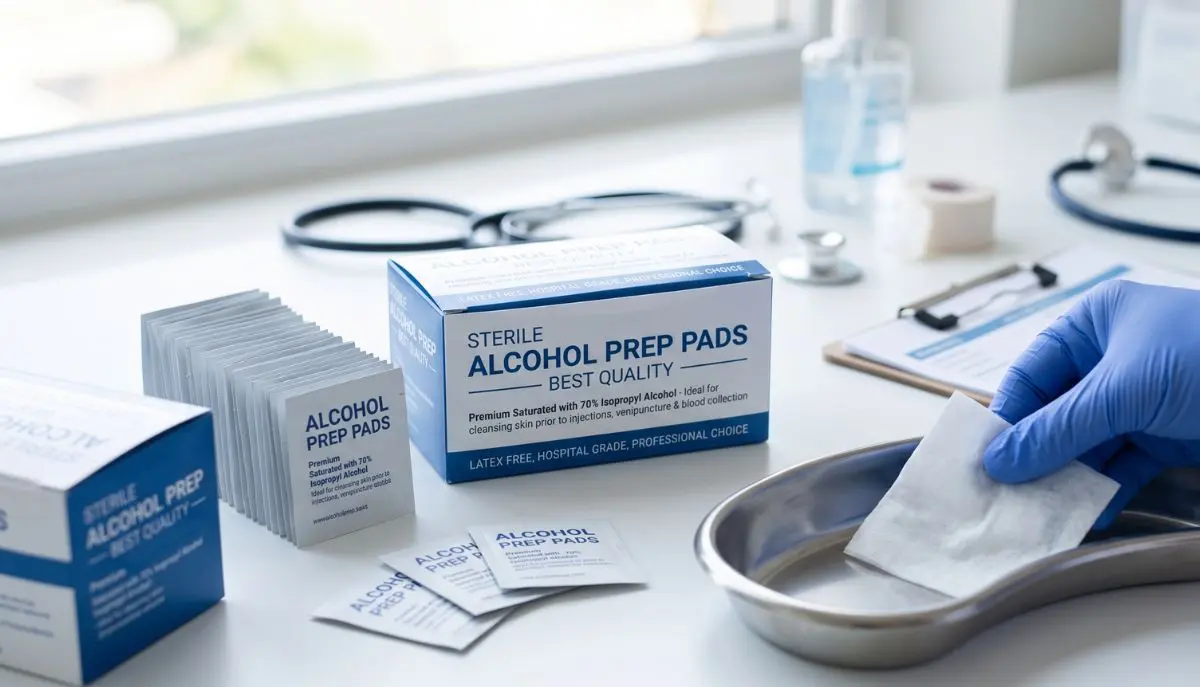
When it comes to healthcare, some of the simplest supplies can make a big difference. An alcohol prep pad may look like nothing more than a small square of cotton or nonwoven material, but it can play an important role in preparing clean skin before certain routine healthcare procedures.
Whether you manage diabetes, give injections at home, work in a medical office, prepare supplies for a clinic, or simply want to keep useful first-aid and healthcare products available, choosing the best alcohol prep pads matters.
The right prep pad should be convenient, appropriately packaged, easy to use, and suitable for the intended purpose. Many healthcare settings commonly use alcohol prep pads containing isopropyl alcohol, often at a concentration around 70%. The Centers for Disease Control and Prevention (CDC) identifies 60–70% alcohol-based solutions as an option for skin preparation before certain injections, with the area allowed to dry completely before the procedure.
At Alfa Healthcare Supply Inc., alcohol prep pads are part of a broader range of healthcare and diabetic supplies designed to support patients, caregivers, healthcare professionals, and families.
This guide explains what alcohol prep pads are, how they work, what to look for when choosing them, how to use them properly, common mistakes to avoid, and how to decide which type may be appropriate for your needs.
What are Alcohol Prep Pads?
Alcohol prep pads are small, individually packaged pads saturated with an alcohol-based solution. They are commonly used to prepare intact skin before certain healthcare procedures.
Many medical alcohol prep pads use isopropyl alcohol, commonly at a concentration of 70%. The pad is designed for single use and is generally packaged individually to help maintain cleanliness until it is opened.
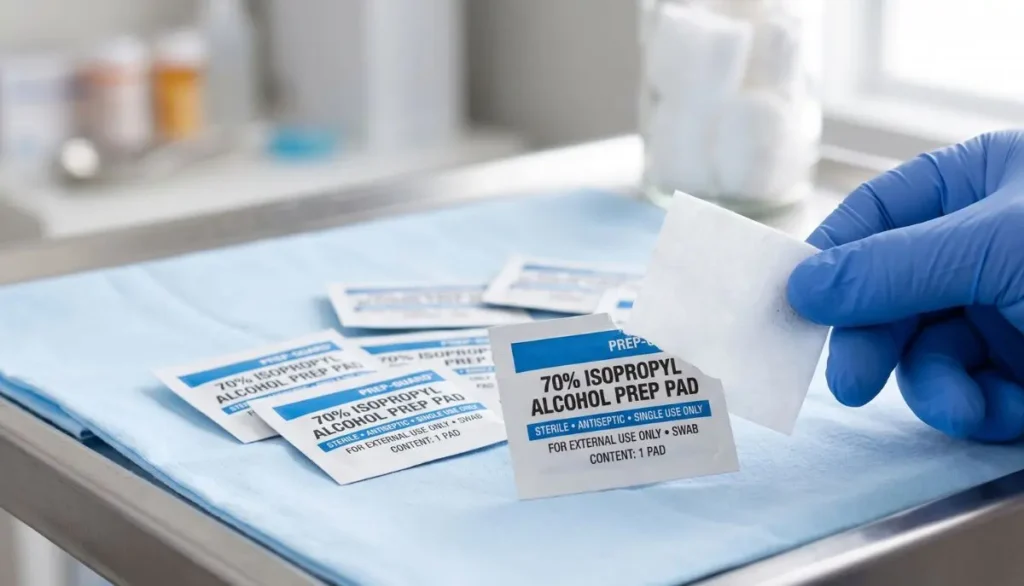
The basic idea is simple:
- Open a fresh pad.
- Use it according to the instructions for the intended procedure.
- Allow the prepared area to dry when directed.
- Dispose of the used pad appropriately.
Despite their simplicity, these steps are important.
A prep pad is not simply a substitute for washing dirty skin. If the skin is visibly dirty, it may need to be cleaned appropriately first. CDC guidance for injection-related skin preparation emphasizes inspecting the skin and preparing it appropriately before the procedure.
Why Are Alcohol Prep Pads So Popular?
Alcohol prep pads are popular because they are:
- Small and lightweight
- Individually packaged
- Convenient for home use
- Easy to carry
- Simple to dispose of
- Useful in many healthcare environments
- Commonly available in medical supply stores
- Convenient for diabetes-care kits and injection supplies
For someone who performs routine healthcare tasks at home, convenience can make a genuine difference.
A small box of individually wrapped prep pads can be easier to organize than a bottle of liquid alcohol and reusable cotton material.
Best Alcohol Prep Pads: What Makes One a Good Choice?
There is no single alcohol prep pad that is automatically the best for every person or every medical procedure.
The best alcohol prep pads are the ones that match the intended use, are appropriately packaged, come from a reliable source, and follow the instructions for the specific procedure.
Here are some of the most important characteristics to consider.
1. Appropriate Alcohol Concentration
One of the first things to check is the alcohol concentration listed on the packaging.
Many commonly used medical prep pads contain approximately 70% isopropyl alcohol.
The CDC notes that alcohol concentrations in the 60–90% range have strong germicidal activity, while its injection-safety materials specifically describe using a 60–70% alcohol-based solution for certain skin-preparation procedures.
However, concentration should not be considered in isolation.
A product should be selected according to its labeling and intended purpose rather than assuming that a particular percentage is appropriate for every situation.
2. Individually Wrapped Packaging
Individual packaging is one of the most useful features of alcohol prep pads.
Each pad remains sealed until it is needed.
This can be particularly useful for:
- Home diabetes-care kits
- Injection supplies
- Medical offices
- Clinics
- Travel healthcare kits
- First-aid supplies
- Caregiver supply bags
- Workplace medical kits
Individually packaged pads are also easier to carry.
Instead of bringing an entire bottle of alcohol, a person can carry a few individually wrapped pads in a small healthcare pouch.
3. Single-Use Design
Most medical alcohol prep pads are designed for single use.
After using a pad, it should not be saved and reused.
This is important because reusing a previously opened pad can compromise the cleanliness of the product and may introduce contamination.
CDC injection-safety guidance emphasizes aseptic technique and the use of appropriate single-use supplies when performing injections.
4. Pad Size and Material
Alcohol prep pads are available in different sizes and materials.
The best size depends on the intended application.
A smaller pad may be convenient for routine home use where only a small area needs preparation.
A larger pad may be useful when a larger skin area needs to be prepared according to the instructions for the procedure.
Look for a pad that is:
- Large enough for the intended use
- Easy to handle
- Properly saturated
- Strong enough not to fall apart during normal use
- Individually packaged
The pad should also be comfortable to handle without excessive dripping.
Why 70% Isopropyl Alcohol Is Commonly Used
One of the most frequently asked questions is:
Why do so many medical alcohol prep pads contain 70% isopropyl alcohol?
The answer involves how alcohol interacts with microorganisms.
According to the CDC, alcohols such as ethanol and isopropyl alcohol have rapid germicidal activity against many microorganisms. The CDC notes that their activity drops substantially when diluted below 50%, with an optimum bactericidal concentration generally identified in the 60–90% range.
This helps explain why 70% isopropyl alcohol is widely used in healthcare products.
However, it is important to understand that alcohol is not a universal sterilizing solution.
The CDC notes that alcohols do not destroy bacterial spores and should not automatically be treated as sterilants for every healthcare application.
That distinction matters.
An alcohol prep pad may be appropriate for a specific skin-preparation task, but that does not mean the same pad should be used to disinfect every medical device, wound, surface, or piece of equipment.
Best Alcohol Prep Pads for Diabetes Care
People living with diabetes may regularly use healthcare supplies such as:
- Blood glucose meters
- Test strips
- Lancets
- Insulin syringes
- Pen needles
- Continuous glucose monitoring supplies
- Other diabetes-management products
Alcohol prep pads are commonly included in diabetes supply kits because they can provide a convenient way to prepare skin for certain procedures.
For example, CDC materials for vaccination clinics list sterile alcohol prep pads among clinical administration supplies.
If you are building a diabetes-care supply kit, individually wrapped alcohol prep pads can be convenient because they take up little space and are easy to organize.
A Simple Diabetes Supply Checklist
A home diabetes-care kit may include items recommended by the person’s healthcare provider, such as:
- Blood glucose meter
- Appropriate test strips
- Lancets
- Lancing device
- Alcohol prep pads when appropriate
- Sharps container
- Glucose treatment supplies when recommended
- Record-keeping materials
- Other prescribed or recommended diabetes supplies
The exact supplies needed vary from person to person.
Are Alcohol Prep Pads Used Before Injections?
Yes, alcohol-based skin preparation can be part of certain injection procedures.
CDC injection-safety guidance describes preparing the skin with a 60–70% alcohol-based solution in appropriate circumstances. The guidance says to wipe from the center of the injection site outward without going back through an already cleaned area, and to allow the area to dry completely.
However, the exact procedure should always follow:
- The medication instructions
- Device instructions
- Healthcare provider instructions
- Facility protocols
- Manufacturer labeling
Not every injection or medical procedure has identical preparation requirements.
If a healthcare professional has given you specific instructions, those instructions should take priority.
How to Use an Alcohol Prep Pad Correctly
Correct use is just as important as choosing a quality product.
Here is a general overview for appropriate skin-preparation situations.
Step 1: Wash Your Hands
Start with clean hands.
Wash your hands using soap and water when appropriate, or use an appropriate hand-hygiene method according to the situation.
Clean hands help reduce the possibility of transferring contamination to the procedure area.
Step 2: Inspect the Skin
Look at the area you intend to prepare.
If the skin is visibly dirty, it may need appropriate cleaning before the antiseptic preparation.
Do not automatically assume that an alcohol pad is a replacement for cleaning visibly dirty skin.
Step 3: Check the Package
Before opening the pad, inspect the wrapper.
Do not use a pad if:
- The package is damaged
- The seal appears broken
- The pad appears contaminated
- The product is expired
- The product does not match the intended purpose
Packaging is part of the product’s protection.
Step 4: Open the Pad
Open the package carefully.
Avoid unnecessarily touching the pad.
The goal is to keep the portion that contacts the skin as clean as practical.
Step 5: Wipe the Appropriate Area
For procedures where alcohol skin preparation is indicated, use the pad according to the applicable instructions.
CDC injection guidance describes wiping from the center of the injection site outward and avoiding going back through an area that has already been cleaned.
Do not scrub aggressively unless the procedure specifically instructs you to do so.
Step 6: Allow the Skin to Dry
This step is frequently overlooked.
The CDC recommends allowing antiseptics to dry according to manufacturer recommendations before certain procedures.
For injection-related skin preparation, CDC materials describe applying the alcohol-based solution for the recommended preparation period and allowing it to dry completely.
Do not immediately wipe the alcohol away unless the instructions tell you to.
Step 7: Dispose of the Used Pad
After use, dispose of the pad appropriately.
Do not put a used pad back into the package.
Do not save it for another procedure.
If the pad has been used during a procedure involving blood or other potentially infectious material, follow the applicable disposal and infection-control instructions.
Alcohol Prep Pads Are Not the Same as Wound Care Products
This is one of the most important distinctions to understand.
An alcohol prep pad intended for preparing intact skin before a procedure is not automatically appropriate for cleaning an open wound.
Alcohol can irritate damaged tissue and may cause discomfort.
If you have an open wound, surgical wound, ulcer, burn, or other damaged skin, follow the wound-care instructions provided by your healthcare professional.
Do not assume that because a product is labeled “alcohol” or “antiseptic” it is appropriate for every type of skin problem.
Alcohol Prep Pads vs. Alcohol Bottles
Both alcohol prep pads and bottled alcohol can contain similar active ingredients, but they are not necessarily interchangeable in practical use.
Alcohol Prep Pads
Advantages include:
- Pre-measured product
- Convenient packaging
- Portable
- No need for separate cotton
- Easy disposal
- Useful for individual procedures
- Less mess for routine tasks
Bottled Alcohol
Advantages can include:
- Useful when a larger quantity is required
- May be suitable for certain cleaning applications
- Can be economical for some settings
However, bottled alcohol requires additional handling and may require an appropriate applicator.
For many routine healthcare tasks, individually wrapped pads are simply easier.
Sterile vs. Non-Sterile Alcohol Prep Pads
Another important consideration is whether a product is labeled sterile or non-sterile.
This distinction should not be ignored.
If a particular procedure requires a sterile product, choose a product specifically labeled and packaged for that requirement.
The CDC’s vaccination clinic supply checklist, for example, specifically lists sterile alcohol prep pads among clinical administration supplies.
Sterility is not something that should be assumed simply because a pad contains alcohol.
Always Check the Label
Look for information such as:
- Sterile or non-sterile status
- Alcohol type
- Alcohol concentration
- Pad dimensions
- Intended use
- Expiration date
- Manufacturer information
- Storage requirements
- Warnings
- Lot information
When in doubt, ask a pharmacist, healthcare professional, or medical-supply specialist.
What to Look for When Buying the Best Alcohol Prep Pads
Choosing the best product becomes easier when you know what questions to ask.
1. What Will You Use Them For?
Start with the intended purpose.
Are the pads for:
- Routine diabetes care?
- Injection preparation?
- Vaccination supplies?
- Clinical use?
- First-aid supplies?
- Travel?
- A healthcare facility?
- Home-care assistance?
The intended use determines what characteristics matter most.
2. Is the Product Individually Packaged?
Individual packaging is often preferable for single-use healthcare applications.
It helps keep unused pads protected and makes storage convenient.
3. Is the Alcohol Concentration Clearly Listed?
Look for clear product labeling.
For commonly used alcohol prep pads, 70% isopropyl alcohol is a frequent formulation, but you should always confirm the actual product label.
4. Is It Sterile When Sterility Is Required?
Do not assume.
If your procedure requires sterile supplies, verify that the package specifically indicates sterility.
5. Is the Pad Large Enough?
A pad that is too small may be inconvenient for the intended procedure.
On the other hand, a very large pad may be unnecessary for a small preparation area.
Choose according to the application.
6. Is the Packaging Intact?
Never ignore damaged packaging.
If an individual wrapper is torn, punctured, wet, or otherwise compromised, do not assume the pad is suitable for use.
7. Is the Product Within Its Expiration Date?
Check expiration dates before storing large quantities.
Healthcare supplies should be rotated so older products are used appropriately before newer stock.
Why Individually Wrapped Alcohol Prep Pads Are Convenient at Home
Home healthcare has changed considerably.
Many people now manage aspects of their healthcare outside traditional clinical settings.
Patients may monitor blood glucose, administer prescribed medications, manage chronic conditions, or care for family members at home.
That makes organization important.
An individually wrapped alcohol prep pad can be used when needed without opening a larger container.
For someone who travels frequently, this can be especially useful.
A few pads can fit into a diabetes supply pouch, medication bag, or travel kit without taking up much space.
Best Alcohol Prep Pads for Medical Offices and Clinics
Healthcare professionals need supplies that are consistent, easy to access, and appropriate for their protocols.
Alcohol prep pads may be used in settings such as:
- Primary care offices
- Diabetes clinics
- Outpatient facilities
- Vaccination clinics
- Nursing facilities
- Home healthcare
- Specialty clinics
- Dental settings
- Other healthcare environments
The CDC’s clinical guidance emphasizes safe injection practices and appropriate infection-control procedures. Alcohol wipes or prep pads may be included among the supplies available in medication-preparation areas.
For healthcare facilities, product selection should also consider:
- Quantity per box
- Unit packaging
- Sterility requirements
- Storage
- Staff familiarity
- Facility protocols
- Procurement consistency
- Product labeling
Alcohol Prep Pads and Safe Injection Practices
Alcohol prep pads are only one part of safe injection practice.
They cannot compensate for unsafe needle or syringe practices.
CDC guidance emphasizes:
- Using aseptic technique
- Using a new sterile syringe and needle for each patient
- Never reusing needles or syringes
- Avoiding contamination of medication vials
- Preparing medications in a clean designated area
- Disposing of used sharps safely
This is an important point for patients and caregivers.
A high-quality alcohol prep pad is useful, but safe healthcare requires a complete process.
Common Mistakes When Using Alcohol Prep Pads
Even simple healthcare products can be used incorrectly.
Here are common mistakes to avoid.
Mistake 1: Reusing a Pad
Alcohol prep pads are generally designed for single use.
Do not reuse them.
Mistake 2: Using a Damaged Package
If the package is compromised, the product may no longer provide the intended protection.
Use a new, properly sealed pad.
Mistake 3: Not Allowing the Area to Dry
Drying is an important part of many antiseptic skin-preparation procedures.
Follow the manufacturer’s instructions and applicable healthcare guidance.
Mistake 4: Using Alcohol Pads on Open Wounds Without Guidance
Alcohol prep pads are not automatically appropriate for wound cleaning.
Follow specific wound-care instructions.
Mistake 5: Assuming Every Alcohol Pad Is Sterile
Alcohol content does not automatically mean sterility.
Check the product label.
Mistake 6: Ignoring Product Instructions
Different products can have different intended uses.
Always read the package.
Mistake 7: Using an Alcohol Prep Pad as a General Surface Disinfectant
A skin-preparation pad is not necessarily designed for cleaning countertops, medical equipment, electronics, or other surfaces.
Use a product specifically labeled for the surface or equipment you are cleaning.
Can Alcohol Prep Pads Be Used on Sensitive Skin?
Some people experience dryness, irritation, or discomfort after exposure to alcohol.
If your skin is sensitive, pay attention to how it responds.
Do not continue using a product that causes a significant reaction without seeking appropriate medical advice.
If you develop symptoms such as:
- Significant redness
- Burning
- Swelling
- Blistering
- Persistent irritation
- Severe itching
stop and seek advice from an appropriate healthcare professional.
For children, older adults, or people with fragile skin, product selection may require additional care.
Are Alcohol Prep Pads Safe for Children?
Alcohol prep pads may be used in pediatric healthcare when appropriate, but the specific product and procedure matter.
Children can have different skin characteristics and healthcare requirements.
Do not use an alcohol prep pad simply because it is convenient.
Instead, follow the instructions from the child’s healthcare provider and the product manufacturer.
Special care is particularly important for infants and very young children. CDC guidance notes unresolved safety/efficacy questions for certain chlorhexidine preparations in infants younger than two months, illustrating why age-specific antiseptic guidance matters.
Alcohol Prep Pads for Travel
Travel can make healthcare routines more challenging.
A well-organized healthcare kit can reduce unnecessary stress.
Individually wrapped alcohol prep pads are convenient because they are:
- Lightweight
- Compact
- Easy to organize
- Simple to dispose of
- Ready to use when needed
If you travel with prescription medications, injections, glucose-monitoring supplies, or other healthcare equipment, ask your healthcare provider what supplies you should carry.
Keep medical supplies protected from excessive heat, moisture, and direct sunlight, and follow the storage instructions provided with each product.
How to Store Alcohol Prep Pads
Proper storage helps preserve the condition of your supplies.
General storage considerations include:
- Keep pads in their original packaging.
- Store them in a clean, dry location.
- Avoid excessive heat.
- Keep them away from flames and ignition sources.
- Keep them away from children unless intended for supervised use.
- Check expiration dates regularly.
- Do not use damaged packaging.
Alcohol is flammable.
FDA-approved labeling for 70% isopropyl alcohol skin-preparation products includes warnings about flammability and keeping the product away from fire or flame.
Never use alcohol-based products near an ignition source when the product is still wet.
Why Drying Matters
Allowing an antiseptic to dry is not simply about avoiding a cold sensation.
Drying can be an important part of the procedure.
CDC guidance states that antiseptics should be allowed to dry according to manufacturer recommendations before certain catheter procedures.
For injection-related skin preparation, CDC materials similarly emphasize allowing the alcohol to dry completely.
Drying also reduces the amount of wet alcohol remaining on the skin.
Always follow the product’s instructions because different antiseptic products and procedures may have different drying requirements.
Alcohol Prep Pads vs. Other Antiseptic Products
Alcohol is only one type of skin antiseptic.
Depending on the procedure, healthcare professionals may use products containing:
- Isopropyl alcohol
- Ethanol
- Chlorhexidine
- Iodophors
- Other antiseptic formulations
The CDC notes that the appropriate skin antiseptic can vary by procedure. For example, its guidance for certain catheter procedures recommends chlorhexidine with alcohol in some circumstances, with other antiseptics—including 70% alcohol—available as alternatives when chlorhexidine is contraindicated.
This means that “best” does not always mean “strongest.”
It means appropriate for the job.
What Makes a Medical Supply Store a Good Place to Buy Alcohol Prep Pads?
A medical supply store can provide more than a product.
For people managing ongoing healthcare needs, having access to knowledgeable staff can make choosing supplies easier.
When shopping for alcohol prep pads, consider whether the supplier:
- Clearly identifies products
- Provides useful product information
- Carries healthcare-related supplies
- Understands common home-care needs
- Offers convenient ordering
- Can help customers identify the appropriate category of product
This can be particularly helpful for patients who purchase multiple healthcare supplies at the same time.
Alfa Healthcare Supply Inc. and Alcohol Prep Pads
Alfa Healthcare Supply Inc. provides healthcare and durable medical equipment supplies for patients, caregivers, families, and healthcare needs.
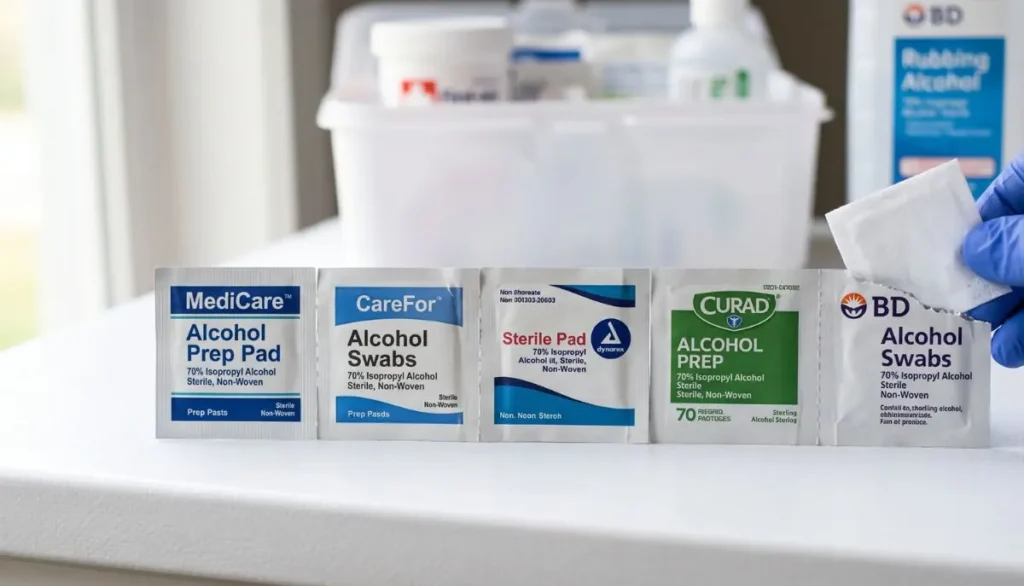
Its product selection includes diabetic supplies and other medical products. The company’s diabetic-supplies category lists Sterile Alcohol Prep Pads – A4245 among its available products.
For customers looking for best alcohol prep pads, having access to a healthcare-focused supplier can make it easier to keep commonly needed supplies organized in one place.
Who May Benefit From Keeping Alcohol Prep Pads Available?
Alcohol prep pads may be useful for:
People Managing Diabetes
Individuals who regularly perform blood glucose monitoring or prescribed injections may find individually packaged prep pads convenient when appropriate for their care routine.
Caregivers
Family members and professional caregivers may keep appropriate supplies organized for patients receiving home healthcare.
Healthcare Professionals
Medical offices and clinics may use alcohol prep pads as part of appropriate clinical procedures.
Travelers
Compact packaging can make them convenient for healthcare travel kits.
Families
A properly stored box of appropriate medical prep pads can be a useful addition to a home healthcare supply cabinet.
How Many Alcohol Prep Pads Should You Buy?
There is no universal number.
The right quantity depends on your actual use.
If you use them occasionally, a smaller package may make sense.
If you have a recurring healthcare routine, a larger quantity may be more convenient.
Consider:
- How often you use them
- How many people need them
- Whether they are used at home or professionally
- Expiration dates
- Storage space
- Cost per pad
- Availability of replacement supplies
Avoid buying an unnecessarily large quantity if you are unlikely to use the pads before their expiration date.
Are More Expensive Alcohol Prep Pads Always Better?
Not necessarily.
Price alone does not determine quality.
When comparing products, look at:
- Alcohol concentration
- Sterile/non-sterile status
- Pad size
- Packaging
- Intended use
- Manufacturer
- Expiration
- Product labeling
- Quantity
- Overall convenience
A lower-priced product may be appropriate if it meets the requirements of your intended use.
A more expensive product may be justified when specialized packaging, sterility, larger size, or another feature is required.
The goal is not to find the most expensive product.
The goal is to find the right product for the right purpose.
A Quick Buying Checklist for the Best Alcohol Prep Pads
Before purchasing, ask these questions:
Product
- Is it designed for my intended use?
- Is the alcohol type clearly identified?
- Is the concentration listed?
- Is the pad size appropriate?
Packaging
- Is each pad individually wrapped?
- Is the packaging intact?
- Is it easy to open?
Sterility
- Do I need sterile pads?
- Does the package clearly state whether the product is sterile?
Storage
- Can I store the product correctly?
- Is the expiration date reasonable?
Supplier
- Is the seller a reliable healthcare supplier?
- Is product information available?
- Can I obtain replacement supplies when needed?
These questions can make purchasing much easier.
Best Alcohol Prep Pads for a Home Healthcare Kit
A home healthcare kit should be simple and organized.
Depending on individual needs, a basic kit may include:
- Alcohol prep pads when appropriate
- Bandages
- Gauze
- Disposable gloves
- Hand-hygiene supplies
- Digital thermometer
- Blood glucose supplies if needed
- Sharps container if injections are performed
- Other supplies recommended by a healthcare professional
Keep supplies separated and labeled.
Do not store alcohol products next to heat sources.
Keep sharps and medications safely away from children.
The Human Side of Choosing Medical Supplies
Healthcare products can sometimes feel impersonal.
A box of alcohol prep pads may not seem important compared with a glucose monitor, CPAP machine, mobility device, or prescription medication.
But anyone who manages healthcare at home understands that small supplies matter.
When you are preparing for a routine injection, checking your glucose, helping a family member, or organizing supplies before leaving home, you want the basics to work without creating extra stress.
That is where simple, well-designed supplies can help.
A product that is easy to open, individually packaged, clearly labeled, and stored properly can make a routine feel more manageable.
Good healthcare is often built from many small details.
Alcohol Prep Pads and Infection Prevention
Alcohol prep pads can support appropriate infection-control practices, but they are only one component.
CDC guidance emphasizes that safe injection practices involve a broader system of measures designed to prevent transmission of infectious diseases.
That system includes:
- Clean hands
- Appropriate skin preparation
- New sterile needles and syringes
- Clean medication preparation areas
- Proper medication handling
- Appropriate sharps disposal
- Correct storage
- Following healthcare-provider instructions
Using a prep pad correctly is useful, but it should never create a false sense of security.
Can Alcohol Prep Pads Disinfect Everything?
No.
This is a common misconception.
Alcohol has useful antimicrobial properties, but it does not destroy every type of microorganism in every situation.
The CDC notes that alcohol does not destroy bacterial spores.
Additionally, a product designed for skin preparation should not automatically be used on medical equipment or household surfaces.
Always use a disinfectant according to its label and intended application.
Alcohol Prep Pads and Medical Equipment
If you need to clean a medical device, check the device manufacturer’s instructions first.
Some devices can be damaged by alcohol.
Others may specifically recommend alcohol-based cleaning.
Do not assume.
For example, glucose meters, CGM components, injection devices, electronic equipment, and other healthcare products can have different cleaning instructions.
When a manufacturer says to use a particular cleaning method, follow it.
How to Choose the Best Alcohol Prep Pads for Your Needs
If you want a simple decision-making process, use these five steps.
Step 1: Identify the Procedure
Know what the pad will be used for.
Step 2: Check the Product Label
Confirm the alcohol type, concentration, intended use, and sterile status.
Step 3: Consider Packaging
Individually wrapped pads are generally convenient for single-use applications.
Step 4: Check Quality and Expiration
Avoid damaged or expired products.
Step 5: Follow Professional Guidance
If the pad is being used for a medical procedure, follow your healthcare provider’s and manufacturer’s instructions.
Why Buying From a Healthcare-Focused Supplier Can Help
Medical supplies are not ordinary household products.
Small differences in labeling, sterility, packaging, and intended use can matter.
A healthcare-focused supplier can make it easier to find products within the correct category.
Alfa Healthcare Supply Inc. offers a range of healthcare products, including diabetic supplies and sterile alcohol prep pads listed under its diabetic-supplies category.
Whether you are stocking a home healthcare cabinet, preparing a diabetes-care kit, supporting a family member, or managing supplies for a healthcare environment, choosing products carefully can make everyday routines easier.
Final Thoughts: Finding the Best Alcohol Prep Pads
The best alcohol prep pads are not necessarily the largest, strongest, or most expensive.
They are the pads that are appropriate for the intended use and meet the requirements of the procedure.
For many routine skin-preparation applications, 70% isopropyl alcohol is a commonly used formulation. Individually wrapped, single-use packaging can add convenience, while sterile packaging may be important when the procedure specifically requires sterile supplies.
Before purchasing, check:
- Alcohol concentration
- Product type
- Sterility
- Pad size
- Individual packaging
- Expiration date
- Manufacturer instructions
- Intended use
And remember one simple rule: use the product according to its label and your healthcare professional’s instructions.
A small alcohol prep pad may be an everyday item, but choosing and using it correctly is part of a larger commitment to safe and organized healthcare.
For patients, caregivers, clinics, and families looking for healthcare supplies, Alfa Healthcare Supply Inc. provides access to a range of medical and diabetic products, including sterile alcohol prep pads.
Frequently Asked Questions About the Best Alcohol Prep Pads
1. What are the best alcohol prep pads?
The best alcohol prep pads are those that match your intended healthcare use, have appropriate labeling, suitable alcohol concentration, reliable packaging, and the required sterile or non-sterile status.
For many routine skin-preparation applications, 70% isopropyl alcohol pads are commonly used, but the correct choice depends on the specific procedure and product instructions.
2. Are 70% alcohol prep pads good?
70% isopropyl alcohol is widely used in healthcare because alcohol has strong antimicrobial activity at appropriate concentrations. The CDC describes 60–70% alcohol-based solutions for certain skin-preparation procedures.
Always follow the instructions for your particular procedure.
3. Are alcohol prep pads sterile?
Some are and some are not.
Do not assume that an alcohol pad is sterile merely because it contains alcohol.
Check the packaging.
If your procedure requires sterile supplies, choose a product specifically labeled sterile.
4. Can I reuse an alcohol prep pad?
No.
Medical alcohol prep pads are generally intended for single use.
Use a fresh pad whenever a new pad is required.
5. Can I use an alcohol prep pad to clean an open wound?
You should not automatically do so.
Alcohol may irritate damaged tissue.
Follow specific wound-care instructions from your healthcare professional.
6. Can alcohol prep pads be used before an injection?
Alcohol-based skin preparation can be used before certain injections when appropriate.
CDC guidance describes 60–70% alcohol-based skin preparation for certain injection procedures and emphasizes allowing the area to dry.
Follow your healthcare provider’s instructions and the medication/device labeling.
7. Why should alcohol dry before an injection?
Drying is part of appropriate skin preparation for many procedures.
CDC guidance recommends allowing antiseptics to dry according to manufacturer instructions before certain procedures.
8. Are alcohol prep pads useful for diabetes care?
They can be convenient for certain diabetes-care procedures, including appropriate skin preparation.
People with diabetes should follow the specific instructions provided by their healthcare professional for glucose monitoring and medication administration.
9. Are individually wrapped pads better?
Individual packaging provides convenience and protects each pad until use.
It is especially practical for travel, home healthcare, clinics, and diabetes-care kits.
10. What should I look for when buying alcohol prep pads?
Check:
- Alcohol concentration
- Alcohol type
- Sterility
- Pad size
- Individual packaging
- Expiration date
- Manufacturer
- Intended use
- Storage instructions
11. Can I carry alcohol prep pads while traveling?
Individually packaged alcohol prep pads are compact and convenient for many travel healthcare kits.
If you are traveling with medications or medical devices, check applicable transportation and storage requirements.
12. Do alcohol prep pads expire?
Yes, medical products have expiration information that should be checked.
Do not use a product past its labeled expiration date.
13. What if an alcohol prep pad package is damaged?
Do not use a pad if its individual package is damaged or compromised.
Choose a properly sealed replacement.
14. Can alcohol prep pads replace handwashing?
No.
Alcohol prep pads are intended for specific applications and should not be treated as a replacement for appropriate hand hygiene.
15. Can I use alcohol prep pads to clean my glucose meter?
Only if the glucose meter manufacturer specifically permits that cleaning method.
Always follow the device’s cleaning and maintenance instructions.
16. Are alcohol prep pads safe for sensitive skin?
Alcohol may cause dryness or irritation in some people.
If you experience significant irritation, contact a healthcare professional for advice about alternatives or appropriate skin care.
17. What is the difference between alcohol prep pads and disinfecting wipes?
They may differ in formulation, concentration, intended surface, size, and regulatory labeling.
A product designed for skin preparation should not automatically be substituted for a surface disinfectant.
18. Does a stronger alcohol concentration mean a better prep pad?
Not necessarily.
The appropriate formulation depends on the intended use.
Choosing the highest concentration available is not a reliable way to determine which product is best.
Medical Disclaimer
This article is intended for general educational and informational purposes only. It does not replace advice from a physician, pharmacist, nurse, or other qualified healthcare professional. Product selection and skin-preparation procedures may vary depending on the patient’s condition, procedure, age, device, medication, and manufacturer instructions. Always read the product label and follow instructions provided by your healthcare professional.