


Replacement Cushion for N20:
Using a CPAP machine every night can become an important part of your sleep routine. However, even when your machine works well, an old, loose, or damaged mask cushion can make sleeping less comfortable. Air leaks, pressure marks, and an unstable mask may interrupt your rest and make your therapy harder to manage.
A replacement cushion for N20 can help restore the fit of your compatible ResMed nasal mask without requiring you to replace the entire mask assembly. Choosing the correct size, cleaning the cushion regularly, and replacing it when it becomes worn can help you maintain a comfortable mask fit.
At Alfa Healthcare Supply Inc., we understand that finding the right CPAP supplies should be straightforward. This guide explains what to look for when choosing a replacement cushion for N20, how to install it, and how to care for it as part of your regular sleep routine.
What is a Replacement Cushion for N20?
A replacement cushion for N20 is the removable part of a compatible ResMed N20 nasal CPAP mask that rests against your nose. It creates the seal between your face and the mask, helping direct the prescribed airflow into your nose during sleep apnea therapy.
The original ResMed AirFit N20 uses a silicone cushion with InfinitySeal technology. Its flexible design is intended to adapt to different facial shapes and help maintain a seal while you move during sleep.
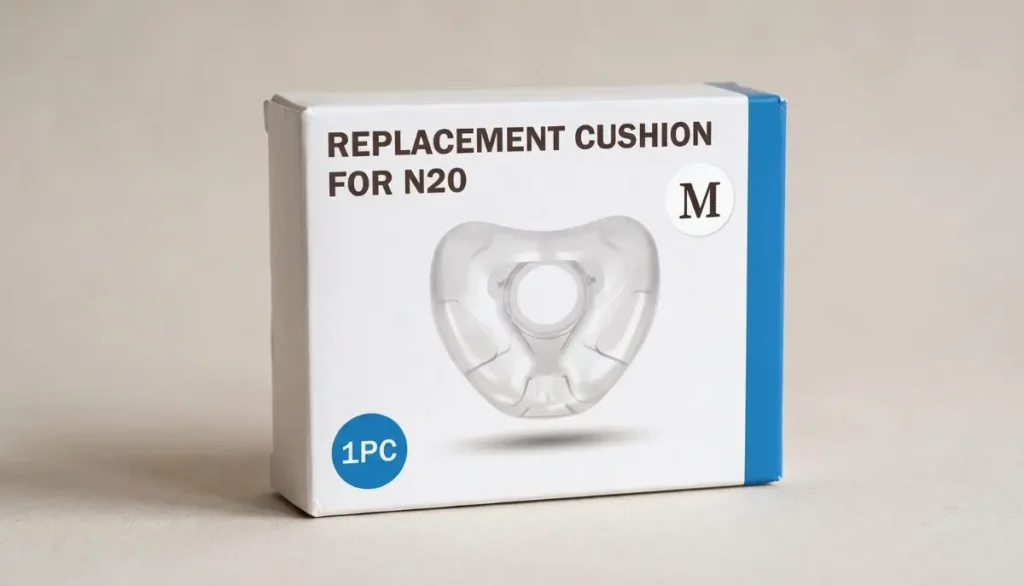
Instead of buying a complete new mask whenever the cushion becomes worn, you may be able to replace only this component. This can be a practical option when the mask frame, headgear, and other parts remain in good condition.
It is important to check compatibility before ordering. The AirFit N20 silicone cushion is designed for the AirFit N20 mask family, while the AirTouch N20 uses a different foam cushion. ResMed also offers an AirTouch N20 cushion that is compatible with the AirFit N20 frame. Always confirm the specific product and size before purchasing.
Why Should You Replace Your N20 Cushion?
Over time, daily use, facial oils, cleaning, and normal wear can affect a CPAP cushion. Even if the cushion looks acceptable at first glance, it may no longer provide the same fit.
Here are common reasons to consider a replacement cushion for N20.
1. Air Leaks Around the Nose
A cushion that has stretched, lost its shape, or developed damage may not seal properly. You might hear air escaping around the edges or notice airflow reaching your eyes.
A new cushion in the correct size may help restore the seal. However, leaks can also result from incorrect headgear adjustment, poor positioning, or an unsuitable mask size.
2. Visible Wear and Tear
Inspect your cushion regularly for cracks, tears, permanent deformation, or other signs of deterioration. If the material is damaged, replacing it is generally better than continuing to use a compromised component.
3. Skin Discomfort
A cushion that no longer sits correctly may contribute to redness, pressure marks, or irritation around the nose. Skin discomfort can have several causes, including excessive strap tension and sensitivity to materials.
A correctly fitted replacement may improve comfort, but persistent irritation should be discussed with your healthcare professional.
4. Difficulty Maintaining a Reliable Seal
If you repeatedly adjust your mask during the night, check the cushion for wear and make sure it is seated correctly in the frame. A replacement cushion for N20 may be appropriate if the existing one no longer fits as intended.
Remember that replacing the cushion will not automatically resolve every leak. Check the mask fit and machine settings with your care provider if problems continue.
Key Features to Look for in an N20 Replacement Cushion
Before purchasing, review the product details to ensure that the cushion suits your mask and needs.
Silicone Cushion Design
The AirFit N20 replacement cushion is made from silicone. Its flexible design helps it rest against the nose while accommodating normal movement during sleep.
InfinitySeal Technology
ResMed’s AirFit N20 cushion uses InfinitySeal technology, which is designed to provide a dependable seal across different facial contours and prescribed airflow pressure settings.
Multiple Size Options
The AirFit N20 cushion is available in three sizes:
- Small: For users who require a smaller cushion according to the manufacturer’s sizing guidance.
- Medium: For users whose measurements and mask fit correspond to the medium size.
- Large: For users who require the larger cushion size based on the sizing guide.
Do not select a size based only on the size of your nose or your general body size. Refer to the manufacturer’s fitting guide and your existing mask specifications.
Replaceable Design
The removable cushion allows you to maintain your compatible mask without automatically replacing the frame and headgear. This can reduce unnecessary waste and make routine mask maintenance more convenient.
How to Choose the Correct Replacement Cushion for N20
Selecting the correct cushion is essential for comfort and a proper seal. Use these simple steps before ordering.
Step 1: Confirm Your Mask Model
Check whether you use a ResMed AirFit N20, AirFit N20 for Her, or AirTouch N20 mask. These names are similar, but their cushion materials and product specifications differ.
Step 2: Check Your Current Cushion Size
Look for the size marking on your existing cushion. It may be identified as Small, Medium, or Large, or by the corresponding letter.
If the current cushion has never fitted well, do not assume that buying the same size will solve the problem. Review the manufacturer’s sizing guide or ask your equipment provider for assistance.
Step 3: Inspect the Mask Frame
Make sure the frame is not cracked or damaged and that the cushion can attach securely. If the frame itself is worn, a new cushion alone may not restore the mask’s fit.
Step 4: Review the Product Description
Before ordering a replacement cushion for N20, check the manufacturer’s name, compatible mask models, cushion material, and size. Confirm what is included in the package so you know whether you are purchasing a cushion only or a larger mask assembly.
How to Replace Your N20 Cushion
Replacing the cushion is generally simple when you follow the instructions for your exact mask model.
- Prepare your mask. Turn off the CPAP machine and disconnect the mask from the tubing as appropriate for your setup.
- Remove the old cushion. Hold the mask frame securely and gently pull the cushion away from it.
- Inspect the frame. Check for cracks, residue, or other damage before installing the new part.
- Fit the replacement. Align the new cushion with the frame and press it into place according to the manufacturer’s instructions.
- Check the connection. Make sure the cushion is seated evenly and securely around the frame.
- Refit your mask. Put the mask on and adjust the headgear without overtightening the straps.
- Check for leaks. Start your prescribed therapy and check the seal according to your machine and mask instructions.
If the cushion does not attach easily, stop and check its model and size. Never force a component into place.
For detailed, model-specific instructions, consult the official ResMed AirFit N20 user guide.
How Often Should You Replace an N20 Cushion?
The right replacement schedule depends on the manufacturer’s guidance, the condition of the cushion, your cleaning routine, and your insurance or equipment-supply arrangements.
ResMed’s US online shop lists a monthly replacement guideline for the AirFit N20 cushion. This is a useful reference, but your individual replacement needs and coverage may differ.
Consider replacing the cushion sooner if you notice:
- Tears, cracks, or other visible damage.
- A persistent loss of seal despite correct fitting.
- Material that has become misshapen or difficult to clean.
- Ongoing discomfort associated with a poorly fitting cushion.
Regularly checking your cushion is just as important as replacing it on schedule. If you notice visible damage, replace the cushion promptly rather than continuing to use it until the planned replacement date.
Tips for Cleaning and Maintaining Your N20 Cushion
Good cleaning habits help remove facial oils and everyday residue that can affect the mask’s condition.
Clean It Regularly
Follow the manufacturer’s cleaning instructions. ResMed recommends cleaning the AirFit N20 cushion after each use with warm water and a mild liquid detergent.
Rinse Thoroughly
Rinse away all detergent residue using clean, drinking-quality water. Leftover soap may irritate your skin.
Let It Air-Dry
Set the cushion on a clean surface and let it air-dry away from direct sunlight. Avoid high heat, which can damage the material.
Avoid Harsh Cleaning Products
Do not use strong chemicals, abrasive cleaners, or products that are not approved for your mask. Follow the official care instructions for your particular cushion.
Inspect It Before Bed
Take a moment to check the cushion for damage and make sure it is attached properly. A quick inspection can help you identify problems before settling down for the night.
Replacement Cushion for N20 vs. Buying a New Mask
Do you need a new cushion or a complete mask? The answer depends on which component is causing the problem.
A replacement cushion may be enough when:
- The cushion is worn or damaged.
- The frame and headgear remain in good condition.
- You are satisfied with your current mask model.
- You can obtain the correct compatible cushion size.
A complete mask or additional parts may be necessary when:
- The frame is cracked or damaged.
- The headgear no longer holds the mask securely.
- Several components show signs of wear.
- The mask continues to fit poorly despite a new cushion and proper adjustment.
If you are unsure which component needs replacing, ask your equipment supplier or healthcare professional to assess the mask.
Where to Find a Replacement Cushion for N20
When shopping for a replacement cushion for N20, choose a supplier that provides clear product information and helps you verify compatibility.
Alfa Healthcare Supply Inc. provides medical supply information for patients and caregivers looking for CPAP-related products and other home medical equipment.
Before placing an order, visit Alfa Healthcare Supply Inc. to check current product availability. Confirm the exact N20 cushion model, size, price, and shipping details before purchasing.
If you cannot find the cushion you need, contact the supplier to ask whether it is available or can be sourced. Product availability and delivery options may vary.
Final Thoughts: Replacement Cushion for N20
A well-maintained CPAP mask can make your nightly therapy routine more comfortable and easier to manage. Choosing the correct replacement cushion for N20 helps you maintain the fit of your compatible mask without automatically replacing every component.
Check your mask model, choose the appropriate size, follow the manufacturer’s cleaning instructions, and inspect the cushion regularly. If you continue to experience leaks, skin irritation, or discomfort, seek guidance from your equipment provider or healthcare professional.
Alfa Healthcare Supply Inc. aims to make finding medical supplies easier for patients and caregivers. Visit the website to review available products and confirm the details you need before ordering.
Frequently Asked Questions: Replacement Cushion for N20
1. What does a replacement cushion for N20 do?
It is the removable component that rests against your nose and helps create a seal for your compatible N20 nasal CPAP mask. Replacing a worn cushion may improve the mask’s fit and comfort.
2. Which sizes are available for the AirFit N20 cushion?
The AirFit N20 silicone cushion is available in Small, Medium, and Large sizes. Check the manufacturer’s sizing guide to select the appropriate option.
3. Is the AirFit N20 cushion compatible with the AirTouch N20?
The AirFit N20 silicone cushion and AirTouch N20 foam cushion are different components. ResMed identifies the AirTouch N20 cushion as compatible with both AirTouch N20 and AirFit N20 mask systems. Confirm the specific product details before purchasing.
4. How often should I replace my N20 cushion?
ResMed’s US shop lists a monthly guideline for the AirFit N20 cushion. Replace it sooner if it becomes damaged or no longer fits properly, and follow the recommendations provided for your equipment.
5. Can I replace only the cushion instead of buying a new mask?
Yes, if the cushion is the only worn component and the rest of your compatible mask remains in good condition. A damaged frame or worn headgear may also need replacement.
6. Why does my N20 mask leak air after I replace the cushion?
Possible causes include an incorrect cushion size, improper installation, loose or uneven headgear, or a damaged mask frame. Recheck the fit and installation instructions. If leaks continue, contact your equipment provider or healthcare professional.
7. How should I clean my replacement cushion for N20?
Clean it according to the manufacturer’s instructions, generally using warm water and mild liquid detergent. Rinse thoroughly and let it air-dry away from direct sunlight.
8. Can a new N20 cushion improve comfort?
A correctly sized, undamaged cushion may improve comfort if your old cushion has deteriorated. However, comfort also depends on mask fit, headgear adjustment, skin sensitivity, and other factors.
Medical disclaimer: This article is for general educational purposes only and is not a substitute for professional medical advice. Follow your prescribed CPAP therapy and the manufacturer’s instructions for your equipment.
Replacement Cushion for F40:
Getting a comfortable night’s sleep with CPAP therapy starts with a mask that fits well. If you use the ResMed AirFit F40 full face CPAP mask, the cushion plays an important role in helping create a comfortable seal while you sleep. Over time, daily use, facial oils, and regular cleaning can affect the condition of this essential part.
The good news is that you may not need to replace your entire mask when the cushion becomes worn. A Replacement Cushion for F40 lets you refresh this part while continuing to use your compatible mask frame and headgear.
At Alfa Healthcare Supply Inc., we understand that choosing the right CPAP supplies can sometimes feel confusing. This guide explains how the replacement cushion works, which size to choose, when to replace it, and how to care for it properly.
What is a Replacement Cushion for F40?
A Replacement Cushion for F40 is the removable silicone cushion designed for the ResMed AirFit F40 full face CPAP mask. The AirFit F40 features an under-the-nose design that helps provide a seal around the nose and mouth without covering the bridge of the nose.
The cushion uses ResMed’s AdaptiSeal technology, designed to adapt to the shape of your face and help maintain a comfortable seal. It is made to work with the AirFit F40 mask system rather than serve as a universal cushion for other CPAP masks.
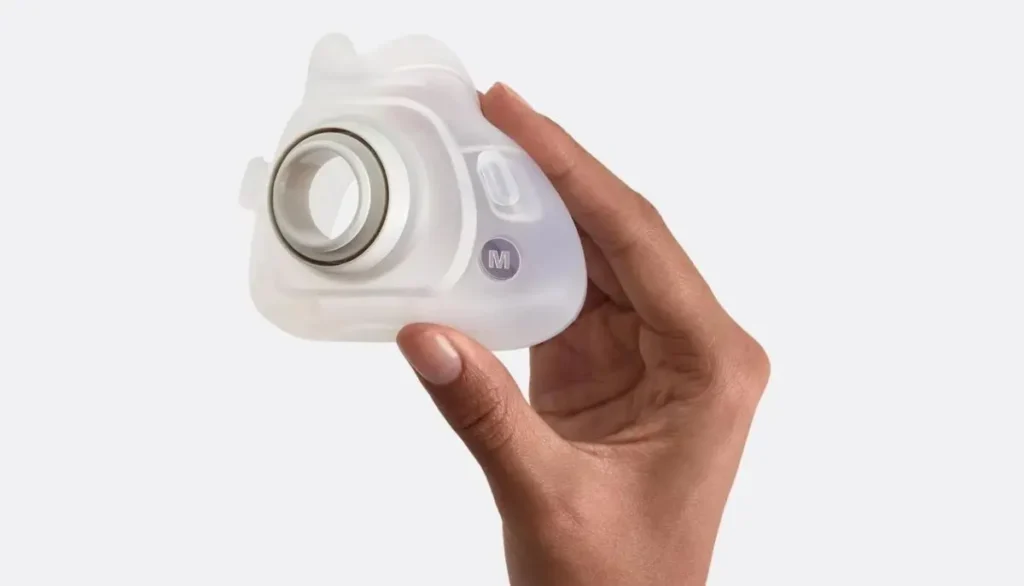
If your current cushion has become damaged, worn, or difficult to fit comfortably, replacing just this component may be a practical option.
Before ordering, confirm that the replacement is specifically intended for your AirFit F40 model. A cushion that looks similar may not fit correctly if it belongs to a different mask.
Why Does Your F40 Cushion Matter?
Your CPAP cushion is the part that makes contact with your face. It helps create a seal so that prescribed air can reach you during therapy.
A cushion in good condition may help you maintain a more comfortable mask fit throughout the night. A worn or poorly fitted cushion, however, may contribute to air leaks, discomfort, and interruptions during sleep.
Here are several reasons to pay attention to your cushion’s condition.
1. Helps Maintain a Proper Seal
A good seal helps reduce unwanted air escaping around the mask. When the cushion is worn, incorrectly positioned, or the wrong size, leaks may become more noticeable.
A new Replacement Cushion for F40 may help if the existing cushion has deteriorated, but leaks can also result from incorrect positioning, loose or overly tight headgear, or changes in facial fit.
2. Supports Everyday Comfort
The AirFit F40’s soft silicone design is intended to adapt to the face. As the cushion ages, it may become less comfortable or harder to position correctly.
Replacing a worn cushion can help restore the intended feel of your mask.
3. Helps Maintain a Clean Mask
Cushions collect facial oils, sweat, and dirt during regular use. Daily cleaning helps remove this buildup, but cleaning cannot repair torn silicone or reverse all wear.
If the cushion remains damaged or no longer seals properly after cleaning and adjustment, consider replacing it.
4. Avoids Replacing the Entire Mask Unnecessarily
If your mask frame, elbow, and headgear are still in good condition, replacing only the cushion may be more economical than purchasing a complete mask system.
Check that the other components remain in good condition and follow the manufacturer’s replacement guidance.
How to Choose the Right Replacement Cushion for F40
Choosing the correct size is one of the most important steps when ordering a Replacement Cushion for F40. ResMed lists three cushion sizes for the AirFit F40: Small-Wide, Medium, and Large.
Small-Wide
Designed for users whose measurements fit the Small-Wide sizing guide. Do not choose it based on the word “small” alone; compare your measurements with the official fitting template.
Medium
A middle sizing option for users whose measurements fit the Medium section of the manufacturer’s fitting guide.
Large
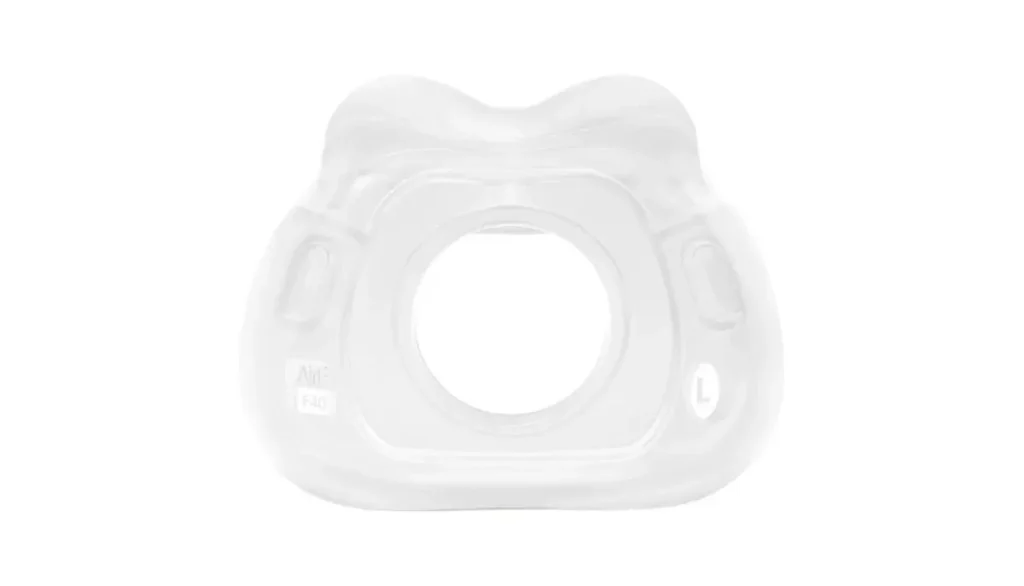
Intended for users whose nose measurements fit the Large section of the sizing template.
Tips for Finding Your Size
- Check the size printed on your current cushion.
- Use the official AirFit F40 fitting template to compare your nose measurements.
- Position the template as instructed by ResMed and check which size fits your measurements.
- If your existing cushion fits comfortably and seals properly, its size can be a useful starting point.
- If you have ongoing leaks or discomfort, reassess the fit rather than automatically choosing a larger or smaller cushion.
You can review the official ResMed AirFit F40 fitting and support guide for manufacturer instructions.
When Should You Replace Your F40 Cushion?
Knowing when to replace your cushion can help you maintain a consistent CPAP routine.
ResMed’s US product information recommends replacing the AirFit F40 cushion once a month. Your individual needs and applicable supplier or insurance replacement schedules may differ, so follow the manufacturer’s guidance and any instructions from your healthcare provider.
Look for these common signs that your cushion may need replacement:
- Visible damage: Small tears, cracks, or splits in the silicone.
- Persistent air leaks: Air continues escaping after you check the cushion position and headgear adjustment.
- Reduced comfort: The cushion feels different or becomes difficult to position comfortably.
- Changes in shape: The silicone appears distorted or no longer sits against your face as intended.
- Ongoing hygiene concerns: The cushion remains dirty or develops buildup that normal cleaning cannot remove.
A cushion does not necessarily need replacing just because it has been used for a certain number of nights. Its condition matters, too. However, do not wait for severe damage if it is already affecting your therapy.
How to Replace the AirFit F40 Cushion
Replacing a cushion can be straightforward when you follow the instructions for your particular mask.
Use these general steps as a guide and consult the official user guide if you are unsure about any part of the process.
- Prepare your mask. Turn off your CPAP machine and disconnect the mask from the tubing as appropriate.
- Remove the old cushion. Follow the manufacturer’s instructions to release the cushion from the mask frame. Avoid pulling forcefully on the silicone.
- Inspect the frame. Check the attachment points and surrounding components for visible damage or residue.
- Fit the new cushion. Align the replacement cushion with the frame’s attachment points and secure it as described in the user guide.
- Check the assembly. Confirm that the cushion is seated correctly and that the mask components are securely connected.
- Put on your mask. Position the cushion under your nose and adjust the headgear evenly without overtightening.
- Check for leaks. Turn on your CPAP device and check the fit according to your device’s instructions.
If the cushion does not attach securely, do not force it. Verify that you have the correct AirFit F40 replacement and consult the official Alfa support page for assembly guidance.
How to Clean and Care for Your Replacement Cushion for F40
Regular care can help keep your cushion clean and in good condition between replacements.
ResMed recommends daily cleaning of the cushion, elbow, short tube, and vent ring. The frame and headgear have separate cleaning schedules in the manufacturer’s instructions.
Follow these practical tips:
- Clean daily: Wash the cushion using warm, drinking-quality water and mild liquid detergent.
- Handle gently: Avoid harsh cleaners, abrasive brushes, and products that may damage the silicone.
- Rinse thoroughly: Remove all soap residue before using the cushion again.
- Air-dry naturally: Place the cushion on a clean surface and allow it to dry away from direct sunlight.
- Inspect regularly: Check for tears, distortion, or other signs of wear during routine cleaning.
- Avoid unnecessary heat: Do not use a hair dryer or place the cushion near a heat source to speed up drying.
Always follow the cleaning instructions supplied with your mask. Proper cleaning helps maintain hygiene, but it does not eliminate the need to replace a worn cushion.
Common F40 Cushion Problems and Possible Solutions
Sometimes, a cushion may seem uncomfortable even when it is relatively new. Before ordering another one, check whether the issue relates to sizing, position, or the condition of your mask.
| Problem | What you can check |
| Air escaping around the nose | Reposition the cushion and check the headgear adjustment. |
| Cushion feels uncomfortable | Check your size and ensure the cushion is sitting correctly under your nose. |
| Mask shifts during sleep | Check that the headgear is fitted evenly and is not twisted. |
| Cushion looks damaged | Replace the damaged part and inspect the mask frame. |
| Leaks continue with a new cushion | Recheck the assembly and fit; contact your equipment supplier or sleep care professional if the problem continues. |
Do not overtighten your headgear to compensate for a poor seal. Excessive pressure may increase discomfort without solving the underlying problem.
If your CPAP therapy remains uncomfortable or your device continues to report significant leaks, seek advice from your equipment provider or healthcare professional.
Why Choose Alfa Healthcare Supply Inc. for CPAP Supplies?
At Alfa Healthcare Supply Inc., we understand that finding the right medical supplies should feel simple and convenient. Whether you are replacing a worn CPAP cushion or maintaining your existing equipment, choosing the correct product is an important part of your routine.
Our goal is to help customers find suitable healthcare supplies with clear product information and practical guidance.
When shopping for a Replacement Cushion for F40, remember to:
- Verify compatibility with your ResMed AirFit F40 mask.
- Confirm the correct cushion size before ordering.
- Review the product description and package contents.
- Check current availability, shipping details, and return conditions.
- Follow the instructions supplied by the manufacturer.
Explore the Alfa Healthcare Supply Inc. website to browse healthcare supplies and find product information. Confirm that the specific F40 cushion and size you need are available before purchasing.
Final Thoughts
A comfortable CPAP routine depends on more than the machine alone. The condition, size, and fit of your mask cushion can make a meaningful difference to your nightly experience.
Choosing the correct Replacement Cushion for F40, cleaning it regularly, and replacing it according to the manufacturer’s guidance can help you maintain your equipment and address common fit problems. If leaks or discomfort continue, consider checking your mask fit with your equipment provider rather than assuming the cushion is the only cause.
Alfa Healthcare Supply Inc. aims to make healthcare supply shopping easier by helping customers access useful product information. Before ordering, confirm the model, size, package contents, and current availability so you can choose the replacement that suits your needs.
Frequently Asked Questions
1. What is a Replacement Cushion for F40 used for?
It replaces the removable silicone cushion on the ResMed AirFit F40 full face CPAP mask. It can be useful when the original cushion becomes worn, damaged, or difficult to fit comfortably.
2. How often should I replace my F40 cushion?
ResMed’s US product guidance recommends replacement once a month. Actual needs can vary, so follow the manufacturer’s instructions and your provider’s guidance.
3. What sizes are available for the AirFit F40 cushion?
The three sizes are Small-Wide, Medium, and Large. Use the official sizing template to select the best match for your nose measurements.
4. Can I replace the cushion without buying a new mask?
Yes, provided the existing mask frame and other components are compatible and in suitable condition. The replacement cushion is a separate component designed for the AirFit F40 mask.
5. Will a new cushion stop all air leaks?
Not necessarily. A new cushion may help if the old one is worn or damaged. Leaks can also occur because of incorrect sizing, poor positioning, loose connections, or headgear adjustment.
6. How should I clean my F40 cushion?
Clean it daily using warm water and mild liquid detergent, rinse it thoroughly, and let it air-dry away from direct sunlight. Follow the manufacturer’s complete cleaning instructions.
7. Is the AirFit F40 cushion compatible with every ResMed mask?
No. It is designed for the AirFit F40. Always verify the exact mask model before ordering replacement parts.
8. Does a replacement cushion include the entire mask?
No. A cushion-only replacement generally includes the cushion, not the complete mask, frame, headgear, or tubing. Check the listing’s package contents before purchasing.
AirFit F40 Mask:
Choosing the right CPAP mask can make a big difference in your nightly routine. A mask that feels uncomfortable, leaks air, or makes it difficult to change sleeping positions can turn sleep apnea therapy into a frustrating experience. That is why finding a mask that balances comfort, fit, and ease of use matters.
The AirFit F40 mask by ResMed is designed for people who need a full-face CPAP mask but prefer a compact, low-profile design. It sits beneath the nose rather than covering the bridge of the nose, while providing coverage for both the nose and mouth. Its soft silicone cushion and flexible frame are designed to support a comfortable fit during sleep.
At Alfa Healthcare Supply Inc., we understand that choosing CPAP equipment can feel confusing, especially when different masks look similar. This guide explains the AirFit F40 mask in simple language, including its main features, sizing options, fitting tips, cleaning instructions, and important safety considerations.
What is the AirFit F40 Mask?
The AirFit F40 mask is a full-face mask developed by ResMed for positive airway pressure (PAP) therapy. It is designed to deliver prescribed airflow through a cushion that seals beneath the nose and around the mouth.
Unlike traditional full-face masks that extend over the bridge of the nose, this mask uses an under-the-nose design. This smaller profile may appeal to people who prefer less material across their face.
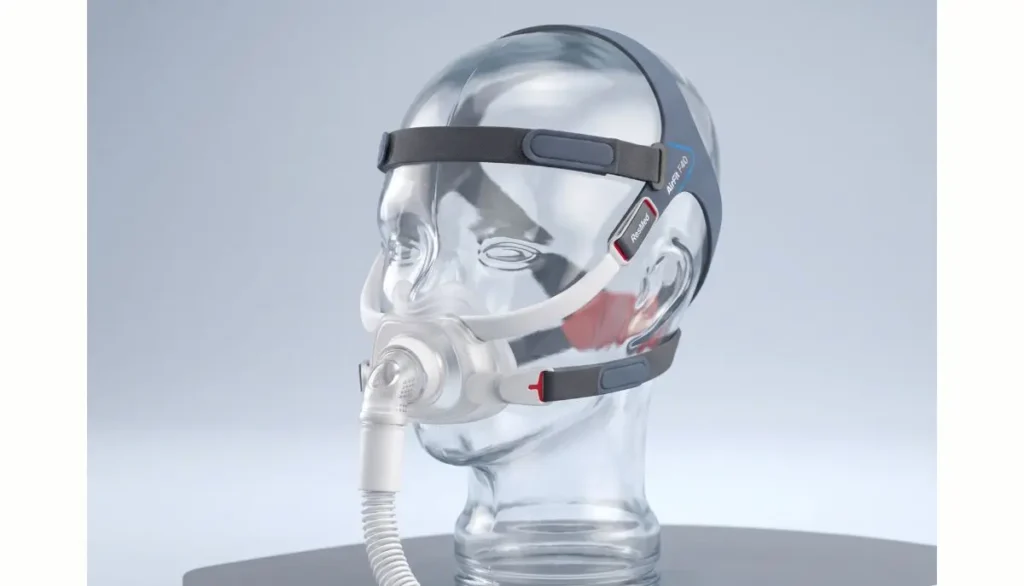
The AirFit F40 mask combines a soft silicone cushion, flexible frame, short tube, and magnetic headgear clips. These features are designed to make the mask easier to put on, adjust, and remove as part of a regular bedtime routine.
Your healthcare provider can help determine whether this mask is appropriate for your prescribed therapy and breathing needs.
Key Features of the AirFit F40 Mask
1. Compact, Under-the-Nose Design
One of the main features of the AirFit F40 mask is its compact shape. The cushion rests beneath the nose instead of covering the nasal bridge.
This design may be helpful for people who dislike pressure around the bridge of the nose or prefer a less bulky mask. It can also make it easier to wear glasses while reading or watching television before sleeping.
However, comfort depends on your facial shape, cushion size, and how well the mask seals.
2. Soft AdaptiSeal Silicone Cushion
The AirFit F40 mask features ResMed’s AdaptiSeal silicone cushion. The soft silicone is designed to adapt to facial contours and help maintain a seal during therapy.
A properly fitted cushion should sit comfortably beneath your nose without pinching your nostrils or pressing excessively against your skin.
If you experience frequent leaks, discomfort, or red marks, check the cushion position and headgear adjustment. Tightening the straps too much may make the problem worse rather than improve the seal.
3. Flexible Frame for Comfortable Movement
Changing sleeping positions can sometimes disturb a CPAP mask’s seal. The AirFit F40 mask features a flexible frame designed to accommodate movement during sleep.
This may be useful for people who sleep on their side, back, or in different positions throughout the night.
Although the frame supports flexibility, no mask can guarantee a leak-free fit in every sleeping position. Proper sizing and adjustment remain important.
4. Convenient Magnetic Clips
Magnetic clips connect the lower headgear straps to the mask frame. They are designed to make putting on and removing the mask easier.
This can be especially helpful when you need to remove your mask during the night and put it back on quickly.
Important safety warning: The AirFit F40 mask contains magnets. These may interfere with certain medical implants or devices, including some implanted devices that are sensitive to magnets. Review the manufacturer’s current user guide for the full list of contraindications and required separation distances. If you have an implant or medical device, consult your healthcare provider before using this mask.
5. Short Tube and Quick-Release Elbow
The AirFit F40 mask includes a short tube and quick-release elbow to connect the mask to the CPAP tubing.
The short tube is designed to help reduce tubing drag when you move during sleep. The quick-release connection also makes it easier to disconnect the mask when needed.
Always check that the connections are secure before starting your therapy.
6. QuietAir Venting
The mask incorporates QuietAir diffused venting, designed to disperse exhaled air more gently and reduce noise.
This feature may make the sleeping environment more comfortable for you and your bed partner. However, normal airflow sounds may still be noticeable.
Keep the vent openings clean and unobstructed. Never cover them while using the mask.
AirFit F40 Mask Sizes: How to Choose the Right Fit
Selecting the correct size is one of the most important steps when choosing the AirFit F40 mask. A cushion that is too small or too large may cause air leaks, discomfort, or difficulty maintaining a reliable seal.
ResMed offers three cushion sizes:
- Small-Wide: Designed for the appropriate combination of nose dimensions and width.
- Medium: Intended for users whose nose measurements fit the medium sizing guide.
- Large: Intended for users whose measurements fit the large sizing guide.
Headgear is also available in Small, Standard, and Large sizes.
Do not choose a cushion based only on your usual clothing size or the size of another CPAP mask. Different mask models can fit differently.
Tips for Finding Your Size
- Obtain the official AirFit F40 fitting template.
- Position it beneath your nose in front of a mirror.
- Compare your nose dimensions with the markings for each cushion size.
- Select the size that best matches the template.
- Follow the manufacturer’s fitting instructions and check the seal with your CPAP device running.
If you are between sizes or cannot achieve a comfortable seal, ask your equipment supplier or sleep-care professional for fitting assistance.
How to Fit the AirFit F40 Mask Correctly
A simple fitting routine can help you get more comfortable with your mask.
Step 1: Prepare the mask. Check that the cushion, frame, headgear, and tubing connections are properly assembled.
Step 2: Position the cushion. Place the cushion beneath your nose, ensuring it rests comfortably without blocking your nostrils.
Step 3: Put on the headgear. Pull the headgear over your head with the ResMed logo facing outward as directed in the manufacturer’s instructions.
Step 4: Attach the magnetic clips. Bring the lower straps behind your ears and attach the clips to the frame, provided the mask is safe for you to use.
Step 5: Adjust the straps. Make small, even adjustments to the upper and lower straps. The mask should feel secure without being excessively tight.
Step 6: Check for leaks. Turn on your CPAP device and reposition the cushion if you notice air escaping around the seal.
If air continues to leak, review the fitting guide or seek professional assistance instead of repeatedly tightening the straps.
How to Clean and Maintain Your AirFit F40 Mask
Regular cleaning helps remove facial oils, dirt, and residue that may affect comfort and mask performance.
ResMed recommends daily cleaning of the cushion, elbow, short tube, and vent ring, with weekly cleaning of the frame and headgear. Follow the current user guide for exact instructions.
Daily Cleaning
- Disconnect the mask from the CPAP tubing.
- Disassemble the components as instructed.
- Wash the cushion, elbow, short tube, and vent ring in warm water with mild liquid detergent.
- Gently clean the vent openings with an appropriate soft brush.
- Rinse thoroughly with clean water.
- Allow the components to air-dry away from direct sunlight.
Weekly Cleaning
Clean the headgear and frame according to the manufacturer’s instructions. Rinse thoroughly and allow all components to dry completely before reassembling the mask.
Avoid harsh chemicals, strong household cleaners, and unapproved cleaning methods. Do not use damaged components.
When Should You Replace Mask Parts?
Cushions and other mask components wear out over time. Cracks, tears, stiffness, damaged straps, persistent leaks, or visible deterioration may indicate that a part needs replacement.
ResMed provides general replacement guidance, but the appropriate schedule can vary with use, product condition, and insurance coverage. Check your supplier’s replacement policy and your mask’s current care instructions.
Who May Benefit From the AirFit F40 Mask?
The AirFit F40 mask may be worth discussing with your healthcare provider if you:
- Need a full-face mask for prescribed PAP therapy.
- Prefer an under-the-nose cushion instead of a traditional design over the nasal bridge.
- Move between sleeping positions during the night.
- Want a compact mask with fewer adjustment points.
- Prefer magnetic clips for easier removal and reattachment.
- Want to wear glasses before settling down to sleep.
The mask is not automatically the best option for every person. Facial anatomy, breathing patterns, prescribed pressure, comfort preferences, and medical-device compatibility all matter.
If you experience persistent mouth or nose leaks, skin irritation, difficulty breathing, or poor therapy results, consult your sleep-care professional before making major changes to your equipment.
AirFit F40 Mask vs. Traditional Full-Face CPAP Masks
Traditional full-face CPAP masks commonly cover the nose and mouth, with a cushion that extends over the bridge of the nose. The AirFit F40 mask instead uses an under-the-nose design with a compact frame.
Here is a simple comparison:
| Feature | AirFit F40 Mask | Traditional Full-Face Design |
| Cushion position | Under the nose | Often covers the nose bridge |
| Overall design | Compact, low-profile | Varies by model |
| Cushion material | Soft silicone | Varies by model |
| Headgear connection | Magnetic clips | Depends on the model |
| Sleeping movement | Flexible frame and short tube | Depends on the model |
| Sizing | Model-specific cushion and headgear sizes | Model-specific sizing |
Neither design is best for everyone. Compare comfort, fit, breathing needs, and compatibility with your prescribed equipment before choosing.
Buying the AirFit F40 Mask From Alfa Healthcare Supply Inc.
Finding the right CPAP supplies should be straightforward. Alfa Healthcare Supply Inc. provides medical supply products and supports customers looking for equipment to help manage their healthcare needs.
If you are considering the AirFit F40 mask, review the product listing and confirm the exact mask configuration, included components, available sizes, and current price before ordering.
You should also verify whether you need a complete mask system or a replacement component. A replacement cushion alone is not the same as a complete mask, and different components may not be interchangeable across mask models.
For additional information, visit Alfa Healthcare Supply Inc. and check the available CPAP supplies.
Because CPAP masks are medical equipment, confirm any prescription requirements and insurance coverage with the supplier before purchasing.
Final Thoughts
The AirFit F40 mask offers a compact alternative for people who need full-face PAP therapy but prefer an under-the-nose design. Its soft silicone cushion, flexible frame, short tube, and magnetic clips are intended to make everyday mask use more convenient.
The most important factors are still correct sizing, a comfortable seal, regular cleaning, and compatibility with your prescribed therapy. Take time to check the sizing guide and safety information before purchasing.
Alfa Healthcare Supply Inc. can be a starting point for exploring CPAP supplies and finding product information to support your equipment needs. If you are unsure which mask or size is right for you, speak with your sleep-care professional or equipment supplier before making a decision.
Frequently Asked Questions About the AirFit F40 Mask
1. Is the AirFit F40 mask a full-face CPAP mask?
Yes. It is a full-face PAP mask designed to provide a seal beneath the nose and around the mouth. Its under-the-nose cushion gives it a more compact profile than many traditional full-face masks.
2. Can I sleep on my side while wearing the AirFit F40 mask?
The flexible frame and short tube are designed to support movement during sleep. Many people may find this useful for side sleeping, but your individual comfort and seal will depend on the fit.
3. What sizes are available for the AirFit F40 mask?
The cushion sizes are Small-Wide, Medium, and Large. Headgear is available in Small, Standard, and Large. Use the official fitting template to identify the most appropriate size.
4. How often should I clean my AirFit F40 mask?
ResMed recommends daily cleaning of the cushion, elbow, short tube, and vent ring, and weekly cleaning of the frame and headgear. Always follow the manufacturer’s latest instructions.
5. How do I know if my AirFit F40 mask is leaking?
You may notice air escaping around the cushion, hear unusual leakage sounds, or receive a leak alert from your CPAP device. Reposition the cushion and make small strap adjustments. If leaks continue, check the size and ask your equipment provider for help.
6. Is the AirFit F40 mask compatible with every CPAP machine?
No. Compatibility depends on the device and its connection requirements. Check ResMed’s current mask-device compatibility information and your machine’s instructions before purchasing. The complete AirFit F40 mask system is not compatible with the ResMed AirMini.
7. Can I use the AirFit F40 mask if I have a medical implant?
Not without checking the manufacturer’s safety guidance first. The mask contains magnets that may interfere with certain implants and medical devices. Review the current user guide and consult your healthcare provider to determine whether it is safe for you.
8. Should I buy a complete mask or just a replacement cushion?
Choose a complete mask system if you need the frame, headgear, cushion, and connecting components. If you already own a compatible AirFit F40 system and only the cushion needs replacing, a replacement cushion may be sufficient. Confirm the product description before ordering.
Medical disclaimer: This article is for general educational purposes only and does not replace medical advice, diagnosis, or treatment. Follow your healthcare provider’s instructions and the manufacturer’s official product documentation.
How Often to Replace AirFit N20 Cushion?
Sleeping with a CPAP machine nightly can make a huge difference to your sleep routine. To make the most of your therapy, however, it’s more than just picking the right machine. Your mask cushion should also be well maintained and replaced when necessary.
If you are wondering how often to replace AirFit N20 cushion, ResMed recommends replacing it approximately once a month. Frequency changes ensure a comfortable fit, minimize leakages and help to keep your CPAP machine in good working order. If you notice any cracks, damage, stiffness, or other wear, it’s time for a new cushion.
At Alfa Healthcare Supply Inc., we know that minor equipment issues can impact your sleep quality through the night. This tutorial will cover when to change your cushion, how to take care of it, and what to look for when you order a new cushion.
What is the ResMed AirFit N20 Cushion?
ResMed AirFit N20 is a mask used for sleep apnea therapy that is fitted over the nose and provides pressurized air through the nose. The soft silicone piece on which your face rests and makes contact with the skin is called the cushion.
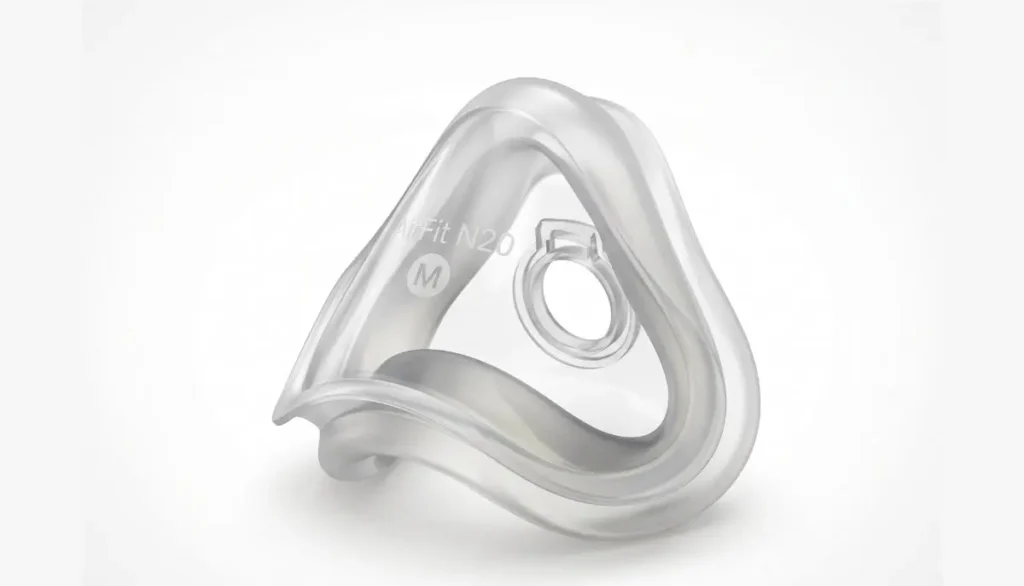
When a cushion is fitted properly, it will help to prevent air loss and help to keep you comfortable while you are sleeping. Facial oils, moisture, habitual use and cleaning over time can cause the cushion to become damaged.
Knowing how frequently to change AirFit N20 cushion may assist you to keep a trustworthy mask seal and not wait until a difficulty interrupts your sleep.
How Often to Replace AirFit N20 Cushion?
The guideline is to change your ResMed AirFit N20 cushion at least monthly, or sooner if the cushion is damaged or no longer seals.
The AirFit N20 cushion is recommended for replacement monthly by ResMed. You’ll have to determine your replacement situation, though, depending on the cushion’s state, your cleaning protocol, and the replacement policy of your insurance company.
Here is a simple guide:
- Every month: Plan for a routine cushion replacement.
- Before one month: Replace it if the silicone becomes cracked, torn, stiff, or visibly deteriorated.
- When air leaks continue: Inspect the cushion and mask fit. Replace the cushion if it is worn or damaged.
- When discomfort develops: Check for changes in the cushion that may contribute to pressure marks or skin irritation.
Knowing how often to replace AirFit N20 cushion is important, but the calendar is not the only thing to consider. Always inspect the cushion and follow the manufacturer’s instructions.
7 Signs Your AirFit N20 Cushion Needs Replacement
A cushion may appear good at first inspection but may, over time, lose its ability to provide a good seal. You can use these warning signs to determine when it’s time to replace it.
1. Air Leaks Around Your Nose
One of the most frequent indications is that air leaks around the edges of your mask. A hissing noise or whiff of air can be heard or felt towards the eyes.
First, adjust the headgear and re-position the mask. Even if the cushion looks in good condition, movement of the face can lead to leaks.
If leaks persist after correct positioning and adjustment, check the cushion for damage or loss of shape. If the cushion is worn, it may need to be replaced.
2. The Silicone Looks Cracked or Torn
Examine the cushion under good lighting. Search for signs of cracking, tears, splits and damage.
A defect, no matter how small, can impact the cushion’s fit against your body. Don’t stick on or tape a broken cushion or try to repair it with glue or other materials.
3. The Cushion Feels Stiff
The new cushion should be loose and comfortable. After multiple uses the silicone can wear out or become less soft.
If your cushion starts to feel very hard, out of shape, or hard to position, it may be time to get a new cushion.
4. You Notice Skin Irritation
Redness, soreness, or discomfort around your nose may indicate that your mask needs attention. Facial oils, residue, excessive strap tension, and an incorrect fit can all contribute to irritation.
Clean the cushion daily and check that the mask is not too tight. If the irritation continues, inspect the cushion and consult your healthcare provider or equipment supplier.
Persistent skin problems should not automatically be blamed on an old cushion.
5. The Cushion Has Changed Color
If the cushion is discolored, it means that the cushion is getting older or the padding has collected dirt on the surface.
Follow the manufacturer’s directions for cushion cleaning. Replace if discolored and stiff, damaged, or showing other signs of deterioration.
6. Cleaning No Longer Restores Its Condition
Washing on a regular basis removes oils, residues, but will not stop material deterioration.
If it still doesn’t feel right or is still dirty, or if the cushion no longer fits after it has been thoroughly cleaned, it may be time to replace it.
7. Your Cushion Has Passed Its Monthly Replacement Date
Even if you think you can use your cushion, ResMed recommends changing it once a month. It’s easier to monitor the date so you don’t end up using a cushion for an extended period of time because it hasn’t failed yet.
One good way to do this is to record your CPAP date on your CPAP supply calendar, and then think ahead for your next CPAP change.
Why Is Regular AirFit N20 Cushion Replacement Important?
Replacing your cushion on schedule can support a more comfortable and consistent CPAP routine.
Better mask seal: A cushion in good condition is more likely to seal properly when correctly fitted.
Improved comfort: A deteriorated cushion may feel less comfortable against your skin.
Reduced irritation from residue: Regular cleaning and timely replacement help you manage the buildup of facial oils and dirt.
Fewer interruptions: Checking your supplies before they wear out can reduce the chance of discovering a damaged cushion just before bedtime.
More dependable equipment care: Regular replacement is one part of maintaining your CPAP mask and following your prescribed therapy.
Remember that replacing a cushion alone does not guarantee effective therapy. Mask fit, machine settings, tubing condition, and other factors can also affect your results.
How to Clean Your AirFit N20 Cushion Properly
Cleaning your cushion every day can help keep it in good condition between replacements. ResMed recommends daily cleaning for the AirFit N20 cushion.
Follow these general steps:
- Turn off and unplug your CPAP machine before disconnecting the equipment.
- Remove the cushion from the mask frame according to the user guide.
- Wash it using warm water and a mild liquid detergent.
- Gently clean the surface to remove facial oils and residue.
- Rinse thoroughly with clean water to remove all soap.
- Place the cushion on a clean towel and allow it to air-dry away from direct sunlight.
- Inspect it before reassembling the mask.
Avoid harsh chemicals, cleaning products that may damage the silicone, and methods that are not approved by the manufacturer. Do not use a washing machine or dryer on your mask components.
Proper cleaning helps maintain the cushion, but it does not eliminate the need for regular replacement.
AirFit N20 Cushion vs. AirTouch N20 Cushion
The AirFit N20 and AirTouch N20 are related ResMed nasal mask products, but their cushions are different.
The AirFit N20 uses a silicone cushion. The AirTouch N20 uses a memory foam cushion and has different care requirements.
| Feature | AirFit N20 | AirTouch N20 |
| Cushion material | Silicone | Memory foam |
| General replacement guidance | Approximately monthly | Approximately monthly |
| Cleaning | Wash daily as directed | Follow its specific care instructions |
| Water exposure | Wash and rinse as instructed | Do not submerge the foam cushion |
| Replacement timing | Replace sooner if damaged | Replace sooner if damaged or deteriorated |
Do not assume that the two cushions are interchangeable. Check your exact mask model before purchasing replacement parts.
How to Choose the Correct AirFit N20 Replacement Cushion
Choosing the correct replacement is just as important as knowing how often to replace AirFit N20 cushion.
Before ordering, check the following:
1. Confirm the mask model. Make sure you use the ResMed AirFit N20, not the AirTouch N20 or another nasal mask.
2. Check the cushion size. Replacement cushions may be available in different sizes. Match the size to your current cushion and mask requirements.
3. Inspect the product description. Confirm that the item is a replacement cushion rather than a complete mask system.
4. Buy from a reliable medical supply provider. A reputable supplier can help you identify the appropriate replacement component.
If you are unsure which cushion fits your mask, contact your equipment supplier or healthcare provider for assistance.
How to Make Your CPAP Cushion Last Longer
You should not extend the recommended replacement schedule just to save money, but good care can help prevent unnecessary damage.
- Clean the cushion daily using the recommended method.
- Allow it to dry completely before using it again.
- Keep it away from direct sunlight when drying or storing it.
- Avoid harsh chemicals and unapproved cleaning devices.
- Handle the silicone gently when removing or attaching it.
- Avoid pulling the mask excessively tight to compensate for leaks.
- Check the cushion regularly for wear and tear.
- Keep a spare replacement cushion available if practical.
If you experience repeated leaks with a new cushion, check the fit and sizing instead of continually tightening the headgear.
How Often Should You Replace Other AirFit N20 Parts?
The cushion is only one component of your CPAP mask. Other parts also require inspection and replacement.
ResMed’s general replacement guidance provides the following schedule:
| CPAP component | General replacement schedule |
| AirFit N20 cushion | Every month |
| Mask frame system | Every 3 months |
| Headgear | Every 6 months |
These are general guidelines, not a guarantee that every part will last that long. Replace damaged components sooner and check your insurance policy, supplier instructions, and the manufacturer’s recommendations.
Can Insurance Cover AirFit N20 Cushion Replacements?
Your health insurance may cover replacement CPAP supplies, but coverage depends on your plan, eligibility, documentation, and supplier requirements.
Before ordering, contact your insurance provider or medical equipment supplier to confirm:
- Whether your plan covers replacement cushions.
- How frequently you can receive a new cushion.
- Whether a prescription or other documentation is required.
- Whether your supplier participates in your insurance network.
- Whether any copayment or out-of-pocket cost applies.
Do not assume that an insurance replacement schedule is the same as the manufacturer’s recommended maintenance schedule.
Where Can You Find AirFit N20 Replacement Supplies?
If your cushion is worn or approaching its monthly replacement date, planning ahead can help you maintain your regular CPAP routine.
Alfa Healthcare Supply Inc. provides medical supply information and supports customers looking for appropriate healthcare equipment and replacement supplies.
Visit the Alfa Healthcare Supply Inc. website to explore available products or contact the supplier for assistance with finding the correct CPAP replacement part.
Before purchasing, confirm the mask model, cushion size, product availability, and any applicable prescription or insurance requirements.
Final Thoughts
Knowing how often to replace AirFit N20 cushion can make CPAP maintenance easier and help you avoid unnecessary discomfort during sleep. ResMed recommends replacing the silicone cushion approximately once a month, with earlier replacement if it becomes damaged or deteriorates.
Make daily cleaning and regular inspection part of your routine. Keep track of replacement dates, confirm the correct cushion size, and ask your healthcare provider or supplier for help if leaks or discomfort continue.
For CPAP supply information and replacement options, visit Alfa Healthcare Supply Inc. at https://alfahealthcaresupplyinc.com/ and check that the product matches your exact mask model.
Frequently Asked Questions
1. How often to replace AirFit N20 cushion if I use CPAP every night?
ResMed recommends replacing the AirFit N20 cushion every month. Daily use can contribute to wear, so inspect it regularly and replace it earlier if it becomes damaged.
2. Can I use my AirFit N20 cushion for two or three months?
Although a cushion may appear usable for longer, the manufacturer’s general recommendation is monthly replacement. Follow that guidance and replace the cushion sooner if you notice damage or deterioration.
3. What happens if I do not replace my CPAP cushion?
A worn cushion may provide a poorer seal, allow air to leak, or become less comfortable. These problems can interfere with your mask fit and sleep routine.
4. Can I wash my AirFit N20 cushion every day?
Yes. ResMed recommends daily cleaning using warm water and mild liquid detergent. Rinse thoroughly and allow the cushion to dry away from direct sunlight.
5. How do I know if my AirFit N20 cushion is too old?
Look for cracks, tears, stiffness, discoloration, persistent residue, or repeated leaks despite proper fitting. A cushion that has reached its monthly replacement date should also be considered for replacement.
6. Does replacing the cushion fix every air leak?
No. Air leaks may result from incorrect sizing, loose or overly tight headgear, sleeping position, facial changes, or other mask problems. Check the fit first and seek help if leaks continue.
7. Is the AirFit N20 cushion the same as the AirTouch N20 cushion?
No. The AirFit N20 uses a silicone cushion, while the AirTouch N20 uses a memory foam cushion. Check your mask model carefully before ordering.
8. Can I replace the AirFit N20 cushion without buying a new mask?
Yes. The cushion is available as a separate replacement component. You generally do not need to purchase a complete mask system if the other components remain in good condition and are compatible.
Medical information note: This article provides general equipment-care information and does not replace your CPAP manufacturer’s instructions or advice from your healthcare provider.
How to Change ResMed AirFit N20 Cushion:
It can be a valuable tool to incorporate into your nightly routine of sleeping if you use a CPAP machine to sleep with every night. When your mask cushion becomes worn out, loose, or uncomfortable, however, it can impact the seal of the mask around your nose. Fortunately, changing the cushion for a ResMed AirFit N20 nasal mask is an easy process if done properly.
When wondering how to change ResMed AirFit N20 cushion, you don’t necessarily have to change the entire mask. If the remaining mask components are still good, you can replace the old mask silicone cushion with another compatible cushion while retaining the rest of the mask.
It’s easy to get confused at first at Alfa Healthcare Supply Inc. about keeping CPAP equipment working. This guide will include how to replace the mask, cleaning instructions, common issues, and methods to help maintain comfort of the mask.
What is the ResMed AirFit N20 Cushion?
The ResMed AirFit N20 mask is a nasal mask that is designed to cover the nose and provide the prescribed positive airway pressure during sleep. It is equipped with an InfinitySeal silicone cushion that is meant to fit comfortably on various facial shapes.
Cushion refers to the softness of the mask that is in contact with your face. It is also significant in forming a seal and assisting to reduce air leakage while using CPAP therapy.
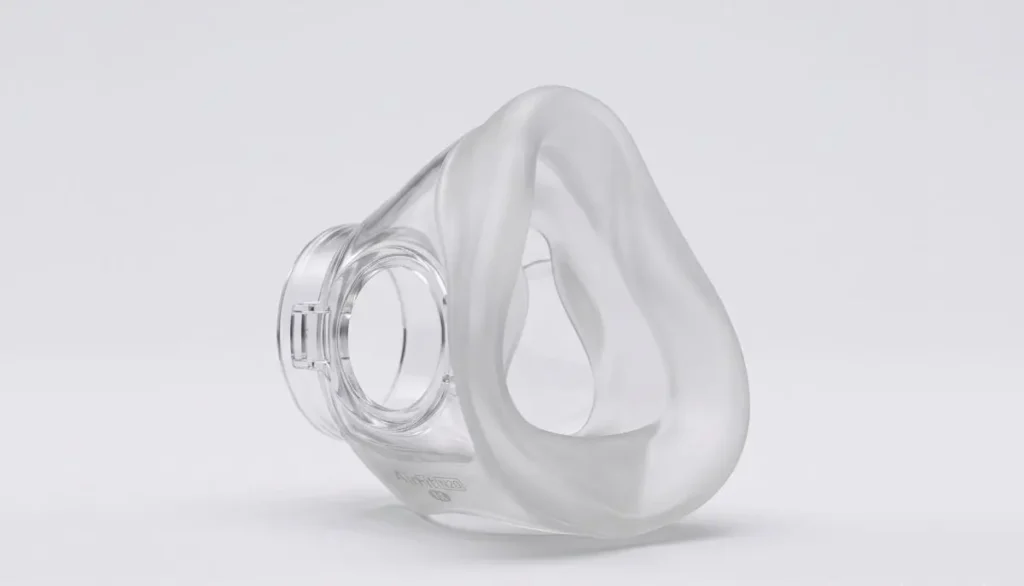
As time goes on, the cushion may become less like new due to natural skin oils, regular use and cleaning. A worn cushion can be replaced to maintain comfort and performance.
ResMed’s product information indicates the cushion AirFit N20 comes in Small, Medium and Large sizes. Appropriate replacement size is important for proper fit.
When Should You Change Your ResMed AirFit N20 Cushion?
Before learning how to change ResMed AirFit N20 cushion, it helps to know when replacement may be necessary.
Look for these common signs:
- Visible wear: The silicone appears damaged, stretched, cloudy, or deteriorated.
- Frequent air leaks: Air escapes around your nose even after you adjust the mask correctly.
- Reduced comfort: The cushion no longer feels as soft or comfortable against your skin.
- Fit problems: The cushion does not sit evenly on your face.
- Persistent hygiene concerns: The cushion remains dirty or develops buildup that cannot be removed with proper cleaning.
A cushion does not always need replacement just because it has been used for a certain number of days. Its condition, your equipment supplier’s replacement schedule, and your insurance coverage may all affect when you receive a new one.
If your mask continues to leak after replacing the cushion, consult your equipment supplier or sleep-care professional.
What You Need Before Replacing the Cushion
Gather these items before starting:
- A compatible ResMed AirFit N20 replacement cushion.
- A clean, dry work surface.
- Your existing mask frame and headgear.
- Mild soap and clean water if you plan to clean the mask components.
Make sure you have the correct cushion for your mask model. The AirFit N20 and AirTouch N20 are different cushion systems, even though they share a similar name. Confirm compatibility before ordering a replacement.
You should also check the cushion size. A Small, Medium, or Large cushion that does not match your needs may cause discomfort or air leaks.
How to Change ResMed AirFit N20 Cushion: Step-by-Step Instructions
Follow these steps to replace the cushion safely and correctly.
Step 1: Turn Off Your CPAP Machine
Turn off your CPAP machine before taking off the mask parts. Remove mask tubing as necessary to allow for comfortable working.
Position the mask on a clear surface, where the mask’s small components will not be lost.
If you are new to the CPAP equipment, spend a few seconds examining how the cushion, frame and headgear, and elbow work together. This will assist in the reassembling process.
Step 2: Remove the Mask Elbow
Elbow attaches the mask to the CPAP tubing.
If the tubing is disconnected from the elbow, disconnect it first, depending on your set up. Then untie the elbow from the mask frame following the manufacturer’s instructions.
Position elbow on a clean and safe area.
By removing this component, you can have easier and more convenient access to the frame of the mask and replace the cushion with ease.
Step 3: Release the Headgear if Needed
Unless you’re replacing the entire cushion, it’s not necessary to remove all the straps of the headgear. Loosening or removing straps however can make it easier to handle the frame.
Unfasten the headgear tabs on the top and unfasten the straps from the frame (if needed). The lower magnet clips will stay on unless they need to be removed for cleaning or maintenance.
Be careful when handling straps. Don’t rip the fabric or extend the fastening tabs.
Step 4: Remove the Old Cushion
The primary point to learn on changing ResMed AirFit N20 cushion.
Grasp the mask frame by its sides. Carefully slide the out-of-date cushion out from the frame until it pulls away.
Do not push or pull the cushion or use sharp objects. The cushion should pull off the frame at a controlled pressure.
Remove and then check the frame for any visible dirt, damage or residue. If there is any crack or damage on the frame, consult your equipment supplier before reusing it.
Step 5: Clean the Mask Frame if Necessary
To clean the frame, if necessary, follow the directions included in your particular ResMed user guide.
ResMed says the washable AirFit N20 parts are compatible with cleaning using warm water and a mild, liquid detergent, then rinsing them off and drying them in the air, away from direct sun.
When installing the new cushion, do not do so when the parts are damp. The mask may not be clean due to soap residue, moisture or dirt.
Do not use any chemicals or cleaning techniques not recommended by the manufacturer.
Step 6: Check the New Cushion
Before installation, examine the replacement cushion.
Make sure it is the correct model and size. Look for any visible damage, deformation, or defects.
If the cushion appears damaged or does not match your mask, do not force it into place. Contact the seller or equipment supplier for help confirming compatibility.
Step 7: Install the New Cushion
Place the new cushion over the mask frame.
Carefully place the cushion into the frame. The AirFit N20 frame is designed to facilitate the proper placement of the cushion into the frame.
Press along the edges to flatten the cushion. Ensure that there are no folds, twists or protruding parts out of frame.
A cushion should fit snugly and not be too hard to put in place.
Step 8: Reattach the Elbow and Headgear
Reconnect the elbow to the mask frame and attach it per manufacturer’s instructions.
Without headgear put the upper straps through the correct frame hole and fold the fasteners back in. Ensure the ResMed logo is facing the outside and up when placing the headgear.
Make sure the strap isn’t twisted and the magnetic clips are in place.
Step 9: Put on the Mask and Check the Fit
Place the mask over your nose and position the headgear comfortably.
Attach the magnetic clips to their corresponding connection points. Adjust the upper and lower straps gradually until the mask feels stable.
Avoid tightening the straps too much. Excessive tension can cause discomfort and may interfere with a good seal.
Connect the mask to your CPAP tubing and switch on your machine according to your normal therapy routine. Check for obvious air leaks and follow the machine’s fitting or leak-check instructions, if available.
If the cushion repeatedly slips, folds, or leaks, remove the mask, reposition it, and try again. Persistent problems may require a different cushion size or professional fitting assistance.
Tips for Getting a Better Seal After Cushion Replacement
Knowing how to change ResMed AirFit N20 cushion is only part of maintaining comfortable CPAP therapy. Correct fitting also matters.
Consider these practical tips:
- Fit the mask before bedtime: Give yourself a few minutes to adjust the cushion while you are awake.
- Keep your face clean: Skin oils, moisturizers, and makeup can interfere with the seal.
- Avoid overtightening: The mask should feel secure without pressing painfully against your skin.
- Check the cushion position: Make sure it sits evenly around your nose.
- Inspect the frame: A damaged frame can prevent even a new cushion from fitting properly.
- Follow your prescribed therapy: Do not change pressure settings to compensate for a mask leak without consulting your healthcare professional.
Small adjustments can make a noticeable difference in comfort. If you cannot achieve a stable seal, ask your CPAP supplier or sleep-care professional to assess the fit.
How to Clean and Maintain Your AirFit N20 Cushion
Regular cleaning helps remove skin oils and residue that may build up during nightly use.
For the silicone AirFit N20 cushion, follow the manufacturer’s cleaning instructions. In general, compatible washable components should be cleaned with warm water and mild liquid detergent, rinsed thoroughly, and allowed to air-dry away from direct sunlight.
Here are a few maintenance habits to follow:
- Clean the cushion regularly according to the user guide.
- Inspect it for tears, deformation, and other signs of wear.
- Keep the mask away from excessive heat and direct sunlight.
- Avoid unapproved cleaning chemicals or devices.
- Make sure the cushion is completely dry before using it again.
Do not confuse the silicone AirFit N20 cushion with the memory-foam cushion used by the AirTouch N20. Their care instructions differ. Always follow the guide for your exact mask model.
Common Mistakes to Avoid
When learning how to change ResMed AirFit N20 cushion, avoid these common mistakes.
Choosing the wrong cushion size: A cushion that is too small or too large may cause pressure, discomfort, or leaks.
Forcing the cushion into the frame: Align it correctly and use gentle pressure rather than forcing the parts together.
Ignoring visible damage: Replace a cushion that shows signs of deterioration instead of continuing to use it.
Using harsh cleaning products: Strong chemicals can damage mask materials or leave unwanted residue.
Overtightening the headgear: More pressure does not always mean a better seal.
Assuming every N20 cushion is identical: Confirm the exact model and compatibility before purchasing a replacement.
Where to Find a Replacement ResMed AirFit N20 Cushion
If your current cushion is worn or damaged, replacing that component may be more practical than purchasing an entire mask, provided the frame and other parts remain in good condition.
Alfa Healthcare Supply Inc. offers medical supply products for patients and caregivers. You can visit the official website to explore available products and contact the supplier about the replacement cushion you need.
Visit: https://alfahealthcaresupplyinc.com/
Before ordering, confirm the following details:
- The replacement is compatible with the ResMed AirFit N20.
- The selected size is correct for your mask.
- The product listing matches the specific component you need.
- Any prescription, insurance, or supplier requirements are addressed.
If you are unsure which cushion to select, ask your equipment supplier for assistance.
Final Thoughts
Learning how to change ResMed AirFit N20 cushion can make routine CPAP maintenance easier and help you keep your equipment in good condition. The process involves removing the old cushion, checking and cleaning the frame when necessary, fitting the compatible replacement, and checking the mask seal before therapy.
Remember that a comfortable mask should fit securely without excessive pressure. Regular cleaning, timely replacement, and correct sizing can help support your prescribed CPAP routine.
For additional information about medical supplies and replacement components, visit Alfa Healthcare Supply Inc. at https://alfahealthcaresupplyinc.com/ and confirm product compatibility before ordering.
Frequently Asked Questions
1. How often should I change my ResMed AirFit N20 cushion?
The replacement interval depends on the cushion’s condition, your usage, and the replacement schedule recommended by your equipment supplier or insurer. Inspect it regularly and replace it when worn, damaged, or unable to maintain a reliable seal.
2. Can I replace the cushion without buying a new mask?
Yes. If your existing AirFit N20 frame, headgear, and elbow are in good condition, you can generally replace the cushion separately with a compatible replacement.
3. How do I know which AirFit N20 cushion size I need?
The AirFit N20 cushion comes in Small, Medium, and Large. Check the size you currently use and refer to ResMed’s sizing guidance. If the mask causes persistent discomfort or leaks, ask your supplier for a fitting assessment.
4. Why is my mask leaking after I replace the cushion?
The cushion may not be fully seated, may be folded, or may be the wrong size. Check its position, inspect the frame, and adjust the headgear gently. If leaks continue, seek advice from your CPAP supplier or healthcare professional.
5. Can I wash the new cushion before using it?
Follow the cleaning directions supplied with your cushion and mask. For washable AirFit N20 silicone components, use the manufacturer’s recommended method and rinse thoroughly before allowing the parts to dry.
6. Is the AirFit N20 cushion the same as the AirTouch N20 cushion?
No. The masks use different cushion materials and have different care requirements. Verify the model before ordering or cleaning a replacement.
7. Do I need tools to replace the cushion?
No special tools are normally required. The cushion is designed to separate from the frame and be reinstalled by hand. Avoid sharp objects or excessive force.
8. What should I do if the new cushion does not fit?
Stop and check the model, size, and orientation. Do not force an incompatible cushion into the frame. Contact your supplier or consult the official ResMed user guide.
Medical information note: This article provides general equipment-maintenance guidance and does not replace the manufacturer’s instructions or advice from your healthcare professional. Always follow the official user guide for your exact mask model.
Introduction: F40 Cushion Replacement
You can have a great impact on the way you sleep at night by using a comfortable CPAP mask. The mask may need the attention of the cushion if it leaks, doesn’t fit properly, or it is not as comfortable as it once was. The ResMed AirFit F40 full face mask offers a comfortable fit for users and is designed to ensure effective CPAP therapy. When it comes to choosing the right f40 cushion replacement, it can make a difference in terms of comfort and a steady CPAP therapy.
At Alfa Healthcare Supply Inc, we know that getting the correct replacement part shouldn’t be a hassle. Patients require trustworthy information, user-friendly product instructions and products that are compatible with their current equipment.
This guide offers information about what the F40 cushion is, when it needs changing, how to choose the right size, installation process and proper care of your cushion.
What is an F40 Cushion Replacement?
The f40 cushion replacement is the replacement silicone cushion for the ResMed AirFit F40 full face CPAP mask. The AirFit F40 is designed to create a secure fit under the nose to decrease the contact around the nasal bridge.
The cushion is the part of your mask that is important to the seal and has to fit your face, to get the right air pressure for your sleep apnoea treatment.
ResMed says its AirFit F40 cushion is made from soft silicone that conforms to the face and ensures a good seal.
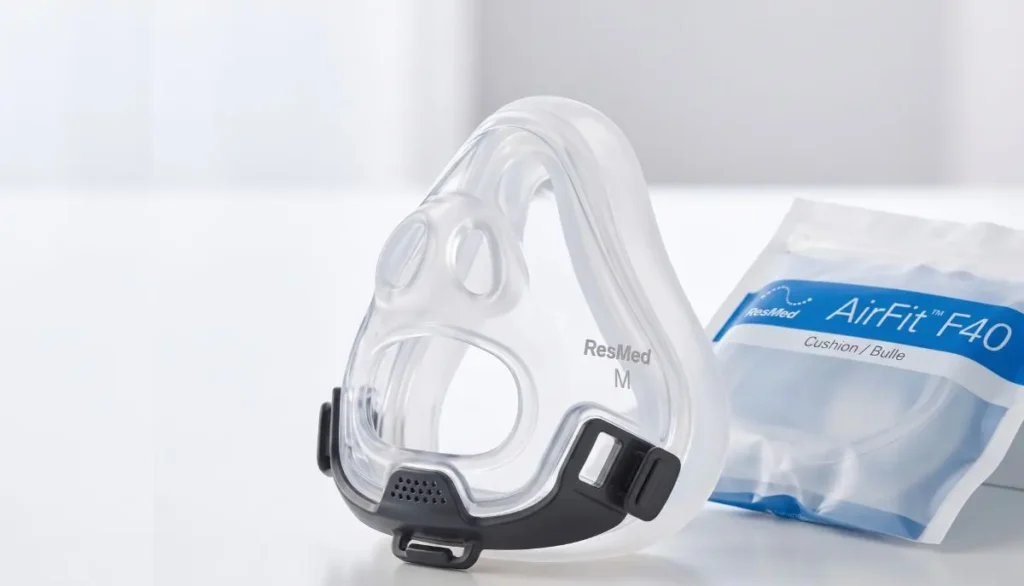
Useful for replacing the cushion when it becomes too worn or damaged or for when it no longer fits comfortably. If the mask is just the cushion that needs replacing, then you don’t have to get a whole new mask, as long as the rest of the mask is still usable.
Important: Choose a cushion specifically made for the AirFit F40. Cushions designed for other ResMed masks, including the AirFit F20 and F30, are not interchangeable simply because they come from the same manufacturer.
Why Choose an F40 Cushion Replacement?
Over time, regular use, facial oils, cleaning, and everyday handling can affect a CPAP cushion. Replacing a worn component can help restore a more comfortable mask fit.
Here are several reasons to consider an f40 cushion replacement.
1. Helps Maintain a Secure Seal
A well-fitting cushion will keep any unwanted air leakage around the mask to a minimum. Too much leakage may disrupt sleep and reduce the comfort of therapy.
Check for damage to the cushion or if it does not fit properly under your nose, if air is leaking around your nose or mouth.
2. Supports Everyday Comfort
Your mask comes into contact with your face several hours every night. A hard, stretched and damaged cushion is not as comfortable as a new cushion.
Choosing a replacement that is appropriate for you can enhance the comfort of your mask when you wear it.
3. Helps Maintain Mask Hygiene
Sweat, dirt and facial oils may accumulate on the cushion. Cleaning will remove this residue every day, but cleaning cannot fix any tears or damages that have occurred on the cushion.
Regularly replacing worn parts and cleaning according to the manufacturer’s guidelines is a crucial aspect of proper CPAP maintenance.
4. Offers a Practical Alternative to Replacing the Entire Mask
In the event just the cushion is worn, replacing it could be more sensible than purchasing a whole mask system.
Also, check the frame, elbow, vent ring and headgear before ordering. There may be other broken parts that need replacing as well.
When Should You Replace Your F40 Cushion?
ResMed’s official shop lists a monthly replacement guideline for the AirFit F40 cushion. However, the actual replacement may depend on how the cushion is used, how it is cleaned and the condition of the cushion.
Consider an f40 cushion replacement when you notice any of the following signs:
- Visible tears, cracks, or other damage.
- A cushion that has become noticeably stretched or misshapen.
- Repeated air leaks despite correct positioning and reasonable strap adjustments.
- Reduced comfort around the nose or mouth.
- A cushion that no longer sits securely against your face.
- Persistent buildup or deterioration that proper cleaning does not resolve.
Avoid waiting until a cushion is no longer usable to inspect. Regularly checking your mask can help you detect any issues before they get in the way of your sleep schedule.
If the leakages persist and the cushion is replaced and checked, contact your CPAP equipment provider/healthcare professional for assistance.
How to Choose the Correct F40 Cushion Size
Choosing the right size is essential. An incorrectly sized cushion may leak, feel uncomfortable, or fail to sit in the correct position.
The AirFit F40 cushion is available in three sizes:
- Small-Wide (SW): Designed for people whose measurements suit the wider small-size template.
- Medium (M): Suitable for people whose measurements fit the medium template.
- Large (L): Designed for people whose measurements fit the large template.
Do not select a size based only on your usual clothing size or the size of another CPAP mask.
Tips for Selecting Your Size
- Check the size printed on your existing cushion.
- Use the official ResMed AirFit F40 sizing template if you are unsure.
- Position the template under your nose as instructed.
- Compare your nose’s width and length with the indicated sizing areas.
- Choose the size that matches the fitting guide and provides a comfortable seal.
You can review the official ResMed AirFit F40 support and fitting guide for additional guidance.
If your current cushion fits comfortably and seals well, choosing the same size is often a reasonable starting point. If you experience repeated fit problems, seek professional fitting advice before ordering another size.
How to Replace an F40 Cushion
Replacing your cushion is a straightforward task when you follow the manufacturer’s instructions.
Before beginning, disconnect the mask from your CPAP tubing and place the equipment on a clean surface.
Step 1: Remove the Existing Cushion
Gently remove the points of attachment from the mask frame holes on the cushion. Be careful not to damage the frame.
Step 2: Inspect the Mask Frame
Inspect frame for cracks, damage, or dirt. Ensure cleanliness at the attachment points and good condition of the area surrounding the attachment points.
Step 3: Position the New Cushion
Insert the new f40 cushion replacement and match up the holes that it attaches to with the holes in the mask frame.
Step 4: Secure Both Sides
Insert the cushion attachment points into the frame holes. Check both sides to ensure the cushion is securely attached and evenly positioned.
Step 5: Reattach the Other Components
Replace the vent ring and elbow as per instructions. Verify the proper positioning and securing of all components.
Step 6: Check the Fit
Put the mask on your face and snug it into the headgear, but don’t over-tighten the mask. Make sure that the cushion is not in any way visible to be leaking, and that it fits under your nose comfortably while you’re using the CPAP machine.
If you are unable to secure the cushion properly, stop and refer to the manufacturer’s guide or your equipment provider.
How to Clean and Care for Your F40 Cushion
Regular cleaning helps remove facial oils and everyday residue that can affect the cushion’s condition.
ResMed recommends cleaning the cushion, elbow and short tube, and vent ring daily.
Follow these basic care steps:
- Remove the cushion according to the user guide.
- Wash it with warm, drinking-quality water and a mild liquid detergent.
- Gently clean the surfaces without using abrasive brushes or harsh chemicals.
- Rinse thoroughly to remove detergent residue.
- Place the cushion on a clean towel and allow it to air-dry away from direct sunlight.
- Inspect it for damage before using it again.
Avoid using cleaning products that are not recommended by ResMed. Ozone and UV cleaning products have not been validated for the mask and may damage or discolor its components.
Never use a cushion that is visibly damaged or cannot be cleaned properly. Refer to the official product instructions for complete cleaning and care requirements.
Where to Buy an F40 Cushion Replacement
When shopping for a replacement, make sure the product description clearly identifies the ResMed AirFit F40 cushion.
At Alfa Healthcare Supply Inc., customers can explore respiratory and CPAP supplies through the company’s online store.
Visit the Alfa Healthcare Supply Inc. respiratory supplies collection to view available products, including the Full Face Cushion for AirFit F40 Series CPAP Masks.
Before placing an order, check the following details:
- Compatibility: Confirm that the cushion is designed for the AirFit F40.
- Size: Select Small-Wide, Medium, or Large according to your fitting requirements.
- Product condition: Buy a new replacement from a reliable supplier.
- What’s included: Check whether the listing includes only the cushion or additional components.
- Shipping and returns: Review the seller’s current policies before completing your purchase.
Product availability, prices, and shipping terms can change. Confirm the latest details on the product page.
Alfa Healthcare Supply Inc. aims to make medical supply shopping easier by providing access to products that support patients and caregivers in their everyday care routines.
Common Problems After Replacing the Cushion
Even a new cushion may not feel right immediately. Some simple checks can help you identify common fitting issues.
Air Leaks Around the Nose
Make sure the cushion is positioned under your nose correctly and is not folded or creased. Adjust the headgear evenly without pulling it too tightly.
Pressure or Discomfort
Check whether the selected size matches your face. Excessive strap tension may also cause discomfort. If the problem continues, ask your equipment provider about fitting assistance.
Cushion Feels Loose
Inspect the attachment points and confirm that both sides are securely connected to the frame. Replace any damaged parts.
Persistent Mask Leaks
A new cushion cannot correct every mask problem. Leaks may also be related to headgear wear, frame damage, incorrect positioning, or equipment settings.
If the problem persists, contact your CPAP provider or healthcare professional rather than changing prescribed pressure settings yourself.
Final Thoughts: F40 Cushion Replacement
Your CPAP mask should support a comfortable and consistent nightly routine. Paying attention to cushion condition, selecting the correct size, and following regular cleaning instructions can help you maintain your equipment properly.
When the cushion becomes worn or damaged, an appropriate f40 cushion replacement may be all you need instead of replacing the entire mask. Always confirm model compatibility and check the condition of the remaining components.
Alfa Healthcare Supply Inc. provides access to respiratory supplies to help customers find equipment and replacement parts for their care needs. Visit the online store to explore available AirFit F40 cushion options and choose the product that matches your mask.
Frequently Asked Questions: F40 Cushion Replacement
1. How often should I replace my F40 cushion?
ResMed’s shop lists a monthly replacement guideline. Inspect your cushion regularly and replace it sooner if it becomes damaged, deteriorates, or no longer fits correctly.
2. Can I replace only the F40 cushion?
Yes. If the cushion is the only component that needs replacing, you can generally purchase the cushion separately. Make sure the frame and other parts remain in good condition.
3. Are F40 and F20 cushions interchangeable?
No. The AirFit F40 and AirFit F20 use different mask designs. Purchase a cushion specifically made for your mask model.
4. What sizes are available for the AirFit F40 cushion?
The available sizes are Small-Wide, Medium, and Large. Use the official sizing template to identify the best fit.
5. Why is my new F40 cushion leaking?
Possible reasons include incorrect sizing, poor positioning, a crease in the cushion, overtightened or uneven headgear, or damage to another mask component. Recheck the fitting instructions and seek professional help if leaks continue.
6. How do I clean my F40 replacement cushion?
Clean it daily using warm water and mild liquid detergent. Rinse thoroughly and air-dry away from direct sunlight. Follow the official user guide for complete instructions.
7. Can I use an F40 cushion with another ResMed mask?
Do not assume compatibility between different mask models. Confirm that the replacement is intended for the AirFit F40 before purchasing.
8. Where can I find an F40 cushion replacement online?
You can check the respiratory supplies collection at Alfa Healthcare Supply Inc. and verify the current listing, size options, price, and availability before ordering.
Medical information note: This article is for general product education and is not a substitute for professional medical advice. Follow the manufacturer’s instructions and consult your healthcare professional or CPAP provider if you experience persistent leaks, discomfort, or problems with your therapy.
Introduction: Replacement Cushion for AirFit F40
ResMed AirFit F40 full face mask, maintaining its cushion is crucial for ensuring a comfortable fit and effective CPAP usage.
If you have an old AirFit F40 and want to replace the mask cushion without purchasing a new mask, the replacement cushion for AirFit F40 is the option for you. The softness and sealing properties of the cushion may change over time due to regular use, facial oils, moisture, and other factors that require regular cleaning. A new cushion can make it more comfortable and help eliminate air leaks.
We know that selecting the right CPAP supplies can be sometimes confusing at Alfa Healthcare Supply Inc. To educate our customers on their choices, what parts fit with them, and what their choices are best for their home healthcare requirements.
You’ll learn how to pick a new cushion for AirFit F40, how to find the correct size, how to change and clean the cushion, and when it might be time for a new one.
What is a Replacement Cushion for AirFit F40?
The replacement cushion for AirFit F40 is the soft silicone component that rests beneath your nose and forms a seal against your face. It is used with the ResMed AirFit F40 full face CPAP mask, which is a compact mask that supplies airflow to both the nose and mouth.
The AirFit F40 features ResMed’s AdaptiSeal cushion design. It is made of soft silicone and is designed to conform to the shape of your face whilst ensuring a good seal during sleep.
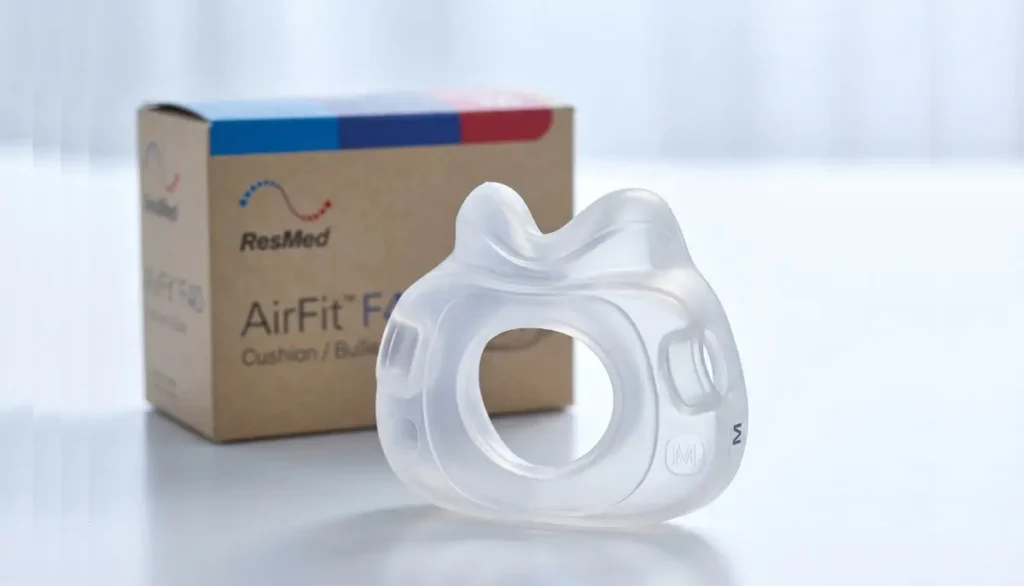
If the mask has an adjustable frame, headgear and other components are still in good condition, you can replace the mask cushion each time instead of replacing the whole mask.
For those who wish to keep using the same mask but need a new cushion, the AirFit F40 replacement cushion is a great option.
Important: Choose a cushion specifically designed for the AirFit F40. Cushions made for other ResMed masks, including the AirFit F20 or AirFit N20, are not interchangeable simply because they come from the same manufacturer.
Key Features of the AirFit F40 Replacement Cushion
Understanding the cushion’s main features can help you decide whether it suits your needs.
1. Soft Silicone Construction
Soft silicone cushion for comfortable Face contact. If the cushion fits properly, there shouldn’t be too much strap tension.
2. Under-the-Nose Design
The AirFit F40 cushion is unlike the traditional full face mask that covers the bridge of the nose, as it sits under the nose. This design offers a different pattern of facial contact compared to other designs, which some may find more comfortable.
3. Designed to Support a Reliable Seal
The shape of the cushion helps to keep the seal intact when using CPAP. But the outcome relies on the proper size, fitting of the mask and its cleanliness and undamagedness of the cushion.
4. Replaceable Component
A replacement cushion for AirFit F40 allows you to replace the cushion while keeping all of the compatible and properly-functioning mask parts. This can be an option when the cushion is the first part of the mask to become worn.
5. Multiple Size Options
The AirFit F40 cushion comes in three sizes: Small Wide, Medium and Large. Choosing the right size is a crucial step to wear comfort and mask effectiveness.
Which Size of AirFit F40 Replacement Cushion Should You Choose?
Choosing the right size is one of the most important steps when purchasing a replacement cushion for AirFit F40.
ResMed identifies the available cushion sizes as follows:
- Small Wide: Intended for users who need the Small Wide cushion shape and fit.
- Medium: Intended for users whose facial measurements and fitting indicate a Medium cushion.
- Large: Intended for users who need the Large cushion based on the manufacturer’s fitting guidance.
Do not assume that a larger size will automatically provide a better seal. A cushion that is too large or too small may cause leaks, pressure points, or discomfort.
Before ordering, check the size printed on your current cushion or consult the official AirFit F40 fitting guide. If you are unsure, use ResMed’s sizing instructions or ask your CPAP equipment provider for assistance.
If your current cushion has always felt uncomfortable, leaks frequently, or leaves persistent marks on your skin, consider checking the fit rather than automatically purchasing the same size again.
When Should You Replace Your AirFit F40 Cushion?
CPAP mask cushions will wear out over time, even if they are cleaned regularly. ResMed advises replacing the AirFit F40 cushion every month, or sooner if there are any issues, or as part of your coverage.
Look for these common signs that it may be time to purchase a replacement cushion for AirFit F40.
Visible Cracks or Tears
Cracks, splits or damaged edges can impair a cushion’s ability to make a good seal. If they are visibly damaged replace them, don’t use them.
Frequent Air Leaks
If the mask leaks more often even with it properly positioned and the strap adjusted appropriately, check the cushion. Worn cushions might not seal just as well.
Stiffness or Loss of Softness
If the cushion is especially hard, misshapen or less flexible than usual, it may not be as comfortable as it used to be.
Discoloration or Residue
If the cushion is discolored, built up or does not respond to cleaning, it might be time to change the cushion.
Skin Irritation or Discomfort
If the cushion starts to give unusual discomfort or a redness, examine the cushion and fit. If the skin irritation is not going away, a health care professional should be consulted.
A well-maintained mask system for the duration of the season can be achieved by changing the cushion on time. If the cushion is damaged earlier, however, don’t wait for the monthly mark.
How to Replace an AirFit F40 Cushion
Replacing the cushion is a straightforward maintenance task when performed according to the manufacturer’s instructions.
Follow these general steps:
Step 1: Turn off your CPAP device. Disconnect the mask from the airflow tubing as appropriate for your setup.
Step 2: Remove the mask from your face. Place it on a clean surface where the small components will not be lost.
Step 3: Separate the cushion from the frame. Gently pull the cushion studs out of the corresponding holes in the frame, following the AirFit F40 user guide. Avoid pulling or twisting the silicone forcefully.
Step 4: Prepare the new cushion. Confirm that the replacement is specifically made for the AirFit F40 and matches the intended size.
Step 5: Attach the replacement cushion. Insert the cushion studs into the frame’s stud holes. Check both sides to make sure the cushion is securely attached.
Step 6: Reattach the vent ring and elbow. Align the vent ring with the cushion opening and press it into place as instructed in the manufacturer’s guide. Reconnect the elbow securely.
Step 7: Check the fit. Put the mask on, position the cushion beneath your nose, and adjust the headgear without overtightening it. Turn on your CPAP device and check for unusual leaks.
If you cannot attach the cushion correctly or the mask appears damaged, consult the official ResMed instructions or contact your equipment provider before using it again.
How to Clean Your AirFit F40 Cushion
Regular cleaning helps remove facial oils, dirt, and residue that may affect comfort and mask performance.
To care for your replacement cushion for AirFit F40:
- Clean the cushion daily, following the manufacturer’s instructions.
- Wash it gently with warm water and a mild liquid detergent.
- Avoid harsh cleaners, strong chemicals, and abrasive scrubbing.
- Rinse thoroughly to remove all soap residue.
- Allow it to air-dry away from direct sunlight.
- Inspect the cushion before using it again.
NEVER put the cushion away before it has dried. Also, do not use products that can harm the silicone or leave behind a nuisance.
While cleaning on a daily basis is vital, cleaning does not revive a broken, permanently distorted or worn out cushion.
Common Problems and Helpful Solutions
Problem: My Mask Is Leaking Air
First, check whether the cushion is positioned correctly beneath your nose. Look for folds, gaps, or twisted headgear. Clean the cushion and inspect it for wear.
If the problem continues, verify that you are using the correct size. Persistent leaks may require help from your CPAP provider.
Problem: My Cushion Feels Too Tight
Avoid tightening the straps excessively. Excessive tension may cause discomfort and can sometimes make the seal worse. Reposition the cushion and adjust the headgear according to the fitting guide.
Problem: My Cushion Has Become Hard
Silicone can deteriorate with repeated use. If the cushion feels stiff or no longer conforms comfortably to your face, replacing it may be appropriate.
Problem: I Bought the Wrong Cushion
Check the packaging, model name, and size before opening or using the product. If the cushion is incompatible, contact the seller to discuss available return or exchange options.
Why Choose Alfa Healthcare Supply Inc. for CPAP Supplies?
Choosing the appropriate home medical equipment shouldn’t be hard. Alfa Healthcare Supply Inc. provides healthcare supplies and durable medical equipment to customers seeking the products that can help meet the needs of patients and caregivers.
When ordering a replacement AirFit F40 cushion, it is crucial to check the product compatibility, size, availability and insurance requirements before placing your order.
For more info about the medical supplies offered by Alfa Healthcare Supply Inc., visit their website.
Before buying be sure they have the exact same AirFit F40 cushion listed and available. You should seek help if you need it, as not all CPAP cushions are the same model or size as the one you’re using.
A replacement cushion can be a relatively small part, but it can help you keep your CPAP system and not have to replace items that are still good.
Tips for Getting the Best Results from Your Replacement Cushion
Keep these simple habits in mind:
- Check the cushion regularly for cracks, tears, and stiffness.
- Clean it every day according to the manufacturer’s instructions.
- Use the correct AirFit F40 cushion size.
- Avoid overtightening the headgear to compensate for leaks.
- Replace damaged components promptly.
- Follow your equipment provider’s and insurer’s replacement guidelines.
- Consult your healthcare professional if mask discomfort or therapy problems continue.
Remember that a cushion alone cannot resolve every CPAP problem. Persistent leaks, dryness, pressure discomfort, or difficulties using your machine may need a broader review of your mask fit and therapy settings.
Final Thoughts: Replacement Cushion for AirFit F40
Your CPAP mask should help you get into a healthy, regular sleep routine. If your cushion is worn or damaged, it can make that routine harder, but if you can get a new part for your mask, you don’t have to buy a whole new system.
There are three factors to consider when picking an AirFit F40 replacement cushion: compatibility, size, and maintenance. Regularly inspect cushion, clean daily and change when necessary or if wear is observed.
Alfa Healthcare Supply Inc’s mission is to enable customers to make informed decisions on home healthcare supplies. Familiarizing yourself with your mask’s needs and verifying the product specifications before placing your order can be a helpful step toward maintaining your CPAP.
Frequently Asked Questions: Replacement Cushion for AirFit F40
1. How often should I replace my AirFit F40 cushion?
ResMed recommends replacing the cushion approximately once a month. Replace it sooner if it becomes damaged, stiff, difficult to clean, or unable to maintain a good seal.
2. Can I replace only the AirFit F40 cushion?
Yes. If your mask frame, headgear, and other components remain in good condition, you can generally replace the cushion alone rather than buying the entire mask system.
3. What sizes are available for the AirFit F40 cushion?
The available sizes are Small Wide, Medium, and Large. Check your existing cushion and the manufacturer’s fitting guide before ordering.
4. Is the AirFit F40 cushion compatible with the AirFit F20?
No. The AirFit F40 and AirFit F20 use different cushion designs. Purchase a replacement specifically made for your mask model.
5. Can I wash my AirFit F40 cushion every day?
Yes. ResMed recommends daily cleaning of the cushion. Use warm water and mild liquid detergent, rinse thoroughly, and let it air-dry away from direct sunlight.
6. Will a new cushion stop all air leaks?
Not necessarily. A new cushion may help if the existing one is worn, but leaks can also result from incorrect sizing, poor positioning, loose or twisted headgear, or other mask issues.
7. Can I use a different cushion size from my original one?
Only if the alternative size is appropriate for your face and compatible with your AirFit F40 setup. Follow the manufacturer’s fitting instructions or ask your CPAP provider for help.
8. Do I need a new mask when the cushion wears out?
Not always. If the frame and other parts are still in good condition, replacing the cushion alone may be sufficient. Replace other components when needed.
9. Does insurance cover an AirFit F40 replacement cushion?
Coverage and replacement schedules vary by insurer and plan. Contact your insurance provider or durable medical equipment supplier to confirm eligibility, documentation requirements, and any out-of-pocket costs.
10. Where can I buy a replacement cushion for AirFit F40?
You can check Alfa Healthcare Supply Inc. for available healthcare supplies. Confirm current stock, the correct cushion size, and product compatibility before ordering.
Medical note: This article provides general product information and is not a substitute for medical advice. Follow the ResMed AirFit F40 user guide and consult your healthcare professional or equipment provider about persistent leaks, discomfort, or questions about CPAP therapy.
ResMed AirFit F20 Cushion Sizes:
The right CPAP mask cushion can make a world of difference in making you feel comfortable during the night. When using the ResMed AirFit F20 full face mask, it’s crucial to understand both F20 cushion sizes and the importance of achieving a comfortable fit and seal. Well-fitting cushion can minimize air leakage, prevent excessive pressure on your face, and make the use of CPAP easier.
When replacement CPAP supplies become an issue, especially with multiple sizes where the options appear the same, we know how to help you figure it out at Alfa Healthcare Supply Inc. This guide covers the different sizes of cushions available for the F20, how to measure your face, how to tell if it’s a bad fit and what to look for when buying a new cushion.
The key is finding a cushion that fits your face, no matter how small, medium, or large you need it to be, to be comfortable and to assist with your CPAP prescription.
What are the Available F20 Cushion Sizes?
The ResMed AirFit F20 replacement cushion comes in 3 standard sizes: small, medium and large. These interchangeable cushions fit to the AirFit F20 mask frame and can be easily swapped out without replacing the entire mask system.
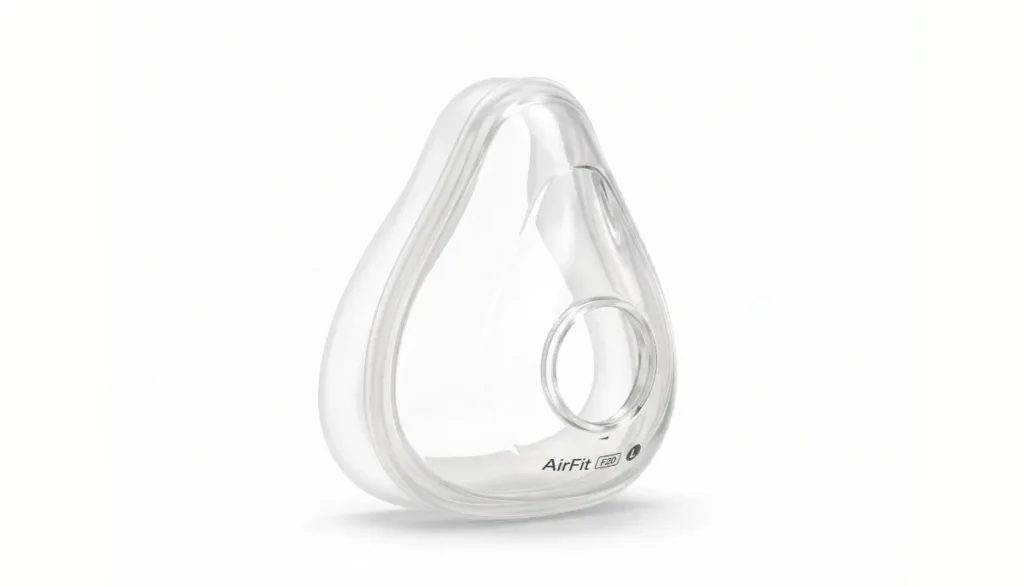
ResMed’s product information states that the cushion has InfinitySeal technology to assist with holding the seal on various facial shapes. The proper size is still important for comfort and performance, though.
1. Small F20 Cushion
The small cushion is developed for the user whose facial measurements fall in small range. It could work for those who have a shorter distance between the bridge of their nose and the lower lip, just below.
If a medium cushion stretches too far down the chin and/or feels too wide, a small cushion can provide a better fit. But, not everyone with a small face will find a small cushion to be more comfortable.
2. Medium F20 Cushion
One of the standard cushions available is the medium cushion, which might be appropriate for users who have medium dimensions.
If you have just one medium cushion and are comfortable with it even though it has a bit of tightness in straps, this might be a practical option to replace. However, examine the cushion for wear, and ensure it is still an appropriate size for your face.
3. Large F20 Cushion
The large cushion is intended for the large range of facial measurements.
If a smaller size seems too narrow or doesn’t fit around the mouth and nose, a larger size may provide better coverage. A large cushion can however be ill placed if it covers too much of your face.
Important: The correct size depends on your facial measurements and how the mask sits on your face, not just your overall face size.
F20 Cushion Sizes Chart
Use the following chart as a starting point when choosing your replacement cushion.
| Cushion size | ResMed measurement guide |
| Small | 74–86 mm |
| Medium | 86–98 mm |
| Large | 98–110 mm |
These are taken from the bridge of the nose to a point below the lower lip and above the chin. They are not the width of the cushion itself.
The ranges overlap each other at their edges: If your measurement is between two sizes, use ResMed’s official sizing template and fitting instructions. If your size is in between sizes, ResMed’s recommendation is to select the larger one.
How to Measure for the Right F20 Cushion Size
Measuring at home can help you narrow down your options before ordering a replacement. Follow these steps carefully.
Step 1: Get a straight ruler
Use a ruler or another rigid measuring tool that allows you to measure in a straight line. Ask someone to help if you find it difficult to measure accurately by yourself.
Step 2: Find the starting point
Locate the bridge of your nose, usually around the area between your eyes. This is the upper starting point for the measurement.
Step 3: Find the endpoint
Locate the small indentation between your lower lip and chin. Measure vertically from the bridge of your nose to this point.
Step 4: Compare your measurement
Use the chart above to identify the closest recommended size. For example, a measurement of 82 mm falls within the small range, while 92 mm falls within the medium range.
Step 5: Confirm the fit
A measurement is a useful starting point, but it cannot guarantee the perfect fit. Use the official ResMed sizing template when possible, and check how the cushion rests on your face before using your CPAP machine overnight.
How to Know If Your F20 Cushion Fits Correctly
The best F20 cushion size should feel comfortable while creating a reliable seal when your CPAP machine is running.
Here are some signs that your cushion may fit properly:
- The cushion rests comfortably around your nose and mouth.
- The mask remains stable when you change sleeping positions.
- You do not need to pull the headgear excessively tight.
- Air leaks are minimal during normal use.
- The cushion does not cause persistent pressure or irritation.
Remember that mask fit also depends on headgear adjustment, cushion condition, facial shape, and sleeping position.
Signs You May Have the Wrong F20 Cushion Size
Even a high-quality cushion can feel uncomfortable if its size does not suit your face.
Frequent air leaks
If air is escaping around the nose, cheeks, or chin the cushion might not be the proper size or position. Clean the cushion, install the mask and fit the headgear as per the user guide before replacing it.
Excessive pressure on the nose
If there is pressure around the nasal bridge, it means the positioning is incorrect, the strap is too tight or it’s the wrong size cushion. Avoid snugly fitting the straps to make up for a poor fit.
Cushion slipping during sleep
If the cushion is moving while you’re turning your head, it’s not in place. Make sure that the headgear and cushion configuration is correct before assuming that a different size is required.
Persistent skin irritation
Pressure, friction, sensitivity and/or poor fit may lead to redness, soreness or discomfort. Wash the cushion frequently and consult your CPAP supplier for advice if it is still irritating.
When you get leaks or discomfort after making reasonable adjustments, consult your equipment provider or health care professional to check the mask fit again.
Are F20 Cushion Sizes Interchangeable?
Yes. The small, medium and large cushions fit with the compatible ResMed AirFit F20 mask frame. This interchangeable system also offers the opportunity to alter the size of the cushion without having to purchase a new mask system altogether.
But AirFit F20 cushions are not standard CPAP cushions. A cushion for another ResMed mask (e.g. AirFit F10, AirFit F30 or AirFit N20) will NOT fit your AirFit F20 frame.
Prior to ordering please ensure it is a genuine AirFit F20 replacement cushion.
Also, make sure you need the regular AirFit F20 cushion or one that is compatible with your mask model.
AirFit F20 vs. AirFit F20 for Her: What Should You Know?
The AirFit F20 and AirFit F20 for Her are full face mask systems that share some similarities, but the full mask setups are not the same.
AirFit F20 will come with the standard small, medium, and large size cushions. In the past, the AirFit F20 for Her were only available in small and medium full-mask type.
ResMed offers the same “small, medium and large” cushion parts for the compatible F20 systems. So the complete mask system name does not take the place of checking the cushion size and compatibility.
Be sure to verify the model name, and size the cushion that is currently on their bed, when purchasing F20 cushion sizes. If you are unsure, consult your equipment supplier before ordering.
How to Replace Your ResMed AirFit F20 Cushion
Once you have selected the correct replacement, changing the cushion is generally straightforward.
- Turn off your CPAP machine and disconnect the mask from the air tubing if necessary.
- Remove the existing cushion from the mask frame according to the AirFit F20 user guide.
- Inspect the frame for visible damage, residue, or other signs of wear.
- Align the replacement cushion with the frame and press it into place as instructed by ResMed.
- Check that the cushion is seated securely and evenly.
- Reconnect the mask and tubing, put the mask on, and check for leaks with the machine running.
Do not force the cushion into place. If it does not attach properly, check that you have the correct model and orientation.
How Often Should You Replace an F20 Cushion?
The replacement frequency may vary depending on the frequency with which you use your CPAP machine, the way that you clean your cushion, and the condition of the silicone as well as your insurance or supplier’s instructions.
As time goes on, the cushion may become discolored, lose its form, suffer tears and not stay flat. These changes may impact on both comfort and mask performance.
Check your cushion routinely and clean and replace as per manufacturer’s directions. Replace as needed when it becomes damaged or no longer fits as intended.
If your cushion leaks even after you position it and make adjustments, take the time to verify the condition of the cushion before deciding it was installed the wrong size.
Tips for Maintaining Your F20 Cushion
Good care can help keep your cushion clean and comfortable.
- Clean it according to the manufacturer’s instructions.
- Allow it to dry completely before use.
- Avoid harsh cleaning products that may damage the silicone.
- Inspect the cushion for tears, stiffness, or other damage.
- Store your mask in a clean, dry place when it is not in use.
- Avoid overtightening the headgear to compensate for leaks.
A clean cushion and correctly adjusted mask can support a more comfortable CPAP routine.
Where Can You Buy F20 Cushion Sizes?
For a replacement, Alfa Healthcare Supply Inc. offers a healthcare supply shopping resource for patients and caregivers who require respiratory and durable medical equipment supplies.
Please check product name, size, mask compatibility and all prescription/covership requirements in advance prior to ordering.
Go to Alfa Healthcare Supply Inc. to see what their products are and see if you need a replacement cushion that’s available.
Avoid choosing a cushion from a product photo. Check the size of your current cushion and compare it to the manufacturer’s recommendations.
Final Thoughts: F20 Cushion Sizes
Getting the right F20 cushion sizes goes beyond small, medium and large. A proper fit will help alleviate the unnecessary pressure, minimize air leaks, and increase comfort during CPAP use at night.
Take measurements of your face, consult the ResMed sizing guide and check the model on your current cushion. Be sure to request help from your CPAP equipment provider, and avoid guessing.
At Alfa Healthcare Supply Inc. our mission is to ensure patients and caregivers that they can make informed decisions regarding the use of healthcare supplies. Just a little extra time spent checking cushion size can make you feel more as though you’re prepared for your new CPAP cushion, and more prepared for your nighttime experience.
Frequently Asked Questions About F20 Cushion Sizes
1. What sizes are available for the ResMed AirFit F20 cushion?
The standard AirFit F20 replacement cushion comes in small, medium, and large sizes.
2. How do I know which F20 cushion size I need?
Measure from the bridge of your nose to the indentation below your lower lip. Compare the result with ResMed’s sizing chart, and confirm your fit with the official template when possible.
3. Can I use a large F20 cushion with a medium mask frame?
The AirFit F20 cushions are designed to be interchangeable with the compatible F20 frame. Confirm the exact mask model and follow the manufacturer’s fitting instructions.
4. Is the AirFit F20 cushion compatible with the AirFit N20?
No. The AirFit F20 and AirFit N20 are different mask models with different cushion designs. Purchase a cushion specifically intended for your mask.
5. Will changing my cushion size stop air leaks?
It may help if the current size is unsuitable. However, leaks can also result from poor positioning, loose or overly tight headgear, worn silicone, or other fitting problems.
6. Should I choose a smaller or larger cushion if I am between sizes?
ResMed recommends selecting the larger option when you fall between sizes. Confirm the recommendation using the official sizing template and a proper mask fit check.
7. Can I replace only the F20 cushion instead of buying a new mask?
Yes, if the mask frame and other components remain in good condition and you purchase the correct compatible replacement cushion.
8. How can I tell whether my F20 cushion needs replacing?
Look for cracks, tears, changes in shape, persistent leaks, or deterioration that affects comfort and sealing. Follow the manufacturer’s maintenance guidance.
Medical disclaimer: This article is for general educational purposes and does not replace medical advice or the manufacturer’s instructions. Consult your healthcare professional or CPAP equipment provider if you have persistent mask leaks, skin irritation, or difficulty achieving a comfortable fit.
Introduction: AirFit F40 Cushion Medium
A comfortable CPAP mask can make a big difference in your nightly sleep routine. If your mask feels uncomfortable, develops air leaks, or leaves marks on your face, it may be time to check the cushion. The AirFit F40 cushion medium is a replacement part designed for people who use the ResMed AirFit F40 full face CPAP mask.
The AirFit F40 is designed with a soft, under-the-nose cushion that helps provide a secure fit without covering the bridge of the nose. Its flexible design supports comfortable movement during sleep. For people who want to maintain their existing mask without purchasing a completely new system, replacing the cushion can be a practical option.
At Alfa Healthcare Supply Inc., we understand that finding the right medical supplies should be simple and convenient. This guide explains the features, sizing, cleaning, replacement, and buying considerations for the AirFit F40 cushion medium so you can make an informed decision.
What is the AirFit F40 Cushion Medium?
The AirFit F40 cushion medium is a replacement silicone cushion for the ResMed AirFit F40 full face CPAP mask. It creates the contact surface between the mask and your face, helping maintain a comfortable seal while your CPAP machine delivers prescribed air pressure.
The cushion uses ResMed’s AdaptiSeal design, which is intended to adapt to facial contours and support a reliable seal. The mask rests beneath the nose rather than across the nasal bridge, offering an alternative to traditional full face mask designs.
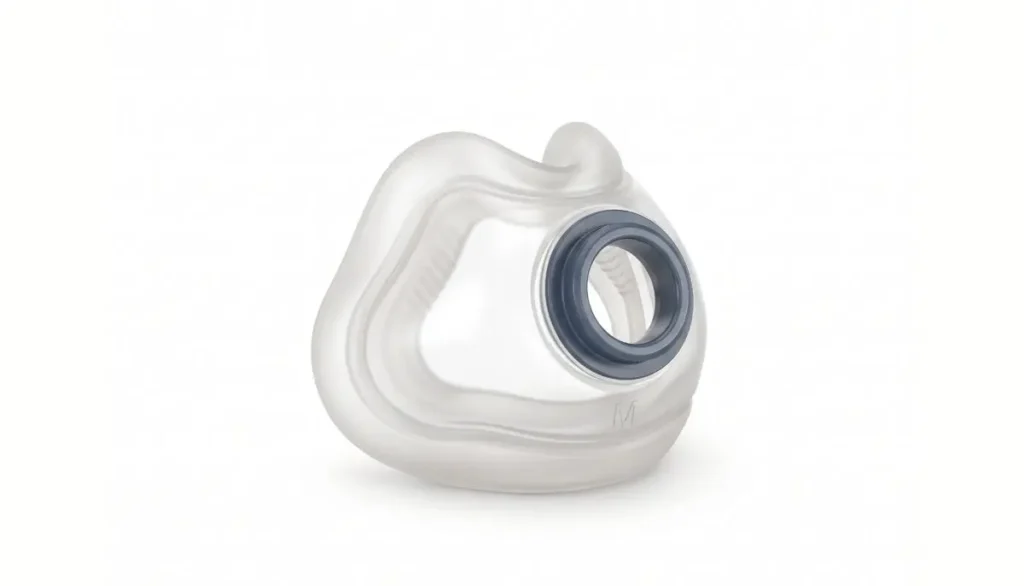
The AirFit F40 cushion medium is intended for users whose facial measurements match the medium size according to the manufacturer’s sizing guide.
Important: This product is a cushion replacement, not a complete CPAP mask. Check the product listing carefully to confirm what is included before ordering.
Key Features of the AirFit F40 Cushion Medium
1. Soft Silicone Construction
The cushion uses flexible silicone designed to sit comfortably against the face. Its soft construction helps create a seal around the nose and mouth during CPAP therapy.
Regular cleaning and proper positioning can help maintain comfort and performance over time.
2. Under-the-Nose Design
The AirFit F40 uses an under-the-nose cushion rather than a traditional design that rests over the bridge of the nose. Some users may find this style more comfortable, particularly if they experience pressure marks around the upper nose with other mask designs.
Individual comfort varies, so correct sizing remains important.
3. Designed for a Secure Seal
A properly fitted cushion helps reduce unwanted air leaks around the mask. The AirFit F40 cushion medium is designed to work with the compatible AirFit F40 mask frame.
If air escapes around your nose or mouth, reposition the cushion and check the headgear adjustment before assuming that you need a different size.
4. Replacement Without Buying a Whole Mask
When the cushion becomes worn but the other mask components remain in good condition, replacing the cushion may be more economical than replacing the entire mask system.
The AirFit F40 cushion medium allows eligible users to replace this specific component while continuing to use their compatible mask frame and headgear.
5. Supports Everyday CPAP Use
CPAP users need equipment that fits comfortably into their daily routines. Cleaning the cushion regularly, checking for damage, and replacing it when needed can help keep the mask in suitable working condition.
Who Should Choose the Medium Size?
Choosing the correct size is essential for comfort and effective mask sealing. The AirFit F40 cushion medium may be appropriate for users whose nose measurements fall within the medium sizing area shown in ResMed’s official fitting template.
However, medium is not automatically the best choice for every adult.
Consider these sizing tips:
- Check your measurements: Use the official AirFit F40 fitting template rather than relying only on your usual mask size.
- Review your current mask: If your existing AirFit F40 cushion is medium and fits comfortably, this can be a useful reference when ordering a replacement.
- Look for gaps: A cushion that is too large or too small may not seal properly.
- Avoid excessive strap tightening: Tightening the headgear too much may create discomfort without correcting a sizing problem.
- Follow the manufacturer’s instructions: Use the recommended fitting procedure to position the cushion correctly.
ResMed offers the AirFit F40 cushion in Small-Wide, Medium, and Large sizes. These options help users select a cushion based on their facial measurements.
How to Fit the AirFit F40 Cushion Medium
Proper positioning helps the cushion create a comfortable seal. Follow the manufacturer’s instructions for your specific mask model.
Step 1: Inspect the Cushion
Before use, check the cushion for tears, cracks, unusual deformation, or other visible damage. Do not use a damaged component.
Step 2: Position the Cushion
Place the cushion beneath your nose as directed in the fitting guide. Make sure it sits evenly against your face without folds or pinched areas.
Step 3: Position the Headgear
Place the headgear over your head with the straps positioned correctly. Attach the magnetic clips as instructed in the user guide.
Step 4: Adjust the Straps
Make small, even adjustments to the upper and lower straps. The mask should feel secure without creating unnecessary pressure.
Step 5: Check the Seal
Turn on your CPAP machine and check for leaks while air is flowing. If air escapes around the nose, gently reposition the cushion and readjust the straps as needed.
If the mask continues to leak despite correct positioning, review the sizing instructions or contact your healthcare provider or equipment supplier for help.
How to Clean the AirFit F40 Cushion Medium
Daily cleaning helps remove facial oils, dirt, and residue that can affect the cushion’s condition and fit.
Follow these general care steps based on ResMed’s guidance:
- Disconnect the mask from the CPAP equipment as instructed.
- Remove the cushion according to the AirFit F40 disassembly instructions.
- Wash it in warm, drinking-quality water using a mild liquid detergent.
- Gently clean the surface without using abrasive brushes or harsh chemicals.
- Rinse thoroughly to remove all detergent.
- Place the cushion on a clean towel and allow it to air-dry away from direct sunlight.
- Reassemble the mask according to the manufacturer’s instructions.
Avoid strong cleaning products, oils, and direct heat unless the manufacturer specifically permits them. Always check the user guide for complete cleaning and maintenance instructions.
When Should You Replace the Cushion?
Over time, daily use can affect the cushion’s flexibility, surface condition, and ability to maintain a good seal.
ResMed’s replacement guidance recommends replacing the AirFit F40 cushion approximately once a month. Actual replacement needs can vary with use, condition, and applicable insurance or supplier policies.
Consider checking your cushion for these signs:
- Persistent air leaks despite correct fitting.
- Visible tears, cracks, or other damage.
- A cushion that no longer maintains its shape.
- Persistent residue or deterioration that remains after proper cleaning.
- Discomfort that continues even after correct repositioning.
The AirFit F40 cushion medium should be replaced when necessary to maintain appropriate equipment condition. Do not wait for the cushion to fail completely if it shows clear signs of deterioration.
Common Problems and Practical Solutions
Air Leaking Around the Nose
Remove any folds in the cushion by gently repositioning it. Check that the headgear is not twisted and that the straps are adjusted evenly.
If leaks continue, verify the cushion size and follow the manufacturer’s troubleshooting guidance.
Red Marks or Facial Discomfort
Excessive strap tension, incorrect positioning, or an unsuitable size may contribute to discomfort. Loosen and readjust the headgear according to the fitting guide.
If skin irritation persists, stop using the equipment if necessary and consult your healthcare professional for advice.
Cushion Feels Loose
Check that the cushion is securely attached to the frame and that the correct replacement component was purchased. Inspect the attachment points for damage.
Cushion Looks Worn
A cushion that has lost its shape or developed cracks should be replaced. Cleaning cannot restore damaged silicone.
AirFit F40 Cushion Medium vs. Other Sizes
Selecting a cushion should be based on fit, not simply on the assumption that a larger or smaller size will feel better.
| Cushion size | General guidance |
| Small-Wide | For users whose measurements match the Small-Wide template |
| Medium | For users whose measurements match the Medium template |
| Large | For users whose measurements match the Large template |
The AirFit F40 cushion medium is one of three available cushion sizes. The manufacturer’s fitting template is the best starting point for selecting the appropriate option.
Remember that cushion size and headgear size are separate considerations. A medium cushion does not necessarily mean you need medium headgear.
What to Check Before Buying
Before ordering a replacement, confirm the following details:
- Mask compatibility: The cushion must be specifically designed for the ResMed AirFit F40.
- Correct size: Verify that medium matches your fitting measurements.
- Product contents: Confirm that the listing includes the cushion only if that is what you need.
- Condition: Buy a new, appropriate replacement from a reliable medical supply source.
- Replacement schedule: Check the cushion’s condition and follow the manufacturer’s recommended replacement guidance.
- Return policy: Review the supplier’s policy for medical accessories before purchase.
The manufacturer’s US product guide lists part number 64628 for the AirFit F40 Cushion Medium. Confirm the part number against the current product listing and your mask model before ordering.
Why Choose Alfa Healthcare Supply Inc.?
Finding the right CPAP replacement part should not be confusing. Alfa Healthcare Supply Inc. serves customers looking for medical supplies and durable medical equipment, helping them identify products that suit their needs.
When shopping for the AirFit F40 cushion medium, customers should focus on correct product identification, compatibility, product condition, and clear ordering information.
You can visit Alfa Healthcare Supply Inc. to explore available medical supplies and check whether this replacement cushion is listed for purchase.
Before completing your order, confirm the current price, availability, shipping details, and product specifications on the website. If you are uncertain about the correct replacement, seek assistance from the supplier or your healthcare provider.
Final Thoughts: AirFit F40 Cushion Medium
A well-maintained CPAP mask can make your nightly routine more comfortable and manageable. The AirFit F40 cushion medium offers a replacement option for users whose measurements match the medium size and who already use a compatible ResMed AirFit F40 mask.
Regular cleaning, correct sizing, and timely replacement are important parts of mask care. If you experience ongoing leaks or discomfort, review the manufacturer’s fitting guidance rather than relying on tighter straps alone.
For customers looking for CPAP accessories and other medical supplies, Alfa Healthcare Supply Inc. provides a starting point for exploring available products and checking replacement options. Always verify the current listing and choose equipment compatible with your prescribed therapy.
Frequently Asked Questions: AirFit F40 Cushion Medium
1. What is the AirFit F40 cushion medium used for?
It is a replacement silicone cushion for the ResMed AirFit F40 full face CPAP mask. It forms the seal between the mask and your face during prescribed CPAP therapy.
2. Is the AirFit F40 cushion medium compatible with other ResMed masks?
No. It is designed specifically for the AirFit F40. Do not assume it will fit other ResMed masks, including the AirFit F20, F30, or F30i.
3. Does the cushion come with a complete CPAP mask?
The replacement cushion is a separate component. Unless the product listing states otherwise, do not expect a frame, headgear, or complete mask system to be included.
4. How often should I replace my AirFit F40 cushion?
ResMed’s recommended replacement guideline is approximately once a month. Replace it sooner if it becomes damaged or no longer maintains a suitable seal.
5. How do I know if the medium size fits?
Use the official ResMed fitting template to compare your nose measurements with the medium sizing area. Check that the cushion sits evenly beneath your nose without gaps or folds.
6. Can I wash the cushion every day?
Yes. ResMed recommends daily cleaning of the cushion using warm water and mild liquid detergent. Rinse thoroughly and allow it to air-dry away from direct sunlight.
7. What should I do if my cushion keeps leaking?
Reposition the cushion, check for folds, and adjust the headgear evenly. If leakage continues, confirm the size and inspect the cushion for wear or damage.
8. Can I use the AirFit F40 cushion medium with any CPAP machine?
Mask compatibility depends on the complete mask system, tubing connections, and CPAP equipment. Verify compatibility with your device and follow the manufacturer’s instructions.
9. Is the cushion suitable for people who sleep on their sides?
The AirFit F40 is designed to support movement during sleep. However, comfort and seal performance vary by individual, so check the fit in your usual sleeping position.
10. Where can I find the AirFit F40 cushion medium?
Visit Alfa Healthcare Supply Inc. to check current product availability. Confirm the size, compatibility, and included components before placing an order.
Medical note: This article provides general product information and is not a substitute for advice from your healthcare provider or the manufacturer’s instructions.