


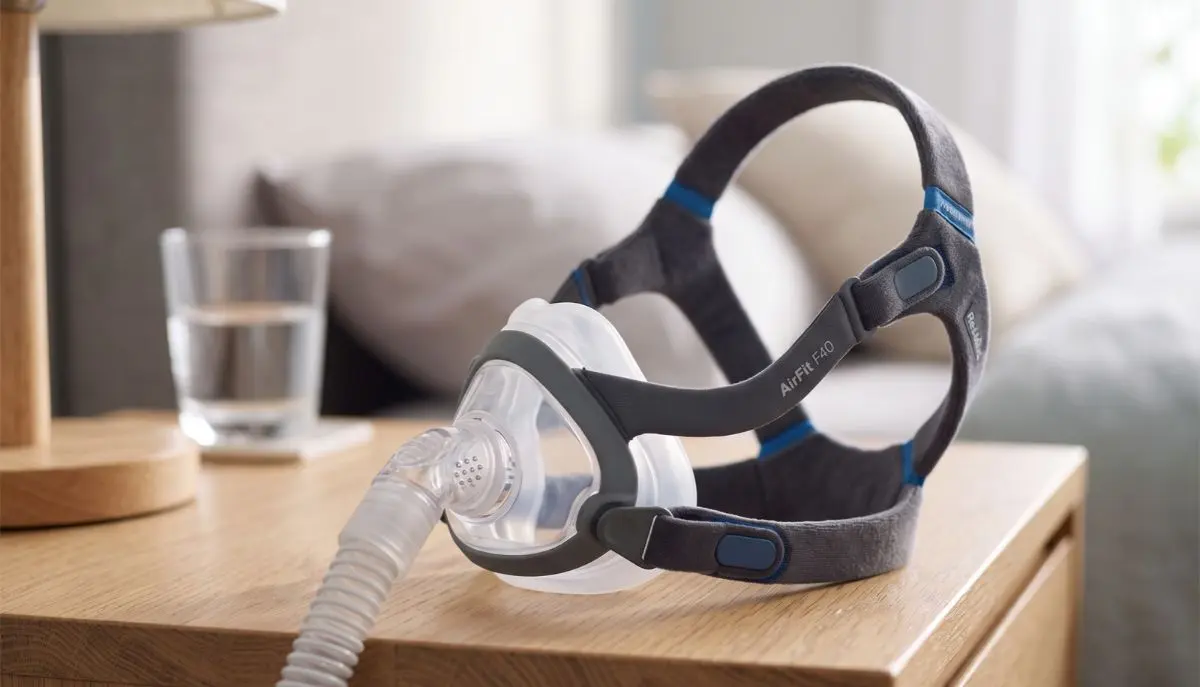
AirFit F40 Mask:
Choosing the right CPAP mask can make a big difference in your nightly routine. A mask that feels uncomfortable, leaks air, or makes it difficult to change sleeping positions can turn sleep apnea therapy into a frustrating experience. That is why finding a mask that balances comfort, fit, and ease of use matters.
The AirFit F40 mask by ResMed is designed for people who need a full-face CPAP mask but prefer a compact, low-profile design. It sits beneath the nose rather than covering the bridge of the nose, while providing coverage for both the nose and mouth. Its soft silicone cushion and flexible frame are designed to support a comfortable fit during sleep.
At Alfa Healthcare Supply Inc., we understand that choosing CPAP equipment can feel confusing, especially when different masks look similar. This guide explains the AirFit F40 mask in simple language, including its main features, sizing options, fitting tips, cleaning instructions, and important safety considerations.
What is the AirFit F40 Mask?
The AirFit F40 mask is a full-face mask developed by ResMed for positive airway pressure (PAP) therapy. It is designed to deliver prescribed airflow through a cushion that seals beneath the nose and around the mouth.
Unlike traditional full-face masks that extend over the bridge of the nose, this mask uses an under-the-nose design. This smaller profile may appeal to people who prefer less material across their face.
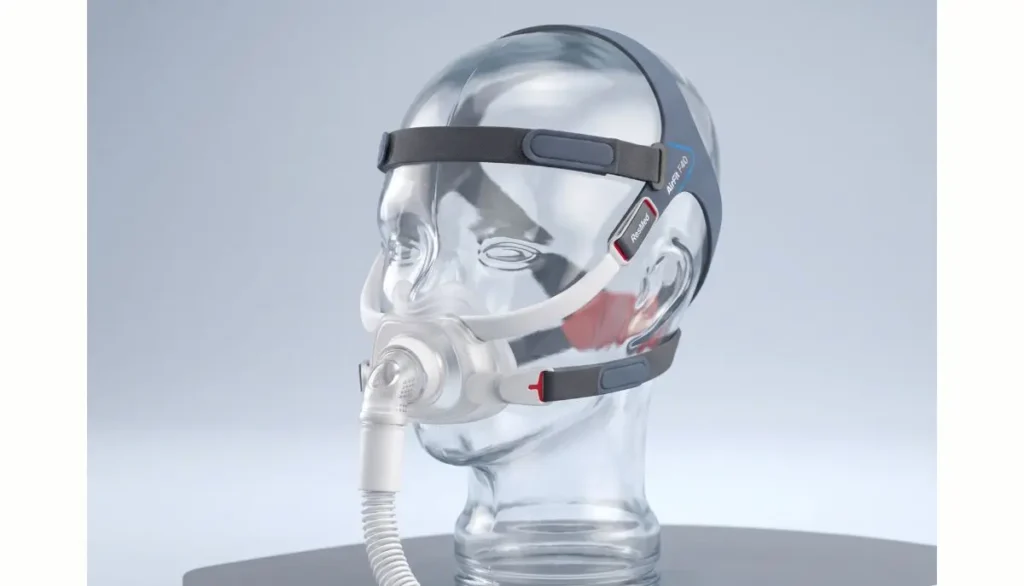
The AirFit F40 mask combines a soft silicone cushion, flexible frame, short tube, and magnetic headgear clips. These features are designed to make the mask easier to put on, adjust, and remove as part of a regular bedtime routine.
Your healthcare provider can help determine whether this mask is appropriate for your prescribed therapy and breathing needs.
Key Features of the AirFit F40 Mask
1. Compact, Under-the-Nose Design
One of the main features of the AirFit F40 mask is its compact shape. The cushion rests beneath the nose instead of covering the nasal bridge.
This design may be helpful for people who dislike pressure around the bridge of the nose or prefer a less bulky mask. It can also make it easier to wear glasses while reading or watching television before sleeping.
However, comfort depends on your facial shape, cushion size, and how well the mask seals.
2. Soft AdaptiSeal Silicone Cushion
The AirFit F40 mask features ResMed’s AdaptiSeal silicone cushion. The soft silicone is designed to adapt to facial contours and help maintain a seal during therapy.
A properly fitted cushion should sit comfortably beneath your nose without pinching your nostrils or pressing excessively against your skin.
If you experience frequent leaks, discomfort, or red marks, check the cushion position and headgear adjustment. Tightening the straps too much may make the problem worse rather than improve the seal.
3. Flexible Frame for Comfortable Movement
Changing sleeping positions can sometimes disturb a CPAP mask’s seal. The AirFit F40 mask features a flexible frame designed to accommodate movement during sleep.
This may be useful for people who sleep on their side, back, or in different positions throughout the night.
Although the frame supports flexibility, no mask can guarantee a leak-free fit in every sleeping position. Proper sizing and adjustment remain important.
4. Convenient Magnetic Clips
Magnetic clips connect the lower headgear straps to the mask frame. They are designed to make putting on and removing the mask easier.
This can be especially helpful when you need to remove your mask during the night and put it back on quickly.
Important safety warning: The AirFit F40 mask contains magnets. These may interfere with certain medical implants or devices, including some implanted devices that are sensitive to magnets. Review the manufacturer’s current user guide for the full list of contraindications and required separation distances. If you have an implant or medical device, consult your healthcare provider before using this mask.
5. Short Tube and Quick-Release Elbow
The AirFit F40 mask includes a short tube and quick-release elbow to connect the mask to the CPAP tubing.
The short tube is designed to help reduce tubing drag when you move during sleep. The quick-release connection also makes it easier to disconnect the mask when needed.
Always check that the connections are secure before starting your therapy.
6. QuietAir Venting
The mask incorporates QuietAir diffused venting, designed to disperse exhaled air more gently and reduce noise.
This feature may make the sleeping environment more comfortable for you and your bed partner. However, normal airflow sounds may still be noticeable.
Keep the vent openings clean and unobstructed. Never cover them while using the mask.
AirFit F40 Mask Sizes: How to Choose the Right Fit
Selecting the correct size is one of the most important steps when choosing the AirFit F40 mask. A cushion that is too small or too large may cause air leaks, discomfort, or difficulty maintaining a reliable seal.
ResMed offers three cushion sizes:
- Small-Wide: Designed for the appropriate combination of nose dimensions and width.
- Medium: Intended for users whose nose measurements fit the medium sizing guide.
- Large: Intended for users whose measurements fit the large sizing guide.
Headgear is also available in Small, Standard, and Large sizes.
Do not choose a cushion based only on your usual clothing size or the size of another CPAP mask. Different mask models can fit differently.
Tips for Finding Your Size
- Obtain the official AirFit F40 fitting template.
- Position it beneath your nose in front of a mirror.
- Compare your nose dimensions with the markings for each cushion size.
- Select the size that best matches the template.
- Follow the manufacturer’s fitting instructions and check the seal with your CPAP device running.
If you are between sizes or cannot achieve a comfortable seal, ask your equipment supplier or sleep-care professional for fitting assistance.
How to Fit the AirFit F40 Mask Correctly
A simple fitting routine can help you get more comfortable with your mask.
Step 1: Prepare the mask. Check that the cushion, frame, headgear, and tubing connections are properly assembled.
Step 2: Position the cushion. Place the cushion beneath your nose, ensuring it rests comfortably without blocking your nostrils.
Step 3: Put on the headgear. Pull the headgear over your head with the ResMed logo facing outward as directed in the manufacturer’s instructions.
Step 4: Attach the magnetic clips. Bring the lower straps behind your ears and attach the clips to the frame, provided the mask is safe for you to use.
Step 5: Adjust the straps. Make small, even adjustments to the upper and lower straps. The mask should feel secure without being excessively tight.
Step 6: Check for leaks. Turn on your CPAP device and reposition the cushion if you notice air escaping around the seal.
If air continues to leak, review the fitting guide or seek professional assistance instead of repeatedly tightening the straps.
How to Clean and Maintain Your AirFit F40 Mask
Regular cleaning helps remove facial oils, dirt, and residue that may affect comfort and mask performance.
ResMed recommends daily cleaning of the cushion, elbow, short tube, and vent ring, with weekly cleaning of the frame and headgear. Follow the current user guide for exact instructions.
Daily Cleaning
- Disconnect the mask from the CPAP tubing.
- Disassemble the components as instructed.
- Wash the cushion, elbow, short tube, and vent ring in warm water with mild liquid detergent.
- Gently clean the vent openings with an appropriate soft brush.
- Rinse thoroughly with clean water.
- Allow the components to air-dry away from direct sunlight.
Weekly Cleaning
Clean the headgear and frame according to the manufacturer’s instructions. Rinse thoroughly and allow all components to dry completely before reassembling the mask.
Avoid harsh chemicals, strong household cleaners, and unapproved cleaning methods. Do not use damaged components.
When Should You Replace Mask Parts?
Cushions and other mask components wear out over time. Cracks, tears, stiffness, damaged straps, persistent leaks, or visible deterioration may indicate that a part needs replacement.
ResMed provides general replacement guidance, but the appropriate schedule can vary with use, product condition, and insurance coverage. Check your supplier’s replacement policy and your mask’s current care instructions.
Who May Benefit From the AirFit F40 Mask?
The AirFit F40 mask may be worth discussing with your healthcare provider if you:
- Need a full-face mask for prescribed PAP therapy.
- Prefer an under-the-nose cushion instead of a traditional design over the nasal bridge.
- Move between sleeping positions during the night.
- Want a compact mask with fewer adjustment points.
- Prefer magnetic clips for easier removal and reattachment.
- Want to wear glasses before settling down to sleep.
The mask is not automatically the best option for every person. Facial anatomy, breathing patterns, prescribed pressure, comfort preferences, and medical-device compatibility all matter.
If you experience persistent mouth or nose leaks, skin irritation, difficulty breathing, or poor therapy results, consult your sleep-care professional before making major changes to your equipment.
AirFit F40 Mask vs. Traditional Full-Face CPAP Masks
Traditional full-face CPAP masks commonly cover the nose and mouth, with a cushion that extends over the bridge of the nose. The AirFit F40 mask instead uses an under-the-nose design with a compact frame.
Here is a simple comparison:
| Feature | AirFit F40 Mask | Traditional Full-Face Design |
| Cushion position | Under the nose | Often covers the nose bridge |
| Overall design | Compact, low-profile | Varies by model |
| Cushion material | Soft silicone | Varies by model |
| Headgear connection | Magnetic clips | Depends on the model |
| Sleeping movement | Flexible frame and short tube | Depends on the model |
| Sizing | Model-specific cushion and headgear sizes | Model-specific sizing |
Neither design is best for everyone. Compare comfort, fit, breathing needs, and compatibility with your prescribed equipment before choosing.
Buying the AirFit F40 Mask From Alfa Healthcare Supply Inc.
Finding the right CPAP supplies should be straightforward. Alfa Healthcare Supply Inc. provides medical supply products and supports customers looking for equipment to help manage their healthcare needs.
If you are considering the AirFit F40 mask, review the product listing and confirm the exact mask configuration, included components, available sizes, and current price before ordering.
You should also verify whether you need a complete mask system or a replacement component. A replacement cushion alone is not the same as a complete mask, and different components may not be interchangeable across mask models.
For additional information, visit Alfa Healthcare Supply Inc. and check the available CPAP supplies.
Because CPAP masks are medical equipment, confirm any prescription requirements and insurance coverage with the supplier before purchasing.
Final Thoughts
The AirFit F40 mask offers a compact alternative for people who need full-face PAP therapy but prefer an under-the-nose design. Its soft silicone cushion, flexible frame, short tube, and magnetic clips are intended to make everyday mask use more convenient.
The most important factors are still correct sizing, a comfortable seal, regular cleaning, and compatibility with your prescribed therapy. Take time to check the sizing guide and safety information before purchasing.
Alfa Healthcare Supply Inc. can be a starting point for exploring CPAP supplies and finding product information to support your equipment needs. If you are unsure which mask or size is right for you, speak with your sleep-care professional or equipment supplier before making a decision.
Frequently Asked Questions About the AirFit F40 Mask
1. Is the AirFit F40 mask a full-face CPAP mask?
Yes. It is a full-face PAP mask designed to provide a seal beneath the nose and around the mouth. Its under-the-nose cushion gives it a more compact profile than many traditional full-face masks.
2. Can I sleep on my side while wearing the AirFit F40 mask?
The flexible frame and short tube are designed to support movement during sleep. Many people may find this useful for side sleeping, but your individual comfort and seal will depend on the fit.
3. What sizes are available for the AirFit F40 mask?
The cushion sizes are Small-Wide, Medium, and Large. Headgear is available in Small, Standard, and Large. Use the official fitting template to identify the most appropriate size.
4. How often should I clean my AirFit F40 mask?
ResMed recommends daily cleaning of the cushion, elbow, short tube, and vent ring, and weekly cleaning of the frame and headgear. Always follow the manufacturer’s latest instructions.
5. How do I know if my AirFit F40 mask is leaking?
You may notice air escaping around the cushion, hear unusual leakage sounds, or receive a leak alert from your CPAP device. Reposition the cushion and make small strap adjustments. If leaks continue, check the size and ask your equipment provider for help.
6. Is the AirFit F40 mask compatible with every CPAP machine?
No. Compatibility depends on the device and its connection requirements. Check ResMed’s current mask-device compatibility information and your machine’s instructions before purchasing. The complete AirFit F40 mask system is not compatible with the ResMed AirMini.
7. Can I use the AirFit F40 mask if I have a medical implant?
Not without checking the manufacturer’s safety guidance first. The mask contains magnets that may interfere with certain implants and medical devices. Review the current user guide and consult your healthcare provider to determine whether it is safe for you.
8. Should I buy a complete mask or just a replacement cushion?
Choose a complete mask system if you need the frame, headgear, cushion, and connecting components. If you already own a compatible AirFit F40 system and only the cushion needs replacing, a replacement cushion may be sufficient. Confirm the product description before ordering.
Medical disclaimer: This article is for general educational purposes only and does not replace medical advice, diagnosis, or treatment. Follow your healthcare provider’s instructions and the manufacturer’s official product documentation.