


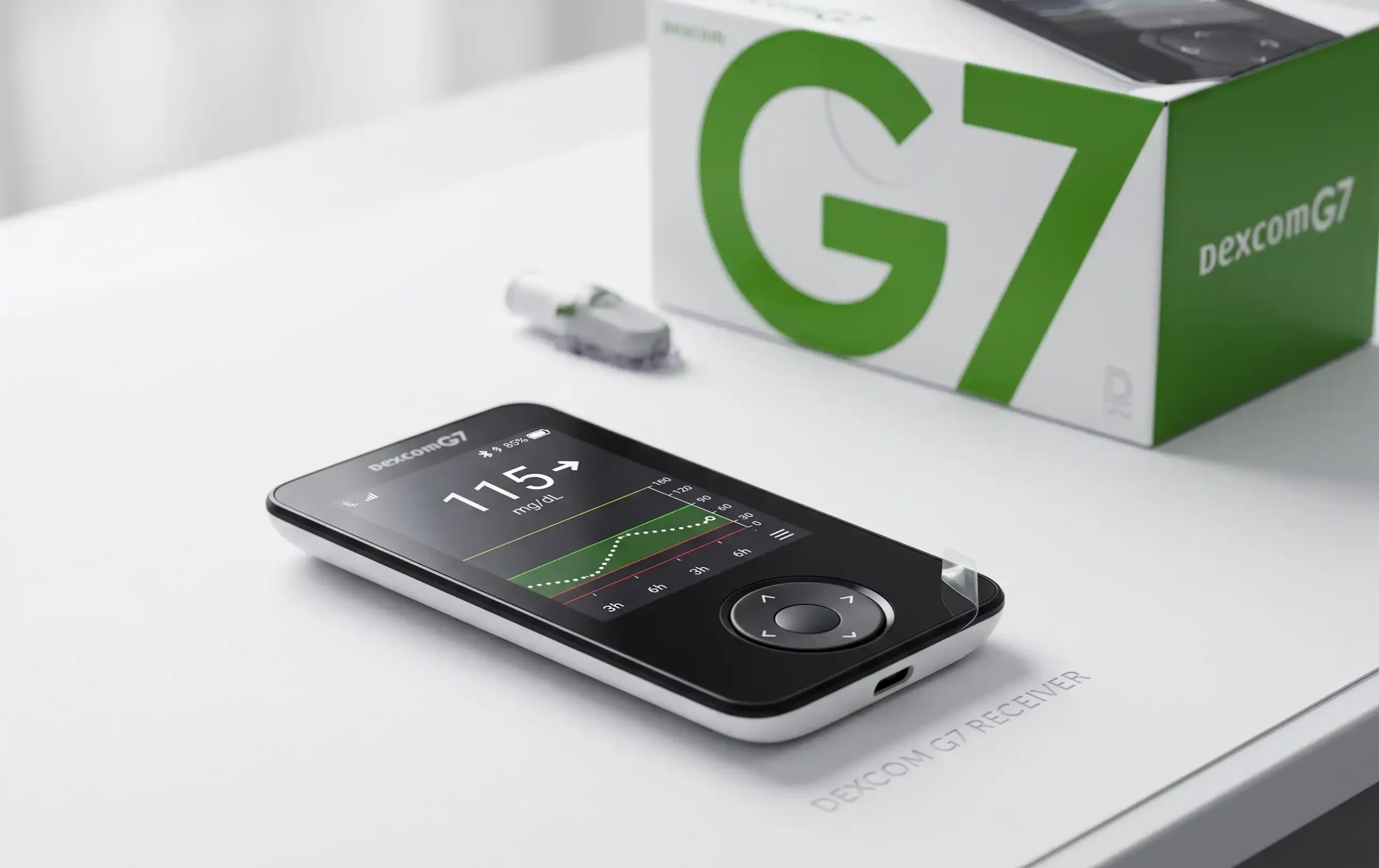
Dexcom G7 Receiver:
If you are considering a Dexcom G7 receiver or already use one, one of the most common questions is: “Dexcom G7 receiver how long does it last?” This is an important question because continuous glucose monitoring systems are something that many people rely on day and night.
The good news is that the Dexcom G7 receiver is designed to be a reusable display device rather than a disposable component. Depending on usage and other factors, its rechargeable battery can last for approximately 7 days on a single charge. The receiver is designed for continuous use, and Dexcom offers a one-year standard warranty for it.
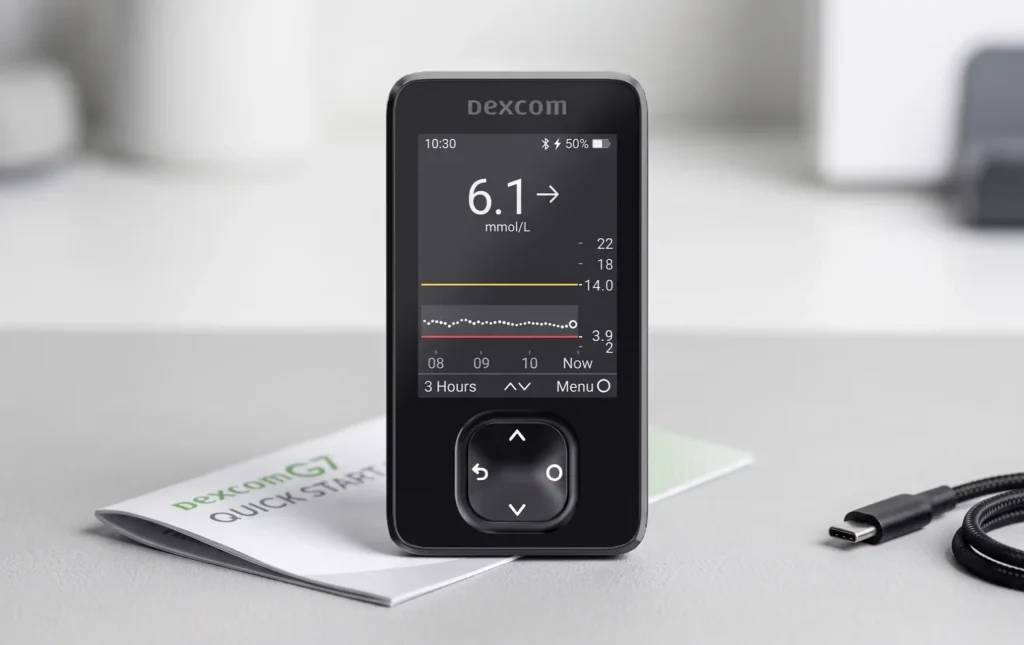
It is also important not to confuse the receiver with the Dexcom G7 sensor. The sensor is the small component worn on the body and is replaced regularly. The standard Dexcom G7 sensor is intended to be worn for up to 10 days, followed by a 12-hour grace period. The newer Dexcom G7 15-Day system extends sensor use to 15 days and also provides an additional 12-hour grace period.
For people looking for dependable diabetes-management equipment, understanding the difference between the receiver, sensor, and other components can make using the system much easier.
How Long Does the Dexcom G7 Receiver Last?
The answer to this depends on what you mean by “last.”
Battery life
The Dexcom G7 receiver battery can last up to 7 days on a single charge. Actual battery performance can vary depending on how the receiver is used and other operating conditions.
Overall receiver lifespan
The receiver is not designed to be replaced every 10 or 15 days like the sensor. It is a reusable electronic display device. Dexcom provides a one-year standard warranty for the receiver from the date of shipment/delivery under its stated warranty terms.
Sensor life
The standard Dexcom G7 sensor is intended to be worn for up to 10 days, with a 12-hour grace period. The Dexcom G7 15 Day sensor is intended for up to 15 days, also with a 12-hour grace period.
This distinction is essential:
Receiver = reusable display device
Sensor = disposable component replaced regularly
What Is the Dexcom G7 Receiver?
The Dexcom G7 receiver is a dedicated display device that allows users to view glucose information from their Dexcom G7 continuous glucose monitoring system.
Instead of relying exclusively on a compatible smartphone, a person can use the receiver to see glucose readings, trends, and alerts.
Dexcom states that users can choose to use:
- Only the Dexcom G7 app
- Only the Dexcom G7 receiver
- Use both the app and receiver simultaneously.
This flexibility can be especially useful for people who prefer a dedicated medical device instead of depending entirely on their personal smartphone.
For some patients, having a separate receiver can also provide peace of mind. A smartphone may run out of battery, be unavailable, or have compatibility limitations. A dedicated receiver provides another way to view CGM information.
How Long Does a Dexcom G7 Receiver Battery Last?
One of the most frequently asked questions about the Dexcom G7 receiver concerns battery life.
According to Dexcom, the receiver battery can last up to 7 days on a single charge.
However, “up to” is important. Battery performance can vary depending on factors such as:
- How frequently the receiver is used
- Screen activity
- Alerts and notifications
- Wireless communication
- Battery condition
- Environmental conditions
- Age and general condition of the device
Because of this, users should not assume that every receiver will provide exactly seven full days of operation every time.
If you depend on the receiver for continuous glucose monitoring, developing a regular charging routine is a practical habit.
A Simple Charging Routine
Consider charging your receiver:
- At a convenient time each day or as needed.
- Before leaving home for an extended period.
- Before traveling.
- Before going to bed if the battery is getting low.
- Whenever the receiver indicates that charging is needed.
Keeping the charging cable and power adapter in a known location can also make everyday use easier.
Does the Dexcom G7 Receiver Need to Be Replaced Every 10 Days?
This is one of the most important things to understand about the Dexcom G7 system.
The 10-day period applies to the standard G7 sensor, not the receiver.
Dexcom indicates that the standard G7 sensor is designed for up to 10 days of wear, followed by a 12-hour grace period.
After the sensor session ends, the sensor is replaced according to the manufacturer’s instructions. The receiver remains available for use with compatible sensors.
The newer Dexcom G7 15 Day system has a longer sensor wear period. Dexcom says its sensor is indicated for up to 15 days, followed by a 12-hour grace period.
When someone asks, “How long does my Dexcom G7 last?” it’s helpful to first clarify what they mean by “last,” since they could be asking about the sensor’s wear time, the receiver’s lifespan, or the overall system.
- The receiver battery
- The receiver itself
- The G7 sensor
- The G7 15 Day sensor
These are different components with different lifespans.
How Long Does a Dexcom G7 Sensor Last?
The standard Dexcom G7 sensor is indicated for up to 10 days of wear, with a 12-hour grace period afterward.
During the grace period, the sensor can continue operating, giving users additional flexibility when transitioning to their next sensor.
Dexcom explains that the remaining grace period can be viewed on the display device, including the receiver.
This can be helpful for people who do not want their sensor change to occur at an inconvenient time.
What About Dexcom G7 15 Day?
Dexcom also offers the Dexcom G7 15 Day system.
The G7 15 Day sensor is indicated for up to 15 days of wear, followed by a 12-hour grace period.
The G7 and G7 15 Day systems are different sensor products, so users should check their packaging and product instructions to determine which system they have.
Dexcom states that the G7 and G7 15 Day systems use the same Dexcom G7 app and receiver.
Dexcom G7 Receiver vs. G7 Sensor
Understanding the difference makes the lifespan question much simpler.
| Component | How long does it last? |
| Dexcom G7 receiver battery | Up to about 7 days per charge |
| Dexcom G7 receiver | Reusable; 1-year standard warranty |
| Standard Dexcom G7 sensor | Up to 10 days + 12-hour grace period |
| Dexcom G7 15 Day sensor | Up to 15 days + 12-hour grace period |
The receiver is therefore a long-term reusable component, while the sensor is a regularly replaced component.
Why the Dexcom G7 Receiver Can Be Helpful
Many people appreciate having a dedicated receiver because it provides a straightforward way to view CGM information.
1. Dedicated Display
The receiver is designed specifically for the Dexcom CGM system. Users do not necessarily have to depend on their personal smartphone.
2. Glucose Trends
The receiver displays glucose information and trends so users can observe how glucose levels are changing.
3. Alerts
The receiver can provide important CGM alerts. Users should configure alerts according to their healthcare professional’s recommendations and the manufacturer’s instructions.
4. Portable Design
The receiver is designed to be small and lightweight, making it practical to carry throughout the day. Dexcom describes it as a lightweight display option for the G7 system.
5. Alternative to a Smartphone
Dexcom allows users to use the receiver instead of, or alongside, a compatible smartphone.
This can be particularly convenient for people who prefer a dedicated device.
How to Make Your Dexcom G7 Receiver Battery Last Longer
Although the receiver can provide up to about seven days of battery life on a charge, everyday habits can help you avoid unexpected low-battery situations.
Charge before extended trips
If you are traveling, make sure the receiver is adequately charged before leaving.
Keep the charging accessories together
Store the receiver cable and adapter somewhere easy to find.
Avoid unnecessary battery depletion
If you know you will be away from a charging source for a long time, start with a sufficiently charged receiver.
Monitor the battery level
Do not wait until the battery is completely depleted if you depend on the receiver for glucose information.
Protect the device
Keeping the receiver clean, dry, and protected from unnecessary drops or impacts can help preserve the device.
Can You Use the Dexcom G7 Without the Receiver?
Yes, depending on your situation and whether you have a compatible smartphone.
Dexcom states that users have the option of using only the Dexcom G7 app on a compatible smart device, only the receiver, or both at the same time.
However, compatibility requirements apply to smartphones and other connected devices. Users should check Dexcom’s current compatibility information before relying on a particular phone or device.
For some insurance situations, there may also be specific equipment requirements. Dexcom notes that Medicare coverage requires use of a receiver in certain circumstances.
What Happens If the Dexcom G7 Receiver Stops Working?
If your receiver develops a problem, do not assume that the sensor itself is defective.
First, check basic issues such as:
- Battery level
- Charging connection
- Receiver settings
- Sensor connection
- Bluetooth or wireless communication
- Distance between the receiver and sensor
- Any error messages displayed on the receiver
Dexcom explains that signal loss can occur when the display device is too far from the sensor or when something such as a wall or water interferes with communication.
If troubleshooting does not resolve the issue, contacting Dexcom technical support may be appropriate.
How Long Is the Dexcom G7 Receiver Warranty?
Dexcom’s standard warranty information states that the receiver has a one-year warranty from the date of shipment/delivery, depending on the applicable terms.
The warranty is different from the expected useful life of the device.
In other words, a one-year warranty does not necessarily mean the receiver is designed to stop working after one year. It means Dexcom provides warranty coverage for qualifying defects during the specified warranty period.
If you experience a receiver problem, check your purchase information and the applicable Dexcom warranty terms.
What Is the Difference Between a Dexcom G7 Receiver and Transmitter?
Another common source of confusion is the word “transmitter.”
The Dexcom G7 system is different from older CGM designs that used a separate reusable transmitter.
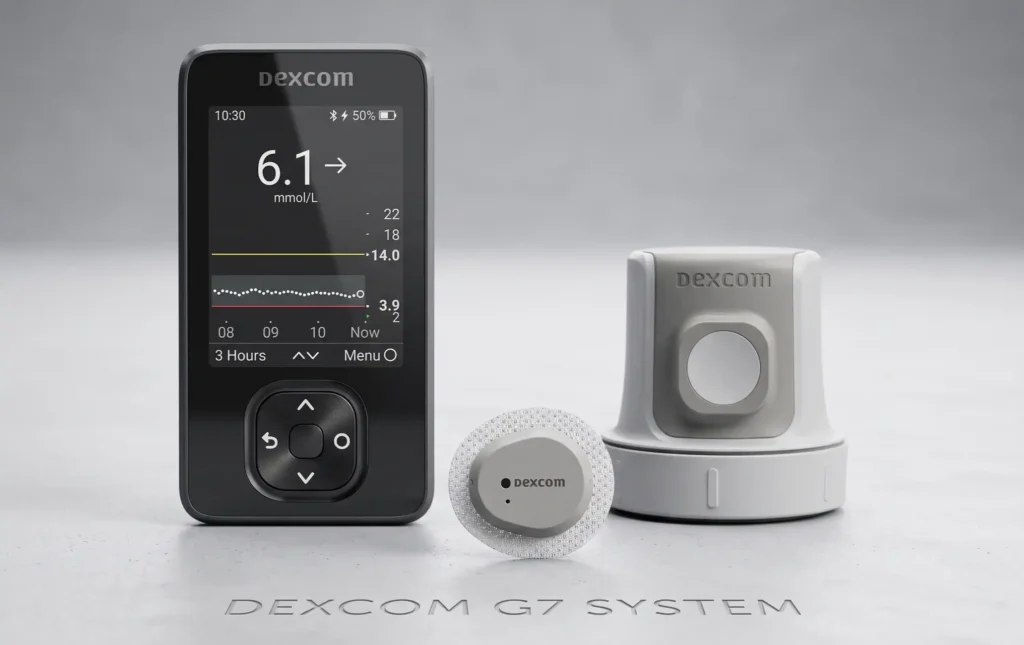
With the G7, the sensor and transmitter are integrated into the wearable sensor system.
The receiver, on the other hand, is the separate display device used to view glucose information.
This means you should not treat the receiver as though it were a traditional three-month transmitter.
Dexcom’s current G7 information explains that the G7 sensor communicates glucose readings to the compatible display device, including the receiver.
How Often Should You Replace a Dexcom G7 Receiver?
There is no simple “replace every X days” schedule for the receiver.
Unlike the disposable sensor, the receiver is intended to be reused.
Replacement may become necessary if:
- The device is damaged.
- The battery no longer performs adequately.
- The receiver develops a technical problem.
- The receiver cannot communicate properly with the compatible G7 system.
- The device is no longer supported or compatible with the system you are using.
- Dexcom or your healthcare provider recommends a replacement.
Always follow the current manufacturer’s guidance for your specific receiver.
Tips for Caring for Your Dexcom G7 Receiver
Taking care of a medical device does not have to be complicated.
Keep it dry
The Dexcom G7 sensor is designed to withstand water exposure under specified conditions, but the receiver is not waterproof. Dexcom specifically advises users to keep the receiver out of water while swimming, bathing, or showering.
Protect it from drops
Avoid leaving the receiver where it can easily fall from a counter, table, or bedside surface.
Avoid extreme conditions
Store and use the receiver according to the manufacturer’s environmental instructions.
Keep the screen clean
Use appropriate cleaning practices recommended by the manufacturer rather than applying harsh chemicals or excessive moisture.
Charge it regularly
A reliable charging routine reduces the chance of discovering an empty battery when you need your glucose information.
Why Battery Life Matters for CGM Users
Continuous glucose monitoring is not simply about seeing a number once or twice a day. For many users, CGM information helps them understand glucose patterns throughout the day.
A low receiver battery can therefore become inconvenient at the wrong time.
Imagine getting ready for work, school, travel, or an appointment and discovering that the receiver has little or no charge. Planning ahead can prevent that stressful situation.
A simple routine—checking the battery level and charging the receiver when necessary—can make daily CGM use more comfortable.
Dexcom G7 Receiver for Everyday Diabetes Management
The Dexcom G7 receiver can be a practical option for people who want a dedicated CGM display.
Instead of constantly relying on a smartphone, users can carry the receiver and view their glucose information through the dedicated device.
For individuals who prefer simplicity, this can make their daily routine feel more manageable.
It can also provide another option when a smartphone is unavailable, incompatible, being charged, or otherwise inconvenient to use.
The right CGM setup ultimately depends on the individual’s medical needs, device compatibility, insurance requirements, and recommendations from their healthcare professional.
Frequently Asked Questions About the Dexcom G7 Receiver
How long does the Dexcom G7 receiver last on one charge?
The Dexcom G7 receiver battery can last up to approximately seven days on a single charge, although actual battery life can vary with use and other conditions.
Does the Dexcom G7 receiver need to be replaced every 10 days?
No. The 10-day lifespan refers to the standard G7 sensor, not the receiver. The receiver is reusable.
How long does a Dexcom G7 sensor last?
The standard Dexcom G7 sensor is indicated for up to 10 days, followed by a 12-hour grace period.
How long does the Dexcom G7 15 Day sensor last?
The Dexcom G7 15 Day sensor is indicated for up to 15 days, followed by a 12-hour grace period.
Does the Dexcom G7 receiver have a warranty?
Yes. Dexcom’s standard warranty information lists a one-year warranty for the receiver from shipment/delivery, subject to applicable terms.
Can I use Dexcom G7 without a receiver?
Yes. Dexcom says users can use the G7 app on a compatible smart device, use only the receiver, or use both.
Is the Dexcom G7 receiver waterproof?
No. Dexcom advises keeping the receiver out of water. The sensor has separate water-resistance specifications.
Can I use the same receiver with Dexcom G7 15 Day?
Dexcom states that the G7 15 Day system is compatible with the current G7 receiver after the receiver’s software is updated as required.