


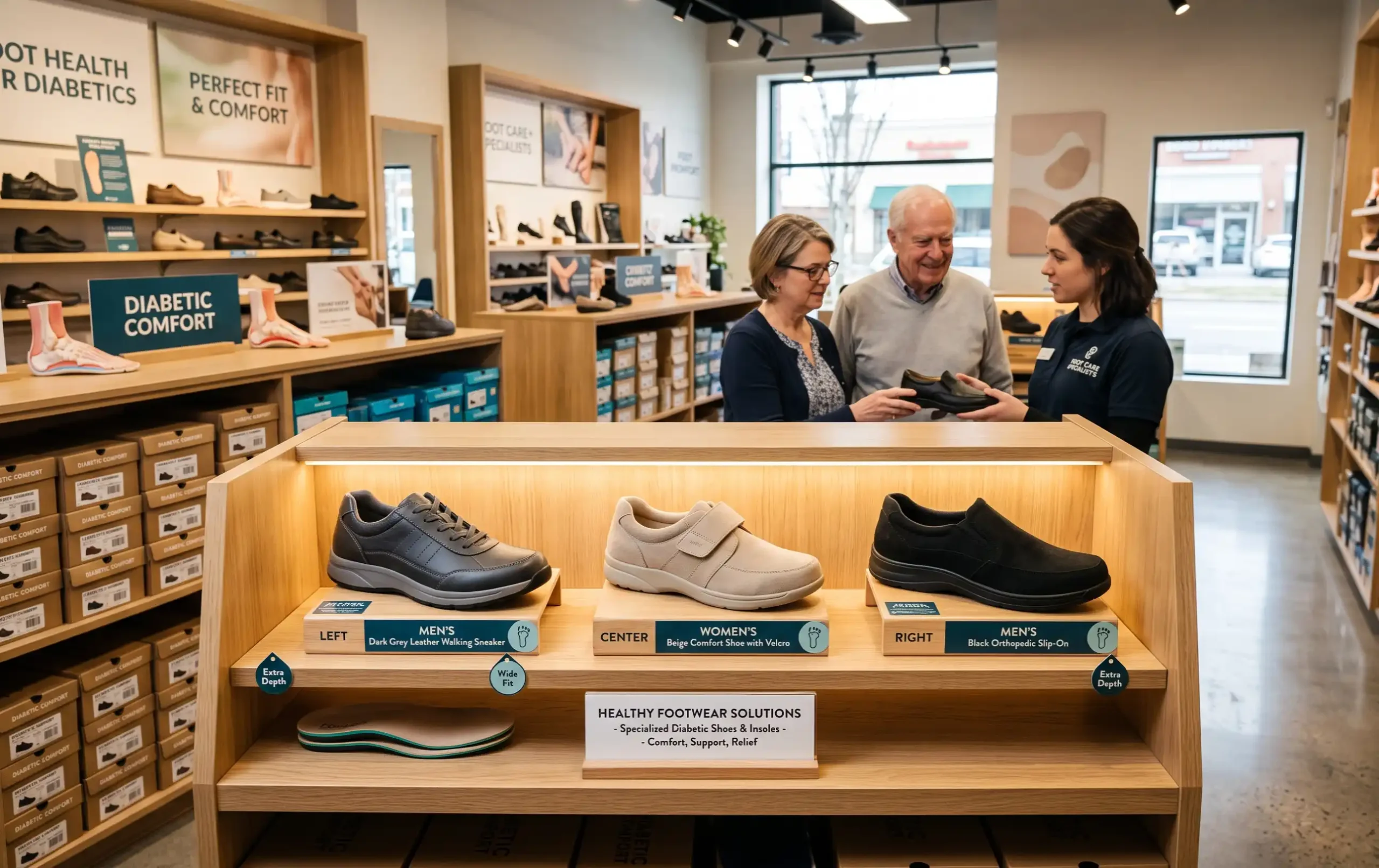
Finding the right footwear can become an important part of everyday diabetes care. If you live in Port Morris, the Bronx, or nearby New York communities and are searching for diabetic shoes Port Morris NY, it helps to choose footwear designed with comfort, fit, support, and foot protection in mind.
Diabetes can affect the feet in different ways. Some people experience numbness or tingling, while others may develop calluses, pressure areas, swelling, or changes in foot shape. Because of this, ordinary shoes may not always provide the space and protection that a person with diabetes needs.
Alfa Healthcare Supply Inc. provides diabetic and orthopedic footwear solutions for patients throughout New York, including the Bronx. Its footwear collection includes therapeutic diabetic shoes, orthopedic footwear, and insert options designed for different foot-care needs. The company serves patients and healthcare providers across the Bronx, Queens, Brooklyn, Long Island, and Westchester.
For someone searching for diabetic shoes Port Morris NY, the goal should not simply be to find a shoe that looks good. The better goal is to find footwear that fits properly, provides enough room, feels comfortable, and works with your healthcare provider’s recommendations.
Diabetes can increase the risk of foot problems, particularly when a person has nerve damage, poor circulation, a history of ulcers, or other diabetes-related foot conditions.
Reduced sensation can make it harder to notice a small problem inside a shoe. A rubbing seam, tight toe area, or pressure point may not be immediately noticeable. Over time, repeated pressure or friction can contribute to skin problems.
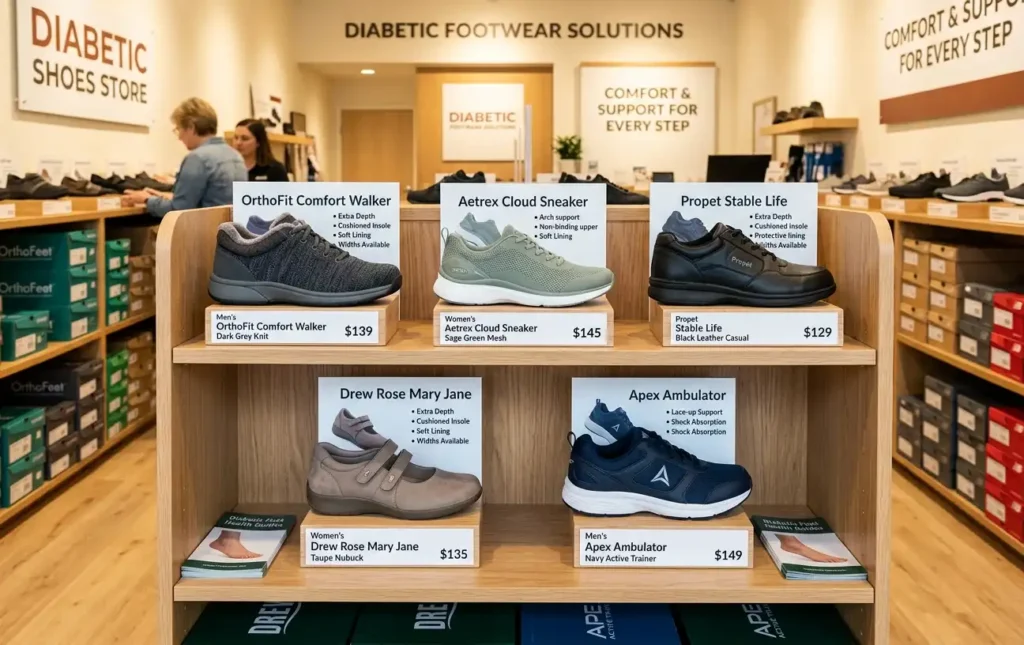
That is why footwear deserves attention as part of a broader foot-care routine.
Good therapeutic footwear may provide:
However, shoes are not a replacement for medical care. If you notice a wound, blister, discoloration, swelling, drainage, or another concerning change in your foot, contact your healthcare professional promptly.
Diabetic shoes, sometimes called therapeutic shoes, are specially designed footwear intended to help protect the feet of eligible people with diabetes and certain diabetes-related foot conditions.
They are different from ordinary athletic or casual shoes because therapeutic footwear may have features such as extra depth, appropriate width options, removable inserts, and construction intended to accommodate therapeutic inserts.
Alfa Healthcare Supply’s diabetic and orthopedic footwear collection includes A5500 therapeutic diabetic shoes, custom insert options, orthopedic footwear, and post-operative or healing footwear.
The exact shoe a person needs depends on their foot condition, medical requirements, size, width, and recommendations from their healthcare professional.
If you are comparing diabetic shoes Port Morris NY, consider more than the appearance of the shoe.
A shoe should fit comfortably without squeezing the toes or creating unnecessary pressure.
The length and width both matter. A shoe that is too short may press against the toes, while a shoe that is too narrow can create pressure along the sides of the foot.
A roomy toe box can provide additional space for the toes and may be especially helpful when a person has certain foot conditions.
Your healthcare provider or qualified footwear professional can help determine what type of toe area is appropriate for your feet.
Some therapeutic shoes provide additional internal depth. This can be useful when an individual needs therapeutic inserts or has a foot shape that requires more room.
Medicare’s requirements for depth shoes include specific construction criteria, including additional depth intended to accommodate qualifying inserts.
Some therapeutic shoes are designed to work with removable inserts.
Depending on your medical needs, your healthcare provider may recommend particular inserts to provide cushioning or help redistribute pressure.
Shoes should stay securely on the feet while walking.
Laces, adjustable straps, or other suitable closure systems can help achieve a more secure fit. The best choice depends on your mobility, hand function, foot shape, and personal needs.
A smooth and comfortable interior can help reduce unnecessary rubbing and irritation.
This is particularly important for people who have reduced sensation because they may not immediately feel friction or pressure.
When people hear the term “diabetic shoes,” they may think only about comfort.
Comfort is certainly important, but therapeutic footwear can have a larger purpose.
People with diabetes may have an increased risk of foot complications. According to Medicare, therapeutic shoes and inserts may be covered under Part B for eligible people with diabetes and severe diabetes-related foot disease.
Medicare identifies several conditions that can support eligibility, including previous foot ulceration, pre-ulcerative calluses, peripheral neuropathy with callus formation, poor circulation, foot deformity, and certain amputations.
This does not mean every person with diabetes automatically qualifies for therapeutic footwear.
Eligibility and medical necessity must be established according to the applicable requirements.
Your doctor or foot-care professional may recommend therapeutic footwear if you have diabetes together with certain foot-related risks or conditions.
Examples can include:
The appropriate footwear should be selected based on your individual condition rather than simply choosing the most expensive or most heavily cushioned shoe.
A diabetic shoe and a therapeutic insert often work together.
An insert can provide additional cushioning or help distribute pressure across the foot. Some people may need custom-molded or other qualifying inserts based on their condition.
Medicare currently describes coverage for either one pair of extra-depth shoes with additional qualifying inserts or one pair of custom-molded shoes with inserts and additional inserts, when eligibility requirements are met.
CMS also provides detailed coding and documentation requirements for therapeutic shoes and inserts.
This is one reason it is important to work with qualified healthcare professionals and a supplier familiar with therapeutic footwear requirements.
Buying diabetic shoes in the correct size is essential.
Do not assume that your usual shoe size will always be the correct size for therapeutic footwear.
Feet can change over time. Swelling, deformities, previous injuries, and changes related to diabetes can affect how a shoe fits.
When selecting footwear, consider:
If possible, follow professional sizing guidance instead of relying only on the size printed inside your old shoes.
Alfa Healthcare Supply provides sizing guidance and footwear support as part of its therapeutic footwear services.
Before putting on new footwear, take a moment to check your feet.
Look for:
People with reduced sensation may not feel an injury right away, so visual inspection can be especially important.
Medicare also recognizes diabetes-related foot care for eligible people with diabetic peripheral neuropathy and loss of protective sensation.
If you find a concerning problem, do not simply cover it with a new shoe and continue walking. Ask your healthcare professional for advice.
Even a well-designed therapeutic shoe may feel different from your old footwear.
Instead of immediately wearing new shoes for an entire day, follow the instructions provided by your healthcare professional or footwear provider.
Pay attention to how your feet feel and look after wearing the shoes.
If you notice repeated rubbing, pressure, redness, or discomfort, stop and have the fit evaluated.
A shoe should not be causing persistent pressure or injury.
When someone searches for diabetic shoes Port Morris NY, they are often looking for convenient access to appropriate footwear without having to travel far from home.
Port Morris is located in the Bronx, and patients may also search surrounding neighborhoods when looking for diabetic footwear, DME products, or other healthcare supplies.
A local-focused medical supply provider can make the process easier by helping patients understand available products, sizing, documentation, ordering, and delivery options.
Alfa Healthcare Supply Inc. is based in Floral Park, New York, and its website states that it serves the Bronx along with Queens, Brooklyn, Long Island, and Westchester.
Alfa Healthcare Supply Inc. provides medical supplies and durable medical equipment for patients, caregivers, and healthcare providers throughout New York.
Its footwear selection includes brands such as Dr. Comfort, Anodyne, and Propet, along with therapeutic diabetic shoes, orthopedic footwear, and insert options.
The company’s website also describes professional sizing support and assistance with documentation related to therapeutic footwear.
For patients who need more than footwear, Alfa’s broader catalog includes diabetic supplies, incontinence supplies, orthopedic supplies, DME equipment, respiratory supplies, urological supplies, and other healthcare products.
People searching for a hospital supply store Port Morris NY may need more than one healthcare product.
For example, a patient recovering at home may need mobility equipment, respiratory equipment, diabetic supplies, orthopedic products, or other home-care items.
Alfa Healthcare Supply offers a broad range of DME and medical supplies, including mobility aids, respiratory devices, orthopedic supports, diabetic supplies, and incontinence products.
This can be useful for patients and caregivers who prefer working with one healthcare supply provider for multiple needs.
A medical supply store Port Morris NY search may also come from patients managing long-term health needs at home.
Home healthcare often requires reliable access to everyday products.
Depending on the individual’s needs, these may include:
Alfa Healthcare Supply’s product catalog includes these types of healthcare categories and is designed to serve patients across multiple New York communities.
A search for surgical supply store Port Morris NY may relate to recovery after an operation, injury, or medical procedure.
Surgical and post-operative needs can vary significantly from one patient to another. Some people may need specialized footwear, mobility equipment, wound-care products, or other supplies recommended by their healthcare team.
Alfa’s footwear collection includes post-operative and healing shoes for certain situations, alongside orthopedic and therapeutic footwear.
The right product should always be based on the instructions of the treating healthcare professional.
This is one of the most common questions patients have.
Medicare Part B can cover therapeutic shoes and inserts for eligible people with diabetes and severe diabetes-related foot disease. However, specific eligibility, documentation, prescribing, fitting, and supplier requirements apply.
Medicare says the doctor who treats your diabetes must certify that you need therapeutic shoes or inserts. A podiatrist or another qualified doctor must order them, and the footwear must be obtained through a qualified provider.
Coverage is not automatic simply because someone has diabetes.
Before ordering, ask your healthcare provider and supplier to confirm:
Medicare currently states that, after the Part B deductible, eligible patients generally pay 20% of the Medicare-approved amount when the supplier accepts assignment.
Insurance rules can change, so patients should confirm current benefits before placing an order.
Therapeutic diabetic footwear has specific documentation requirements.
CMS emphasizes that proper medical documentation is important for Medicare claims. Its current policy includes requirements related to diabetes, qualifying foot conditions, physician documentation, orders, and timing of visits.
This is important because a patient may qualify medically but still experience a claim problem if required documentation is missing or incomplete.
A qualified supplier can help explain the process, but your healthcare provider is responsible for the applicable clinical certification and medical documentation.
If you are looking for diabetic shoes Port Morris NY, the process can be simple when you follow the correct steps.
Discuss your foot health and ask whether therapeutic footwear is appropriate.
Your provider can identify conditions such as neuropathy, calluses, deformities, circulation problems, or previous ulcers.
If therapeutic footwear is medically necessary, follow your provider’s instructions regarding the required order and documentation.
Look for a supplier experienced with diabetic footwear and insurance requirements.
Do not choose footwear based only on appearance. Proper length, width, depth, and insert compatibility matter.
After receiving your shoes, continue your regular foot-care routine and monitor for pressure or skin changes.
Before purchasing therapeutic footwear, consider asking:
Getting answers before ordering can help prevent avoidable problems.
Living with diabetes can sometimes make ordinary activities feel more complicated.
Something as simple as choosing shoes can involve questions about pressure, fit, inserts, insurance, and foot health.
The good news is that you do not have to make the decision alone.
Your doctor, podiatrist, and qualified medical footwear supplier can help you understand what is appropriate for your feet.
The right footwear should feel like part of your everyday routine—not something you have to constantly think about.
Alfa Healthcare Supply Inc. focuses on medical supplies, durable medical equipment, and therapeutic healthcare products for patients and healthcare professionals throughout New York.
The company states that it is listed in the NPI registry and partners with Parachute Health for secure ordering.
For diabetic footwear, Alfa offers therapeutic diabetic shoes, orthopedic shoes, inserts, and several established footwear brands. Its service area includes the Bronx and other New York communities.
Patients looking for diabetic footwear can explore the available options and discuss their specific requirements with their healthcare provider and supplier.
Finding diabetic shoes Port Morris NY does not have to be difficult.
The most important thing is to choose footwear based on your individual foot health, not simply on appearance or price. Proper fit, adequate space, appropriate inserts, and professional guidance can all be important when selecting therapeutic footwear.
If you are also searching for a hospital supply store Port Morris NY, medical supply store Port Morris NY, or surgical supply store Port Morris NY, consider a healthcare supplier that can support more than one part of your care routine.
Alfa Healthcare Supply Inc. provides diabetic and orthopedic footwear along with a broad range of medical supplies and DME products for patients throughout the Bronx and New York.
Before purchasing therapeutic footwear, speak with your doctor or podiatrist about your specific foot-care needs and confirm insurance requirements with your supplier.
Your feet carry you through every part of your day. Giving them the right support is a small step that can make everyday life more comfortable and confident.
Patients in Port Morris and the Bronx can explore therapeutic footwear through medical supply providers serving the Bronx and greater New York area. Alfa Healthcare Supply Inc. offers diabetic and orthopedic footwear and serves patients throughout the Bronx.
Yes. Therapeutic diabetic shoes may provide additional depth, appropriate width, removable inserts, and other features intended to accommodate certain diabetes-related foot needs.
No. Not everyone with diabetes automatically needs or qualifies for therapeutic footwear. Your healthcare provider should evaluate your foot health and determine whether therapeutic footwear is appropriate.
Medicare Part B covers therapeutic shoes and inserts for eligible people with diabetes and severe diabetes-related foot disease, subject to specific requirements.
For eligible patients, Medicare’s benefit generally allows either one pair of extra-depth shoes with three additional pairs of qualifying inserts or one pair of custom-molded shoes with two additional pairs of qualifying inserts per calendar year.
Therapeutic footwear covered by Medicare requires an order from a qualified physician or practitioner and certification of medical need by the doctor managing the patient’s diabetes.
Therapeutic footwear and appropriate inserts may be designed to accommodate the foot and redistribute pressure. However, the correct product depends on your individual condition and should be selected with professional guidance.
Stop wearing them if they are causing significant or persistent pressure, rubbing, or skin irritation and contact your healthcare professional or footwear provider for evaluation.
Sometimes, but it depends on the shoe and the insert. Ask your healthcare professional or qualified footwear provider before using an existing insert.
Yes. Alfa Healthcare Supply’s catalog includes diabetic supplies, DME equipment, orthopedic supplies, incontinence products, respiratory supplies, urological supplies, and other healthcare products.
This article is for general educational purposes only. It is not a substitute for medical diagnosis, treatment, or personalized advice from a physician, podiatrist, or other qualified healthcare professional. Medicare and insurance coverage depends on individual eligibility and current program requirements. Always confirm coverage and medical suitability before purchasing therapeutic footwear.