


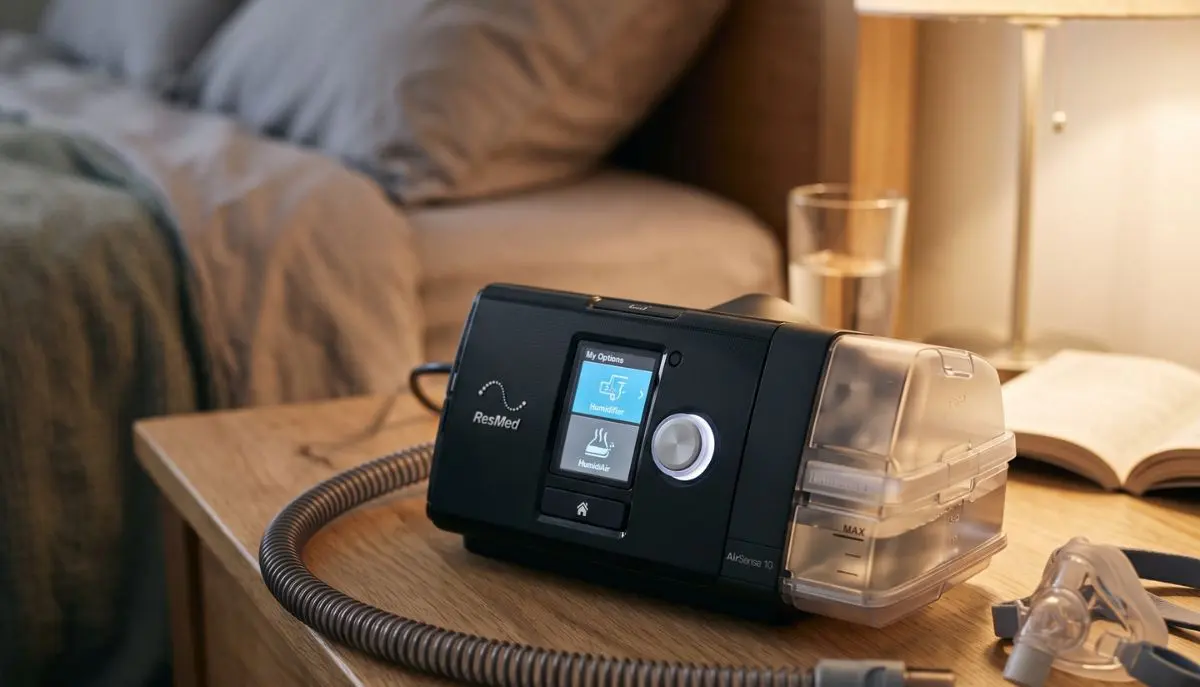
Does ResMed AirSense 10 Have Heated Humidifier
If you have the ResMed AirSense 10 CPAP machine, you might ask yourself, “Does ResMed AirSense 10 have heated humidifier technology?” Yes it is! ResMed AirSense 10 therapy devices can be equipped with a built-in humidifier called HumidAir™ that humidifies the air you breathe while using your CPAP machine.
Humidification is a feature of many CPAP machines that will make nighttime therapy more comfortable for many CPAP users. Some of the side effects of PAP can include dry mouth, dry nose and irritated nose, nasal congestion and other unpleasant sensations. Using a heated humidifier will help to increase the moisture content of airflow and help with comfort.
The AirSense 10 can be fitted with ResMed’s built-in HumidAir heated humidifier. Heated humidification is also meant to minimize dryness and congestion that can occur during CPAP therapy, ResMed states.
We know that sometimes it can be confusing to select and maintain a CPAP machine at Alfa Healthcare Supply Inc. This guide provides a detailed explanation on how the AirSense 10 humidifier operates, how to use it, and how heated tubing can be used in conjunction with the humidifier.
Does ResMed AirSense 10 Have Heated Humidifier?
Yes, the ResMed AirSense 10 also comes with HumidAir heated humidifiers.
HumidAir humidifier does not need to be used in conjunction with an external humidifier and is attached to the side of the AirSense 10. HumidAir is an integrated humidification system from ResMed for Air10.
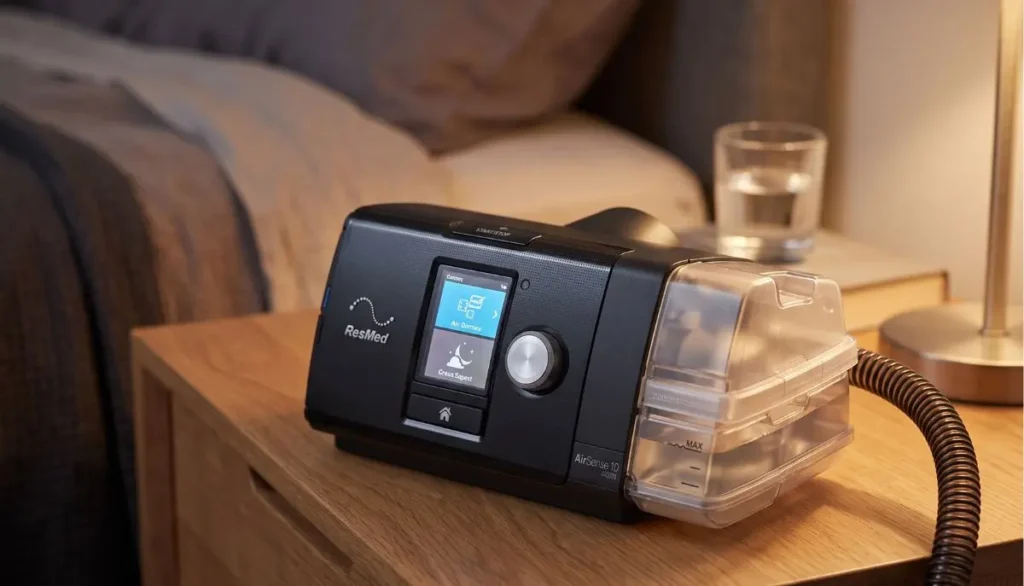
It is important to be aware, however, that the appearance of an AirSense 10 setup will not always be the same. Your AirSense 10 may include a humidification accessory such as a water tub with or without a side cover depending on the device configuration and accessories that are supplied with it.
AirSense 10 devices with HumidAir are described in ResMed’s documentation, and the instructions for filling and inserting the humidifier water tub are provided.
What Does the Heated Humidifier Do?
The HumidAir system preheats water in the humidifier tub to increase the moisture within the CPAP airflow.
The humidifier may help to provide more moisture to the air while you are sleeping, instead of breathing relatively dry pressurized air all night.
This can be especially helpful if you experience:
- Dry nose
- Dry mouth
- Nasal irritation
- Nasal congestion
- Throat dryness
- General discomfort from dry CPAP air
According to ResMed, heated humidification should be used to relieve dryness and congestion, and to make the CPAP treatment more comfortable.
How Does the AirSense 10 Heated Humidifier Work?
The procedure is quite simple.
You fill the matching water tub with the prescribed water and insert it into the AirSense 10 and begin treatment with CPAP therapy.
The humidifier is used to add moisture to the air that will pass through the tubing to your mask.
The amount of humidity can also be adjusted through the machine’s settings. ResMed says that AirSense 10 sleepers can set the humidity level from Off to 1-8 (1 is the lowest humidity setting and 8 is the highest).
This is helpful as since everyone has varying comfort requirements.
Some people may like a lower level of humidity, some people may require more humidity to stop waking up with a dry mouth or nose.
Is the HumidAir Humidifier Built Into the AirSense 10?
Here lies the source for some confusion.
HumidAir humidifier is an integrated component for AirSense 10 devices, but it has a removable water tub. HumidAir is ResMed’s integrated humidifier system for Air10 devices, ResMed says.
The tub for water can be taken out to be cleaned and maintained.
HumidAir replacement water tubs are also available for ResMed’s AirSense 10 and AirCurve 10 models.
So, when you’re asked, does ResMed AirSense 10 have heated humidifier, the best answer is:
Yes. AirSense 10 therapy devices are compatible with the built-in HumidAir heated humidification system. Depending on the machine configuration, it may come with a different amount of equipment.
How Do You Use the AirSense 10 Humidifier?
Using the humidifier is straightforward.
Step 1: Remove the Water Tub
Remove the humidifier water tub from the side of the AirSense 10.
Step 2: Open the Tub
Open the water tub carefully.
Step 3: Add Water
Fill the tub with the recommended water up to the maximum water-level marking.
ResMed recommends appropriate water for the humidifier and provides specific guidance in its documentation.
Step 4: Close the Tub
Make sure the water tub is properly closed.
Step 5: Insert the Tub
Slide the humidifier tub back into the AirSense 10.
Step 6: Check Your Humidity Setting
Use the AirSense 10 menu to check the humidity level and adjust it according to your comfort.
If you experience dryness, you may need more humidity. If you notice excess moisture or water collecting in the mask or tubing, the humidity may need adjustment.
Does AirSense 10 Need Heated Tubing?
Not necessarily.
AirSense 10 can be used to humidify via the HumidAir system, but heated tubing can be used for even more of a comfort.
ResMed’s ClimateLineAir™ heated tubing is made to fit ResMed’s AirSense 10 and AirCurve 10 systems. It is used to keep humidified air at a desired temperature on its way through the tube.
This can help to minimize condensation, also known as rainout.
Humidifier vs. Heated Tubing
These two components perform different jobs:
| Component | Main Purpose |
| HumidAir heated humidifier | Adds moisture to the CPAP air |
| ClimateLineAir heated tubing | Helps maintain air temperature through the tubing |
| CPAP mask | Delivers air to the user |
| Water tub | Holds water for humidification |
Using a HumidAir humidifier does not automatically mean that you must use heated tubing.
HumidAir can be combined with ClimateLineAir for a more controlled humidification experience, though. ClimateLineAir is part of ResMed’s Climate Control solution on AirSense 10 and AirCurve 10 devices, the company says.
What Happens If the Humidifier Runs Out of Water?
When the water tub is empty the AirSense 10 may still run, but will not humidify.
According to ResMed, the device will not work with water in the tub, but humidification will cease.
When operating with dry machine, one may observe a higher level of dryness.
This is why many CPAP users will go to bed with a view to the water level.
Can You Turn Off the AirSense 10 Humidifier?
Yes.
It is possible to set the humidity level to Off or to a desirable level.
Humidification may not be necessary for some users each night. Others may prefer to have humidification on for a more restful night’s sleep.
If your CPAP therapy becomes dry, you may want to talk to your health care provider or equipment supplier about the problem before making significant changes to your therapy.
What If There Is Water in the CPAP Mask or Tube?
In the mask or tubing, Water droplets may be an indication of condensation, also known as rainout.
This can be caused by the warm humidified air setting up the tubing.
ResMed suggests using ClimateLineAir heated tubing in combination with Climate Control to help control temperature and humidity. Changing the Climate Control settings might help if there is further condensation.
A simple way to think about it is:
More humidity + cooler tubing = greater possibility of condensation.
Heated tubing helps keep the humidified air warmer as it moves toward the mask.
What Humidity Level Should You Use?
No one can tell you exactly how humid it is that is ideal for you.
The AirSense 10 lets the user set the humidity according to comfort. ResMed offers a range from Off to level 8.
If the nose or mouth is dry, it might be a need for more humidity.
If you see moisture in your mask, you might need to increase the humidity or adjust the temperature setting.
Don’t make multiple changes at once, do one setting and observe the effects of the change in your body.
Contact your health care provider or CPAP equipment provider if you still have troubles.
How Do You Know If the AirSense 10 Humidifier Is Working?
The AirSense 10 has indicators that can assist you in finding out whether the humidifier is working.
On the device screen, icons alert users to when the humidifier is heating or cooling, explains ResMed. Certain hardware issues might not be known, and the Sleep Report can indicate a smiley-face when the humidifier is operating correctly.
If the humidifier does not appear to be working, check:
- Is the water tub inserted correctly?
- Is there enough water in the tub?
- Is humidification turned on?
- Are the tubing and mask connected correctly?
- Is the water tub clean and in good condition?
If the problem continues, contact your medical equipment supplier or ResMed support.
How Should You Clean the AirSense 10 Humidifier?
It is important to clean it regularly.
Clean the water tub following manufacturer’s instructions. ResMed advises doing the water tub and air tubing with warm water and mild soap, and letting them air-dry.
A basic routine includes:
- Emptying unused water
- Washing the water tub
- Rinsing thoroughly
- Allowing the tub to dry completely
- Checking for cracks or damage
- Replacing worn components when necessary
Always adhere to the instructions for cleaning and replacing the humidifier tub and AirSense 10 model.
Does Every AirSense 10 Come With the Same Humidifier Setup?
Not necessarily.
Different AirSense 10 packages and configurations can include different accessories.
For instance, ResMed offers AirSense 10 configurations with HumidAir and ClimateLineAir tubing.
Other machines can also be different according to the different market, supplier or original pack.
If you already own an AirSense 10, refer to the side of the machine and determine if you have a HumidAir water tub or side cover?
When in doubt, refer to the model information or consult your DME supplier prior to buying replacement parts.
Why Heated Humidification Can Make CPAP More Comfortable
It may take time to get used to using CPAP.
Initially it may seem strange to experience the airflow under pressure. Some find that dry air makes it even more uncomfortable.
Humidification using heat may be helpful in that regard as it would increase moisture in the air flow.
This doesn’t alter the function of CPAP treatment. Rather, it’s centered on ease and the general therapy encounter.
That distinction matters.
A humidifier isn’t a treatment for sleep apnea by itself. A comfort feature to enhance the experience of positive airway pressure therapy.
AirSense 10 and ClimateLineAir Heated Tubing
If you’re operating the AirSense 10 humidifier and seek more temperature control, ClimateLineAir heated tubing could be a crucial accessory to take into account.
ClimateLineAir is a specially designed ResMed product for use with AirSense 10 devices and AirCurve 10 devices. Maintains the temperature of humidified air in the tubing.
If condensation or cold air or inconsistent comfort is a problem, the combination of:
AirSense 10 + HumidAir + ClimateLineAir
can offer a more controlled humidification system.
Your healthcare professional or DME supplier may be able to help you decide if the arrangement is suitable for you.
Where Can You Get AirSense 10 Humidifier Supplies?
When ordering replacement CPAP parts, you will want to make sure that you are ordering parts that are compatible with your machine.
Alfa Healthcare Supply Inc. is a medical and durable medical equipment supplies provider that caters to patients and caregivers, prioritizing trusted healthcare products and services.
If replacing humidifier tubs, tubing for the humidifier, filters, or other CPAP accessories, make sure you get the correct model for the CPAP and verify its compatibility.
Alfa Healthcare Supply Inc. offers options for CPAP and medical supplies at Alfa Healthcare Supply.
Final Thoughts: Does ResMed AirSense 10 Have Heated Humidifier?
So, does ResMed AirSense 10 have heated humidifier technology?
Yes. The AirSense 10 will be compatible with the built-in AirSense HumidAir heated humidifier, which will help to increase humidity in the air and can make CPAP therapy more comfortable.
Humidification might be especially beneficial for many people who experience dryness or nasal discomfort from CPAP. Additional temperature control can be obtained and condensation controlled by adding compatible ClimateLineAir heated tubing.
It is critical to use the right compatible parts and adhere to the manufacturers cleaning, watering and maintenance guidelines.
When replacing a humidifier tub, heated tube, or other AirSense 10 accessory, please check compatibility with your specific device before ordering. In case you are not certain, a qualified DME supplier like Alfa Healthcare Supply Inc. can assist you to select the right medical equipment.
Frequently Asked Questions
Does ResMed AirSense 10 have heated humidifier?
Yes. The ResMed AirSense 10 is designed to work with the integrated HumidAir heated humidifier. The humidifier adds moisture to the CPAP airflow and is intended to improve comfort.
Is the AirSense 10 humidifier automatic?
The AirSense 10 offers Climate Control options that can automatically manage temperature and humidity when used with compatible heated tubing.
Does AirSense 10 need distilled water?
ResMed provides specific recommendations for water used in its humidifiers. Follow the water guidance in your AirSense 10 user documentation and your healthcare equipment supplier’s instructions.
Can I use AirSense 10 without water?
Yes. The device can operate without water in the humidifier tub, but humidification will not be provided.
Does AirSense 10 need ClimateLineAir tubing?
No. ClimateLineAir is not required simply to operate the AirSense 10. However, it can work with HumidAir to help manage the temperature of humidified air and reduce condensation.
Why is my AirSense 10 humidifier using too much water?
Water consumption can vary depending on humidity settings, room conditions, therapy duration, and other factors. If the water level drops unusually quickly, check your setup for leaks and consult your equipment provider if the issue continues.
Can I turn the humidifier off?
Yes. The AirSense 10 allows the humidity level to be set to Off.
Medical Disclaimer: This article is for general educational purposes and is not a substitute for medical advice, diagnosis, or treatment. Always follow your healthcare professional’s instructions and the manufacturer’s documentation for your CPAP equipment.