


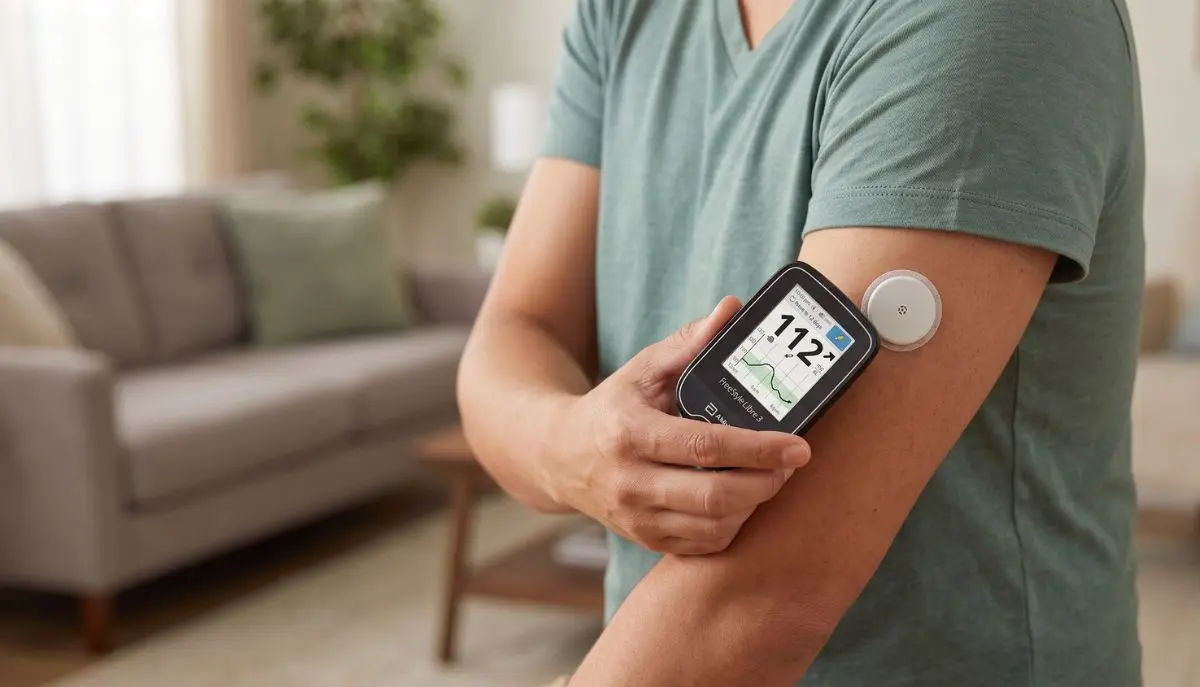
If you are using a continuous glucose monitoring (CGM) system, you may have wondered: freestyle libre 3 reader device how long does it last?
It is a very reasonable question. When you depend on a glucose monitoring device every day, you want to know how long the reader will work, how often you need to charge it, how much glucose information it can store, and whether the reader needs to be replaced as often as the sensor.
The good news is that the FreeStyle Libre 3 Reader is designed to be reused, unlike the disposable sensor. These are two different parts of the system, and each has a different expected usage period.
According to Abbott information, the FreeStyle Libre 3 Reader has a rechargeable lithium-ion battery with approximately 4 days of typical battery life. The reader can also store approximately 90 days of glucose history.
The FreeStyle Libre 3 Sensor has a different lifespan. A standard FreeStyle Libre 3 Sensor is designed to be worn for up to 14 days. After the sensor’s wear period ends, it stops collecting glucose data and should be replaced.
For someone new to CGM technology, this can sound confusing. Why does the sensor last 14 days while the reader lasts much longer? And if the reader battery lasts around four days, does that mean you need a new reader every four days?
No.
The four-day figure refers to the reader’s rechargeable battery life, not the useful life of the entire reader.
This guide from Alfa Healthcare Supply Inc. explains what you should know about the FreeStyle Libre 3 Reader, its battery, storage capacity, sensor lifespan, charging habits, maintenance, and when it may be time to consider replacing the device.
The FreeStyle Libre 3 Reader is a handheld device designed to work with compatible FreeStyle Libre 3 system components.
Instead of relying only on a smartphone, some users may prefer having a dedicated reader for glucose monitoring. A handheld reader can be useful for people who want a separate device specifically for checking glucose.
The reader communicates with the compatible sensor and provides glucose information on its screen. Depending on the system configuration and labeling in your region, it can provide glucose readings, trends, alarms, and other information.
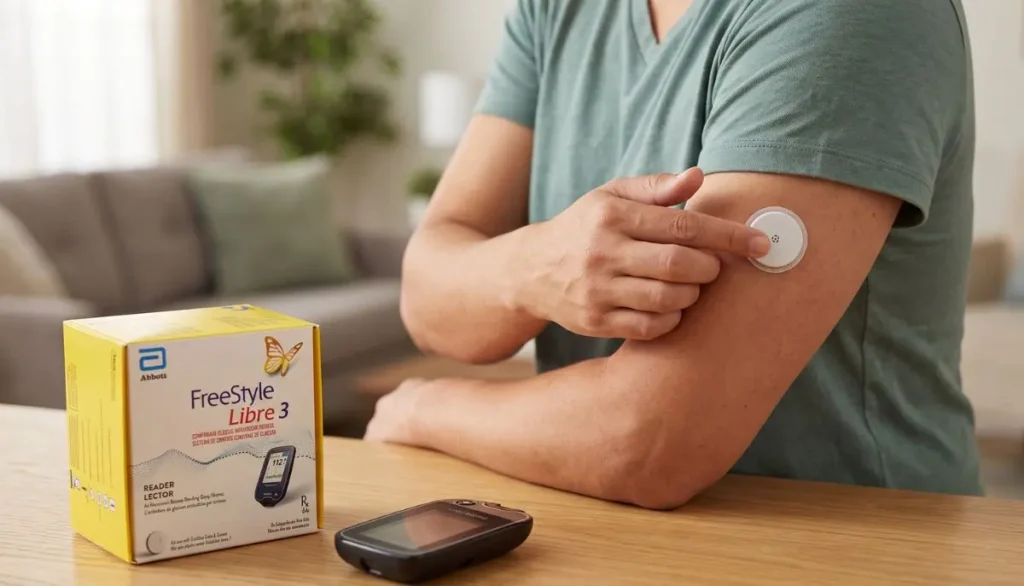
Abbott’s product information describes the FreeStyle Libre 3 Reader as a handheld device with a color touchscreen and the ability to store approximately 90 days of glucose history.
That stored information can be useful because glucose management is not always about one number.
A single glucose reading tells you what is happening at one moment. Looking at your glucose history can help you and your healthcare professional identify patterns over time.
For example, you may notice that glucose tends to change after meals, during exercise, overnight, or around certain daily activities.
The answer depends on what you mean by “last.”
There are three different questions people commonly ask:
These should not be confused.
Abbott’s FreeStyle Libre 3 documentation specifies approximately 4 days of typical use for the rechargeable reader battery.
This does not mean the reader needs to be thrown away after four days.
The battery is rechargeable. When the battery gets low, you recharge the reader using the supplied charging equipment according to the applicable instructions.
Think of it like a smartphone.
A smartphone may need charging every day or several days, but you do not replace the phone every time the battery reaches 0%.
The same basic idea applies to the rechargeable reader.
The FreeStyle Libre 3 Reader can hold approximately 90 days of glucose information. Abbott’s support information confirms that the reader stores up to 90 days of data.
This is particularly useful when you want to look back at your glucose history rather than only today’s numbers.
The sensor is different from the reader.
A standard FreeStyle Libre 3 Sensor is designed for up to 14 days of wear. After that period, the sensor automatically ends and should be removed and replaced according to the manufacturer’s instructions.
So, in simple terms:
Reader: rechargeable and reusable.
Reader battery: approximately 4 days of typical use before recharging.
Reader memory: approximately 90 days of glucose history.
FreeStyle Libre 3 Sensor: up to 14 days.
That distinction answers one of the most common questions about the system.
No.
The 14-day period applies to the standard FreeStyle Libre 3 Sensor, not the reader.
The sensor is the small wearable component that is placed on the body. It is designed for a limited wear period and is then replaced.
The reader is a reusable electronic device.
This means you can continue using the same compatible reader with new sensors, provided the reader remains functional and is compatible with the sensor/system you are using.
Abbott’s documentation describes the reader as having a rechargeable lithium-ion battery, while the sensor has its own power source and defined wear period.
This is an important distinction for people purchasing their first CGM system.
You generally should not think of the reader as a “14-day device.”
Instead, think of the reader as the reusable part of the system and the sensor as the replaceable part.
The FreeStyle Libre 3 Reader has approximately four days of typical battery life, according to Abbott documentation.
Actual battery performance can vary depending on how the device is used.
For example, battery consumption can be affected by how frequently you use the reader, how often the screen is active, and other operating conditions.
The easiest approach is to make charging part of your normal routine.
You might consider charging your reader:
Abbott’s support information also advises users to charge the reader when they receive a Low Battery alert so that alarms are not missed.
That is especially important for people who rely on glucose alarms.
A simple habit can prevent an avoidable problem: don’t wait until the reader completely runs out of power if you know you will need it.
One of the helpful features of the reader is its ability to store approximately 90 days of glucose information.
This is much longer than the 14-day wear period of an individual standard FreeStyle Libre 3 Sensor.
Why is that useful?
Imagine you are trying to understand why your glucose levels have been changing over several weeks.
Looking only at today’s readings may not give you enough information.
Having stored historical information can make it easier to review trends and discuss them with your healthcare professional.
The reader may therefore become more useful over time because it is not only showing you a current glucose result. It can also help you review historical information, depending on the features available on your particular system and software.
This is another area where confusion is common.
The sensor and the reader have separate memory capabilities.
The FreeStyle Libre 3 Sensor is designed to collect and store glucose information during its wear period. Abbott documentation indicates up to 14 days for the standard FreeStyle Libre 3 Sensor.
The reader, on the other hand, can store approximately 90 days of glucose history.
So the two numbers are not competing with each other.
They describe different components.
Suppose you start a new sensor on Monday.
That sensor can be used for up to 14 days.
After the sensor ends, you replace it with another compatible sensor.
Your reusable reader continues to be used with the system.
The reader’s larger storage capacity allows you to maintain a longer history than the life of a single sensor.
The standard FreeStyle Libre 3 Sensor is designed to last up to 14 days.
Abbott states that the sensor is designed to provide glucose monitoring for this period.
At the end of the wear period, the reader notifies the user that the sensor has ended. Abbott’s support information explains that the sensor automatically stops collecting glucose data after 14 days and should be removed.
This is different from the reader.
You replace the sensor regularly.
You recharge and continue using the reader.
It is also important not to confuse the standard FreeStyle Libre 3 Sensor with the FreeStyle Libre 3 Plus Sensor.
Abbott documentation states that the FreeStyle Libre 3 Plus Sensor can provide up to 15 days of wear, while the standard FreeStyle Libre 3 Sensor provides up to 14 days.
Availability, indications, compatibility, and labeling can vary by market, so users should always check the product information applicable to their location and device.
The important point is that changing the sensor does not mean you automatically need a new reader.
Generally, the reader is intended to be a reusable component rather than a disposable 14-day product.
If your reader is working properly and remains compatible with your system, you can continue using it with compatible sensors.
However, electronic devices can eventually develop problems.
A reader may need attention if you notice:
If your reader appears damaged, do not continue using a device that may be unsafe.
Abbott safety information advises users not to use a reader if it appears damaged because it may result in no readings or create other safety concerns.
When in doubt, consult the manufacturer’s instructions or contact Abbott support.
Although no electronic device lasts forever, good care can help you avoid unnecessary problems.
The reader is an electronic device, so it should be protected from unnecessary moisture.
Do not treat the reader like the wearable sensor.
The sensor has specific water-resistance characteristics, but that does not mean the handheld reader should be exposed to water.
Temperature can affect electronic devices and batteries.
Abbott’s safety information provides specific storage and operating temperature requirements for the reader.
Avoid leaving the reader in a hot vehicle or exposing it to extreme environmental conditions.
Use the charging cable and power adapter specified for the reader and follow Abbott’s instructions.
Avoid damaged charging cables.
A clean screen makes the reader easier to use and can help you see glucose information clearly.
Follow the manufacturer’s cleaning instructions rather than using harsh chemicals or excessive liquid.
A reader can look small and simple, but it contains electronic components.
A protective case may be helpful if appropriate for the device.
One temporary error may not mean that the reader has failed.
However, repeated problems deserve attention.
If the device repeatedly fails to operate correctly, contact the manufacturer or your healthcare provider rather than repeatedly attempting to fix it yourself.
A low battery does not mean the reader has reached the end of its life.
It usually means the rechargeable battery needs to be charged.
Abbott specifically advises users to charge the reader when they receive a Low Battery alert, particularly to help ensure alarms are not missed.
A practical routine is to check the battery level before leaving home.
This is especially useful if you are going to work, school, traveling, exercising, or spending a long day away from a convenient power source.
It is a small habit that can make glucose monitoring less stressful.
Follow the manufacturer’s instructions for your specific reader and charging setup.
The most important point is to charge the device safely and use the supplied or approved charging accessories as directed.
If you are unsure about charging behavior, consult the current FreeStyle Libre 3 Reader user manual rather than relying on advice from an unrelated device.
Product instructions can change as manufacturers update systems, so the manual supplied with your reader should be treated as an important source of information.
No.
This is one of the easiest ways to understand the system.
The sensor has a defined wear period.
The reader has a rechargeable battery.
For the standard FreeStyle Libre 3 system:
Therefore, you may charge the reader several times during the life of one sensor.
That is completely normal.
The reader is a small electronic computer.
It has a rechargeable lithium-ion battery that powers the display, processing, communication, and other functions.
Abbott’s specifications identify the reader’s power source as a lithium-ion rechargeable battery.
The battery allows you to use the device without keeping it connected to a power source all the time.
When the battery gets low, you recharge it.
This is similar to other rechargeable electronic devices you may already use.
Rechargeable batteries naturally experience wear over time.
However, normal charging according to the manufacturer’s instructions is part of ordinary use.
You should not avoid charging the reader because you are worried that routine charging means the reader is “wearing out” immediately.
Instead, follow Abbott’s charging instructions and pay attention to changes in battery behavior.
For example, if a reader that normally lasts around several days suddenly loses power much faster than expected, that may be worth investigating.
A significant change in battery performance can be a reason to contact the manufacturer or supplier for guidance.
If your reader stops working, first consider simple possibilities such as:
Do not attempt to open or repair the reader yourself.
If the problem continues, contact the manufacturer or your healthcare professional for appropriate assistance.
If you depend on the reader for glucose monitoring, it is also sensible to know what backup glucose-monitoring method has been recommended for you.
For people using CGM technology, having a backup plan can provide peace of mind.
| Feature | FreeStyle Libre 3 Reader | FreeStyle Libre 3 Sensor |
| Purpose | Displays and stores glucose information | Measures glucose |
| Reusable? | Yes, designed as a reusable reader | No, disposable |
| Battery | Rechargeable lithium-ion | Built-in sensor power source |
| Typical battery/wear period | About 4 days per charge | Up to 14 days |
| Data storage | About 90 days | Up to 14 days |
| Replacement | Not routinely replaced every 14 days | Replaced after wear period |
| Main role | Reads/displays glucose information | Collects glucose information |
The figures above are based on Abbott’s published product and support information.
One of the biggest advantages of CGM technology is that glucose monitoring can become part of a normal daily routine.
Instead of constantly thinking about when to check your glucose, the system can provide ongoing information through its compatible sensor and reader or smartphone, depending on your setup.
The reader can help you see what your glucose is doing and review historical information.
For many people, that can make glucose monitoring feel less like a series of isolated tests and more like a picture of their day.
You may start noticing patterns.
Maybe your glucose changes after breakfast.
Maybe exercise affects your readings differently in the morning than in the evening.
Maybe your overnight glucose pattern looks different from your daytime pattern.
Those observations can become useful discussion points with your healthcare professional.
However, CGM information should not replace professional medical advice.
Your healthcare professional can help you understand what your glucose patterns mean for your individual situation.
For people who prefer a dedicated handheld glucose reader, the FreeStyle Libre 3 Reader can offer several practical benefits.
You do not necessarily need to depend entirely on your everyday smartphone when a compatible reader is part of your monitoring setup.
The reader uses a rechargeable battery rather than being thrown away after a single sensor period.
Approximately 90 days of glucose history can be stored on the reader.
The handheld format makes it practical to carry a dedicated glucose-monitoring device.
Historical glucose information can provide more context than looking at a single reading.
A few simple habits can make daily use easier.
If you receive a low-battery warning, charge the reader.
Don’t discover that the battery is nearly empty when you are already away from home.
Avoid drops, excessive moisture, extreme temperatures, and other preventable damage.
Remember that replacing a sensor does not mean replacing your reader.
The reader can hold approximately 90 days of data, so you have an opportunity to review longer-term information.
Always use the current instructions supplied with your specific product.
The 14-day figure refers to the standard sensor, not the rechargeable reader.
The approximately four-day figure refers to typical battery life between charges.
The reader is rechargeable.
If you receive a low-battery alert, charging the device promptly can help prevent missed alarms or interruptions.
The wearable sensor and handheld reader have different designs and care requirements.
If the reader appears damaged, follow Abbott’s safety guidance and seek appropriate assistance.
So, freestyle libre 3 reader device how long does it last?
The simplest answer is:
The FreeStyle Libre 3 Reader is rechargeable and reusable. Its battery provides approximately 4 days of typical use per charge, while the reader can store approximately 90 days of glucose history. The standard FreeStyle Libre 3 Sensor, by comparison, is designed for up to 14 days of wear.
That difference is important.
You are not buying a reader that gets thrown away every two weeks. The reader is the reusable handheld part of the system. The sensor is the component that is routinely replaced.
For everyday diabetes management, understanding this distinction can make the system much easier to use and can help you plan for charging, sensor replacement, and glucose-data review.
If you are purchasing or using a FreeStyle Libre system, always check the instructions and labeling for your specific model and region because product features, compatibility, indications, and availability can change.
At Alfa Healthcare Supply Inc., the goal is to make medical supply information easier to understand so patients, caregivers, and families can make informed decisions and feel more comfortable using their healthcare equipment.
If you have questions about glucose monitoring supplies, CGM accessories, or other diabetes-management products, speak with your healthcare professional and use the manufacturer’s current product instructions as your primary guide.
The FreeStyle Libre 3 Reader has approximately 4 days of battery life with typical use, according to Abbott’s product documentation. It has a rechargeable lithium-ion battery, so it can be charged and used again.
No. The 14-day period applies to the standard FreeStyle Libre 3 Sensor. The reader is a reusable device with a rechargeable battery.
Battery life is approximately four days under typical use, so charging frequency depends on how you use the device. Charge the reader when the battery is low and follow the manufacturer’s charging instructions.
The reader stores up to approximately 90 days of glucose information.
The standard FreeStyle Libre 3 Sensor is designed to be worn for up to 14 days. After the wear period ends, the sensor stops collecting glucose data and should be replaced.
No. The reader is designed to be reusable. A compatible sensor is replaced according to its wear period, while the reader can continue to be used if it is functioning correctly and compatible with the system.
The reader notifies you that the sensor has ended. Abbott states that the sensor automatically stops collecting glucose data after the 14-day period and should be removed.
Recharge the reader according to Abbott’s instructions. Abbott recommends charging the reader when the Low Battery alert appears so that alarms are not missed.
The reader can store approximately 90 days of glucose history, which is considerably longer than the 14-day wear period of an individual standard FreeStyle Libre 3 Sensor.
Yes. Abbott documentation states that the FreeStyle Libre 3 Plus Sensor is designed for up to 15 days, compared with up to 14 days for the standard FreeStyle Libre 3 Sensor.
The reader is not routinely replaced after a set number of days in the same way as the disposable sensor. If it becomes damaged, stops functioning properly, develops charging problems, or otherwise fails to operate as expected, contact Abbott or your healthcare provider for guidance.
Medical disclaimer: This article is intended for general educational purposes and is not a substitute for medical advice, diagnosis, or treatment. Do not make changes to medication, insulin, or diabetes treatment based solely on information in this article. If your glucose readings do not match how you feel or you are concerned about a reading, follow your healthcare professional’s instructions for confirming glucose and obtaining medical advice.