


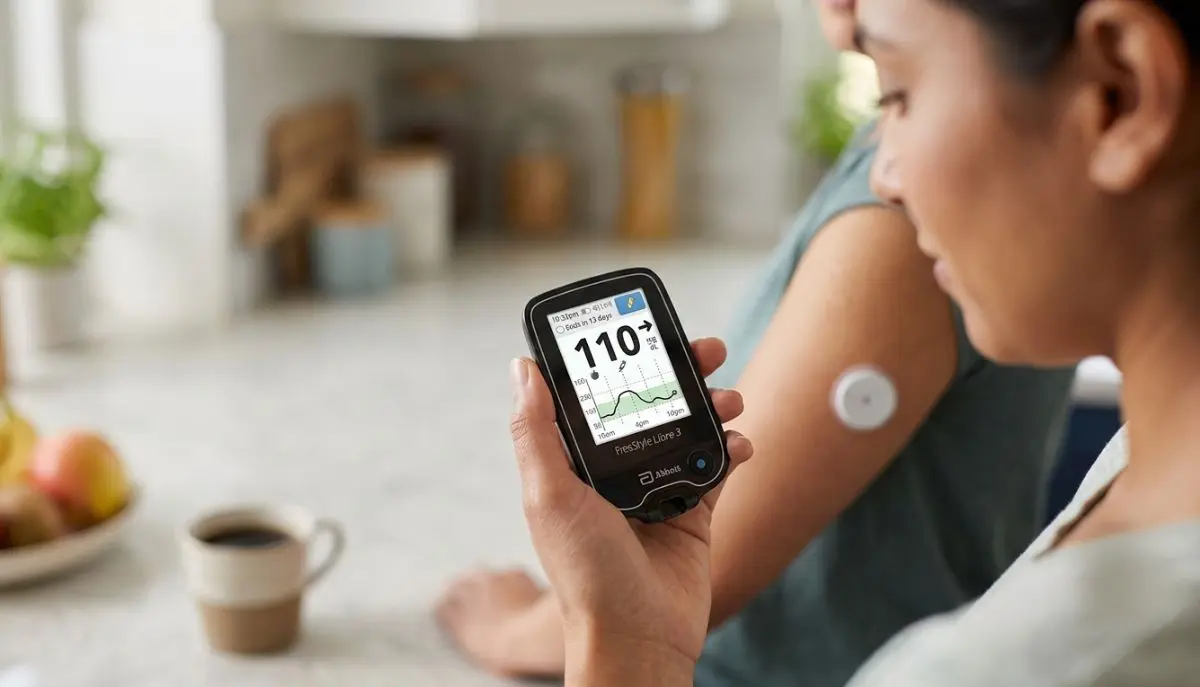
If you use a continuous glucose monitoring (CGM) system, you may wonder, how long does a FreeStyle Libre 3 reader last? It is an important question because the reader is the device you rely on to review glucose information and manage your daily monitoring routine.
The good news is that the FreeStyle Libre 3 Reader is designed for long-term use. Unlike the disposable sensor, which is replaced after its approved wear period, the reader is a reusable device. Abbott states that the typical usable life of a FreeStyle Libre Reader is about 3 years.
It is also important to understand that the reader’s battery life, sensor life, data storage, and overall usable life are four different things. Confusing these can make it difficult to know when you actually need a new reader.
In this guide, we will explain how long the FreeStyle Libre 3 Reader lasts, how often you may need to recharge it, how much glucose information it can store, what happens when the battery runs out, and when it may be time to replace the reader.
So, how long does a FreeStyle Libre 3 reader last?
There are several answers depending on what you mean by “last.”
Therefore, the reader does not need to be replaced every 14 days. The sensor and reader have very different lifespans.
One of the most common questions people have is whether the FreeStyle Libre 3 Reader needs to be replaced whenever they replace their sensor.
The answer is generally no.
The sensor is designed to be worn for a limited period and then replaced. The reader is the reusable electronic device used to receive and display glucose information.
Think of it like this:
Sensor = short-term disposable component
Reader = reusable electronic device
Abbott explains that the FreeStyle Libre sensor is designed to provide glucose readings for up to 14 days. At the end of that period, the reader can notify the user that the sensor has ended and needs to be replaced.
The reader itself can continue being used with compatible sensors rather than being discarded after each sensor.
This distinction can make managing your diabetes supplies much easier.
When someone asks how long does a FreeStyle Libre 3 reader last, they are often asking about the total working life of the device.
According to Abbott, the typical usable life of a FreeStyle Libre Reader is approximately three years.
That does not necessarily mean every reader will stop working exactly on the third anniversary. Actual performance can depend on normal use, charging habits, physical condition, storage, and other factors.
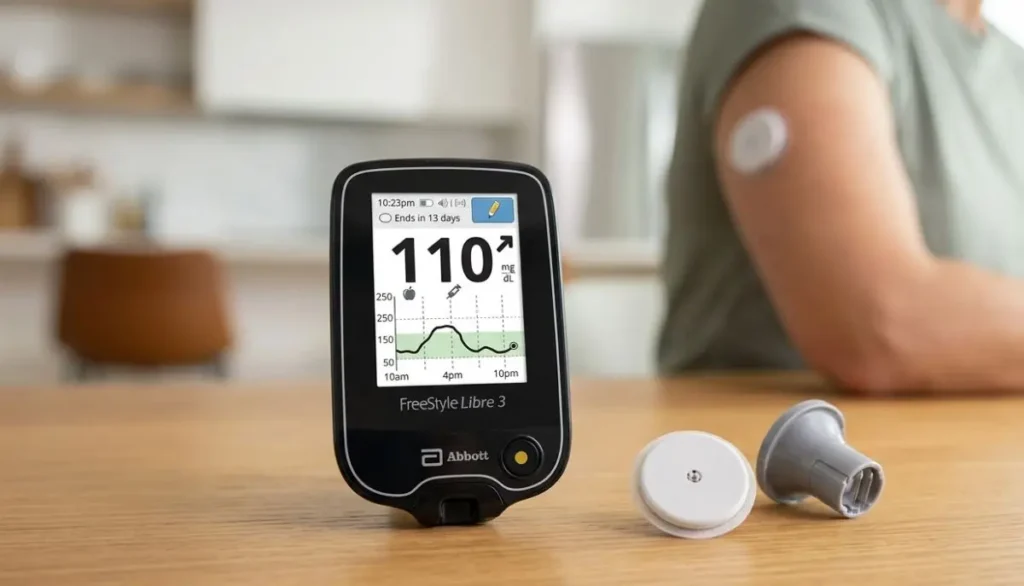
A reader that is handled carefully may remain useful throughout its expected service life.
However, electronic devices can eventually experience battery or hardware problems. If your reader is no longer functioning correctly, you should follow Abbott’s support guidance rather than assuming that the device must simply be discarded.
Your reader may become an important part of your daily routine.
For many people, glucose monitoring happens around meals, exercise, medication, work, travel, sleep, and other everyday activities. Having a dependable reader can make the process feel more predictable.
Nobody wants to discover that their device needs attention when they are away from home.
That is why it is helpful to understand the difference between:
Another meaning of how long does a FreeStyle Libre 3 reader last relates to battery life.
Abbott says that, with normal use, the reader can be used for approximately 7 days before it needs to be recharged.
The exact time between charges can vary depending on how the device is used.
The reader includes a battery icon so you can monitor the remaining charge. Abbott also explains that a low-battery warning appears when the reader needs to be recharged.
This is useful because you do not have to guess when the battery is running low.
You do not necessarily need to charge the reader every day.
With normal use, approximately one week between charges is expected according to Abbott’s support information.
However, building a charging routine can help prevent surprises.
For example, some people may prefer to recharge their reader on a particular day of the week, while others may charge it whenever the battery indicator gets low.
The important thing is to avoid waiting until the device is completely empty if you know you will need it.
If your FreeStyle Libre reader battery is completely discharged, Abbott says it should take approximately 3 hours to fully charge.
That means planning ahead can be helpful.
If you are preparing for a trip, appointment, or busy day, check the battery level before leaving home.
A simple habit such as checking the battery while packing your medical supplies can help you stay organized.
It is understandable to worry that all your glucose history will disappear if the reader runs out of power.
According to Abbott, stored glucose readings are not lost when the reader runs out of power. The reader simply needs to be recharged.
This is reassuring because a temporary low battery does not automatically mean that your stored information is erased.
Once the reader is charged, your stored data can remain available according to the device’s storage capacity and system functionality.
Still, it is a good practice to keep the reader charged, particularly if you depend on it for regular glucose monitoring.
The FreeStyle Libre 3 Reader can store approximately 90 days of glucose history.
This is considerably longer than the amount of information that may be visible during a single short viewing session.
Having stored history can be useful when looking for patterns over time.
For example, you and your healthcare professional may be interested in looking at glucose information alongside:
Glucose data should always be interpreted in the context of your individual treatment plan and healthcare professional’s advice.
No.
This is one of the most important points to understand.
The 14-day period refers to the sensor, not the overall lifespan of the reader. Abbott states that the FreeStyle Libre sensor is designed for up to 14 days of use.
After the sensor reaches the end of its approved wear period, it stops collecting glucose data and should be replaced.
The reader itself is reusable and has a much longer expected usable life.
So a typical monitoring routine might look like:
Use Reader → Use Sensor → Replace Sensor → Continue using Reader → Repeat
The reader is not thrown away with each sensor.
When a sensor reaches the end of its wear period, the reader can notify you.
Abbott explains that after 14 days, the sensor automatically stops collecting glucose data and should be removed. The reader displays information about the remaining sensor life and provides notifications as the sensor approaches the end of its period.
This makes it easier to prepare for your next sensor.
It is a good idea to have your replacement sensor available before the current sensor reaches its end.
While no electronic device lasts forever, careful handling can help you get dependable use from your reader.
Use appropriate cleaning practices recommended by the manufacturer.
Avoid exposing the electronic device to unnecessary moisture or harsh substances.
A reader may be compact and easy to carry, but it is still an electronic medical device.
Consider using a protective case if appropriate.
Don’t routinely allow the battery to remain completely discharged for long periods.
Check the battery indicator and recharge when necessary.
Avoid leaving the reader in extreme temperatures, such as a hot vehicle or direct sunlight.
Medical devices can be sensitive to environmental conditions.
The user manual and official support resources are important references for proper operation.
If you experience an unexpected error, damage, or unusual behavior, consult Abbott’s official support information.
Knowing the expected lifespan is useful, but it is also important to recognize signs that your reader may not be functioning properly.
Potential warning signs can include:
A single problem does not necessarily mean the reader has reached the end of its useful life.
Before replacing the device, check the manufacturer’s troubleshooting instructions or contact Abbott support.
If your reader is still within its expected usable life and is functioning properly, it may continue to be useful.
However, technology and product compatibility can change.
Before purchasing replacement sensors or another reader, verify that the reader and sensor you plan to use are compatible with each other.
This is particularly important because FreeStyle Libre products can differ by model, market, software version, and generation.
If you are unsure, check the product documentation or speak with your healthcare provider or supplier.
One of the useful features of a CGM system is that glucose monitoring is not only about one number.
A single reading tells you what is happening at a particular moment.
Historical information can help you and your healthcare professional identify patterns.
For example, you might notice that glucose behaves differently:
The reader’s ability to store approximately 90 days of glucose history provides a substantial amount of information for reviewing trends.
However, stored data should not be used to independently change medication or insulin doses unless your healthcare professional has given you an appropriate plan.
Managing diabetes can sometimes feel like having another responsibility added to an already busy day.
Work, family, travel, meals, exercise, appointments, and everyday commitments do not stop because you are monitoring glucose.
That is why convenience matters.
A reusable reader can become a familiar part of your routine. Instead of learning a completely new device every couple of weeks, you generally continue using the same reader while replacing the disposable sensor according to the manufacturer’s instructions.
For someone who is new to CGM technology, this distinction can make the system feel less complicated.
Keeping your supplies organized can make glucose monitoring easier.
Depending on your individual treatment plan and the system you use, your supplies may include:
It can also be useful to have a replacement sensor available before your current sensor ends.
Planning ahead is especially helpful when traveling.
Abbott’s official support information explains that the reader needs to be recharged when the battery runs out and that stored readings are not lost.
For questions about using the device during charging, always follow the instructions for your specific reader model and the applicable user manual.
Because FreeStyle Libre products can differ between markets and generations, avoid assuming that instructions for an older Libre reader automatically apply to a newer model.
This comparison makes the difference very clear:
| Component | Typical duration |
| FreeStyle Libre 3 Reader | Approximately 3 years of typical usable life |
| Reader battery | Approximately 7 days with normal use before recharge |
| Complete battery recharge | Approximately 3 hours |
| Reader data storage | Approximately 90 days |
| FreeStyle Libre 3 Sensor | Up to 14 days |
The reader-life information comes from Abbott’s official support resources, while sensor duration and data-storage information are also documented by Abbott.
Keep in mind that these figures describe different aspects of the system and should not be treated as interchangeable.
The three-year figure is a typical usable-life estimate, not a guarantee that every device will operate for exactly that length of time.
If your reader stops functioning unexpectedly:
If your glucose readings do not match how you feel, or you have concerns about the accuracy of a reading, follow the safety instructions provided with your system and use an appropriate alternative glucose measurement method when instructed.
Do not make medication or insulin changes based solely on general information from an online article.
If you are searching for a FreeStyle Libre reader, it is important to purchase from a legitimate medical supply provider or another authorized source appropriate for your location and prescription requirements.
Alfa Healthcare Supply Inc. is a medical supply provider serving customers in New York and offers a range of diabetes and home medical supplies.
Before ordering a specific reader or sensor, confirm the exact product model you need. This is particularly important when searching online because FreeStyle Libre products have different generations and configurations.
You can visit Alfa Healthcare Supply Inc. to explore available medical supplies.
If you are unsure which FreeStyle Libre product is appropriate for you, speak with your healthcare professional before purchasing.
Searching online for “FreeStyle Libre reader” can return several different products.
A reader designed for one generation of the FreeStyle Libre system may not necessarily be interchangeable with every other FreeStyle Libre product.
Before purchasing, check:
A few minutes of checking can help prevent the frustration of receiving a device that does not work with the sensor you already have.
So, how long does a FreeStyle Libre 3 reader last?
The most important answer is that the reader has a typical usable life of approximately three years, according to Abbott.
That should not be confused with the battery, which lasts approximately 7 days with normal use between charges, or the sensor, which is designed for up to 14 days of wear. The reader can also store approximately 90 days of glucose history.
Understanding these differences can make your diabetes-supply routine much easier.
A simple way to remember it is:
Reader = long-term device
Battery = recharge about weekly with normal use
Sensor = replace according to its approved wear period
Data = approximately 90 days stored on the FreeStyle Libre 3 Reader
If you are replacing an old reader or purchasing one for the first time, take a moment to confirm the exact FreeStyle Libre model and sensor compatibility. When it comes to glucose monitoring, having the right equipment and following the manufacturer’s instructions can help make everyday monitoring more organized and predictable.
For additional information about diabetes supplies and medical equipment, visit Alfa Healthcare Supply Inc..
The typical usable life of a FreeStyle Libre Reader is approximately 3 years, according to Abbott. This is different from the sensor’s wear period.
With normal use, Abbott says the reader can be used for approximately 7 days before it needs to be recharged.
A completely discharged reader takes approximately 3 hours to fully charge, according to Abbott.
Yes. Abbott states that the FreeStyle Libre 3 Reader can store approximately 90 days of glucose history.
No. Abbott states that stored glucose readings are not lost when the reader runs out of power. The device needs to be recharged.
No. The 14-day period applies to the FreeStyle Libre 3 sensor, not the reader. The reader is designed for repeated use.
The FreeStyle Libre 3 sensor is designed for up to 14 days of wear. After that period, the sensor stops collecting glucose data and should be replaced according to the manufacturer’s instructions.
It may continue to work if it is functioning correctly and remains compatible with the sensors you use. Always check current manufacturer compatibility information before purchasing replacement sensors.
A rapidly draining battery can be a reason to investigate the device. First check charging and troubleshooting information from Abbott. If the problem continues, contact the manufacturer or your supplier.
You can look for a FreeStyle Libre reader through legitimate medical supply providers such as Alfa Healthcare Supply Inc. Before purchasing, verify the exact reader model and sensor compatibility.