


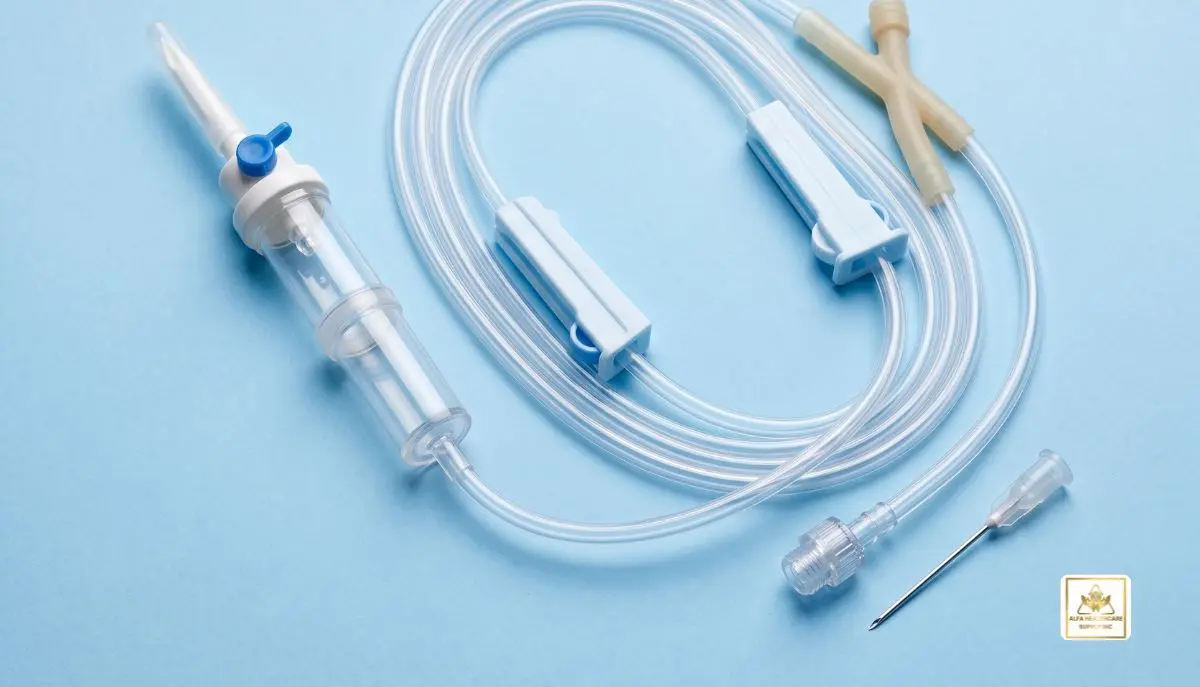
Introduction: Luer Lock Infusion Sets
When choosing medical supplies, even a small component can make a meaningful difference. A reliable connection between medical devices helps healthcare professionals manage treatments with greater confidence. This is one reason luer lock infusion sets are important in many healthcare settings.
Luer lock infusion sets use a threaded connector that twists into place, helping secure compatible medical components together. These connectors are designed to provide a more secure connection than a simple push-fit Luer slip connector when properly matched and used.
For healthcare professionals, caregivers, and medical supply buyers, understanding how these products work can make it easier to select the right equipment for a specific medical application.
At Alfa Healthcare Supply Inc., we understand that finding appropriate medical supplies should be straightforward. Our goal is to help customers make informed choices by providing useful product information and access to healthcare supplies.
This guide explains the features, potential benefits, selection considerations, and safety practices associated with luer lock infusion sets in simple, easy-to-understand language.
What Are Luer Lock Infusion Sets?
Luer lock infusion sets are medical devices or tubing assemblies that use a threaded Luer connector to join compatible components securely. Depending on the specific product, an infusion set may include tubing, connection points, protective caps, and other components designed for a particular medical use.
The Luer lock mechanism typically consists of matching connector parts. One component fits into the other, and the threaded collar twists to help hold the connection in place.
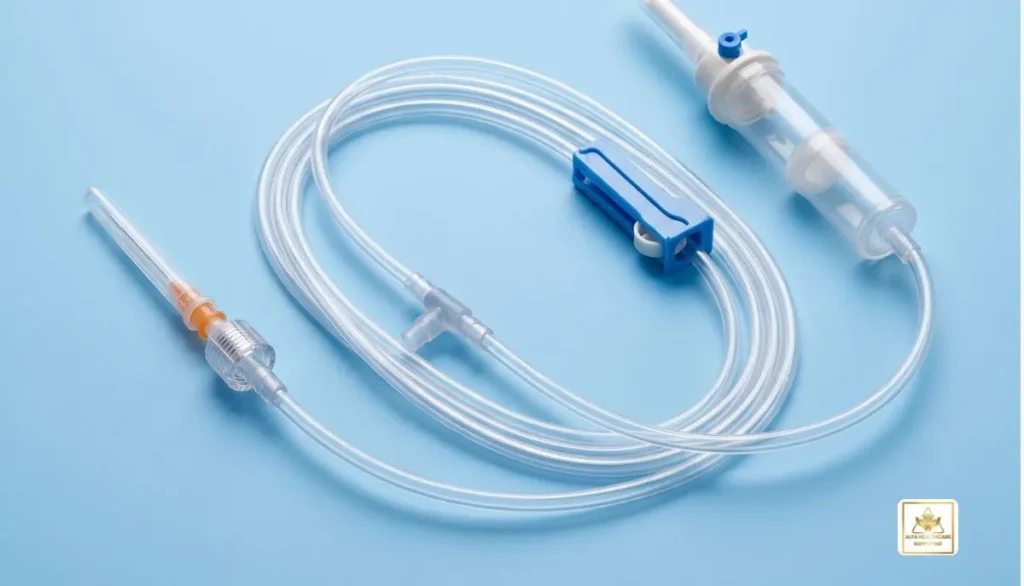
Unlike a Luer slip connection, which relies primarily on a push-fit design, a Luer lock connector has a threaded locking mechanism.
However, the exact components and intended uses vary by product. Not every Luer lock infusion set is suitable for every type of therapy, medication, pump, or medical device.
Before selecting a product, users should check its labeling, compatibility information, and manufacturer instructions.
How Do Luer Lock Infusion Sets Work?
The main purpose of a Luer lock connector is to help maintain a secure connection between compatible medical components.
Here is a simple explanation of the process:
- Component matching: The user or healthcare professional confirms that both components are designed to connect with each other.
- Connector alignment: The matching connector ends are aligned according to the manufacturer’s instructions.
- Secure attachment: The threaded collar is engaged and tightened as directed.
- Connection inspection: The connection is checked for proper seating, visible damage, and signs of leakage.
- Use according to instructions: The complete medical device is used only for its intended application.
These steps are general information, not a substitute for device-specific instructions or clinical training.
A secure-looking connection does not automatically guarantee that a system is sterile, leak-free, or suitable for a particular treatment. Correct product selection and proper handling remain essential.
Key Features of Luer Lock Infusion Sets
When comparing luer lock infusion sets, several features may influence whether a product is suitable for the intended application.
1. Threaded Locking Mechanism
The threaded collar helps hold compatible connector components together. This design can reduce the chance of accidental disconnection compared with a push-fit connection in appropriate applications.
However, the connection must still be assembled correctly and checked as directed.
2. Compatibility With Medical Equipment
Some products are designed to connect with specific syringes, tubing assemblies, catheters, or other medical components.
Compatibility should never be assumed simply because two connectors appear to fit. Always confirm the intended application and manufacturer specifications.
3. Product-Specific Tubing Design
Depending on the product, tubing may differ in length, material, diameter, flexibility, and intended use.
These details can affect how a device fits into a particular clinical setup. Buyers should review the product description carefully rather than choosing only by connector type.
4. Protective Packaging
Medical devices may be supplied in individual packaging or other packaging configurations, depending on the product.
When sterility is required, verify the manufacturer’s sterile designation, package integrity, and expiration information where applicable. A Luer lock connector alone does not establish that the entire product is sterile.
5. Clear Product Identification
Product labels and instructions help users identify the correct device, its intended purpose, and any limitations.
Checking the model number, connector type, and product specifications before ordering can help prevent avoidable selection errors.
Benefits of Luer Lock Infusion Sets
The benefits of luer lock infusion sets depend on the complete device and the application for which it is designed.
More Secure Connections
The threaded locking mechanism helps retain compatible connectors in place. This can be valuable in applications where accidental separation needs to be minimized.
Greater Connection Confidence
A properly matched and assembled locking connector can provide greater resistance to unintended separation than a basic push-fit connection.
Nevertheless, users must inspect connections regularly when required by the device instructions.
Support for Organized Medical Workflows
In appropriate clinical applications, clearly identified and compatible connectors can help healthcare professionals assemble medical equipment according to established procedures.
Options for Different Medical Applications
Luer lock connectors are used across a range of medical devices. However, an individual infusion set may be designed for only one specific purpose.
The important point is to choose the complete device that matches the prescribed therapy and equipment requirements, rather than assuming every product with a Luer lock connector is interchangeable.
Common Uses of Luer Lock Infusion Sets
The term luer lock infusion sets can describe products used in different medical contexts, depending on their design and labeling.
Examples of settings where compatible Luer lock connections may be found include:
- Hospitals and outpatient clinics
- Medical treatment facilities
- Certain medication administration systems
- Clinical procedures requiring compatible syringes and tubing
- Selected home-care applications under appropriate professional guidance
Not every product is intended for all these settings. For example, a general-purpose Luer connector should not be assumed suitable for a specialized infusion procedure.
Healthcare professionals must verify the exact device, prescribed therapy, and connection requirements before use.
Luer Lock vs. Luer Slip: What Is the Difference?
Both connector types are designed to join compatible medical components, but their attachment mechanisms differ.
| Feature | Luer Lock | Luer Slip |
| Connection design | Threaded locking collar | Push-fit connection |
| Attachment | Twists into place | Pushes into place |
| Resistance to accidental separation | Generally greater when correctly secured | Depends more on the push-fit connection |
| Product compatibility | Must be confirmed | Must be confirmed |
| Suitable application | Determined by the complete device and instructions | Determined by the complete device and instructions |
Neither design is automatically appropriate for every medical application. The correct choice depends on the equipment, procedure, and manufacturer’s instructions.
For applications where a locking connection is specified, choosing the correct Luer lock product can help support proper equipment assembly.
How to Choose the Right Luer Lock Infusion Sets
Selecting the right product involves more than checking whether the connector has a threaded collar.
Confirm the Intended Medical Application
Start by identifying the purpose of the device. Is it intended for a particular infusion system, medication delivery setup, or other clinical application?
Follow the prescription and healthcare professional’s recommendations whenever applicable.
Check Connector Compatibility
Verify the required connector type and ensure that all connected components are designed to work together.
Never force connectors together or use an improvised adapter to overcome incompatibility.
Review Tubing Specifications
Check the tubing length, material, dimensions, and any other specifications relevant to the intended application.
A product with the right connector but the wrong tubing configuration may not be appropriate.
Verify Sterility and Packaging
If the application requires a sterile device, confirm that the product is labeled as sterile and that its packaging is intact.
Do not use a product with compromised packaging when sterility is required.
Check Manufacturer Instructions
The manufacturer’s instructions explain how the product should be assembled, used, stored, and disposed of.
These instructions take priority over general product information.
Purchase From a Reliable Medical Supply Source
A dependable supplier should provide clear product descriptions and help customers identify relevant specifications.
At Alfa Healthcare Supply Inc., customers can explore healthcare supply options and review available product information before choosing supplies for their needs.
Safety Guidelines for Luer Lock Infusion Sets
Medical connectors play an important role in treatment safety. Correct selection, handling, and connection procedures are essential.
The U.S. Food and Drug Administration (FDA) warns that medical device misconnections can lead to serious patient harm. Similar-looking connectors may sometimes allow unrelated systems to be connected accidentally.
For this reason, the following precautions are important:
- Verify every connection: Confirm that each component is intended to connect to the specific device.
- Follow aseptic procedures: Use the cleaning and handling procedures required for the device and clinical application.
- Inspect before use: Check for cracks, damaged threads, leaks, contamination, or compromised packaging.
- Avoid excessive tightening: Follow the manufacturer’s directions. Excessive force can damage connectors.
- Do not improvise: Avoid unapproved adapters or modifications.
- Never force a connection: If the components do not fit correctly, stop and seek guidance.
- Follow single-use instructions: Do not reuse disposable devices unless the manufacturer specifically permits it and applicable instructions support that use.
- Ask for professional help: Patients and caregivers should not connect or disconnect medical tubing unless they have been instructed and authorized to do so.
For additional guidance, consult the FDA’s Medical Device Connectors resource.
Why Product Quality and Proper Selection Matter
Medical supplies are part of a larger system of care. A connector that appears small or simple may affect the reliability of the complete setup.
When comparing luer lock infusion sets, consider the quality and suitability of the entire device rather than focusing only on the connector.
Look for clear labeling, identifiable manufacturers, appropriate product documentation, and specifications that match the intended use.
Healthcare facilities should follow their purchasing policies and clinical protocols. Individual patients and caregivers should rely on their healthcare team when selecting equipment for prescribed treatment.
It is also important to remember that a locking connector does not prevent every possible leak, contamination event, or connection error. Proper handling and ongoing attention remain necessary.
Luer Lock Infusion Sets at Alfa Healthcare Supply Inc.
Finding the right medical supplies should not feel confusing. Customers need understandable product information and a reliable way to explore available options.
Alfa Healthcare Supply Inc. supports patients, caregivers, and healthcare-related needs through its medical supply business. Our focus is on helping customers make informed purchasing decisions by reviewing product details and choosing supplies that match their requirements.
If you are looking for luer lock infusion sets, begin by identifying the exact product specification or device you need. Confirm compatibility, intended use, and any applicable prescription or clinical requirements before ordering.
Visit the Alfa Healthcare Supply Inc. to explore available medical supplies. If you cannot find the exact item you need, contact the supplier to ask about product availability and specifications.
The goal is simple: help customers find suitable supplies without unnecessary confusion.
Conclusion
Choosing suitable medical equipment begins with understanding how it works and what it is designed to do. Luer lock infusion sets use a threaded connection to help secure compatible medical components, making them useful in a variety of applications where that connection type is specified.
However, the connector alone does not determine whether a device is suitable, sterile, or safe for a particular treatment. Product compatibility, correct handling, manufacturer instructions, and professional guidance all matter.
At Alfa Healthcare Supply Inc., we believe that clear information helps customers make more confident decisions about healthcare supplies. Before purchasing luer lock infusion sets, review the product specifications carefully and confirm that the device matches your intended medical application.
Choose the right product, verify compatibility, and follow the instructions every time. These simple habits can help support safer and more informed medical supply decisions.
Frequently Asked Questions
1. What are luer lock infusion sets?
Luer lock infusion sets are medical devices or tubing assemblies that use threaded Luer connectors to attach compatible components securely. The exact purpose and configuration depend on the product.
2. How do luer lock infusion sets differ from Luer slip products?
A Luer lock uses a threaded collar that twists into place. A Luer slip uses a push-fit connection. The appropriate type depends on the device and its intended application.
3. Are luer lock infusion sets suitable for home use?
Some medical devices with Luer lock connectors may be used in home-care settings when specifically intended for that purpose. Patients should use them only as directed by their healthcare professional and the manufacturer.
4. Can all Luer lock connectors fit every medical device?
No. A connector that appears physically compatible may still be unsuitable for a particular system or application. Always check the product specifications and manufacturer instructions.
5. Are all luer lock infusion sets sterile?
No. Sterility depends on the specific product and its packaging. Check the manufacturer’s labeling and verify package integrity when a sterile device is required.
6. Can a Luer lock connection leak?
Yes. Incorrect assembly, damaged components, incompatibility, or other device problems can result in leakage. Follow the instructions and inspect connections as required.
7. Can disposable luer lock infusion sets be reused?
Do not reuse a disposable device unless its manufacturer explicitly permits reuse and the applicable instructions support it. Follow the product’s labeling and clinical guidance.
8. How should I select the right luer lock infusion sets?
Check the intended use, connector compatibility, tubing specifications, sterility requirements, manufacturer instructions, and any clinical or prescription requirements.
9. Where can I find medical supplies from Alfa Healthcare Supply Inc.?
Visit https://alfahealthcaresupplyinc.com/ to explore the company’s available medical supplies and product information. Confirm availability of the specific product before ordering.
10. What should I do if a connector does not fit properly?
Do not force it or modify the equipment. Stop and consult the manufacturer, supplier, or appropriate healthcare professional to confirm compatibility.
Medical disclaimer: This article is for general educational purposes only. It does not replace professional medical advice, device-specific instructions, or clinical training. Always follow the manufacturer’s labeling and consult an appropriate healthcare professional when selecting or using medical devices.