


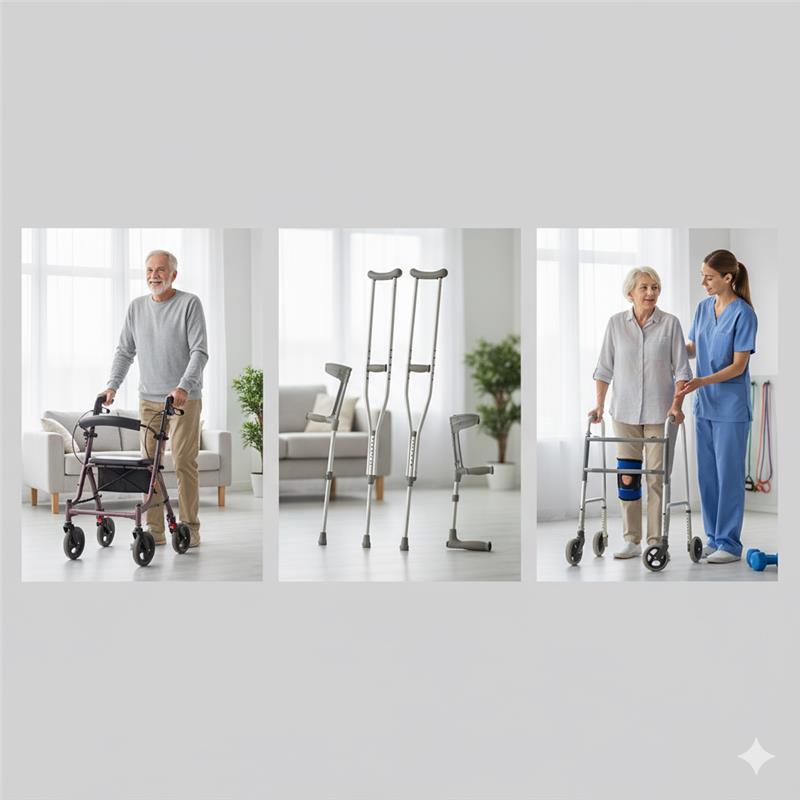
After surgery—whether it’s on your knee, hip, or leg—mobility becomes one of your biggest challenges. Choosing the right walking aid can make a world of difference in how quickly and safely you recover. While both walkers and crutches help maintain balance and reduce strain on the healing limb, selecting the correct one depends on your strength, comfort, and medical needs.
At Alfa Healthcare Supply, we believe in helping patients regain mobility confidently with well-designed, supportive equipment. This article will guide you through understanding the differences between walkers and crutches, the right time to use each, and how to ensure they fit your recovery goals perfectly.
If you’re still preparing your home for post-surgery recovery, check out our earlier blog Recovering from Knee Surgery: Essential Mobility Aids and Home Care Tips to set up your space safely.
Mobility aids play two major roles during recovery — support and protection. After surgery, the body needs to regain stability and confidence in movement while protecting the operated area from excessive strain. Walkers and crutches are not just tools for movement; they are essential recovery companions.
Each device helps prevent falls, reduce muscle fatigue, and maintain proper posture during the recovery phase.
Walkers come in several designs, each serving a different stage of recovery:
When selecting a walker, focus on height adjustability, grip comfort, and stability. Ensure the height allows your elbows to bend slightly (about 15°) when holding the handles — this prevents shoulder strain.
Walkers are also easier to pair with accessories such as walker trays, pouches, or glides to carry essentials safely during recovery.
Crutches are a great alternative for those with upper body strength and balance. They provide mobility while keeping weight off one leg.
Types of Crutches:
Fitting Matters:
With correct posture and balance, crutches promote faster mobility progress while preventing muscle strain.
The right choice between a walker and crutch depends on your surgery type, doctor’s recommendation, and comfort level.
| Recovery Need | Best Option |
|---|---|
| Full support, low balance | Standard or 2-wheel walker |
| Partial weight-bearing | Rollator or knee walker |
| Non-weight-bearing, higher mobility | Crutches |
| Long-term or chronic mobility support | Forearm crutches |
Patients recovering from knee surgery, hip replacements, or leg fractures often start with walkers and gradually transition to crutches as they regain balance.
Remember: comfort and stability should always come before speed. Overexertion or improper use can delay healing and cause strain injuries. Your physiotherapist can help determine when to transition from one aid to another.
Using the correct walking aid the right way ensures a safe, confident recovery process at home.
At Alfa Healthcare Supply, we offer a range of high-quality mobility aids designed for safe, comfortable recovery. Take the next step in your healing journey by exploring aids that match your lifestyle and needs.
If you’re still navigating your early post-surgery days, our detailed guide Recovering from Knee Surgery: Essential Mobility Aids and Home Care Tips shares valuable insights to help you prepare your home and daily routine for faster recovery.