


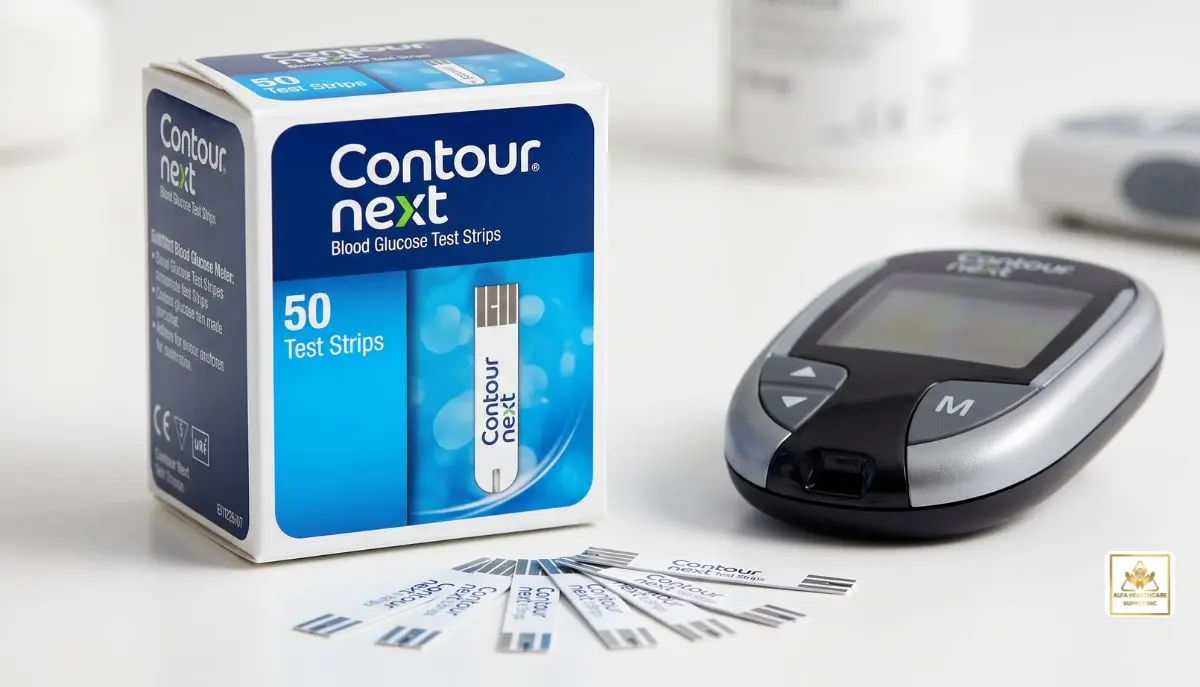
What is CONTOUR NEXT Test Strips?
If you have a blood glucose meter at home, you might have come across the term CONTOUR NEXT test strip and not known exactly what they are, how they function and whether they work with your blood glucose meter. Knowing what your supplies are can make taking your blood glucose easier.
So, what is CONTOUR NEXT test strips? Simply put, CONTOUR NEXT test strips are blood glucose testing strips that can be used with CONTOUR NEXT blood glucose meters. A small amount of blood is put on the strip and the meter will analyse the blood sample to display the blood glucose reading.
Understanding the CONTOUR NEXT test strip and proper storage and use is critical for individuals who regularly check their blood glucose level.
We at Alfa Healthcare Supply Inc. believe that health supplies should be easy to understand. This guide provides detailed information on what CONTOUR NEXT test strips are, how they work, which meters use them, how to deal with them, and what to look for when buying them.
Important: Be sure to use the test strips and instructions that come with your CONTOUR NEXT meter. This article is intended to provide general information for education purposes only and should not be used as a substitute for medical advice obtained from your health care professional.
What is CONTOUR NEXT Test Strips?
What do the “CONTOUR NEXT test strips” measure? They are one-time blood glucose test strips for use with the compatible blood glucose meters, CONTOUR NEXT.
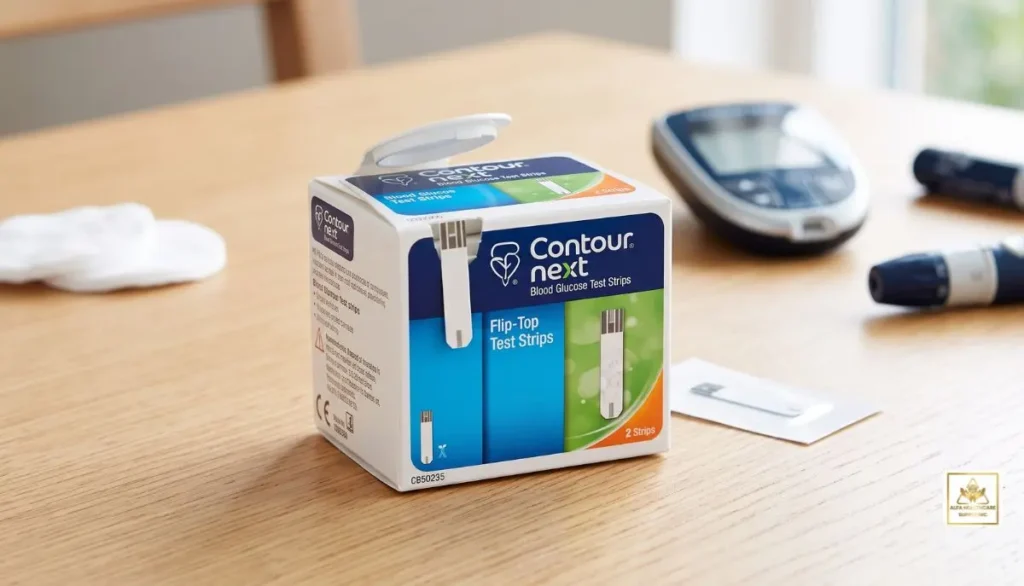
A small amount of blood is applied to the blood glucose test strip to conduct a blood glucose test. The compatible meter then evaluates the sample and provides an output of the blood glucose.
The process is generally straightforward:
- Wash and dry your hands.
- Insert a compatible CONTOUR NEXT test strip into the meter.
- Obtain a small blood sample with a lancing device.
- Apply the blood to the test strip.
- Allow the meter to process the sample.
- Read the blood glucose result.
Some test strips are compatible with CONTOUR NEXT systems. Not all glucose test strips will fit into all blood glucose meters.
How Do CONTOUR NEXT Test Strips Work?
Knowing how the strip relates to the meter makes it easier to understand what is CONTOUR NEXT test strips.
The strip that the blood sample is placed on is called the test strip. After inserting the strip into a compatible CONTOUR NEXT meter, the meter is ready for testing. The meter takes a reading of the glucose level in the sample when the blood is placed on the right zone of the strip and works out a reading based on the measured glucose level.
The specifications may include a small sample requirement, and a short testing time, depending on the system in question for the CONTOUR NEXT. For instance, the current documentation for the CONTOUR NEXT system mentions a sample volume of 0.6 μL and a countdown of 5 seconds for some systems that are compatible with the CONTOUR NEXT system.
This can be a rapid testing process, so there’s still a chance of getting it done right.
Which Meters Use CONTOUR NEXT Test Strips?
The most crucial thing to know about CONTOUR NEXT test strips is that compatibility is key.
CONTOUR NEXT test strips are designed for compatible CONTOUR NEXT blood glucose meters. Examples within the CONTOUR NEXT family include:
- CONTOUR NEXT ONE
- CONTOUR NEXT GEN
- CONTOUR NEXT EZ
- Other compatible CONTOUR NEXT systems
For example, the CONTOUR NEXT ONE is specifically designed to use CONTOUR NEXT blood glucose test strips.
The CONTOUR NEXT EZ also uses CONTOUR NEXT blood glucose test strips.
Make sure you read the exact model name on your meter and understand it is the same model on the test-strip’s package.
Why Does Compatibility Matter?
There are several meters and test strips that are alike. But, they aren’t always interchangeable.
The use of the wrong test strip can render the meter ineffective or may yield an inaccurate result. That’s why it’s important to know the model of your meter before buying.
If you still don’t know what is CONTOUR NEXT test strips or which strips you need, please refer to your meter user guide or consult your healthcare professional or pharmacist.
Key Features of CONTOUR NEXT Test Strips
Now that we have explained what is CONTOUR NEXT test strips, let’s look at some features associated with compatible CONTOUR NEXT systems.
1. Small Blood Sample
Some CONTOUR NEXT systems are developed to use a small sample of blood. The manufacturer’s documentation for the current CONTOUR NEXT systems documents a sample volume of 0.6 μL.
If you’re testing on a regular basis, it’s easier to manage if you need less blood.
2. No Coding Technology
Some CONTOUR NEXT meters are equipped with a No Coding Technology. This eliminates the need for the user to manually enter a code when using test strips which are compatible with it.
If possible, fewer steps in the manual process can make it easier to follow for everyday testing.
3. Second-Chance Sampling
Second-Chance Sampling is available with some compatible CONTOUR NEXT systems. This feature may be used to apply extra blood if insufficient when the meter says so.
This can help minimise strip wastage.
4. Fast Results
Some CONTOUR NEXT systems can give a result in about five seconds. Specifications may differ for each meter model so consult your individual product manual.
How to Use CONTOUR NEXT Test Strips
Knowing what is CONTOUR NEXT test strips is only the first step. Correct use is also important.
Step 1: Wash Your Hands
Wash your hands with soap and water and dry them completely.
Wet fingers can dilute a blood sample, while substances left on your fingers may affect testing.
Step 2: Take Out One Test Strip
Remove one CONTOUR NEXT test strip from its container or package.
If your strips are supplied in a bottle, close the bottle promptly after removing the strip. Keeping strips protected from moisture is important.
Step 3: Check the Expiration Date
Before using the strip, check its expiration date.
Do not use expired test strips. If you notice damaged packaging or strips that appear compromised, follow the manufacturer’s instructions rather than using them.
Step 4: Insert the Strip
Insert the appropriate end of the test strip into your compatible CONTOUR NEXT meter.
Wait until the meter indicates that it is ready for a blood sample.
Step 5: Obtain a Blood Sample
Use your lancing device according to its instructions to obtain a small blood sample.
Never share a lancing device with another person because of the risk of bloodborne infection.
Step 6: Apply Blood to the Strip
Touch the test strip to the blood sample according to the instructions for your meter.
The strip draws in the sample, allowing the meter to analyze it.
Step 7: Read the Result
Wait for the meter to complete the test and display the blood glucose result.
If the reading seems unusual or does not match how you feel, follow your healthcare professional’s instructions for checking or responding to the result.
How Should CONTOUR NEXT Test Strips Be Stored?
Proper storage is an important part of understanding what is CONTOUR NEXT test strips and how to use them correctly.
Test strips should be protected from conditions that can affect their performance.
For example, manufacturer documentation for certain CONTOUR NEXT systems specifies test-strip storage between 41°F and 86°F with 10%–80% relative humidity. Always follow the storage requirements printed on your specific product packaging because specifications can vary.
Helpful habits include:
- Keep strips in their original container when applicable.
- Close the container promptly after removing a strip.
- Protect strips from excessive heat and humidity.
- Do not use expired strips.
- Avoid using damaged strips.
- Follow the storage instructions on the package.
A simple storage routine can help protect your testing supplies.
Common Mistakes to Avoid
When learning what is CONTOUR NEXT test strips, it is also useful to know what can interfere with testing.
Using Wet Hands
Always dry your hands completely after washing.
Using Expired Strips
Check the expiration date before testing.
Leaving the Container Open
Moisture can affect test strips. Close the container according to the manufacturer’s instructions.
Buying the Wrong Strips
Check your meter model before purchasing replacement strips.
Applying Too Little Blood
Follow your meter’s instructions for obtaining and applying the blood sample.
Ignoring Repeated Unexpected Results
If you repeatedly receive readings that seem unusual, follow your healthcare professional’s guidance and check your testing technique and supplies.
Are CONTOUR NEXT Test Strips Accurate?
People often ask about accuracy after searching what is CONTOUR NEXT test strips.
CONTOUR NEXT test strips are designed to provide blood glucose measurements when used with compatible meters and according to the manufacturer’s instructions. However, the result can be affected by several factors, including the meter, strip condition, storage, blood sample, testing technique, and environmental conditions.
Manufacturer documentation provides specific performance and operating requirements for individual CONTOUR NEXT systems.
For this reason, correct testing technique is just as important as choosing the right test strip.
How to Choose the Right CONTOUR NEXT Test Strips
If you are shopping for CONTOUR NEXT test strips, take a few moments to check:
1. Your Meter Model
Look carefully at your meter. Confirm whether it is a CONTOUR NEXT ONE, CONTOUR NEXT GEN, CONTOUR NEXT EZ, or another model.
2. Test-Strip Compatibility
Make sure the product specifically states compatibility with your meter.
3. Package Quantity
Different packages may contain different numbers of strips. Choose a quantity that fits your testing routine and healthcare plan.
4. Expiration Information
Check the expiration date and package condition when you receive your supplies.
5. Storage Requirements
Read the manufacturer’s storage instructions and store the strips appropriately.
At Alfa Healthcare Supply Inc., customers can explore diabetic supplies and other healthcare products while checking product information before ordering.
Why Having the Right Test Strips Matters
For someone who checks blood glucose regularly, test strips are not simply accessories. They are an important part of the blood glucose testing system.
A compatible meter and test strip work together to produce the reading. If the wrong strip is used, the testing process may not work as intended.
That is why the simple answer to what is CONTOUR NEXT test strips is more than just “a piece of paper used for a glucose test.” They are specialized testing components designed to work with compatible blood glucose meters.
CONTOUR NEXT Test Strips: A Simple Daily Routine
For many people, blood glucose testing becomes easier when it follows the same routine each time.
Think of it as:
Wash → Dry → Insert → Sample → Apply → Wait → Read
Keeping your supplies organized can also help. Store your meter, test strips, lancets, and other testing supplies in a convenient place according to their storage instructions.
When the process becomes familiar, testing can feel less complicated.
Final Thoughts: What Is CONTOUR NEXT Test Strips?
So, what is CONTOUR NEXT test strips? They are specialized, disposable blood glucose testing strips designed to work with compatible CONTOUR NEXT meters. They allow the meter to analyze a small blood sample and provide a blood glucose reading.
For everyday diabetes testing, the basics are important: use the correct strips, check the expiration date, store them properly, wash and dry your hands, follow the meter instructions, and use the strips only with compatible equipment.
If you are looking for CONTOUR NEXT test strips or other diabetic supplies, Alfa Healthcare Supply Inc. provides healthcare and medical supply products for everyday needs.
Choosing the right testing supplies does not have to feel complicated. Start by checking your exact meter model and confirming that the test strips are compatible.
Alfa Healthcare Supply Inc. is committed to making healthcare supply information easier to understand so customers can make informed choices about the products they use.
Frequently Asked Questions
What is CONTOUR NEXT test strips?
CONTOUR NEXT test strips are disposable blood glucose testing strips designed for use with compatible CONTOUR NEXT blood glucose meters. A small blood sample is applied to the strip, and the meter analyzes the sample to provide a glucose reading.
What meter uses CONTOUR NEXT test strips?
Compatible CONTOUR NEXT meters, including models such as CONTOUR NEXT ONE, CONTOUR NEXT GEN, and CONTOUR NEXT EZ, use CONTOUR NEXT blood glucose test strips. Always confirm compatibility with your exact meter model.
Do CONTOUR NEXT test strips require coding?
Compatible CONTOUR NEXT systems may use No Coding technology, which removes the need for manual coding. Features vary by meter model.
How much blood is needed for CONTOUR NEXT test strips?
Certain compatible CONTOUR NEXT systems specify a 0.6 μL blood sample. Check the user guide for your particular meter and test strips.
How fast do CONTOUR NEXT systems provide results?
Certain CONTOUR NEXT systems provide a glucose result in about five seconds. Exact performance depends on the meter model.
Can I use any glucose test strip with a CONTOUR NEXT meter?
No. You should use the test strips specified for your particular CONTOUR NEXT meter. Always check compatibility before purchasing.
How should I store CONTOUR NEXT test strips?
Store them according to the manufacturer’s instructions and protect them from excessive heat, cold, humidity, and moisture. Keep containers closed when applicable.
Can I use expired CONTOUR NEXT test strips?
Expired test strips should not be used. Check the expiration date before testing and follow the manufacturer’s instructions.
This article is for educational purposes only and does not replace professional medical advice. Always follow the manufacturer’s instructions and your healthcare professional’s recommendations for blood glucose monitoring.