


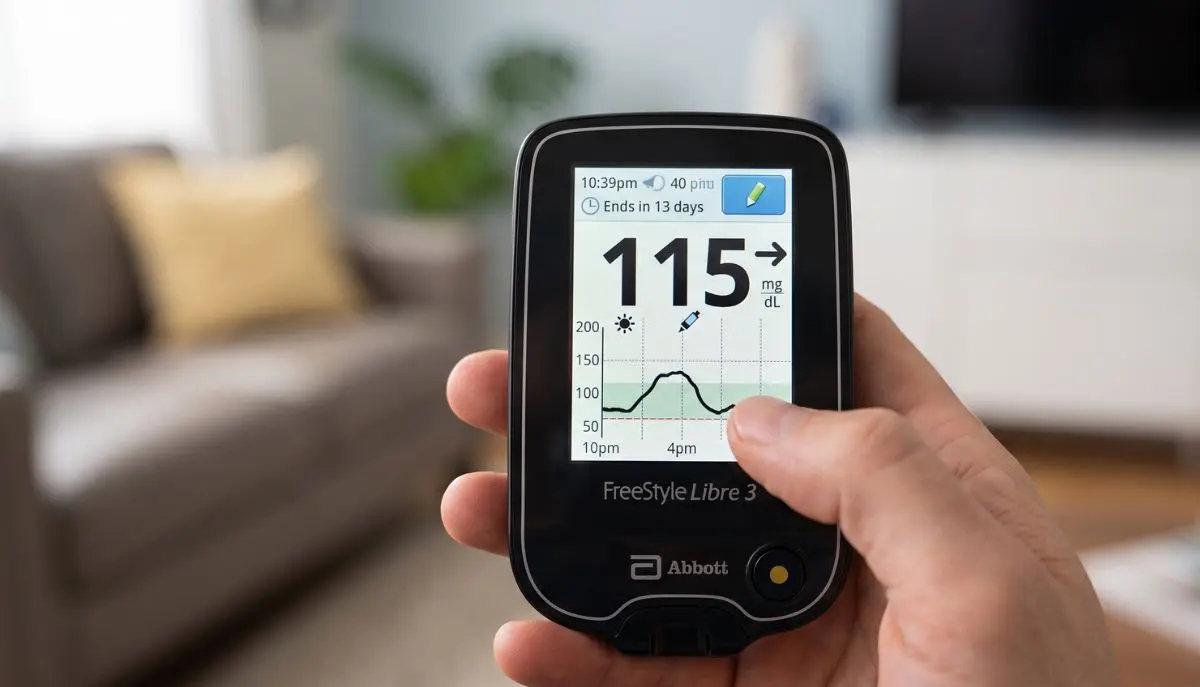
If you are searching for “what is FreeStyle Libre 3 reader device,” you may already know that continuous glucose monitoring (CGM) can make checking glucose easier. But you may still wonder what the reader actually does, how it works with a sensor, whether you need a smartphone, what information it displays, and where you can get one.
The FreeStyle Libre 3 Reader is a handheld device designed to receive glucose information from a compatible FreeStyle Libre 3 sensor. Instead of relying only on a smartphone, the reader gives users another way to view glucose readings and receive certain alerts. Abbott describes the reader as handheld, lightweight, and equipped with a backlit color touchscreen. It can also store approximately 90 days of glucose history and notes. For people who prefer a dedicated medical device, do not want to depend on a smartphone, or need an alternative way to view CGM information, understanding the reader can be helpful.
This guide from Alfa Healthcare Supply Inc. explains the FreeStyle Libre 3 Reader in simple language, including what it is, how it works, its important features, how it differs from traditional glucose meters, who may use it, and important considerations before purchasing.
Important: The FreeStyle Libre system is a prescription medical device in the United States. Always follow the current Abbott instructions and your healthcare professional’s guidance for using the system and making treatment decisions.
The FreeStyle Libre 3 Reader is a handheld glucose-reading device that works with a compatible FreeStyle Libre 3 sensor.
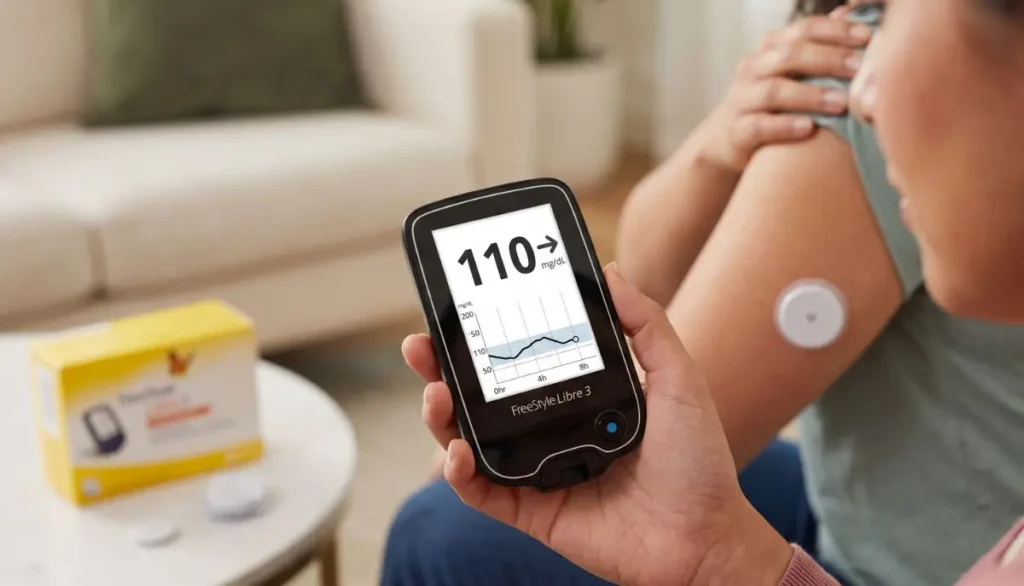
The sensor is worn on the body and measures glucose continuously. Once the sensor is active, glucose information can be transmitted to a compatible reader. Abbott explains that the FreeStyle Libre 3 Reader receives glucose readings through streaming from the sensor and can provide glucose alarms.
In simple terms:
Sensor → measures glucose → sends information → FreeStyle Libre 3 Reader → displays glucose information
This means the reader acts as a dedicated screen for the CGM system.
Rather than carrying out a traditional fingerstick every time you want to see a glucose value, the CGM system is designed to provide ongoing glucose information through the sensor and compatible reading device.
The reader is different from the sensor itself.
The sensor is the small wearable component placed on the body. It collects glucose information continuously.
The reader is the handheld device used to view information received from the sensor.
The FreeStyle Libre system can also work with compatible smartphones and the Libre app. Abbott currently states that the FreeStyle Libre 3 system includes the Libre 3 Plus sensor, Libre 3 sensor, Libre 3 app, Libre app, and Libre 3 reader.
The process is easier to understand when you break it into a few basic steps.
The sensor is placed according to Abbott’s instructions. It continuously collects glucose information.
After the sensor is started and active, glucose readings can be streamed to the FreeStyle Libre 3 Reader.
One major difference from the FreeStyle Libre 2 reader is that the FreeStyle Libre 3 system can automatically send real-time readings to the reader without requiring a scan once the sensor is active.
You can use the reader’s touchscreen to see your glucose information and understand the direction of your glucose trend.
Depending on the system settings and circumstances, the reader can provide glucose alarms. Abbott notes that alarms need to be enabled and that the sensor must remain within the applicable communication range of the reading device.
The reader can store approximately 90 days of glucose history and notes entered about activities such as eating, exercising, or taking insulin.
This historical information can be useful when reviewing patterns with a healthcare professional.
Smartphones are convenient, but they are not the right choice for everyone.
A dedicated reader can be useful for someone who wants a separate device specifically for glucose monitoring.
For example, some people may prefer:
For some families, a dedicated reader may also make diabetes management easier because the CGM reading device is separate from everyday phone activities.
The important point is that the reader is not simply another version of a traditional blood glucose meter. It is part of a continuous glucose monitoring system.
It is easy to confuse a CGM reader with a traditional blood glucose meter.
They work differently.
A traditional meter generally requires:
The result represents the glucose level measured from that particular blood sample.
A CGM uses a sensor worn on the body to continuously collect glucose information. The information can then be displayed through a compatible reader or smartphone.
Abbott describes CGM systems as pairing a wearable sensor with an app or reader to provide glucose information continuously.
That gives the user a different type of information: not simply one individual glucose test, but an ongoing picture of glucose changes.
The reader is designed to make glucose information easy to view.
Depending on the system status and information available, the reader can provide glucose readings and trend information.
The reader can also provide alarms when configured and applicable.
One advantage of CGM technology is that glucose information can help users recognize patterns rather than looking at isolated readings.
For example, a person may be able to notice how glucose changes around:
However, the reader should not replace professional medical advice.
Glucose information needs to be interpreted in the context of your individual treatment plan.
No, the FreeStyle Libre 3 Reader is designed as a dedicated reader.
This is one of the reasons people may look for the reader when considering a FreeStyle Libre CGM system.
The FreeStyle Libre ecosystem also includes smartphone applications, but the reader provides a separate way to view glucose information.
Abbott notes that the apps have specific smartphone and operating-system compatibility requirements.
If you are considering using a smartphone instead of the reader, it is important to check Abbott’s current compatibility information rather than assuming every phone will work.
Yes, the FreeStyle Libre 3 system is designed for automatic glucose transmission when the compatible sensor and reader are operating as intended.
Abbott specifically identifies automatic real-time readings as a feature of the FreeStyle Libre 3 system.
This is different from the older FreeStyle Libre 2 reader experience.
With the FreeStyle Libre 2 system, users generally needed to scan the sensor to obtain readings.
With the FreeStyle Libre 3 system, compatible readings are automatically streamed to the reader once the sensor is active.
That distinction is important when deciding which type of glucose-monitoring device fits your needs.
The reader includes several features intended to support everyday glucose monitoring.
The FreeStyle Libre 3 Reader is designed to be carried and used as a dedicated glucose-reading device.
Abbott describes the reader as having a backlit color touchscreen.
A touchscreen can make navigating glucose information more straightforward than using multiple physical buttons.
The reader receives glucose information from the compatible sensor.
This allows users to view glucose information without repeatedly performing traditional fingerstick tests simply to obtain a reading.
The system can provide alarms for certain glucose conditions when alarms are enabled and the system is being used within the applicable communication requirements.
Abbott’s product information states that the reader can store approximately 90 days of glucose history and notes.
This can be useful when looking at longer-term patterns.
An important feature of the FreeStyle Libre 3 Reader is its built-in meter for blood glucose testing.
However, this does not mean you can perform a traditional blood glucose test without additional supplies.
Abbott states that the built-in meter requires FreeStyle Precision Neo blood glucose test strips, control solution, a lancing device, and lancets, which are not included with the reader kit.
Yes, the reader includes a built-in blood glucose meter.
However, the CGM sensor and the built-in blood glucose meter are two different functions.
The CGM sensor provides glucose information through the continuous monitoring system.
The built-in meter can be used with the appropriate blood glucose test strips and other required supplies.
Abbott explains that FreeStyle Precision Neo test strips, control solution, a lancing device, and lancets are needed for the built-in meter and are obtained separately.
Therefore, when purchasing or using a reader, it is important to understand exactly which supplies are included and which need to be purchased separately.
The FreeStyle Libre 3 Reader can store approximately 90 days of glucose history and notes, according to Abbott’s product information.
Having historical information can be helpful when discussing glucose patterns with a healthcare professional.
For example, instead of remembering what happened several weeks ago, stored information can provide a record of glucose patterns and notes.
However, stored data should be considered a monitoring resource—not a substitute for professional interpretation.
One of the most useful aspects of CGM technology is that it can show more than a single number.
Imagine checking a traditional meter and seeing:
Glucose: 120 mg/dL
That tells you the glucose level at that moment.
A CGM can provide additional information about where glucose is going.
For example, glucose may be:
Trend information can provide additional context.
This can be especially helpful when discussing patterns with a healthcare professional.
However, users should follow their prescribed treatment plan and should not make treatment decisions solely from assumptions about trend information.
The appropriate device depends on the individual’s medical needs, prescription, insurance coverage, compatible sensor, and healthcare professional’s recommendations.
People who may consider a reader include individuals who:
Your healthcare professional can help determine whether the system is appropriate for you.
In the United States, the FreeStyle Libre 3 system is a prescription medical device.
Abbott’s safety information states that federal law restricts the device to sale by or on the order of a physician.
Therefore, consumers should not treat the FreeStyle Libre 3 Reader like an ordinary electronics product.
A prescription and applicable payer requirements may apply.
Coverage also depends on the individual’s insurance plan and eligibility.
Abbott states that the FreeStyle Libre 3 Reader can be purchased through participating durable medical equipment suppliers and retail pharmacies. Product availability may vary.
For customers looking for diabetes supplies, Alfa Healthcare Supply Inc. provides medical supply products and serves customers in New York.
Before purchasing, it is a good idea to confirm:
Because medical-device availability can change, checking the supplier’s current inventory and product information is important.
Insurance coverage can vary significantly.
Some patients may have coverage through Medicare or commercial insurance, while others may have different eligibility requirements or out-of-pocket costs.
Abbott specifically notes that Medicare and other payer criteria may apply.
Do not assume that a CGM reader will automatically be covered simply because you have insurance.
Before ordering, consider contacting:
Ask about:
The exact contents can depend on the product package and supplier.
It is important not to assume that every supply needed for the complete monitoring process comes inside the reader package.
For example, Abbott’s product information specifically says that supplies needed for the reader’s built-in blood glucose meter—including test strips, control solution, a lancing device, and lancets—are not included in the reader kit.
Before purchasing, check the current package contents.
This small step can prevent an unpleasant surprise when you are ready to begin testing.
The reader is designed around a touchscreen interface, and Abbott provides a quick-start guide, quick-reference guide, and user manual.
Still, every medical device requires proper setup.
If you are new to CGM technology, take time to:
A few minutes spent learning the device can make daily use much more comfortable.
Do not ignore symptoms simply because the reader shows a number that appears normal.
Abbott’s safety information explains that fingersticks are required when glucose readings or alarms do not match symptoms or when the system displays the appropriate blood glucose symbol.
If you experience symptoms that concern you:
The reader is an important monitoring tool, but it should be used as part of your overall diabetes-management plan.
Many users wonder whether they should use a reader or smartphone.
There is no single answer for every person.
A reader may be attractive if you prefer:
The Libre app may be attractive if you prefer:
Abbott notes that app compatibility depends on the smartphone model and operating system.
The important thing is to confirm current compatibility rather than choosing based only on the phone’s brand.
Depending on the system, compatible Libre applications can support data sharing with caregivers and healthcare professionals.
Abbott describes features that allow users to share glucose data with loved ones through LibreLinkUp and provide information to healthcare professionals through LibreView.
However, sharing functionality depends on compatible devices, applications, internet connectivity, account setup, and other requirements.
If sharing is important to your diabetes-management routine, review the current Abbott instructions before relying on it.
This is one of the most common points of confusion.
The sensor is worn on the body.
Its job is to collect glucose information.
The reader is the handheld device.
Its job is to receive and display glucose information from the compatible sensor and provide applicable alarms and other reader functions.
Think of the sensor as the measurement component and the reader as the display and monitoring component.
You need the compatible system components to work together according to the manufacturer’s instructions.
No.
These are separate components.
The FreeStyle Libre 3 Reader is the handheld reading device.
The FreeStyle Libre 3 Plus sensor is the newer sensor option in Abbott’s current FreeStyle Libre 3 system.
Abbott’s current U.S. website states that the FreeStyle Libre 3 system includes the Libre 3 Plus sensor, Libre 3 sensor, Libre 3 app, Libre app, and Libre 3 reader.
Abbott also currently states that the FreeStyle Libre 3 sensor is being discontinued and encourages users to discuss moving to the FreeStyle Libre 3 Plus sensor with their doctor.
This is particularly important if you are searching for older FreeStyle Libre 3 products.
Always verify current availability and compatibility before ordering.
The FreeStyle Libre software ecosystem is changing.
Abbott’s current support page says the FreeStyle Libre 3 app will be phased out and recommends transitioning to the Libre app with the next sensor. This does not mean you should make changes without checking the manufacturer’s instructions.
If you currently use the FreeStyle Libre 3 app, review Abbott’s latest transition guidance and confirm your smartphone’s compatibility with the current Libre app.
Yes.
The FreeStyle Libre 3 system is a continuous glucose monitoring system, commonly called a CGM.
A CGM uses a wearable sensor and a compatible reader or smartphone to provide glucose information.
Abbott explains that CGM systems pair a small sensor worn on the back of the upper arm with an app or reader.
This approach is different from checking glucose only occasionally with a conventional blood glucose meter.
For some people, having a dedicated reader provides peace of mind.
Your smartphone might have:
A dedicated reader keeps glucose monitoring separate.
It can be especially convenient for someone who wants a device whose primary purpose is viewing glucose information.
The right choice depends on personal preference, medical needs, device compatibility, and healthcare guidance.
Before purchasing a reader, ask yourself a few practical questions.
The FreeStyle Libre system is prescription-only in the United States.
Reader and sensor compatibility matters.
The FreeStyle Libre product line is evolving, and Abbott currently identifies the Libre 3 sensor as being discontinued in favor of the Libre 3 Plus sensor.
Check your plan rather than assuming coverage.
If you want to use the reader’s built-in blood glucose meter, the necessary test strips and related supplies are purchased separately.
Check Abbott’s current compatibility list.
These questions can make the purchasing process much smoother.
A medical supply supplier can be useful when you need more than simply a product shipped to your door.
Customers often have practical questions about:
At Alfa Healthcare Supply Inc., customers can explore a range of diabetes and medical supply products.
The company’s website can be used to review currently available products and contact the supplier for product-related questions.
If you have been prescribed the system, these simple habits can make getting started easier.
Medical-device instructions can change. Always use the latest manufacturer documentation.
Do not assume that every Libre sensor works with every Libre reader.
A dedicated device is only useful when it has sufficient battery power.
Understanding what an alarm means before you need it can make the experience less stressful.
If your healthcare plan calls for fingerstick testing, keep the appropriate meter and supplies available.
Do not rely blindly on a device reading when it does not match how you feel.
If you are unsure about sensor application, readings, alarms, or treatment decisions, ask your healthcare professional or manufacturer support.
So, what is FreeStyle Libre 3 Reader device?
In simple terms, it is a dedicated handheld device that receives and displays glucose information from a compatible FreeStyle Libre 3 sensor.
It is more than a simple glucose meter. The reader is part of a continuous glucose monitoring system and can provide ongoing glucose information, applicable alarms, stored history, and a built-in blood glucose meter when used with the required supplies.
For someone who prefers not to depend entirely on a smartphone, a dedicated reader can be a practical option.
At the same time, the FreeStyle Libre product line continues to evolve. Abbott’s current information highlights the Libre 3 Plus sensor and says the FreeStyle Libre 3 sensor is being discontinued, so anyone purchasing or replacing equipment should verify current sensor, reader, app, and compatibility information before ordering.
If you are looking for diabetes supplies or want to check current availability, you can visit Alfa Healthcare Supply Inc. and review its diabetes supply options.
The FreeStyle Libre 3 Reader is a handheld device designed to receive and display glucose information from a compatible FreeStyle Libre 3 sensor. It has a backlit color touchscreen, can provide glucose alarms, and can store approximately 90 days of glucose history and notes.
No. The reader is a dedicated handheld reading device. The FreeStyle Libre system also offers smartphone-based options, but smartphone compatibility requirements apply.
The FreeStyle Libre 3 system automatically streams glucose readings to a compatible reader after the sensor is active, so routine scanning is not required in the same way it was with the FreeStyle Libre 2 system.
Yes. The FreeStyle Libre 3 Reader includes a built-in blood glucose meter. However, separate FreeStyle Precision Neo test strips, control solution, a lancing device, and lancets are required.
Abbott states that the reader can store approximately 90 days of glucose history and notes.
Abbott states that the reader can be purchased through participating DME suppliers and retail pharmacies, although availability may vary.
In the United States, the FreeStyle Libre 3 system is restricted to sale by or on the order of a physician.
Yes. The FreeStyle Libre 3 Reader can provide applicable glucose alarms when the alarm settings are enabled and system requirements are met.
No. The reader and sensor are different components. The sensor collects glucose information, while the reader displays information received from the compatible sensor.
Availability can change. Abbott’s current support information says the FreeStyle Libre 3 sensor is being discontinued and directs users toward the FreeStyle Libre 3 Plus sensor. The reader remains listed as part of the FreeStyle Libre 3 system.
Coverage depends on the patient’s insurance plan and applicable eligibility requirements. Medicare and other payer criteria may apply.
The reader provides glucose information, but users should follow their healthcare professional’s treatment instructions. Abbott advises reviewing the complete safety information and using additional blood glucose testing when indicated.
Medical disclaimer: This article is for general educational purposes and is not a substitute for medical advice, diagnosis, or treatment. Always follow the current manufacturer’s instructions and your healthcare professional’s recommendations for CGM use, glucose testing, and treatment decisions.