


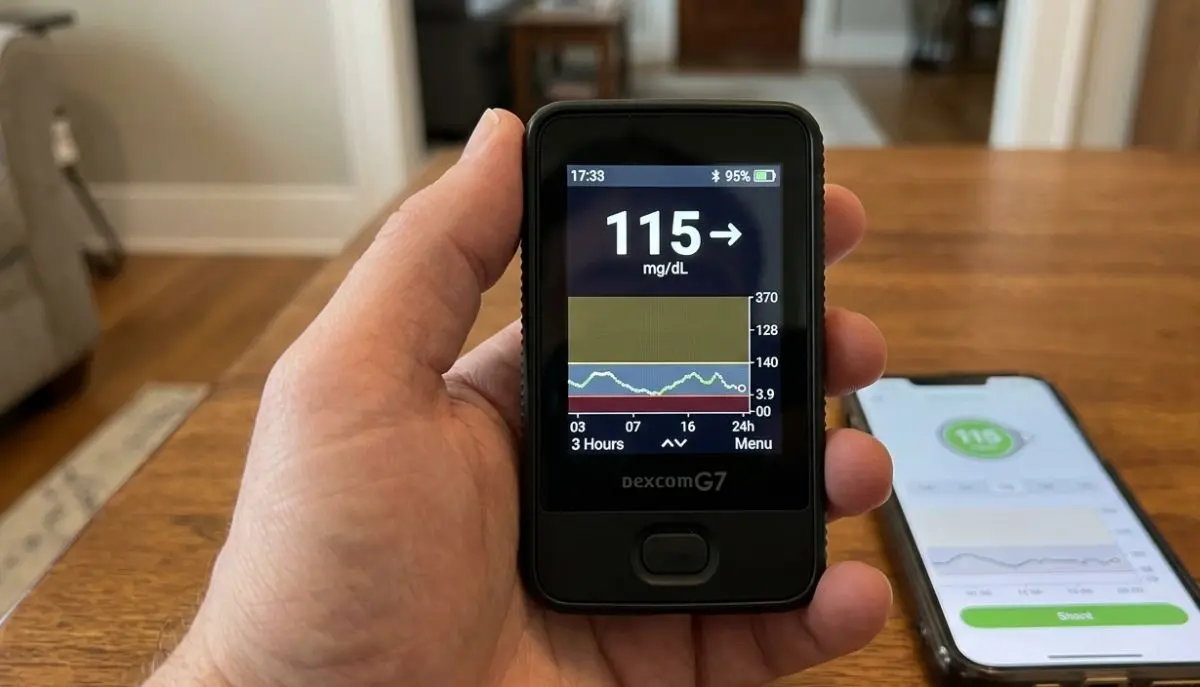
If you use a Dexcom G7 Continuous Glucose Monitoring (CGM) system, having a reliable way to view your glucose information can make everyday diabetes management easier. While many people use the Dexcom G7 mobile app on a compatible smartphone, others prefer a dedicated receiver.
This leads to a common question: where can I buy a Dexcom G7 receiver?
You can purchase a Dexcom G7 receiver through appropriate medical supply channels, healthcare providers, and authorized suppliers. Alfa Healthcare Supply Inc. also lists the Dexcom G7 Receiver among its diabetic supplies, providing another option for people looking for a medical equipment supplier.
Before purchasing, however, it is important to understand what the receiver does, whether you actually need one, whether your insurance may cover it, and whether the receiver you are buying is compatible with your Dexcom G7 system.
This guide explains these points in simple language so you can make an informed decision with your healthcare provider or diabetes care team.
The Dexcom G7 receiver is a dedicated display device that receives glucose information from a Dexcom G7 sensor.
The sensor is worn on the body and collects glucose information. The receiver then displays information such as glucose readings, trends, graphs, and alerts.
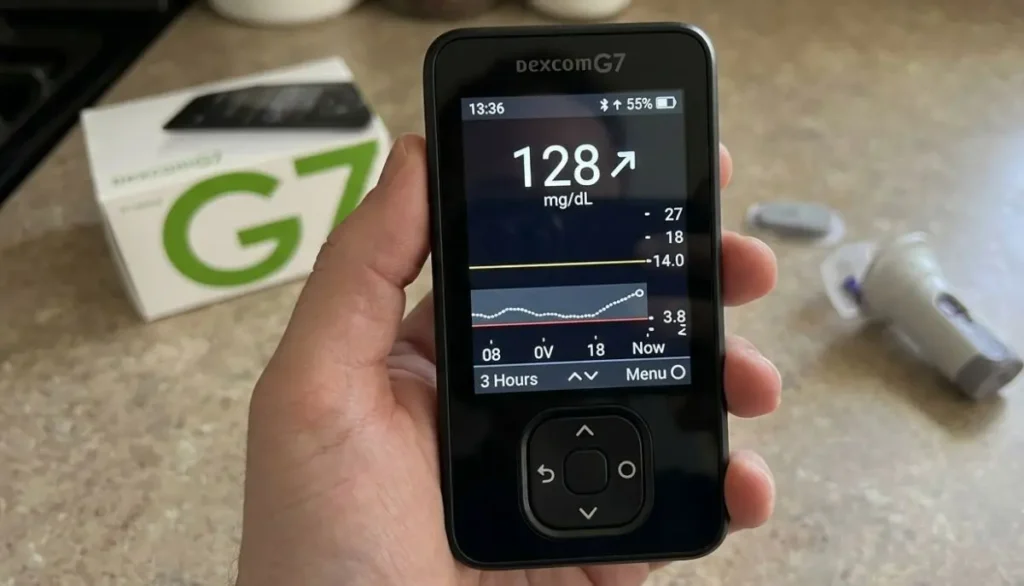
Think of the system in a simple way:
Dexcom G7 Sensor → Glucose Information → Receiver → Glucose Display
The receiver is different from the sensor.
The sensor is the wearable component that collects glucose information, while the receiver is the device you use to view that information.
Dexcom explains that G7 users can choose to use the compatible smartphone app, the receiver, or both at the same time.
That flexibility is helpful because not everyone’s daily routine is the same.
If you are searching online for where can I buy a Dexcom G7 receiver, there are several places you may consider.
Medical supply companies and durable medical equipment (DME) suppliers are one option for obtaining diabetes-related equipment.
Alfa Healthcare Supply Inc. lists the Dexcom G7 Receiver in its diabetic supplies category. Its website currently displays the receiver as a product available through its online medical supply store.
A medical supplier can also be useful when you have questions about:
When ordering a medical device, always provide accurate insurance and prescription information when requested.
Your doctor, endocrinologist, diabetes educator, or other qualified healthcare professional may be able to help you obtain a Dexcom receiver.
This can be particularly useful if you are starting Dexcom G7 for the first time or if your healthcare plan requires documentation or a prescription.
Dexcom’s guidance also recommends contacting your healthcare professional if your CGM is prescribed or provided directly through your healthcare professional and you need a receiver.
Dexcom itself provides information and purchasing options for its receiver products.
If you are considering buying directly from Dexcom, check the current product availability, eligibility requirements, and ordering information on the official Dexcom website.
This is also a useful place to confirm current compatibility information before purchasing.
Depending on your insurance plan and medical circumstances, your receiver may be supplied through a medical equipment provider.
Medicare coverage has specific receiver requirements. Dexcom states that Medicare coverage requires use of a receiver, subject to the applicable coverage rules.
Because insurance policies can change, it is important to confirm your current benefits rather than assuming that every plan handles the receiver in the same way.
No.
This is one of the most important things to understand before you buy one.
Dexcom states that users have the option to use:
A compatible smartphone is required if you choose the app option.
Therefore, the answer to “where can I buy a Dexcom G7 receiver?” should start with another question:
Do I actually need a receiver?
If your smartphone is compatible with Dexcom G7 and you are comfortable using it for glucose monitoring, you may not need a separate receiver.
However, a dedicated receiver can be useful for people who prefer a separate medical device.
Everyone has different habits and needs.
Some people prefer to keep their glucose monitoring separate from their personal smartphone.
For example, you may prefer a receiver because:
Not every smartphone supports every CGM application.
Dexcom maintains a compatibility list because supported devices can change over time. Dexcom recommends checking its current compatibility information before relying on a smartphone for G7 monitoring.
If your phone is not compatible, a dedicated receiver can provide another display option.
Your smartphone may run out of battery.
You may upgrade your phone.
You may accidentally delete an application.
You may simply prefer not to use your personal phone for medical monitoring.
A dedicated receiver gives you another option.
For some people, simplicity matters.
Instead of opening a phone, finding an app, and navigating notifications, you can keep a dedicated receiver with your diabetes supplies.
That can make the daily routine feel more straightforward.
Insurance requirements are another important reason.
For example, Dexcom’s Medicare guidance states that a receiver is required for Medicare coverage.
Always confirm your individual coverage requirements with your insurer and healthcare provider.
No.
This is a very important purchasing consideration.
Dexcom states that the Dexcom G6 receiver is not compatible with the Dexcom G7 sensor. The G7 uses a redesigned receiver.
Therefore, if you are upgrading from G6 to G7, do not assume that your existing G6 receiver will work.
Before ordering, make sure the product is specifically identified as a Dexcom G7 Receiver.
Buying the wrong generation can lead to unnecessary expense and frustration.
If you have searched where can I buy a Dexcom G7 receiver, don’t stop at the first product listing you see.
Take a few minutes to check the following.
Look specifically for a Dexcom G7 Receiver.
Do not confuse it with:
The receiver and sensor are different products.
Your receiver needs to work with the Dexcom system you are using.
Dexcom states that G6 components are not compatible with the G7 system.
If you are using a newer Dexcom G7 product or a connected diabetes device, check the current compatibility information.
Depending on the supplier, insurance arrangement, and applicable rules, you may need a prescription or documentation.
If a supplier asks for prescription information, provide it accurately.
If you are unsure whether you need a prescription, ask the supplier or your healthcare professional.
Do not assume that your insurance will automatically pay for the receiver.
Coverage can depend on:
Ask your insurance company or medical supplier about coverage before placing an order if cost is a concern.
When buying medical equipment online, look for a supplier that clearly identifies its business, product information, contact information, and ordering process.
This is especially important when purchasing equipment that may become part of your daily diabetes-management routine.
A medical supply store can be convenient because it may offer more than one type of diabetes product.
For example, Alfa Healthcare Supply Inc. lists the Dexcom G7 Receiver alongside other diabetes supplies, including glucose monitoring products, test strips, and lancets.
This can be helpful if you are already ordering several diabetes supplies.
Instead of searching for every product separately, you can discuss your needs with one medical supply provider.
If you are considering Alfa Healthcare Supply Inc., visit the company’s website to review current product availability and ordering information.
The receiver and smartphone can both serve as display devices, but they fit different lifestyles.
| Feature | Dexcom G7 Receiver | Compatible Smartphone |
| Dedicated glucose display | Yes | No |
| Requires compatible phone | No | Yes |
| Designed specifically for G7 | Yes | Uses Dexcom G7 app |
| Can be used as a separate device | Yes | No |
| Smartphone notifications | No | Yes |
| Convenient if you already carry a phone | May be less convenient | Often convenient |
| Useful for people avoiding smartphone dependence | Yes | Less suitable |
There is no universal solution for every person.
Your healthcare professional can help you determine which setup fits your medical and personal needs.
Yes.
Dexcom states that you can use the receiver without relying on the Dexcom G7 smartphone app. The company also allows users to use both the receiver and compatible smartphone together.
This makes the receiver useful for someone who does not want their glucose monitoring to depend on a smartphone.
For example, a person may carry the receiver during the day and keep their smartphone separate.
However, always follow the current Dexcom instructions for setup, pairing, alerts, and system use.
Yes.
Dexcom specifically states that you can use both the receiver and the Dexcom G7 app at the same time.
This can provide flexibility.
For example, your smartphone may be convenient when you are already using it, while the receiver can serve as a dedicated backup display device.
However, using multiple display devices does not mean that every feature will work identically on both devices. Always review current Dexcom instructions for your specific setup.
The basic process is easy to understand.
First, the Dexcom G7 sensor is placed according to the manufacturer’s instructions.
The sensor collects glucose information.
The information is transmitted to a compatible display device.
If you are using the receiver, the receiver displays the glucose information.
Depending on your setup, you may see:
The receiver acts as the screen through which you interact with the CGM system.
If your receiver is lost, damaged, or stops working, contact the appropriate supplier or Dexcom support team for guidance.
Do not assume that any generic glucose meter or old Dexcom receiver can replace it.
If you have a compatible smartphone, you may have another display option, but this depends on your specific device and Dexcom compatibility.
For a replacement, keep your purchase information, prescription information, and device details available if requested.
This is one of the situations where a receiver may be especially useful.
Dexcom says that it regularly adds compatible smartphones and recommends checking its current compatibility list. For people whose smartphone is not compatible, Dexcom points to the redesigned G7 receiver as an alternative display option.
Before purchasing a new smartphone simply to use a CGM app, compare the cost and convenience of using the dedicated receiver.
A healthcare professional or medical equipment supplier can also help you understand your available options.
No.
A Dexcom G7 receiver is designed to display information from a Dexcom G7 CGM sensor.
A traditional blood glucose meter measures glucose from a blood sample using a test strip.
These are different technologies.
A person may use both CGM technology and a traditional glucose meter depending on their healthcare plan and circumstances.
If CGM readings do not match how you feel or if you have questions about treatment decisions, follow the manufacturer’s current safety instructions and contact your healthcare professional as appropriate.
The price of a Dexcom G7 receiver can vary by supplier, insurance coverage, location, and purchasing arrangement.
For example, Alfa Healthcare Supply Inc.’s website currently lists the Dexcom G7 Receiver at $249.99, but online prices can change.
Before purchasing, check the current product page for the latest price.
Also consider whether insurance may cover some or all of the cost.
A lower advertised price is not necessarily the final amount you will pay if insurance, prescription, shipping, or other requirements apply.
Yes.
Unlike the wearable sensor, the receiver is a reusable electronic display device.
The sensor is replaced according to its approved wear period and manufacturer’s instructions, while the receiver is intended to be used repeatedly.
This is another reason why you should not think of the receiver as a replacement for the sensor.
You need the appropriate components of the CGM system for it to function as intended.
If you are ready to search for where can I buy a Dexcom G7 receiver, use this checklist:
☐ Confirm that you need a receiver.
☐ Confirm that it is specifically a Dexcom G7 Receiver.
☐ Check your smartphone compatibility.
☐ Check whether your insurance covers the device.
☐ Ask whether a prescription is required.
☐ Confirm supplier availability.
☐ Check the return and warranty information.
☐ Make sure you are not accidentally purchasing a G6 receiver.
☐ Ask your healthcare provider if you are unsure which setup is appropriate.
This small checklist can prevent many common purchasing mistakes.
When searching for a medical supply provider, people often want more than a product listing.
They want clear information, dependable service, and a supplier that understands that healthcare products are part of real people’s everyday lives.
Alfa Healthcare Supply Inc. is a medical supply and DME provider serving patients and caregivers with a range of healthcare products.
Its online diabetic supplies category currently includes the Dexcom G7 Receiver along with other glucose-monitoring products.
For someone searching where can I buy a Dexcom G7 receiver, Alfa Healthcare Supply Inc. can be one supplier to consider when checking product availability and ordering requirements.
If you have questions about the receiver, insurance, prescription documentation, or delivery, contact the supplier directly before ordering.
So, where can I buy a Dexcom G7 receiver?
You can look for the device through Dexcom, your healthcare provider, and qualified medical equipment suppliers. Alfa Healthcare Supply Inc. currently lists the Dexcom G7 Receiver in its online diabetic supplies category.
Before you purchase, remember these important points:
Most importantly, don’t feel pressured to figure everything out by yourself. If you are starting a CGM system, upgrading from another Dexcom model, or trying to understand your insurance coverage, your healthcare provider and medical equipment supplier can help you identify the appropriate setup.
A receiver may be a small device, but for someone managing diabetes every day, having a display option that feels comfortable and dependable can make the routine a little easier.
You can purchase or obtain a Dexcom G7 receiver through Dexcom, healthcare providers, and qualified medical equipment suppliers. Alfa Healthcare Supply Inc. currently lists the Dexcom G7 Receiver in its diabetic supplies category.
Prescription requirements can depend on your healthcare situation, supplier, and insurance. Ask your healthcare provider or medical supplier about the current requirements before ordering.
No. Dexcom states that the G6 receiver is not compatible with Dexcom G7 sensors.
Yes. If you have a compatible smartphone, you can use the Dexcom G7 app as your display device. Dexcom also allows users to use the receiver alone or both the receiver and app.
Yes. The receiver can be used as a dedicated display device without relying on the Dexcom G7 smartphone app.
Dexcom states that Medicare coverage requires use of a receiver, subject to the applicable Medicare coverage requirements.
Prices vary by supplier and coverage. Alfa Healthcare Supply Inc.’s website currently lists the Dexcom G7 Receiver at $249.99, although prices are subject to change.
No. The sensor is the wearable component that collects glucose information, while the receiver is a display device used to view information from the sensor.
Yes. Dexcom states that users can use the app, receiver, or both at the same time.
Confirm that the product is specifically a Dexcom G7 receiver, check compatibility, review prescription and insurance requirements, and confirm current availability and price with the supplier.
This article is provided for general educational purposes and is not medical advice. Dexcom G7 products should be used according to the manufacturer’s current instructions and your healthcare professional’s recommendations. If you have questions about glucose readings, treatment decisions, device compatibility, or your individual diabetes-management plan, speak with your doctor or qualified diabetes care professional.