



When people first hear the phrase diabetics need special shoes, it often raises questions. Do they really need something different from regular footwear? Is it just a precaution, or is there a deeper medical reason behind it?
The truth is, footwear becomes much more than a daily comfort choice for individuals living with Diabetes. It turns into a form of protection, prevention, and long-term care.
Over time, diabetes can quietly affect the nerves and blood flow in the feet, making them more vulnerable to injuries that might seem small at first—but can quickly become serious if ignored. What makes it even more challenging is that many of these injuries may not be felt right away due to reduced sensation.

This is where the idea that diabetics need special shoes becomes important. It is not about limitation or restriction—it is about safety, support, and maintaining independence in everyday life.
For many people, the right pair of shoes can mean the difference between constant worry and confident, pain-free movement. It’s about walking without fear, staying active longer, and protecting one of the most essential parts of the body—the feet that carry you through every step of life.
When we talk about why diabetics need special shoes, it all starts with understanding what diabetes does quietly inside the body—especially in the feet. Foot health is often overlooked until discomfort or complications appear, but for people living with Diabetes, the feet are one of the most sensitive and vulnerable areas.
At first glance, feet may seem strong and simple—they carry us, balance us, and keep us moving every day. But diabetes can gradually change how they feel and function. Over time, high blood sugar levels can damage tiny blood vessels and nerves, especially in the lower limbs. This condition, often linked with diabetic nerve damage, can reduce sensation in the feet, making it harder to feel pain, heat, or pressure.
This is where the importance of wearing the right footwear becomes evident. When sensation in the feet is reduced, even a minor issue inside the shoe—such as a tight seam, a rough edge, or a slightly snug fit—may go unnoticed. What might otherwise seem like a trivial annoyance can develop into blisters, sores, or injuries without the person realizing it. This is a primary reason why diabetic patients require specialized footwear designed to minimize friction and protect sensitive skin.
Blood circulation is essential for maintaining healthy feet. When circulation is reduced, even minor wounds can take longer to heal, making prevention especially important. Diabetic shoes are designed to encourage better blood flow by reducing pressure points and giving the feet adequate room to move comfortably throughout the day.
There is also an emotional side to this connection. Many people with diabetes begin to feel cautious or even anxious about walking long distances or staying on their feet for too long. Simple daily activities—like going for a walk, shopping, or working—can start to feel uncertain. Proper footwear helps rebuild that confidence, offering stability and reassurance with every step.
In essence, understanding foot health is not just about medical facts—it is about protecting independence and quality of life. That is why the diabetics need special shoes is not just a recommendation; it is a practical step toward preventing complications, supporting healing, and helping people stay active with confidence and comfort.
At first glance, regular shoes may seem perfectly fine for everyday use. They are widely available, stylish, and designed for general comfort. But when it comes to long-term foot protection for people living with Diabetes, they often fall short in ways that are not immediately obvious. This is one of the main reasons diabetics need special shoes instead of relying on standard footwear.
Regular shoes are typically built for average foot shapes and normal sensitivity. They are not designed with medical protection in mind. For someone with diabetes, this difference becomes very important. Reduced nerve sensation can make it difficult to feel pain, pressure, or irritation. So a shoe that feels “fine” at the start of the day may slowly create friction points, tight spots, or rubbing areas without the wearer realizing it.
Another issue is related to fit and how pressure is distributed across the foot. Many standard shoes provide limited room in the toe area, include rigid stitching, or have uneven inner surfaces. These design elements can create excessive pressure on certain points of the foot. Over time, this can result in blisters, calluses, or even open sores. Because healing may be slower due to reduced blood circulation, even small injuries can become serious if they are not noticed and treated early.
Ordinary shoes lack the specialized cushioning and shock-absorbing capabilities essential for protecting sensitive feet. Daily activities like walking and standing subject the soles of the feet to repetitive pressure. Without proper support, this pressure is transmitted directly to the skin and underlying tissues, increasing the risk of discomfort and injury.
Moisture control is another overlooked issue. Many regular shoes do not offer breathable, medical-grade materials that help keep feet dry. Excess moisture can increase the risk of skin breakdown and infection, especially in sensitive diabetic feet.
All these factors point to a simple yet crucial truth: ordinary shoes are designed for everyday use, not for protection. For those at risk of foot-related problems, this distinction is significant. That is why diabetic patients require specialized footwear that reduces pressure, prevents friction, and supports daily foot health.
Regular footwear is designed mainly for everyday comfort and appearance, not for medical support or protection. For individuals with diabetes, this level of protection is often not sufficient.
Regular shoes often:
For someone with reduced sensation, these small issues can go unnoticed until they become wounds or infections.
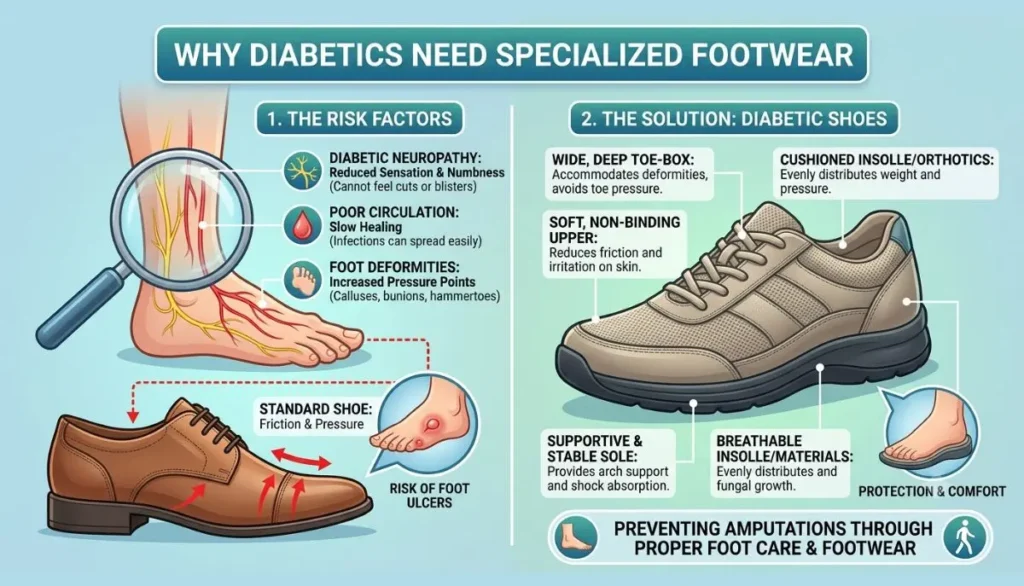
Nerve damage can reduce pain sensation. That means cuts, blisters, or pressure sores may not be felt immediately.
Special diabetic shoes are designed with:
These features help prevent injuries before they start.
Poor circulation is a common issue in diabetic feet. Special shoes help by:
This helps maintain healthier blood flow, reducing complications over time.
Foot ulcers are one of the most serious complications for diabetic patients. Once they form, they can take a long time to heal.
Proper diabetic footwear reduces pressure on high-risk areas, helping prevent ulcers before they develop.
This is a major reason diabetics need special shoes as part of daily care.
Many people with diabetes experience foot sensitivity, swelling, or discomfort when walking.
Special shoes provide:
This makes walking more comfortable and safer.
Diabetes can cause changes in foot structure over time, including swelling or deformities.
Diabetic shoes are designed with:
This ensures a more customized and stable fit.
When people first hear that diabetics need special shoes, the reaction is often emotional before it is practical. It can feel like a reminder of a health condition that demands constant attention, or a sign that everyday choices now come with more caution. For someone living with Diabetes, footwear is no longer just about style or routine comfort—it becomes tied to safety, confidence, and peace of mind.
There is a certain suppressed sense of disappointment that many people do not openly discuss. Switching from ordinary footwear to specially designed medical shoes can feel like a loss—a sacrifice of style, simplicity, or the feeling of living a normal life. Yet, over time, this emotional burden often shifts; what once seemed like a limitation or a hindrance gradually transforms into a source of confidence and comfort.
Because once someone understands why diabetics need special shoes, the perspective changes. It is no longer about restriction; it is about protection. It becomes easier to appreciate that each step taken in the right shoes is a step taken with less worry about hidden injuries, pain, or complications.
There is also a powerful sense of relief that comes with the right pair. Many people describe finally feeling “safe” while walking again—something most people take for granted. That feeling of safety can restore independence in a deeply meaningful way. Simple moments—walking through a store, taking a short stroll, or standing for longer periods—begin to feel possible again without fear in the background.
Over time, diabetic shoes become more than medical equipment. They become part of daily life, quietly supporting mobility and helping people stay active without constant concern. And emotionally, that support matters just as much as the physical protection they provide.
In the end, understanding why diabetics need special shoes is not just about health education—it is about empathy. It is about recognizing that behind every pair of shoes is a person trying to move through life with comfort, dignity, and confidence in every step.
Footwear is more than just a medical tool—it affects confidence and independence.
Many people feel frustrated when they first hear that diabetics need special shoes. It can feel like a limitation. But in reality, the right shoes often bring freedom back:
Good diabetic shoes are not about restriction—they are about protection and independence. diabetics need special shoes.
Not every person with diabetes will need medical footwear immediately, but it is strongly recommended for those who have:
Even individuals in early stages may benefit from preventive protection.
To understand why diabetics need special shoes, it helps to know what sets them apart:
Each feature is designed with prevention in mind.
Ultimately, the answer to why diabetic patients need special footwear lies in a simple principle: prevention is better than cure. For those with diabetes, the feet are not just ordinary body parts; rather, they require constant care, awareness, and protection.
What may seem like a small detail, such as shoe fit or inner cushioning, can make a meaningful difference over time. Reduced sensation and slower healing mean that even minor pressure or friction can quietly develop into serious complications if it goes unnoticed. Special diabetic shoes are designed specifically to reduce these risks, offering a safer and more supportive environment for daily movement.
But beyond the medical benefits, there is also a human side to it. The right footwear restores confidence. It allows people to walk, work, and stay active without constantly worrying about discomfort or hidden injuries. That sense of freedom matters just as much as physical protection.
In the bigger picture, understanding why diabetics need special shoes is really about understanding how small choices in daily life can protect long-term health. A well-designed pair of shoes is not just footwear—it is a form of care, prevention, and independence that supports every step forward.
People with diabetes often experience changes in their feet, including reduced sensation, poor circulation, and a higher risk of injuries. Special diabetic shoes are designed to protect the feet, reduce pressure points, and provide extra comfort. For many individuals, these shoes offer peace of mind, knowing their feet are better protected throughout the day.
Diabetic shoes are built with extra depth, soft interiors, wider toe boxes, and cushioned support. Unlike regular shoes, they are specifically designed to minimize friction and pressure that can lead to blisters, sores, or foot complications. They help create a safer and more comfortable environment for sensitive feet.
Yes. One of the main reasons diabetics need special shoes is to reduce the risk of foot ulcers. These shoes distribute body weight more evenly, helping prevent excessive pressure on certain areas of the foot that can lead to skin breakdown and wounds.
Not everyone with diabetes will require diabetic shoes, but they can be highly beneficial for individuals with neuropathy, poor circulation, foot deformities, previous ulcers, or other diabetes-related foot conditions. A healthcare professional can help determine if diabetic shoes are the right choice.
Diabetic neuropathy is nerve damage caused by diabetes. It can reduce the ability to feel pain, heat, or injuries in the feet. This means a person may not notice a blister, cut, or sore until it becomes serious. Diabetic shoes provide added protection to help lower this risk.
Absolutely. Many people find diabetic shoes more comfortable than traditional footwear because they offer extra cushioning, support, and room for natural foot movement. They are designed to keep feet comfortable whether you’re walking, working, or spending time with family.
Yes. Living with diabetes can sometimes create anxiety about foot health. Wearing diabetic shoes can provide reassurance and confidence, allowing people to stay active and enjoy daily activities without constantly worrying about foot injuries.
Many diabetic shoes feature adjustable closures and extra depth, making them more accommodating for feet that experience swelling throughout the day. This helps maintain comfort without creating tight pressure points.
The lifespan of diabetic shoes depends on how frequently they are worn. Generally, they should be inspected regularly for signs of wear, loss of cushioning, or damaged support. Replacing worn shoes helps ensure continued protection and comfort.
Yes. Most diabetic shoes are designed to accommodate custom orthotics or diabetic inserts. These inserts can provide additional cushioning, pressure relief, and support tailored to an individual’s specific foot needs.
No. Diabetes can affect people of all ages. Anyone with diabetes who experiences foot-related concerns may benefit from diabetic shoes, regardless of age. Protecting foot health early can help prevent future complications.
The greatest benefit is protection. Diabetic shoes help reduce the risk of injuries, ulcers, and complications while improving comfort and mobility. Beyond physical benefits, they can also provide emotional comfort, helping individuals feel more secure and confident in their daily lives.