


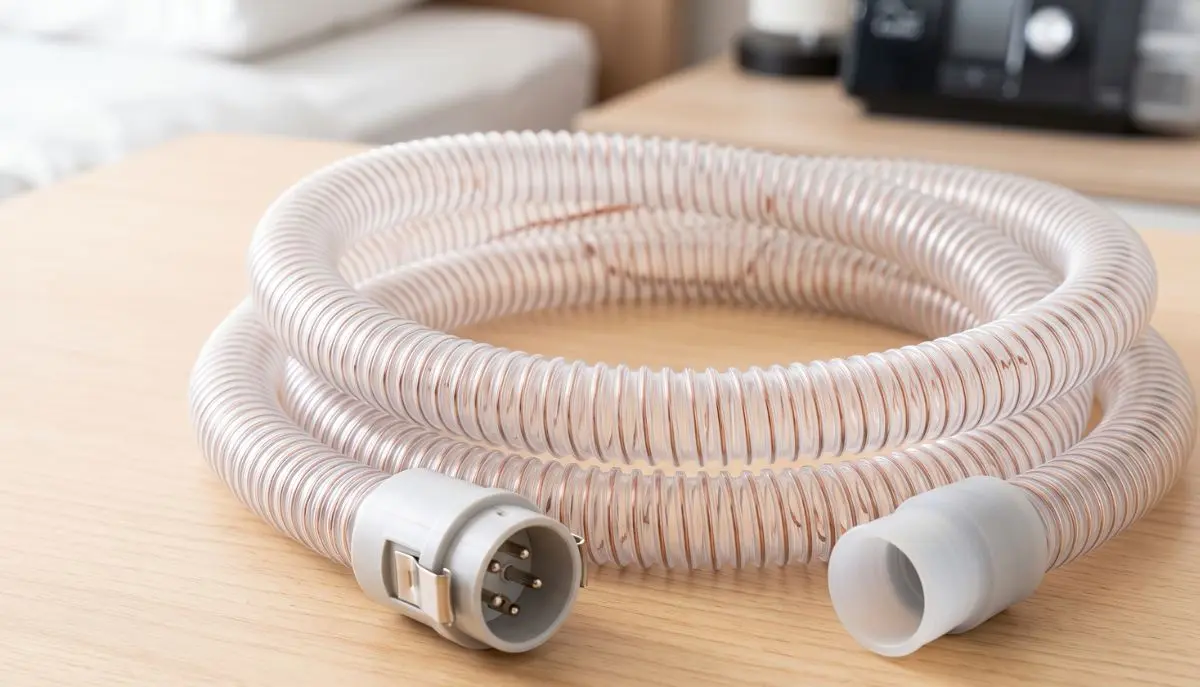
How Do I Know If My CPAP Heated Tubing Is Working?
If you use a CPAP machine at night, you may have wondered: how do I know if my CPAP heated tubing is working?
This is a common question, especially when you are new to heated CPAP tubing. Unlike a CPAP machine, heated tubing does not always feel obviously “hot.” Its purpose is usually to keep the air at a comfortable temperature and help reduce condensation, sometimes called rainout, as humidified air travels from the machine toward your mask.
A heated tube may be working correctly even when it only feels slightly warm—or when you do not notice a temperature difference by touch.
The good news is that there are several simple ways to check your tubing.
If you use a compatible ResMed system, for example, the device can recognize compatible heated tubing. ResMed’s ClimateLineAir 11 user guide states that when the tube is connected correctly, “ClimateLine connected” briefly appears on the device screen.
This guide explains what to look for, how heated CPAP tubing works, what symptoms can suggest a problem, and what to do if your tube does not seem to be heating.
What is Heated CPAP Tubing?
Heated CPAP tubing is an air hose designed to deliver pressurized air from your CPAP or bilevel machine to your mask while controlling the temperature of the air traveling through the tube.
A standard CPAP hose simply carries air.
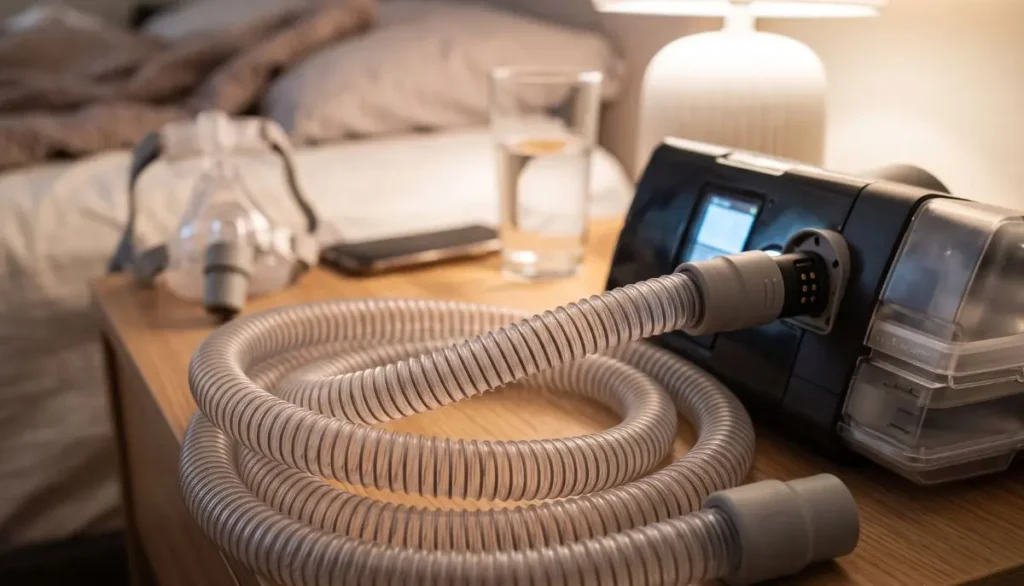
A heated hose contains heating components that allow compatible CPAP equipment to control the temperature of the air. Some systems also use sensors to help regulate the temperature close to the mask.
For example, ResMed describes the ClimateLineAir 11 as a heated breathing tube designed to deliver air to a compatible mask. When used with the appropriate humidifier, it enables the Climate Control feature.
The main reasons people use heated tubing include:
- Reducing condensation inside the tubing
- Helping control “rainout”
- Making humidified CPAP air more comfortable
- Helping maintain a more consistent temperature
- Reducing the chance of cold air reaching the mask
- Working with compatible humidifiers and climate-control systems
Heated tubing is particularly useful for people who use CPAP humidification and notice water collecting in the tubing or mask.
How Do I Know If My CPAP Heated Tubing Is Working?
There are several signs that can help you determine whether your heated CPAP tubing is functioning correctly.
You should not rely on just one test.
Instead, check the machine connection, settings, tubing condition, condensation, and how the air feels during therapy.
Here are the most useful checks.
1. Check Whether Your CPAP Machine Recognizes the Heated Tube
One of the easiest ways to check a compatible heated tube is to look at your CPAP machine after connecting it.
For compatible ResMed Air11 equipment, the ClimateLineAir 11 user guide says to connect the heated tube firmly to the device. When the connection is recognized, “ClimateLine connected” briefly appears on the device screen.
This is important because the tube is not simply a regular hose.
The electrical connector needs to make proper contact with the compatible machine.
What to do
- Turn off your CPAP machine.
- Disconnect the tubing.
- Inspect the connector.
- Reconnect the heated tubing firmly.
- Turn the machine on.
- Watch the display for the appropriate tubing or climate-control indication.
If your machine specifically recognizes the heated tube, that is a strong indication that the electrical connection is functioning.
However, the exact display message depends on your CPAP manufacturer and model.
2. Check the Heated Tubing Setting
Another way to determine whether your heated CPAP tubing is working is to check your machine’s temperature settings.
Some CPAP systems allow you to select a tube temperature.
For example, ResMed systems using compatible ClimateLineAir heated tubing can provide a tube-temperature setting. Depending on the machine and configuration, the temperature may be adjusted within a specified range.
For AirSense 10 and AirCurve systems, ResMed states that tube temperature can be adjusted from approximately 60°F to 86°F (16°C to 30°C) when using the appropriate ClimateLineAir configuration.
On compatible Air11 systems, the default Auto tube temperature is approximately 80°F (27°C), while manual settings can be adjusted between 60°F and 86°F (16°C–30°C).
If you can see a tube-temperature setting on your machine, that is useful evidence that the device has detected compatible heated tubing.
3. Do Not Expect the Tube to Feel Hot
This is one of the most important things to understand.
A functioning heated CPAP tube does not necessarily feel hot.
The goal is generally controlled, comfortable temperature—not a very warm hose.
If you touch the tubing and think:
“It isn’t hot, so it must not be working.”
that conclusion may be incorrect.
Heated tubing is designed to regulate temperature rather than turn the entire hose into a heating element that feels hot to your hand.
ResMed explains that Climate Control is designed to maintain comfortable temperature and humidity while helping prevent condensation.
So, slightly warm or barely noticeable warmth can be completely normal.
4. Look for Less Condensation
One of the most practical signs that heated tubing is doing its job is reduced condensation.
Condensation occurs when warm, humid air cools inside the tubing.
This can create droplets of water.
CPAP users often call this rainout.
You may notice:
- Water droplets inside the hose
- Water in your mask
- A wet feeling around your face
- Gurgling sounds
- Water dripping toward the mask
- Moisture collecting overnight
A heated tube can help maintain the temperature of the air as it travels from the humidifier to the mask.
ResMed says its ClimateLineAir heated tubing works with Climate Control to help maintain temperature and humidity and protect against rainout.
Therefore, if you previously experienced frequent condensation and it improves after using compatible heated tubing, that can be a useful practical sign that the system is functioning.
However, condensation can have several causes, so the absence or presence of rainout should not be used as the only test.
5. Check How the Air Feels at Your Mask
Another simple check is to pay attention to the air reaching your mask.
With the machine running, notice whether the air feels:
- Extremely cold
- Comfortable
- Warmer than before
- Excessively warm
- Unusually inconsistent
A heated tube should normally provide a controlled temperature rather than suddenly becoming very hot.
If the air feels comfortable and your humidification is working properly, your heated tubing may be functioning as intended.
Remember that comfort can be subjective.
One person may prefer warmer air, while another may prefer cooler air.
6. Check Whether Your CPAP Machine Has Climate Control
If you have a compatible ResMed device, check whether the Climate Control feature is available.
Climate Control is designed to coordinate humidification and heated tubing.
ResMed explains that Climate Control can automatically manage humidifier output and heated tubing temperature to maintain a comfortable level of humidity while reducing rainout.
On compatible systems, you may see options such as:
- Climate Control Auto
- Climate Control Manual
- Tube Temperature
- Humidity Level
The exact options depend on the CPAP model and connected equipment.
If the machine does not show the expected heated-tube controls, check whether the tubing is compatible with your specific device.
7. Make Sure the Tube Is Compatible With Your CPAP Machine
Compatibility is extremely important.
Not every heated tube works with every CPAP machine.
For example, ResMed states that the ClimateLineAir 11 is the heated tubing designed for compatible Air11 devices.
Similarly, ClimateLineAir tubing for Air10 systems is intended for compatible AirSense and AirCurve equipment.
Alfa Healthcare Supply Inc. currently lists both ClimateLineAir 11 Heated Tubing for AirSense 11 CPAP and AirCurve 11 BiLevel machines and ClimateLineAir Heated Tubing for AirSense 10 CPAP and AirCurve 10 BiLevel machines in its respiratory supply selection.
Before replacing your tubing, verify:
- Your CPAP model
- Your tubing model
- The manufacturer’s compatibility information
- Whether your machine supports heated tubing
- Whether the humidifier is compatible
Choosing the correct tube is much more important than simply choosing a tube that looks similar.
8. Inspect the Electrical Connector
A heated CPAP tube usually has more than just an air connection.
It may also have an electrical connection that allows the CPAP machine to power and control the heating function.
Carefully inspect the connector for:
- Dirt
- Damage
- Cracks
- Bent parts
- Loose components
- Signs of moisture
- Unusual wear
Never force the connector into the CPAP machine.
If it does not fit naturally, stop and verify compatibility.
The ResMed ClimateLineAir 11 instructions specifically show that the tubing connector needs to be aligned with the appropriate device outlet and pushed firmly into place.
9. Make Sure the Tube Is Fully Connected
A partially connected tube can create problems.
The air connection should be secure at both ends:
CPAP machine → heated tubing → mask
For a compatible ResMed ClimateLineAir 11 system, the manufacturer instructs users to connect the tubing firmly to the machine outlet and then connect the other end to the assembled mask.
A loose connection can cause:
- Air leaks
- Poor therapy comfort
- Unusual noises
- Reduced airflow
- Problems with climate-control functions
If the tube keeps coming loose, inspect the connection and tubing for damage.
10. Check for Holes, Cracks, or Tears
Sometimes the issue is not the heating element at all.
The tubing itself may simply be damaged.
Look carefully along the entire length of the hose.
Check for:
- Small holes
- Cracks
- Splits
- Flattened sections
- Damaged cuffs
- Loose connectors
- Visible wear
ResMed recommends regularly checking heated tubing and replacing it if there are holes, tears, or cracks.
A damaged tube can affect therapy even if the heating function is working.
What Does a Working Heated CPAP Tube Feel Like?
This question is surprisingly common.
There is no single sensation that every user should expect.
A working heated tube may feel:
- Slightly warm
- Neutral
- Comfortably tempered
- Warmer than a standard tube
It does not need to feel hot.
The temperature of the room, humidity level, machine settings, tube temperature setting, and your own sensitivity can all affect how the air feels.
If your machine is maintaining the selected temperature and your therapy is comfortable, the tubing may be functioning normally even if you cannot feel obvious heat.
Why Does My Heated CPAP Tube Not Feel Warm?
There are several possible explanations.
The Temperature Setting May Be Low
If your tube temperature is set to a lower level, you may not notice much warmth.
Some users prefer cooler air.
Others prefer warmer air.
If your machine permits adjustment, follow the manufacturer’s instructions and choose a comfortable setting rather than attempting to make the tubing excessively hot.
The Machine May Be Using Automatic Climate Control
Automatic climate systems may adjust temperature and humidity according to the system’s settings.
This means you may not experience a dramatic temperature change.
ResMed’s Climate Control Auto system, for example, is designed to coordinate the humidifier and heated tubing rather than simply maximize tube heat.
The Tube May Not Be Properly Detected
If the CPAP machine does not recognize the heated tube, the heating function may not operate correctly.
Check the connection first.
Then verify compatibility.
If the machine continues to behave as though a standard tube is connected, consult the user guide for your specific CPAP system.
The Heated Tube May Be Damaged
Heating components or connectors can fail.
If the tube is old, damaged, repeatedly disconnected, or showing visible wear, replacement may be appropriate.
Do not attempt to open or repair the tube yourself.
Medical equipment accessories should be used and maintained according to the manufacturer’s instructions.
What Is Rainout in CPAP Therapy?
Rainout is one of the main reasons people use heated CPAP tubing.
Imagine warm, humid air leaving the humidifier.
As that air travels through a cooler hose, it may cool down.
When moisture condenses, water droplets can form inside the tubing.
That is rainout.
You may hear:
“gurgle, gurgle…”
during the night.
You may also wake up with water in your mask.
This can be annoying and can interfere with comfortable therapy.
Heated tubing helps by keeping the air temperature more consistent as it travels through the hose.
ResMed specifically describes ClimateLineAir heated tubing and Climate Control as tools designed to help manage temperature, humidity, and rainout.
How Do I Know If My Heated Tubing Is Working Without Touching It?
You can check several things without physically testing the temperature.
Look at your CPAP screen
Does your machine recognize the heated tube?
Check the settings
Is tube temperature available?
Observe condensation
Has water in the tubing decreased?
Listen to the system
Are there unusual gurgling sounds?
Check the connection
Is the tube securely connected?
Inspect the tube
Are there cracks, holes, or damaged connectors?
Think about comfort
Does the air reaching your mask feel more comfortable?
Together, these clues provide a much better picture than simply touching the hose.
Can I Test a Heated CPAP Tube by Holding It?
You can feel the outside of the tube, but this is not a precise diagnostic test.
Your hand is not a temperature-measuring instrument, and the outside of the tubing may not feel dramatically warm.
More importantly, do not use unsafe methods to test the heating element.
Avoid:
- Cutting the tubing
- Opening the connector
- Using electrical probes unless specifically instructed by the manufacturer
- Applying external heat
- Putting the tube near a stove or heater
- Submerging electrical connectors
- Attempting to repair internal wiring
The safest approach is to use the CPAP machine’s built-in controls and the manufacturer’s troubleshooting instructions.
Can a Heated Tube Work Without a Humidifier?
This depends on the CPAP system and tubing.
Some heated tubing can physically carry air without humidification, but the benefits of climate control are generally associated with compatible heated humidifier systems.
For example, ResMed states that Climate Control is available when the appropriate heated tubing and humidifier are attached.
Do not assume that every heated tube works the same way.
Always follow the instructions for your specific CPAP machine and tubing.
Why Is My Heated Tube Still Getting Water Inside?
A heated tube can reduce condensation, but it does not guarantee that rainout will never happen.
If you still see water, consider:
- Tube temperature may need adjustment
- Humidity may be too high
- Bedroom temperature may be low
- Tubing may be exposed to cold air
- The tube may not be properly connected
- The tubing may not be compatible
- The climate-control system may be set incorrectly
ResMed recommends, for compatible ClimateLineAir systems, increasing tube temperature when condensation continues. If the air becomes too warm and condensation remains, reducing humidity may help.
Make changes gradually and follow your machine’s instructions.
What If My Nose Feels Dry Even With Heated Tubing?
Heated tubing and humidification are related, but they are not exactly the same thing.
The tube controls or helps maintain air temperature.
The humidifier adds moisture.
If your nose or mouth feels dry, the issue may involve:
- Humidity level
- Mouth breathing
- Mask leak
- Room air
- Therapy settings
- Individual comfort needs
ResMed notes that humidification can help with dryness, while persistent dry mouth may also be associated with mouth leaks.
Do not assume that turning the tube temperature higher will automatically solve every dryness problem.
Heated Tube vs. Standard CPAP Tube
Understanding the difference can make troubleshooting easier.
| Feature | Heated CPAP Tubing | Standard CPAP Tubing |
| Carries CPAP air | Yes | Yes |
| Heating function | Yes, with compatible system | No |
| Helps manage condensation | Can help | Less direct control |
| Temperature control | Available on compatible systems | Generally unavailable |
| Electrical connection | Often yes | Usually no |
| Requires compatibility | Yes | Depends on machine |
| Works with climate-control features | On compatible systems | Generally no |
The key point is simple:
A heated tube is more than a hose. It is an accessory designed to work with compatible CPAP equipment.
How to Check Your CPAP Heated Tubing Step by Step
If you are asking “how do I know if my CPAP heated tubing is working?”, use this quick checklist.
Step 1: Identify Your CPAP Machine
Find the exact model.
Examples include:
- AirSense 10
- AirSense 11
- AirCurve 10
- AirCurve 11
- Other CPAP or bilevel systems
Step 2: Identify Your Tubing
Look at the tubing packaging or markings.
Make sure it is actually a heated tube designed for your machine.
Step 3: Turn the Machine Off
Disconnect the tubing carefully.
Step 4: Inspect the Connector
Look for obvious damage, dirt, moisture, or broken parts.
Step 5: Reconnect the Tube
Attach the correct end to the CPAP machine.
Make sure it is firmly connected.
Step 6: Turn the Machine On
Check the screen for recognition of the heated tube.
On compatible ResMed Air11 equipment, the device briefly displays “ClimateLine connected” when the heated tubing is recognized.
Step 7: Check Tube Temperature
If your machine provides a tube-temperature setting, confirm that it is available.
Step 8: Start Therapy
Put on your mask and begin therapy.
Step 9: Pay Attention to Comfort
Notice whether the air feels comfortable and whether condensation has improved.
Step 10: Check the Tubing the Next Morning
Look for:
- Water droplets
- Cracks
- Damage
- Excessive condensation
- Loose connections
This simple routine can help identify many common problems.
Common Signs Your Heated CPAP Tubing May Need Attention
Your tube may need further inspection if you notice:
1. The CPAP does not recognize the heated tube
This may indicate a compatibility or connection issue.
2. Tube temperature controls disappear
On systems where temperature controls should be available, this can suggest that the machine is not detecting the expected tubing.
3. The tube is visibly damaged
Holes, cracks, and tears are reasons to replace the tubing.
4. Water continues to collect heavily
This can indicate a climate-control, humidity, temperature, room-environment, or equipment issue.
5. The tube disconnects easily
Check the connectors and tubing cuffs.
6. The air becomes uncomfortably hot
Reduce the temperature according to the manufacturer’s instructions.
7. You smell something unusual
Stop using damaged or abnormal equipment and contact the manufacturer or your medical equipment provider for guidance.
Do Not Try to Repair a Heated CPAP Tube Yourself
A standard air hose might look simple, but heated tubing has electrical components.
That means DIY repairs are not a good idea.
Do not:
- Cut the tube
- Tape electrical components
- Open the connector
- Attempt to replace internal heating wires
- Modify the tubing
- Add your own heating device
If the tubing is damaged or appears to malfunction, replacement with a compatible tube is generally safer than attempting an internal repair.
How Should Heated CPAP Tubing Be Cleaned?
Follow the manufacturer’s cleaning instructions for your specific tubing.
For ResMed ClimateLineAir products, ResMed advises washing the air tubing in warm water with household dishwashing liquid, rinsing thoroughly, and allowing it to dry away from direct sunlight and heat. ResMed also advises against washing the tubing in a dishwasher or washing machine.
The electrical connector deserves particular care.
Do not treat the connector like an ordinary washable surface.
Follow the instructions provided with your specific tubing.
How Often Should CPAP Heated Tubing Be Replaced?
There is not one universal replacement schedule that applies to every user and every tube.
Replacement may become necessary when the tubing:
- Develops cracks
- Has holes
- Becomes stiff or brittle
- Shows significant wear
- Has damaged connectors
- No longer connects securely
- Does not function correctly
- Has persistent problems that cannot be resolved through normal setup
Regular inspection is more useful than waiting for a specific number of months.
ResMed specifically recommends checking tubing regularly and replacing it if holes, tears, or cracks are found.
Is a Heated CPAP Tube Supposed to Be Hot?
No.
A heated CPAP tube is generally intended to maintain a controlled and comfortable temperature.
Hot does not automatically mean working.
Likewise, not feeling hot does not automatically mean it is broken.
Your CPAP machine’s settings and compatibility indicators are more useful than using your hand to judge temperature.
If your system has a tube-temperature display, use that feature rather than trying to estimate temperature by touch.
Can I Use Any Heated Tubing With My CPAP?
No.
Heated CPAP tubes are not universally interchangeable.
Compatibility can depend on:
- CPAP manufacturer
- CPAP model
- Humidifier
- Tubing connector
- Climate-control system
- Electrical connection
For example, ResMed identifies ClimateLineAir 11 as the heated tubing compatible with Air11 devices.
This is why it is important to check your exact CPAP model before purchasing replacement tubing.
What Should I Do If My Heated CPAP Tube Is Not Working?
Start with the simple checks.
Check the connection
Make sure both ends are firmly attached.
Check compatibility
Confirm that the tube matches your CPAP machine.
Check the settings
Look for tube-temperature or climate-control options.
Inspect the tubing
Look for cracks, holes, or damaged connectors.
Restart the equipment
Follow your CPAP manufacturer’s normal startup procedure.
Check the user guide
Your device’s instructions are the best source for model-specific troubleshooting.
Contact your equipment supplier
If the tube still does not appear to work, ask your DME supplier or equipment provider to help determine whether the tube or machine requires further evaluation.
When Should You Contact a Healthcare Professional?
A heated tube is mainly a comfort and equipment component, but your overall CPAP therapy is medical treatment.
Contact your healthcare professional if you experience:
- New or worsening breathing problems
- Significant discomfort during therapy
- Persistent symptoms despite using CPAP
- Repeated problems with therapy
- Unexpected pressure-related issues
- Problems that make you stop using CPAP
Do not change prescribed pressure settings on your own simply because the air feels uncomfortable.
For equipment-specific problems, a qualified DME supplier or the CPAP manufacturer can also help.
Choosing Heated CPAP Tubing From a Medical Supply Provider
When replacing your heated CPAP tubing, look beyond price alone.
A reliable medical supply provider should help you identify the correct product for your equipment.
Alfa Healthcare Supply Inc. provides respiratory equipment and medical supplies and lists heated CPAP tubing among its COPD/asthma and respiratory product offerings. The company serves areas including Queens, Brooklyn, the Bronx, Manhattan, Long Island, and Westchester.
Alfa Healthcare Supply Inc. also states that it has more than 25 years of experience and provides respiratory equipment among its healthcare product categories.
When looking for replacement tubing, have your CPAP machine model available. This makes it easier to identify the appropriate tubing rather than guessing based on appearance.
Why Correct Tubing Matters
CPAP therapy is something you may use every night.
That means small equipment problems can become frustrating very quickly.
A poorly fitting tube may cause leaks.
A damaged tube may affect airflow.
A non-compatible tube may not provide the expected climate-control features.
And excessive condensation can make therapy uncomfortable.
The right heated tube, properly connected and used with compatible equipment, can make the CPAP experience more comfortable.
That is why it is worth checking the equipment rather than simply assuming the tube is broken because it does not feel hot.
A Simple 5-Minute Heated Tubing Check
If you want a quick routine before bedtime, try this:
1. Look:
Check the tubing for cracks, holes, or damage.
2. Connect:
Make sure both ends are firmly attached.
3. Confirm:
Check whether your CPAP recognizes the heated tube.
4. Review:
Check the tube-temperature or climate-control setting if available.
5. Observe:
During and after therapy, look for unusual condensation or discomfort.
This simple routine can catch many common equipment problems.
Final Thoughts: How Do I Know If My CPAP Heated Tubing Is Working?
If you have been wondering “how do I know if my CPAP heated tubing is working?”, remember that you do not need to feel obvious heat to prove that it is operating.
Instead, look at the complete picture.
Your CPAP machine should recognize compatible heated tubing when the system supports that feature. Your tube should be properly connected. The appropriate temperature or climate-control settings should be available. The tubing should be free from holes, cracks, and other damage. And, when humidification is being used, heated tubing may help reduce the condensation that causes rainout.
For compatible ResMed equipment, manufacturer documentation provides specific indicators and settings that can help users confirm proper setup.
The most important thing is compatibility. A heated tube is not simply a warmer version of a standard CPAP hose. It is an accessory designed to work with specific equipment.
If you need replacement CPAP tubing, know your exact machine model before ordering. Alfa Healthcare Supply Inc. offers respiratory and CPAP-related medical equipment, including heated tubing options for compatible ResMed systems.
For equipment questions that cannot be resolved through normal setup and manufacturer instructions, contact your DME supplier or healthcare professional rather than attempting to modify the tubing yourself.
A few minutes of checking can help you understand whether your CPAP system is operating as expected—and can make your nightly therapy more comfortable and predictable.
About Alfa Healthcare Supply Inc.
Alfa Healthcare Supply Inc. is a medical equipment and DME supplier serving Floral Park, Queens, and the greater New York area. The company provides respiratory equipment and a broad range of medical supplies for patients, caregivers, and healthcare providers.
Its respiratory product selection includes CPAP-related equipment and accessories, including compatible heated tubing options.
Frequently Asked Questions
How do I know if my CPAP heated tubing is working?
Check whether your CPAP machine recognizes the heated tube, whether the appropriate temperature controls are available, and whether the tubing is securely connected. Also watch for changes in condensation and comfort. Do not rely only on whether the hose feels hot.
Should CPAP heated tubing feel warm?
It may feel slightly warm, but it does not need to feel hot. Heated tubing is designed to regulate temperature rather than produce noticeable heat throughout the entire hose.
Why is my heated CPAP hose cold?
Possible causes include a low temperature setting, automatic climate control, an incompatible tube, a poor connection, or a tubing problem. Check your CPAP’s settings and compatibility information first.
How hot should CPAP heated tubing get?
The correct temperature depends on your CPAP machine and settings. For compatible ResMed systems, tube temperature can be controlled within a specified range, but the exact options depend on the model and configuration.
Can I touch my CPAP tube to see if it is heating?
You can feel the outside of the tube, but this is not a reliable temperature test. A heated tube may only feel mildly warm.
Why does my heated CPAP tube still have water?
Heated tubing helps reduce condensation but may not completely eliminate rainout. Temperature, humidity, room temperature, and climate-control settings can all affect condensation.
Does heated tubing prevent rainout?
It can help reduce rainout when used with a compatible CPAP humidifier and climate-control system. However, condensation can still occur under certain conditions.
Can I use heated tubing with any CPAP machine?
No. Heated tubing is model-specific. Always check the manufacturer’s compatibility information before buying replacement tubing.
How do I know if my ResMed ClimateLineAir is connected?
On compatible ResMed Air11 equipment, the user guide states that “ClimateLine connected” briefly appears on the device screen when the tube is properly recognized.
Can a heated tube stop working?
Yes. Like other equipment accessories, heated tubing can develop wear or damage. Connector problems, physical damage, or equipment compatibility issues can affect operation.
Should I replace a CPAP tube with cracks?
Yes. ResMed advises replacing air tubing if it has holes, tears, or cracks.
Can I repair heated CPAP tubing?
DIY repair is not recommended. Heated tubing contains electrical components, so damaged tubing should generally be replaced with the correct compatible product.
Does heated tubing make CPAP air warmer?
Yes, compatible heated tubing can help control the temperature of the air delivered through the tubing. The exact behavior depends on the CPAP system and settings.
Does heated tubing replace a CPAP humidifier?
No. Heated tubing and humidification perform different functions. A humidifier adds moisture, while heated tubing helps manage the temperature of the air traveling toward the mask.
What if my CPAP says the heated tube is not connected?
Check the tubing connection and confirm that you are using a compatible heated tube. If the problem continues, consult your device manual or contact your equipment provider.
Important: This article is for general educational purposes and is not a substitute for personalized medical advice. Always follow the instructions provided with your CPAP equipment and speak with your healthcare professional for questions about your prescribed therapy.